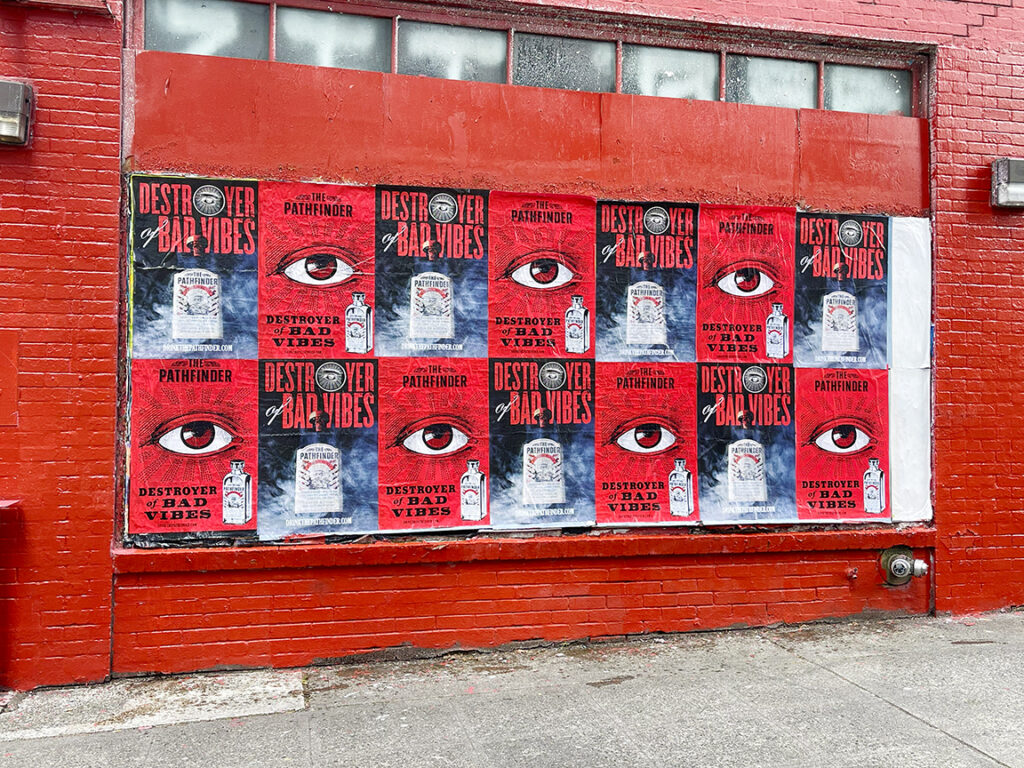
Wheatpasting in Shoreditch London: Poster Strategy for High-Impact Streets starts with matching the right streets, surfaces, audience, and campaign timing. Shoreditch is not shy about its walls. Walk from Old Street roundabout down Curtain Road toward the Boxpark on Bethnal Green Road and you’re moving through one of the most visually dense streetscapes in Europe — commissioned murals, paste-up art, hand-painted shop fronts, construction hoardings that have been repurposed into gallery space. This is a neighborhood that has built an entire aesthetic identity around public visual culture, and it remains one of the most effective zones in London for brand wheatpaste campaigns.
The concentration of approved surfaces in Shoreditch is not accidental. Property owners in the area have recognized for at least fifteen years that visual content on their walls attracts foot traffic, generates press coverage, and positions their buildings as culturally relevant. That market dynamic created an infrastructure that brands can access: walls with genuine permissions, postering networks that know which surfaces are available and which are protected, and a built-in audience that has been conditioned to pay attention to what’s on those walls.
If you’re planning a wheatpaste campaign in London and Shoreditch isn’t already on your surface list, this guide explains what you’re missing — and what it takes to make a campaign here work rather than just spend money.
The Shoreditch Demographic: Who You’re Actually Reaching
Shoreditch runs through Tower Hamlets and Hackney, two boroughs that have undergone significant demographic change over the past two decades without fully losing their original character. The current population mix in and around Shoreditch skews heavily toward 22-40-year-olds working in tech, media, design, fashion, and hospitality. The area has a high density of creative industry offices — Spotify’s UK office, Vice Media’s former base, dozens of advertising agencies, design studios, and production companies.
On weekends, Shoreditch’s residential population is supplemented by visitors from across London and from other countries — Brick Lane’s food market, the street art tours, the vintage shops on Cheshire Street, the concentration of galleries and pop-up concept stores. By noon on a Saturday, Brick Lane alone is shoulder-to-shoulder.
Shoreditch and the surrounding Hackney neighborhoods have an average resident age of 31 — significantly younger than the London average of 36. Median household income in Hackney has risen 40% in the past decade, creating a demographic with disposable income and strong consumption in entertainment, food, fashion, and culture.
What this means practically: Shoreditch is not a neighborhood for mass-market campaigns. It’s a neighborhood for brands that want to reach a specific slice of younger, culturally literate, trend-aware Londoners. Fashion, music, entertainment, tech, and lifestyle brands fit here naturally. Banks, insurance products, and mass-market retail don’t land the same way — not because the audience isn’t there, but because the context makes those categories feel out of place.
The Surfaces: Where Posters Actually Go
Brick Lane Corridor
Brick Lane running from Bethnal Green Road south toward Whitechapel is the highest foot traffic corridor in Shoreditch. The surfaces here range from full building-side walls on the eastern side of the lane to hoarding panels around development sites on the western approach. Weekend foot traffic on Brick Lane between 11am and 4pm rivals many shopping centers in terms of sheer volume. Weekday traffic drops but remains high due to the concentration of restaurants, cafes, and offices.
Competition for surfaces here is significant. Popular spots on Brick Lane will have fresh posters within 48 hours of being posted. If you want longevity on Brick Lane surfaces, you need either a regular refresh schedule or the kind of standout design that people don’t want to cover.
Rivington Street and Curtain Road
These parallel streets running between Old Street and Shoreditch High Street have a more residential-commercial mix than Brick Lane and correspondingly lower but higher-quality foot traffic. The people walking these streets are more likely to be local — living or working in the immediate area — which means repeat exposure is higher. A poster that goes up on Rivington Street will be seen multiple times by the same people over its lifespan, building frequency that a Brick Lane placement seen once by tourists can’t achieve.
Hoxton Square Area
Hoxton Square itself and the streets around it — Hoxton Street, Pitfield Street, Eagle Wharf Road — serve a slightly older and more residential demographic than central Shoreditch. This is where the 30-45-year-old Shoreditch resident who’s been there since before the gentrification lives and socializes. Campaigns targeting this slightly more established demographic benefit from Hoxton placements as a complement to the higher-energy Brick Lane zone.
Bethnal Green Road near Boxpark
Boxpark Shoreditch at the junction of Bethnal Green Road and Redchurch Street draws significant foot traffic from a deliberately selected demographic — young professionals, streetwear-aware shoppers, restaurant and bar visitors. The walls around Boxpark and along Bethnal Green Road toward Cambridge Heath have become a prime postering zone for exactly this reason. Placement here puts you directly in front of people who are already in a discovery mindset.
What Makes Shoreditch Different From Other London Zones
The poster culture here has created a specific audience behavior that differs from other London neighborhoods. Shoreditch residents and regular visitors actively look at what’s on the walls. They photograph interesting posters and share them on social media. The street acts as a kind of editorial filter — if something is posted here, it has a baseline cultural legitimacy that it doesn’t automatically have elsewhere. That filter creates organic amplification that a campaign in a more neutral neighborhood won’t get.
“In Shoreditch, a well-placed poster can do two jobs at once — the physical impression for people walking past, and the social media share from someone who photographs it and posts it to their 8,000 Instagram followers. That second impression is free if the design is worth sharing.”
This also means that design standards here are higher than in other neighborhoods. Shoreditch audiences have been looking at exceptional street art for years. A mediocre campaign feels worse here than it would in a less visually sophisticated neighborhood. The same poster that would attract attention in a less visually competitive zone might be ignored or mocked in Shoreditch. Brands that invest in Shoreditch wheatpasting campaigns need to invest proportionally in design quality.
Running a Shoreditch Campaign: Practical Considerations
Surface Booking Lead Time
Unlike booking an advertising slot in a publication where the inventory is finite and formally sold, Shoreditch surface access works through operator relationships. The networks that manage postering in East London have ongoing arrangements with property owners and can generally confirm surface availability within a week. The optimal lead time from brief to posting is two to three weeks, which allows time to confirm surfaces, produce UK-print quantities, and schedule the crew.
Posting Times
Most wheatpasting in London happens between 11pm and 5am. Shoreditch’s nightlife means the streets around Brick Lane and Old Street stay active late, which can push posting to 2am-5am windows on busy nights. This doesn’t affect quality but is worth knowing if you’re tracking campaign progress and expecting same-day confirmation.
Refreshing Placements
On Shoreditch’s most competitive surfaces, first placements may be covered within a week by subsequent campaigns. Building in a refresh budget — typically 40-50% of the initial posting cost — for a second round at the two-week mark extends effective visibility significantly. Some brands treat Shoreditch campaigns as three-week cycles with two posting rounds, which gives consistent presence for the full window.
Format Recommendations for Shoreditch
Shoreditch walls reward larger formats. Single A0 sheets disappear into the visual noise on Brick Lane. The campaigns that register are running multiple sheets tiled together — 4×2 or 6×3 arrangements that create a mural-scale presence on a single wall. This approach costs more in print production but creates the kind of dominant visual presence that actually cuts through in a competitive visual environment.
For smaller budgets, the alternative is hyper-targeted A1 or A0 placements in specific high-quality positions rather than broad coverage at smaller scale. One excellent position — the right wall on Rivington Street with a clean design and fresh paste — will outperform fifteen mediocre placements scattered across less trafficked side streets.
Seasonal Considerations
Shoreditch foot traffic peaks in spring and summer, when outdoor dining and weekend street activity draw the largest numbers. The Brick Lane market, the Spitalfields Market spill, and the general London outdoor season make April through September the highest-impact window for campaigns here. Autumn sees reduced weekend foot traffic but maintains strong weekday volume from the office-heavy eastern fringe of the neighborhood. Winter campaigns are viable but should factor in shorter daylight hours and reduced outdoor dwell time.
Why Shoreditch Dominates So Many London Poster Searches
Shoreditch appears again and again in search results because it is shorthand for creative visibility in London. Competitor pages and adjacent OOH coverage highlight the area’s street art reputation, fashion relevance, nightlife economy, and heavy pedestrian flow. Searchers coming to this keyword want to know whether Shoreditch is actually worth the hype and how to use it strategically.
The strongest content angle is neighborhood fit with specifics. People want to understand which kinds of brands belong in Shoreditch, where poster density has the most impact, how Shoreditch compares with Brick Lane or Camden, and why the area is often chosen for launch moments tied to fashion, music, streaming, and challenger consumer brands. Common H2 topics should include audience profile, best posting zones, creative style, and launch timing. A generic neighborhood description will not be enough.
Searchers also value honesty about competition. Shoreditch offers cultural cachet, but it is visually crowded. That means posters need bold artwork, repetition, and a compact route plan to stand out. Framing the article around those real-world decisions makes it much closer to what users are looking for when they search Shoreditch and wheatpasting together.
That is why Shoreditch pages rank best when they balance aspiration with execution. Searchers want the cultural upside, but they also want to know how to avoid getting lost in a neighborhood where almost everything is already trying to look interesting.
Frequently Asked Questions
Surface-by-Surface Breakdown in Shoreditch
Shoreditch is the most documented wheatpaste territory in London, and with good reason. The EC1/EC2 postal boundary contains approximately 40 licensed paste sites — walls with documented landowner permission, established surface relationships, and regular refresh cycles. That density is what makes Shoreditch the starting point for most London campaigns that AGM coordinates for US brands.
Brick Lane Corridor (E1)
Running south from Bethnal Green Road to Whitechapel Road, Brick Lane has walls that have been part of London’s visual culture for four decades. The north end near the Old Truman Brewery is particularly strong — the hoarding panels around the brewery complex face pedestrian traffic from the Sunday market, which draws 40,000 to 80,000 people depending on the season. We’ve placed campaigns here for music labels, fashion brands, and film releases. The wall on the western side of Brick Lane facing the Boiler House has been used for campaigns by brands ranging from streetwear labels to streaming platforms.
Old Street Roundabout and Corridor (EC1)
The roundabout itself is technically Transport for London infrastructure and not usable for wheatpaste campaigns. But the streets feeding into it — City Road, Great Eastern Street, Old Street heading east — have multiple hoarding sites. The tech worker demographic concentrated in this corridor (Shoreditch has the highest density of tech startups in the UK) makes it a specific target for B2B software brands and consumer apps.
Curtain Road and Rivington Street
The gallery and studio district between Old Street and Hoxton Square has render and brick surfaces that tend to attract higher-end campaign placements. We’ve seen fashion and luxury brand campaigns here, which is appropriate — the demographic skews toward design professionals, buyers, and creative industry workers with higher disposable income than the broader East London average.
Shoreditch High Street Overground station handles approximately 12 million passenger journeys annually. The street-level area around the station entrance on Bethnal Green Road is one of the highest foot-traffic paste locations in East London.
Foot Traffic Patterns in Shoreditch
Understanding when people move through Shoreditch matters as much as knowing where the walls are. The neighborhood runs on a different clock than the rest of London.
Morning weekday foot traffic peaks between 8:30am and 9:30am as the tech and creative sector workforce commutes in from Hackney, Bethnal Green, and the Northern and Central lines via Old Street. Lunchtime brings a second surge, particularly around Spitalfields Market and the Brick Lane food stalls. The evening crowd from 6pm to midnight is the largest and most diverse — restaurant and bar traffic, gallery openings, event venues like the Courtyard Theatre and Village Underground.
Weekend patterns are different. Saturday mornings on Brick Lane start slowly and build to peak capacity by noon, driven by the market crowds. Sunday is the biggest single day — the Brick Lane Market and Columbia Road Flower Market (a ten-minute walk north on Columbia Road) draw the heaviest weekend foot traffic in East London. Our operators have run campaigns specifically timed to land on Sunday mornings, when 60,000+ people move through the Brick Lane-to-Columbia Road corridor.
Seasonal Considerations
Summer Shoreditch is different from winter Shoreditch. July and August bring a higher proportion of tourists — international visitors who are browsing rather than commuting, which increases dwell time in front of poster locations. September through November is the strongest window for entertainment and fashion campaigns because the local creative industry is back from summer and actively consuming culture. December drops off sharply around the 20th as the neighborhood quiets before Christmas.
How Our Operators Work Shoreditch
AGM’s crews have run campaigns across Shoreditch more times than we’ve counted. The workflow is established: posting starts at 3am from the Brick Lane end and works north and west toward Old Street, which means the highest-traffic locations (Old Street station area, Boxpark) get fresh placements just before the morning commute peaks. We’ve run this route for film premieres, album drops, and fashion launches — the east-to-west posting sequence gives each location maximum freshness for the audiences most likely to see it.
Paste consistency for Shoreditch’s mix of brick, painted brick, and render surfaces is set slightly thicker than our standard mix. The older brick common in Victorian-era buildings on Great Eastern Street and Commercial Street is more porous than the painted render on newer hoarding panels. Getting the paste ratio right for each wall type is something our crews have dialed in through experience — not something you figure out on a first run.
We’ve placed on the large-format wall sections of the Old Truman Brewery complex three times this year alone. The surface holds, the foot traffic is consistent, and the demographic — art school graduates, creative freelancers, brand professionals — is exactly right for the entertainment and fashion clients we typically run there.
Past Campaigns in Shoreditch: What Worked
Without naming clients directly, here’s what the data from AGM’s Shoreditch campaigns shows about what works and what doesn’t.
Single-color, high-contrast designs outperform photographic posters in low-light conditions. Most people who see a Shoreditch wheatpaste campaign see it in the evening, under sodium-vapor or LED street lighting. Dark backgrounds with light typography, or white backgrounds with bold black imagery, hold their impact in those conditions. Designs that rely on subtle gradients or detailed photography lose visual power at distance on a brick wall.
Location clustering matters more than total location count. A campaign of 20 posters concentrated within a six-block radius creates a sense of saturation that makes the campaign feel bigger and more deliberate than 40 posters spread across three different neighborhoods. When the goal is creating buzz in Shoreditch specifically — generating the kind of street-level conversation that feeds back into social media — concentration beats spread every time.
Why is Shoreditch good for wheatpaste campaigns?
Shoreditch has some of the highest concentration of approved street art and postering surfaces in Europe. Combined with dense foot traffic from a young, media-literate demographic aged 22-40 and a street culture that actively engages with visual content, it’s one of the most effective neighborhoods in London for brand wheatpaste campaigns — particularly for entertainment, fashion, tech, and lifestyle brands.
What brands typically run wheatpaste campaigns in Shoreditch?
Streetwear brands, tech companies, music labels, streaming platforms, film distributors, and fashion brands regularly run Shoreditch wheatpaste campaigns. The neighborhood’s demographic — young professionals and creatives with disposable income — makes it a target for any brand trying to reach that audience segment authentically rather than through paid digital channels.
Which streets in Shoreditch work best for wheatpasting?
Brick Lane, Rivington Street, Curtain Road, Bethnal Green Road near Boxpark, and the streets around Hoxton Square have the highest foot traffic and best concentration of available surfaces. Old Street roundabout is useful for volume but has more competition for surface space and faster poster turnover. The best specific position depends on your campaign’s demographic target.
How long do wheatpaste posters last in Shoreditch?
On approved surfaces with quality paste, posters typically last two to four weeks before being covered by subsequent campaigns or showing significant weather damage. Shoreditch’s active poster culture means popular surfaces on Brick Lane turn over faster — sometimes within a week — which is why campaigns in this neighborhood often build in a refresh round.
How do I book a Shoreditch wheatpaste campaign?
Contact American Guerrilla Marketing at [email protected] or (646) 776-2770. We work with East London operators who have established surface relationships throughout Shoreditch, Dalston, Hackney Wick, and the surrounding neighborhoods. We coordinate the full campaign from surface selection through GPS-verified posting reports.