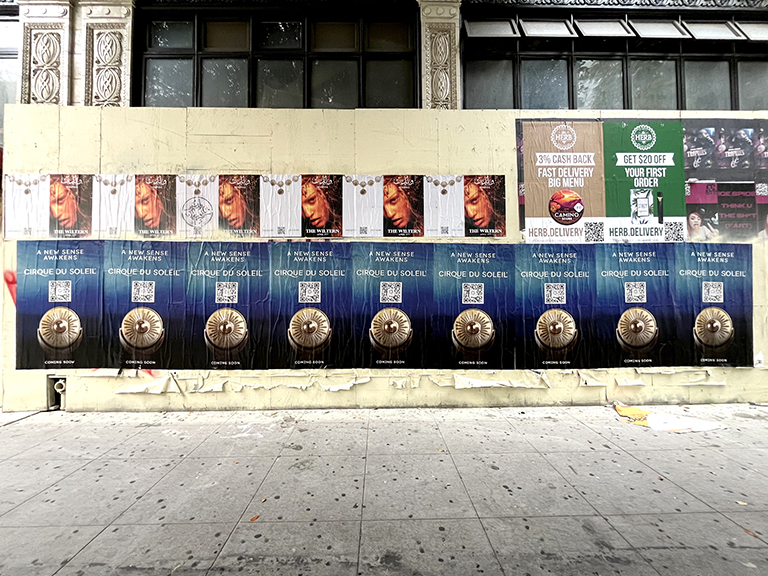
Mexico City has 300+ distinct colonias spread across 16 alcaldías covering over 1,400 square kilometers. For campaign planning purposes, that complexity resolves down to a manageable set of neighborhoods that actually matter for wheatpaste work — the ones with the right combination of foot traffic, audience profile, wall availability, and operational environment.
This guide covers the colonias that experienced operators work in most, what each one offers, and which campaign types fit each zone. It’s not exhaustive — there are outer colonias that serve niche purposes for specific campaigns — but it covers the terrain that matters for 90% of what gets briefed.
The Core Colonias: Where Most Campaigns Run
Roma Norte — Cuauhtémoc Alcaldía
Audience: 25-42, creative professionals, media workers, expats, international visitors
Best streets: Álvaro Obregón, Orizaba, Tonalá, Sonora
Wall conditions: Excellent — rough plaster and brick, strong paste adhesion
Campaign fit: Music, fashion, streaming, tech, lifestyle, film
Cost level: Medium-high — premium wall locations priced higher
Roma Norte is where most campaigns start. It’s the colonia with the best balance of audience quality, wall availability, and operator infrastructure. If there’s one neighborhood in CDMX that a brand needs to be in, it’s this one.
Condesa — Cuauhtémoc Alcaldía
Audience: 28-45, affluent, residential, park-centric lifestyle, significant expat presence
Best streets: Ámsterdam, Tamaulipas, Michoacán
Wall conditions: Good — Art Deco surfaces, some smooth stucco challenges
Campaign fit: Streaming, food and hospitality, premium lifestyle, music targeting older demographic
Cost level: Medium-high — similar to Roma Norte
Juárez — Cuauhtémoc Alcaldía
Audience: 22-38, LGBTQ+ community concentration, nightlife-oriented, creatives, younger professionals
Best streets: Génova, Liverpool, Hamburgo, the Zona Rosa commercial zone
Wall conditions: Variable — older commercial buildings offer good surface, modern retail frontage doesn’t
Campaign fit: Nightlife, fashion, queer-focused brands, music events, entertainment
Cost level: Medium
Doctores — Cuauhtémoc Alcaldía
Audience: 18-35, working-class, music-oriented (especially electronic, reggaeton, cumbia), urban youth
Best streets: Dr. Río de la Loza, Dr. Vertiz, Niños Héroes
Wall conditions: Excellent — old industrial and commercial surfaces, rough concrete, very high paste adhesion
Campaign fit: Music (especially urban genres), mass-market consumer brands, events targeting broad youth audience
Cost level: Lower than Roma Norte — high value for budget
Centro Histórico — Cuauhtémoc Alcaldía
Audience: Extremely diverse — tourists, commuters, vendors, workers, full economic range
Best streets: Eje Central, República de Uruguay, corridors around Bellas Artes and Zócalo
Wall conditions: Excellent on appropriate surfaces — extensive rough commercial surfaces, historic facades excluded
Campaign fit: Mass awareness, concert promotion, regional Mexican music, film wide releases
Cost level: Low to medium — high volume for budget
The Cuauhtémoc alcaldía — which contains Roma Norte, Condesa, Juárez, Doctores, and Centro Histórico — is the single most important alcaldía for wheatpaste campaign work in Mexico City. It covers approximately 32 square kilometers and holds the majority of the city’s most campaign-relevant colonias in one contiguous zone.
Secondary Colonias: High-Value Additions
Coyoacán — Coyoacán Alcaldía
Audience: Students, artists, intellectuals, film buffs, families, tourists visiting Frida Kahlo Museum
Best streets: Francisco Sosa, División del Norte (near Cineteca Nacional), Allende
Wall conditions: Good — residential and commercial mix, older building stock
Campaign fit: Film (especially art house), cultural events, music (indie, jazz), arts-adjacent brands
Cost level: Medium
Polanco — Miguel Hidalgo Alcaldía
Audience: High-income residents, luxury shoppers, business travelers, premium diners
Best streets: President Masaryk adjacent streets, Horacio, blocks around Parque Lincoln
Wall conditions: Challenging — requires private property agreements; limited available surfaces
Campaign fit: Luxury fashion, premium consumer goods, upscale hospitality, high-income targeting
Cost level: High — premium wall access, higher operator fees
Narvarte — Benito Juárez Alcaldía
Audience: Young families, upwardly mobile professionals, 28-40, less trendy than Roma Norte but similar demographics
Best streets: Insurgentes Sur (the boundary), interior residential/commercial streets
Wall conditions: Good on commercial blocks
Campaign fit: Lifestyle, food and beverage, streaming, family-oriented brands
Cost level: Medium — slightly lower than Roma Norte
Escandón — Miguel Hidalgo Alcaldía
Audience: Young, artistic, increasingly gentrifying, adjacent to Condesa
Best streets: Insurgentes Sur facing blocks, Benjamín Hill, Amores
Wall conditions: Good
Campaign fit: Music, emerging brands, creative campaigns
Cost level: Lower than Condesa — good emerging market value
Santa María la Ribera — Cuauhtémoc Alcaldía
Audience: Students, young artists, academics, price-conscious creative workers
Best streets: Av. México, Salvador Díaz Mirón, Carpio
Wall conditions: Good
Campaign fit: Music (indie, alternative), cultural campaigns, art-adjacent brands
Cost level: Low — excellent value for emerging-market reach
Specialized Zones: For Specific Campaign Needs
Tepito — Cuauhtémoc Alcaldía
Tepito is one of the most culturally distinctive neighborhoods in Mexico City — a legendary market zone with deep working-class identity and a reputation that extends across the country. Campaign work here requires operators with genuine local connections. The audience is mass-market, working-class, and concentrated. For brands that need to reach this population segment, there’s no substitute. For brands targeting the creative professional or affluent consumer, Tepito isn’t the priority.
Guerrero — Cuauhtémoc Alcaldía
Xochimilco — Xochimilco Alcaldía
Xochimilco is a distinct zone of the city — famous for its canals and chinampas (floating gardens), it functions almost as a small city within the metropolitan area. Campaigns here are niche and require local operator knowledge. Tourism-adjacent campaigns, festival promotions for events held in Xochimilco, and campaigns targeting the distinct cultural community of the southern alcaldías sometimes include this zone.
How to Build a Multi-Colonia Campaign from This Map
Most campaigns in Mexico City work best when colonias are selected based on the specific campaign objective rather than trying to cover everything. A practical selection framework:
| Campaign Goal |
Recommended Colonias |
| Creative-class awareness |
Roma Norte + Condesa + Juárez |
| Mass awareness / broad reach |
Centro Histórico + Doctores + Guerrero |
| Premium / luxury targeting |
Polanco + Condesa + Roma Norte |
| Music release (indie/alternative) |
Roma Norte + Juárez + Coyoacán + Escandón |
| Music release (regional/urban) |
Doctores + Centro + Tepito + Guerrero |
| Film (art house) |
Coyoacán + Roma Norte + Condesa |
| Youth brand / nightlife |
Juárez + Doctores + Roma Norte |
| Full city coverage |
Roma Norte + Doctores + Centro + Polanco + Coyoacán |
Surface Availability Across CDMX Colonias: Operator Perspective
One of the most useful things an experienced CDMX operator can tell you is which colonias have the best-to-worst ratio of workable paste surfaces to prominent location. This isn’t obvious from maps or satellite imagery — it requires time on foot in each colonia, understanding the building stock, and knowing which walls are preapproved and which are off-limits.
From our experience running campaigns in Mexico City across many colonias, here’s how the major campaign zones rate on surface quality and availability:
Roma Norte: Highest density of workable rough plaster and brick surfaces among the premium colonias. The older mixed-use building stock on streets like Orizaba, Jalapa, and Tabasco provides consistent paste surfaces. Competition for the best walls is high because every operator knows these streets.
Condesa: Fewer total workable surfaces than Roma Norte due to more Art Deco finished facades and glass storefronts, but the surfaces that exist tend to be prominent and well-located. Tamaulipas and the construction-adjacent zones are the primary inventory.
Centro Histórico and Doctores: High volume of older rough plaster surfaces, particularly on secondary streets off the main tourist corridors. Less competition for these walls because fewer operators are maintaining ongoing relationships with Centro property owners. Good opportunity for campaigns that need volume at lower cost.
Coyoacán: Lower wall density than central colonias, but the existing surfaces — particularly on Francisco Sosa and Higuera — are visually premium and photographed heavily. Quality over quantity is the right frame for Coyoacán surface planning.
Santa María la Ribera: An underused campaign zone with good wall quality and minimal operator competition. The colonia sits adjacent to Roma Norte’s northern edge and has a similar building age profile — rough plaster commercial and residential facades — without the Roma Norte wall-access price premium. We’ve run campaigns here for clients who wanted Roma Norte demographics at more accessible costs.
AGM’s operators in CDMX maintain an active wall inventory database covering over 200 preapproved locations across 12 colonias. The inventory updates after each campaign cycle — removing locations that changed access status and adding new walls from ongoing property owner outreach. For most standard campaigns, we’re working from existing inventory rather than cold-scouting new locations.
Seasonal Timing Considerations by Colonia
Mexico City’s 300+ days of sun per year and the June-through-October rainy season create colonia-specific timing considerations that experienced operators factor into campaign planning.
Roma Norte and Condesa (Cuauhtémoc alcaldía): Afternoon sun exposure is intense on south-facing walls — the 7,350-foot altitude amplifies UV impact. During rainy season (June-October), afternoon storms typically roll in between 3pm and 6pm and can be heavy. Execution nights should target post-midnight timing to allow any earlier rain to dry before paste application. The walls around Parque España in Roma Norte and Parque México in Condesa benefit from tree canopy that provides partial weather protection.
Coyoacán: The colonia’s denser tree canopy provides more weather protection than the more exposed central colonias. Francisco Sosa in particular has such heavy tree coverage that some walls are effectively sheltered from direct rain. This makes Coyoacán relatively good for rainy season campaigns compared to more exposed zones.
Polanco: Higher elevation than Condesa with more wind exposure in some blocks. Wind affects poster application — operators work more carefully in higher-wind conditions to prevent bubbling. The manicured building maintenance culture in Polanco also means that posters may be cleaned off more quickly than in other colonias, so timing relative to key campaign moments matters more here than anywhere else.
Centro Histórico: The urban heat island effect is more pronounced in Centro than in the park-anchored colonias to the west. Summer execution in Centro should account for surface temperatures that can affect paste adhesion on very hot surfaces. Night execution when surfaces have cooled is the standard approach — same as everywhere in CDMX, but more important in Centro’s dense stone and concrete environment.
Past Campaign Performance Across CDMX Zones
Looking across multiple campaigns and multiple years of CDMX work, the performance patterns by colonia are consistent enough to inform targeting decisions with confidence:
Social media pickup rate (user-generated content showing campaign posters): Roma Norte consistently highest, followed by Coyoacán, then Condesa. The creative and photography-active demographics in these colonias generate organic amplification that multiplies the campaign’s reach beyond the placements themselves.
Total impression volume per placement: Metro-adjacent and Centro Histórico locations deliver the highest daily impression counts due to transit traffic volumes. A single well-placed poster near Metro Insurgentes or along Eje Central can accumulate more total views per day than a poster in Coyoacán interior, simply by volume of foot traffic.
Audience quality match for premium brands: Polanco and Condesa consistently rate highest for reaching affluent Mexican consumers aged 35-55. Roma Norte delivers the creative professional audience aged 25-42. Centro delivers mass-market reach across a broad demographic range.
Campaign longevity (poster survival rate at 14 days): Coyoacán consistently shows the highest 14-day survival rates, largely due to lower competing campaign density and the weather protection from tree canopy. Roma Norte commercial corridors show lower survival rates because they’re actively targeted by multiple operators, and poster replacement turnover is constant.
We share this performance data with clients planning campaigns because it affects which colonias make sense for which campaign objectives. A brand choosing between Roma Norte and Centro Histórico isn’t choosing between good and bad — they’re choosing between audience profile, social amplification probability, and raw impression volume. The right choice depends on what the campaign needs to accomplish.
Less-Covered Colonias Worth Considering
Santa María la Ribera: Located in the Cuauhtémoc alcaldía north of the Alameda Central, Santa María la Ribera has a well-established cultural identity built around its central kiosk, weekend markets, and a long tradition of intellectual and artistic residents. The colonia’s audience includes academics from nearby universities, long-term middle-class residents, and a growing younger population attracted by lower rents than Roma Norte. Wall quality is good — similar building age and construction to Roma Norte with less competition for access.
Escandón: Sitting between Roma Norte/Condesa and the western colonias of Narvarte and Del Valle, Escandón has developed a significant café culture and independent business scene in recent years. The audience is comparable to Roma Norte with a slight age increase — the 28-40 bracket is well-represented. Campaign placements here often reach people who also frequent Roma Norte and Condesa, creating a frequency supplement for campaigns running in all three zones.
Narvarte: Located south of Roma Norte across Viaducto, Narvarte is a dense, middle-class residential colonia with good commercial corridors along Insurgentes Sur and the colonia’s internal streets. Less culturally prominent than Roma Norte but with solid foot traffic and a less-saturated campaign environment. For brands that need volume at lower cost than the premium creative colonias, Narvarte extends reach efficiently.
How to Choose the Right Colonia Mix for the Actual Campaign Goal
Pages that rank for neighborhood and area terms usually win because they help the reader compare. That is exactly the need here. Mexico City has enough distinct colonias that a generic best-of list is not especially useful. The real planning question is which neighborhoods belong together for a given brand, release, or market-entry objective.
For example, a campaign built for cultural relevance may weight Roma Norte, Condesa, and Juarez differently than one built for broad awareness, which may need Centro or transit support. A premium or luxury-facing brand may still want Polanco in the mix, but often not as a standalone route. The strength is in the combination.
- Start with the audience and campaign objective before you choose the neighborhoods.
- Balance one or two hero colonias with supporting zones instead of spreading thinly across the city.
- Use neighborhood combinations that create both relevance and reach.
Searchers landing on this type of page usually want to leave with a route hypothesis. If the article helps them sketch the first version of that neighborhood mix, it is aligned with search intent.
The bottom line for planners is simple: treat best neighborhoods for wheatpasting in mexico city as a campaign decision with tradeoffs, not as a generic city talking point. The campaigns that usually perform best in CDMX define the audience, route logic, reporting standard, and creative threshold before the first sheet goes to print.
That is also why the best briefs stay specific about neighborhoods, install timing, and proof of posting. In Mexico City, clarity before execution usually matters more than chasing a bigger poster count after the fact.
Frequently Asked Questions
How many colonias in Mexico City are useful for wheatpaste campaigns?
Roughly 15-20 colonias in Mexico City’s central and inner-ring zones offer consistently useful conditions for wheatpaste campaigns. Of these, 8-10 are regularly used by professional operators for client campaigns. The rest are either too residential, too low-traffic, or have enforcement environments that make consistent execution difficult.
What is the difference between a colonia and an alcaldía in Mexico City?
An alcaldía is Mexico City’s equivalent of a borough — there are 16 of them, each with its own local government and administrative authority. Within each alcaldía are multiple colonias (neighborhoods), which are the street-level community units that residents identify with. Campaign planning uses colonias for targeting and alcaldías for understanding regulatory environment.
Which Mexico City colonia has the highest foot traffic for wheatpaste campaigns?
Is Santa María la Ribera good for wheatpaste campaigns in Mexico City?
Which Mexico City colonias should be avoided for wheatpaste campaigns?
Purely residential colonias with low foot traffic and strong neighborhood association enforcement should be avoided. Santa Fe (office district, not pedestrian-oriented), Lomas de Chapultepec (highly residential, high enforcement), and outer alcaldías with low target audience concentration are generally not worth including unless there is a specific strategic reason.