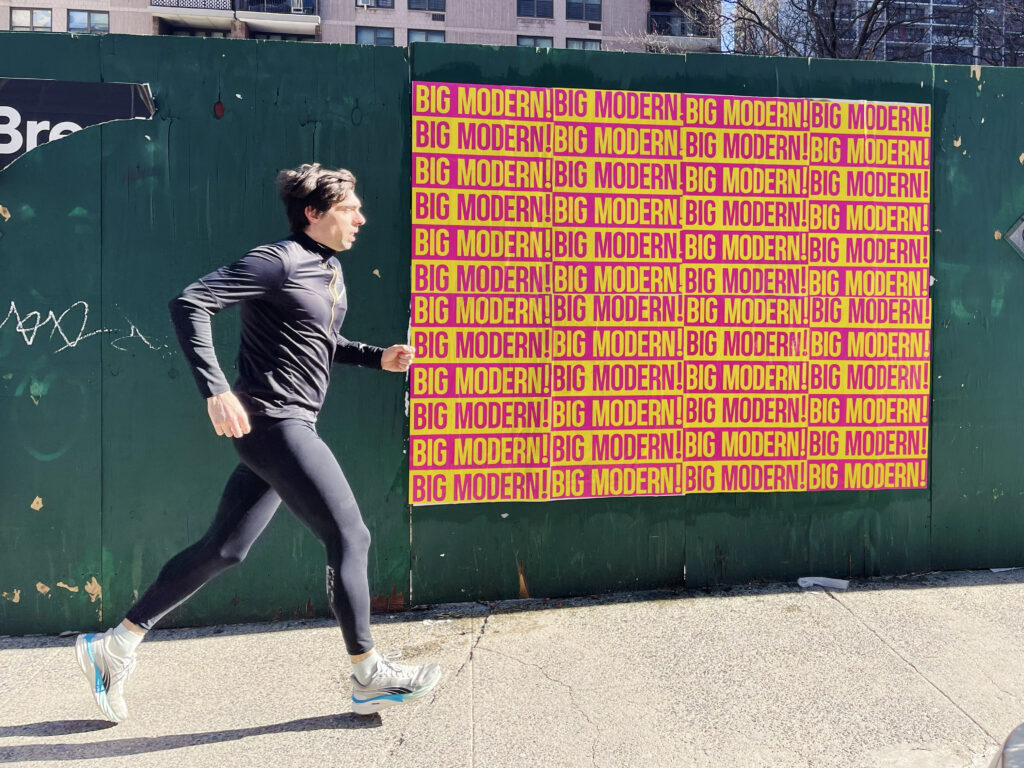
Mexico City takes music seriously. Not in the abstract sense that every major city claims — in the specific sense that the city has a deep, layered music culture across multiple genres, a devoted live music scene, and a physical street culture where music promotion has lived for generations. When an artist posts up in Roma Norte or blankets Doctores before a Foro Sol date, it means something. It’s not just media. It’s a statement.
Music release campaigns in CDMX are one of the most natural applications of wheatpasting. The medium fits the context — music is inherently local, physical, experiential, and tied to specific moments in time. A poster announcing an album drop or a tour date does something a digital ad can’t: it makes the release feel like an event that exists in the actual city, not just on a streaming platform.
This guide covers how music release wheatpaste campaigns work in Mexico City — the colonias that matter for different genres, the timing that maximizes impact, the formats that work best for music content, and how to structure a campaign that supports both the release and any accompanying live dates.
Mexico City’s Music Geography
To run a music campaign in CDMX effectively, you need to understand how the city’s music culture is distributed geographically. Different colonias have different genre associations and different audience profiles for music consumption.
| Genre |
Primary Colonias |
Key Venues |
| Reggaeton / Urban Latin |
Doctores, Tepito, Centro, Iztapalapa |
Palacio de los Deportes, various clubs |
| Pop / Crossover |
Roma Norte, Condesa, Polanco, Narvarte |
Auditorio Nacional, Pepsi Center |
| Regional Mexican (Banda, Norteño) |
Centro, Doctores, Tepito, outer colonias |
Foro Sol, Arena Ciudad de México |
| Cumbia / Tropical |
Doctores, Guerrero, Iztapalapa |
Salón Los Ángeles, Salón Tropicana |
| Indie / Alternative |
Roma Norte, Juárez, Coyoacán, Escandón |
Foro Indie Rocks, El Imperial |
| Electronic / Club |
Juárez, Roma Norte, Doctores |
Club Nuevo Mundo, Patrick Miller, Tresor |
| Jazz / Singer-Songwriter |
Coyoacán, Roma Norte, Condesa |
El Vicio, Plaza Garibaldi adjacent venues |
Mexico City’s major venues for national and international touring artists: Foro Sol (65,000 capacity), Auditorio Nacional (10,000), Palacio de los Deportes (22,000), Arena CDMX (22,000). A campaign supporting a show at any of these venues should cover colonias across the city, not just the trendy creative zones.
Campaign Timing: The Music Release Window
Timing is where most music release campaigns in Mexico City go wrong. The instinct is to match street posting to the release date — to have posters go up the day the album drops. That misses the discovery function of the medium.
A wheatpaste campaign in CDMX is not primarily an announcement — it’s a discovery mechanism. People encounter a poster while walking their normal routes. They see it, register the artist name and artwork, and file it. When they encounter the name again — on a streaming platform, in their social feed, from a friend — the poster gives that encounter a physical memory anchor. “I saw that on the wall in Roma Norte.” That recognition and connection is what drives actual listening behavior.
This means campaigns need to be on the street before the release date:
- Album drop campaign: Posters up 7 to 10 days before release date
- Single release campaign: Posters up 5 to 7 days before release
- Tour announcement / ticket on-sale: Posters up 2 to 3 weeks before on-sale date
- Pre-show campaign (venue-specific): Posters up 2 weeks before show date, concentrated in colonia zones that feed into the venue
Genre-Specific Campaign Strategy
Regional Mexican — Banda, Norteño, and Related Genres
Regional Mexican is the most commercially powerful music genre in Mexico by audience size, and its fanbase is concentrated in parts of the city that many campaign planners overlook. Doctores, Centro Histórico, Tepito, Guerrero, and the working-class colonias of the outer alcaldías are where this audience lives and moves. A banda or norteño release campaign that runs only in Roma Norte and Condesa is essentially invisible to its target audience.
Effective regional Mexican campaigns in CDMX run heavy in Centro and Doctores, with supplementary coverage in the colonias that send heavy traffic to Foro Sol on show nights. The format tends to be straightforward: artist photo, album title, release date. High-contrast, readable at distance, no need for typographic sophistication — the audience will respond to the artist’s name and face without needing visual flourishes.
Reggaeton and Urban Latin
Reggaeton campaigns in Mexico City typically split their placements between two worlds: the aspirational colonias (Roma Norte, Juárez, Condesa) where the genre’s crossover success has built cultural credibility, and the working-class zones (Doctores, Tepito, Iztapalapa) where the genre’s core audience actually lives. Both are real. The campaign that covers only the trendy colonias misses the primary fanbase; the campaign that ignores the aspirational zones misses the cultural conversation.
Indie and Alternative
Roma Norte, Juárez, Escandón, and Coyoacán are the natural habitat for indie and alternative music campaigns in CDMX. The audience is concentrated in these colonias, the walls are receptive, and the cultural context — galleries, independent bookstores, alternative venues — creates an environment where a carefully designed indie artist poster reads as part of the colonia’s visual identity rather than an intrusion.
Indie campaigns in CDMX tend to feature more design-forward artwork than genre campaigns with broad audience reach. The audience is visually sophisticated and responds to aesthetic quality in the campaign design. A poster that looks like it was designed with care earns more attention and respect in Roma Norte than one that looks like a standard promotional template.
Formats That Work for Music Campaigns
Music poster formats in Mexico City have their own conventions, shaped by decades of local concert promotion tradition and the practical realities of the street surfaces available:
Standard portrait poster (24×36″): The workhorse format. Artist photo with name, album/single title, release date or tour date. This is the format that most operators can print quickly, paste easily, and document cleanly. If you’re running a large volume campaign across multiple colonias with a tight timeline, this format gives you the most flexibility.
Large-format artist portrait (36×48″ or 48×72″): Bigger is more commanding on a wall. A single large-format poster of an artist dominates a wall in a way that a standard-size sheet doesn’t. The tradeoff is cost (more paper, more paste, harder to handle for the crew) and location specificity — not every wall has the dimensions to accommodate a large format cleanly.
Multi-sheet grid installation: For major releases, a 4-sheet or 6-sheet grid assembled on a single wall creates a near-billboard-scale installation that reads from significant distance. These are typically reserved for album drops where visual impact is the primary objective, and they require walls of specific dimensions and surfaces that accept multi-sheet paste cleanly.
Coordinating Street Campaigns With Digital Releases
The most effective music release campaigns in Mexico City treat wheatpasting as one channel in a coordinated release plan, not a standalone tactic. The street campaign creates physical presence; digital platforms create the actual listening behavior. The connection between the two is intentional.
Practical coordination points:
- Include a QR code or short URL on the poster that links directly to the streaming release, pre-save page, or artist profile — this bridges the street encounter directly to a digital action
- Tag the city in social media posts that feature campaign photos — a photo of the artist’s poster on a Roma Norte wall performs well on Instagram and TikTok and creates organic spread of the physical campaign
- Time the street campaign to go up before the DSP release so that social posts showing the physical campaign act as a pre-release announcement
- Use the campaign documentation photos as content — GPS-tagged, city-specific poster photos are strong promotional content for an artist’s own channels
How Music Labels Coordinate Street Campaigns in CDMX
Music labels — both major international labels with Mexican operations and independent Mexican labels — have been running wheatpaste campaigns in Mexico City as part of release strategy for years. The medium has specific functions in a music release context that digital advertising doesn’t replicate: physical presence in the street environment, social media pickup from fans who photograph and share poster sightings, and an implicit signal of campaign investment that builds artist credibility.
Major Latin labels with offices in Mexico City typically coordinate CDMX street campaigns through their local marketing teams, who have established operator relationships or work through regional marketing agencies. When AGM coordinates CDMX music release campaigns for labels based in the US, the process runs through our operator network in Mexico City with the label’s local team approving colonia targeting and creative.
The campaign brief for a music release typically covers the release date, the artist’s fanbase demographic profile, the primary target colonias, the poster format, and the documentation requirements for internal reporting. Label marketing teams in Mexico City are sophisticated clients — they know the colonia demographics, they’ve seen previous campaign documentation, and they have specific expectations for what “Roma Norte” or “Condesa” means as a targeting choice.
Mexico City is the largest music market in Latin America by streaming volume and concert attendance. Spotify, Apple Music, and YouTube all report Mexico as a top-5 global market for Latin music consumption. A music release campaign that achieves strong street visibility in CDMX is reaching the most important market for Latin music audiences in the world.
Timing Music Release Campaigns: The CDMX Window
The standard timing for a music release wheatpaste campaign in Mexico City is 10 to 14 days before the release date, with the campaign remaining active (without refresh) through the first week post-release. This window captures the anticipation period, the release announcement moment, and the first week of streaming and sales activity.
From our experience running campaigns in Mexico City for music releases, the 14-day pre-release window is the most valuable. Fans who see a poster two weeks before release have time to pre-save, share on social media, and build anticipation. Fans who see a poster two days before release are already aware of the release through other channels and the poster functions more as a reminder than as a discovery mechanism.
Show-adjacent campaigns — placements running in the weeks before an Auditorio Nacional or Foro Sol date — follow a tighter window: 10 to 12 days before the show, with the campaign concentrated in the colonias surrounding the venue’s catchment audience. For a Foro Sol date at 65,000 capacity, that means Roma Norte, Condesa, and Centro Histórico. For an Auditorio Nacional date at 10,000 capacity, the concentration is tighter around Polanco, Lomas, and Condesa.
AGM’s field team coordinates release date campaign timing in reverse from the release date, accounting for print production time (48 to 72 hours), execution night scheduling, and the lead time needed to confirm wall agreements. A release date of the 15th of the month means briefing by the 1st, print files delivered by the 2nd or 3rd, execution on the 1st or 2nd of the month for a 13-to-14-day pre-release window.
Pre-Save Campaigns and Street Media Integration
Streaming platforms have increasingly encouraged artists to run pre-save campaigns — directing fans to save an upcoming release on Spotify or Apple Music before the release date. Wheatpaste campaigns in Mexico City can function as physical support for pre-save campaigns when the poster creative includes a QR code or short URL directing the viewer to the pre-save landing page.
The mechanics work best when the QR code is large enough to be scanned from arm’s length — at least 3 inches square on a 24×36 poster. Smaller QR codes require the viewer to get uncomfortably close to the wall surface, which reduces the scan rate. A QR code that’s integrated into the design rather than added as an afterthought also performs better — viewers who see the code as part of the visual composition are more likely to engage with it than viewers who see it as a technical add-on.
From our experience running campaigns in Mexico City, the Roma Norte and Condesa placements generate the highest QR scan rates of any CDMX zone — reflecting the smartphone penetration and digital-engagement level of the colonia demographics. Metro-adjacent placements generate lower scan rates because transit-mode behavior reduces the dwell time needed to notice, frame, and scan a QR code on a moving-through pedestrian.
For music release campaigns that include a pre-save component, the timing implication is that the campaign needs to go up further in advance of the release date than a standard awareness campaign. Pre-save campaigns are most valuable when they run 3 to 4 weeks before release, giving fans time to engage with the pre-save mechanism and generating pre-release streaming volume signals that affect algorithmic placement on the day of release. This earlier timing means briefing and production needs to start 5 to 6 weeks before release rather than the standard 3 to 4 week lead time.
How to Turn a Release Week Into a Street Presence
Search results for music release promotion often favor pages that connect physical media to the release calendar. That is exactly what brands and artist teams need in Mexico City. A poster campaign is rarely the whole story. It is the street-level layer that makes a release feel present, local, and culturally real in the days around the drop.
Neighborhood choice is critical because fans do not circulate the same way across genres. Some releases benefit from culture-heavy neighborhoods and nighttime visibility. Others need broader recognition through transit, Centro, or mixed routes that balance relevance with scale.
- Install 5 to 10 days before the drop if the goal is anticipation and repeat exposure.
- Match neighborhoods to genre, fan movement, and the visual tone of the project.
- Use one strong image system that reads instantly from across the street.
- Coordinate poster timing with teasers, pre-saves, ticket links, or media coverage.
The most useful article for this query helps a manager or label turn abstract excitement into a campaign brief. Timing, area mix, and visual discipline are the pieces searchers are usually trying to solve.
The bottom line for planners is simple: treat mexico city wheatpasting music releases as a campaign decision with tradeoffs, not as a generic city talking point. The campaigns that usually perform best in CDMX define the audience, route logic, reporting standard, and creative threshold before the first sheet goes to print.
That is also why the best briefs stay specific about neighborhoods, install timing, and proof of posting. In Mexico City, clarity before execution usually matters more than chasing a bigger poster count after the fact.
Frequently Asked Questions
Does wheatpasting work for music releases in Mexico City?
Yes — Mexico City has one of the strongest street poster traditions for music promotion in Latin America. Record labels, distributors, and artists have used flyposting campaigns in CDMX for decades to build street presence before album drops, single releases, and tour announcements. The city’s active music culture and dense pedestrian colonias make it an effective medium for music marketing.
Which colonias work best for music release wheatpaste campaigns in Mexico City?
It depends on the genre. Roma Norte, Juárez, and Condesa reach the creative/professional audience for indie, pop, and crossover artists. Doctores and Tepito reach working-class fans of reggaeton, cumbia, and regional Mexican music. For artists playing Foro Sol or Auditorio Nacional, a multi-colonia approach covering both audiences makes sense.
When should a music release wheatpaste campaign go up in Mexico City?
For album drops and single releases, posters should hit the streets 7 to 10 days before the release date. For tour announcements and ticket on-sale campaigns, 2 to 3 weeks ahead is more effective. Campaigns that go up too close to the release date miss the discovery window and don’t create the anticipation effect.
Do major Latin music labels use wheatpaste campaigns in Mexico City?
Yes. Universal Music Latin, Sony Music Latin, and major independent distributors operating in the Mexican market all use street-level campaigns in CDMX as part of broader release marketing. The medium is particularly valued for artists with strong visual identity, where a large-format image on the street drives more impact than a digital ad served to existing followers.
What poster formats work best for music campaigns in Mexico City?
Artist photo campaigns typically use 24×36 or 36×48 formats to showcase the artist at near-life-scale. Tour date announcements often use portrait formats with the artist image at top and tour information at the bottom. For album art campaigns, the cover image itself is often the entire poster. Multi-sheet grids create high-impact installations for major releases.