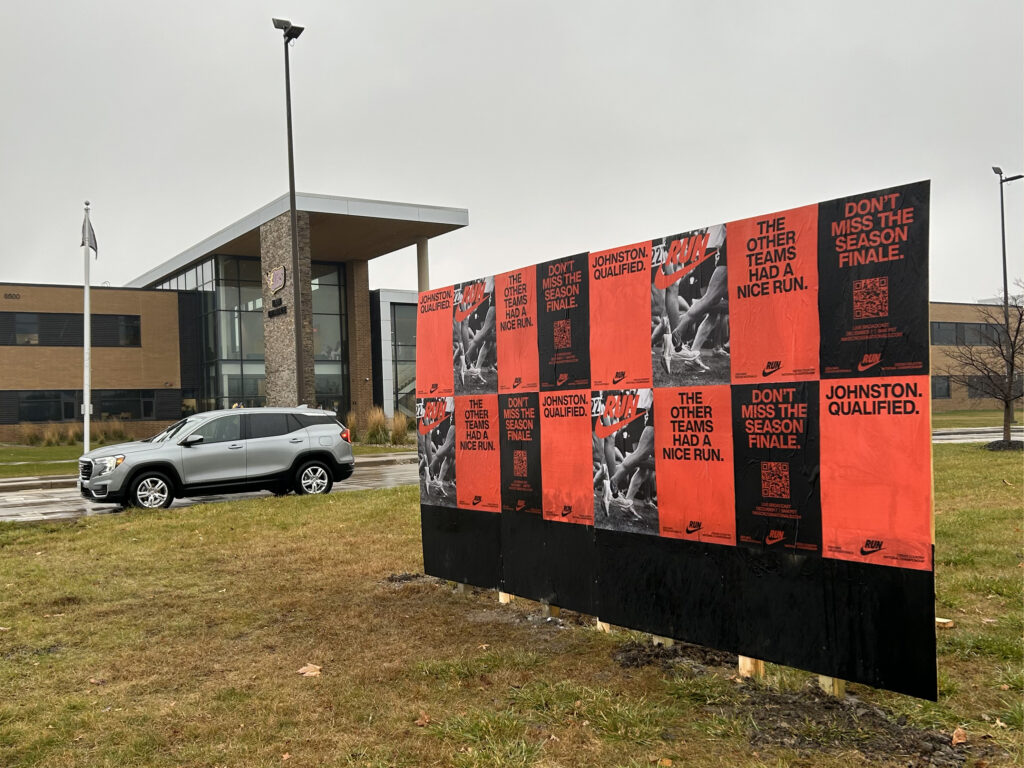
Boston is a different kind of guerrilla marketing market. It’s older than most American cities, more geographically compact, and divided into neighborhoods that have distinct cultural identities and very different target audiences. The same poster campaign that performs brilliantly in Allston’s music-dense, student-heavy corridor will underperform in South Boston’s residential and sports-bar landscape. Knowing which walls are in which neighborhoods, which surfaces hold, and which audiences are actually walking past the placements is the foundation of a Boston wheatpaste campaign that works.
The city also has one of the highest concentrations of college students in the world. Boston, Cambridge, and Somerville together host 250,000+ students across dozens of universities, including Boston University, Northeastern, Harvard, MIT, Boston College, Tufts, and Emerson. That student concentration makes the fall semester start one of the most valuable campaign windows in the country. Every September, a quarter-million young adults with disposable income, brand awareness, and strong social connectivity re-enter the Boston market and establish new consumer habits. Getting to them in that window matters.
We’ve executed wheatpaste campaigns in Boston from our base at Industry City in Brooklyn, NY, with field teams operating in the Boston market. Every campaign is GPS-tracked and delivered with full proof-of-performance documentation. This guide covers Boston’s best neighborhoods for wheatpaste campaigns, what types of brands get the strongest results, and how to time campaigns to the windows when the Boston market is most receptive.
Boston’s Best Wheatpaste Neighborhoods
Allston: Music, Students, and Cultural Density
Allston is the center of Boston’s music and underground cultural scene, home to some of the city’s most active venues including Brighton Music Hall, Great Scott, and the Sinclair corridor. Boston University students dominate the neighborhood, and the Harvard Ave and Brighton Ave commercial strips see dense foot traffic from students, venue-goers, and the creative professional spillover from the surrounding neighborhoods. For music releases, entertainment brands, lifestyle brands, and any campaign targeting college students and young cultural consumers, Allston is the essential Boston anchor.
Allston is also the neighborhood where wheatpaste competition is most active. Established poster corridors around the major venues and along Harvard Avenue have consistent cycles of new material. Our placements need to be positioned for maximum surface competition, well-bonded, high-quality paper, and placed in the higher-visibility sections of the primary corridors. Hold time in Allston is shorter than in other Boston neighborhoods because the surface competition is real.
Fenway and Kenmore Square
The Fenway and Kenmore Square area is one of Boston’s most valuable activation zones for sports, entertainment, and lifestyle brands. Fenway Park is the anchor, and the surrounding bars, restaurants, and retail on Lansdowne Street, Boylston Street, and the Yawkey Way approaches concentrate one of the most loyal, brand-aware sports audiences in the country during Red Sox home game season from April through September. For brands with sports adjacency, Boston sports fandom, or entertainment associations that fit the Fenway identity, this corridor delivers premium impression quality at concentrated volumes during game-day windows.
Kenmore Square itself, where Commonwealth Avenue, Brookline Avenue, and Beacon Street converge, is also a major BU student transit hub with exceptional daily foot traffic. Wheatpaste on the construction surfaces and permitted walls around Kenmore Square reaches both the student commuter audience and the sports and entertainment audience with different timing and daypart emphasis.
The South End
Boston’s South End is the city’s most culturally diverse and professionally affluent residential neighborhood, known for its restaurant scene, gallery district, and LGBTQ community. The South End audience skews older and higher-income than Allston or Fenway, and the campaign that works here looks different than the campaign that works on Harvard Avenue. Fashion brands, design-forward consumer products, food and beverage premium brands, and cultural institutions perform well in the South End. The pace is different. The aesthetic standard is higher. And the poster hold time is longer because competition is lower than in the student-heavy zones.
Cambridge and Harvard Square
Cambridge’s Harvard Square and the surrounding corridors serve a complex demographic mix: Harvard students and faculty, MIT students from the neighboring Kendall Square area, and the professional and academic community that gravitates toward Cambridge’s specific intellectual culture. For brands targeting educated, analytically engaged consumers with high income and strong word-of-mouth behavior, Cambridge offers a distinct audience that responds to creative and messaging that respects their sophistication. Generic college marketing creative underperforms here. Thoughtful, well-designed work earns credibility.
Somerville: Davis Square and Union Square
Somerville’s Davis Square and Union Square have evolved into some of the most active cultural zones in the Boston metro, with a younger professional and creative class that has partially displaced from Cambridge. Tufts University’s Davis Square adjacency adds a student layer. The neighborhood’s active food, music, and arts scene makes it receptive to the same brands that perform in Allston but at a slightly older, more settled demographic. For campaigns that want to reach the post-college 25-35 audience without paying Cambridge prices for surface access, Somerville is the best value in the Boston metro.
What Makes a Boston Wheatpaste Campaign Work
Surface Scouting: Why Boston Requires Field Work
Boston’s street topology is unlike most American cities. The irregular street grid, the density of historic architecture with different surface materials, and the concentration of university-owned buildings with specific access restrictions make surface scouting more complex here than in most markets. A map-based route planning approach that works in Chicago or Los Angeles fails in Boston because the actual surface quality and access on any given street doesn’t match the map prediction.
Our Boston scouting process walks every proposed route, assesses surface texture and material for adhesion quality, identifies the current competitive poster environment, checks for active enforcement activity in the zone, and documents the specific placement spots with photo records before the campaign is committed. That scouting investment produces significantly better surface quality and hold times than campaigns placed without it.
Creative Format for Boston’s Visual Environment
Boston’s neighborhoods have strong aesthetic identities. The design language that reads as authentic in Allston is different from what reads as credible in the South End. Our pre-campaign creative review assesses whether the proposed design will be legible at Boston street level, whether it fits the visual culture of the target neighborhood, and whether any compliance issues apply to the specific market or category. Creative that doesn’t pass the neighborhood-fit test gets flagged before print. Printing and discovering the mismatch at deployment is an expensive error that a 30-minute review prevents.
Seasonal Timing in Boston
Boston winters are hard on outdoor media. Cold temperatures affect adhesive performance, rain and snow degrade paper condition faster than warmer months, and the reduced foot traffic in certain neighborhoods during deep winter reduces the impression value per placement. We advise clients on the seasonal timing implications for Boston campaigns and plan accordingly. Fall (September-November) and spring (March-May) are the optimal windows. Summer works but with reduced student population. January and February are technically feasible but require adjusted expectations and surface management.
The College Window: Boston’s Most Valuable Annual Campaign Period
September Move-In: The Annual Reset
Every September, Boston receives an extraordinary influx of new students from across the country and internationally. Move-in week from late August through the first week of September is when 250,000+ students reestablish their presence in the Boston market, many of them new to their specific neighborhood and actively forming the brand habits and commercial relationships they’ll maintain for the next 4+ years. A wheatpaste campaign running in Allston, Fenway, and around BU during this window reaches an audience that is specifically open to discovering what Boston’s street-level brand environment has to offer.
This window is different from the academic-year baseline. The September audience is new, exploring, and receptive in a way that established residents and returning students aren’t. Brands that reach new students in September can establish early loyalty that holds through the full academic career. Brands that wait until October or November miss the formative discovery period.
Fall Athletic Season
The Boston College Eagles, the Northeastern Huskies, the Harvard Crimson, and the BU Terriers all have fall athletic programs that bring student audiences to campus venues in concentrated groups. For campaigns targeting specific student bodies, game-day activations and poster campaigns timed to athletic event schedules reach concentrated student audiences in a high-engagement context.
Boston Marathon and Spring Events
The Boston Marathon, held on Patriots Day in April, draws 500,000+ spectators to the course route from Hopkinton to Boylston Street. The Back Bay, Kenmore Square, and Copley Square sections of the course are among the highest-foot-traffic outdoor events in New England annually. For brands that want a single-day impression window with exceptional scale, Marathon Monday is the highest-volume day of the year in the Boston outdoor advertising environment. We plan Marathon weekend campaigns with course-specific routes that capture the maximum audience window from Heartbreak Hill through the Kenmore Square final mile.
Combining Wheatpaste with Other Boston Campaign Formats
With Brand Ambassador Programs
Our brand ambassador agency in Boston deploys in the same zones as wheatpaste campaigns to create layered awareness. The poster establishes visual presence. The ambassador creates human contact with the audience that the poster builds awareness toward. This sequence converts passive recognition into direct engagement, which is particularly effective in the college demographic’s social environment where personal recommendation carries weight that advertising doesn’t.
With Street Team Activations
Our street team activations in Boston work well alongside poster campaigns during high-traffic events: Red Sox home games on Lansdowne Street, Marathon Monday on the course, and the fall move-in window in Allston and Fenway. Street teams in these windows extend the poster campaign’s awareness into direct audience interaction during the highest-foot-traffic moments of the campaign calendar.
With Sidewalk Stencils
Our sidewalk stencil campaigns in Boston add ground-level presence to vertical poster campaigns. The combination creates a multi-level brand environment that captures both the pedestrian walking past and the one looking down. In dense pedestrian zones like Harvard Square, Kenmore Square, and the primary Allston corridors, the combination of wall posters and sidewalk stencils creates a brand saturation effect that single-format campaigns don’t achieve.
With Product Sampling
Our product sampling programs in Boston work well paired with wheatpaste campaigns that build pre-awareness before the sampling event. For food, beverage, and CPG brands, a poster campaign running in a neighborhood for a week before a sampling activation creates warm audience context that makes the sample more likely to result in positive first impressions and follow-on purchase. The combination sequence is awareness then trial rather than cold trial, which consistently outperforms on conversion metrics.
Boston Market Field Notes
Red Sox Game Day: Fenway’s Peak Activation Window
Fenway Park home games create one of the most concentrated and passionate crowd windows in American sports. The 37,755 fans per game, the pre-game Lansdowne Street and Yawkey Way foot traffic, and the post-game crowd movement through Kenmore Square create a 5-6 hour activation window with exceptional audience concentration. Wheatpaste campaigns running in the Fenway corridor during home game windows accumulate game-day impressions that dwarf normal daily foot traffic. For sports brands, beverage companies, and lifestyle brands with sports cultural alignment, the Fenway game-day window is the highest-value single-day impression opportunity in the Boston market.
Harvard Square vs. Allston: Different Audiences, Different Creative
One of the most common Boston campaign mistakes is running the same creative across Harvard Square and Allston without adaptation. The Harvard Square audience is intellectually oriented, design-aware, and skeptical of marketing that feels unsophisticated. The Allston audience is music-oriented, culture-forward, and authentically suspicious of corporate brand presentation. Both audiences have sophisticated BS detectors. But they detect different signals. Creative that works in one zone frequently fails in the other without specific adaptation. We flag this in creative review for clients who want to cover both neighborhoods.
Frequently Asked Questions About Wheat Paste Posting in Boston
What is wheat paste posting and how does it work in Boston?
Wheat paste posting applies paper posters to walls, construction hoarding, and permitted surfaces using a wheat starch adhesive. In Boston, AGM campaigns are deployed on authorized surfaces in neighborhoods including Allston, Fenway, the South End, Cambridge, and Somerville. Every placement is GPS-tagged and photo-documented, with a full proof-of-performance report delivered after campaign completion.
What are the best neighborhoods for wheatpaste campaigns in Boston?
Allston for music, entertainment, and college-audience brands. Fenway and Kenmore Square for sports and concert-adjacent campaigns. The South End for premium lifestyle and design-forward brands. Cambridge’s Harvard Square for academic and professional audiences. Somerville’s Davis and Union Square for the post-college creative demographic. Each neighborhood requires audience-matched creative and timing.
How much does a wheatpaste poster campaign cost in Boston?
AGM Boston wheatpaste campaigns start at approximately $2,500-$4,500 for a neighborhood-scale deployment. Multi-neighborhood programs covering 3-4 Boston areas run $7,000-$16,000. Pricing includes surface scouting, print review, installation, GPS tracking, and the proof-of-performance report. Contact our team for a specific Boston quote based on your target neighborhood and campaign window.
Is wheat paste posting legal in Boston?
Legal wheatpaste posting uses authorized surfaces with property owner permission. Boston has active enforcement of unauthorized posting in densely populated neighborhoods, with fines and rapid removal common. AGM operates exclusively on authorized surfaces and completes a compliance review before every campaign. The enforcement risk on unauthorized placements makes authorized surface relationships essential in the Boston market.
What types of brands get the best results from wheatpaste campaigns in Boston?
Music and entertainment releases, sports and athletic brands, fashion and lifestyle companies, college-focused consumer brands, food and beverage launches targeting the young adult demographic, and cannabis brands blocked from digital channels all perform well. Boston’s exceptional college student population density makes September the highest-value launch window for brands targeting the 18-24 demographic.
What is the best time of year for wheatpaste campaigns in Boston?
Fall semester return from late August through October is the highest-value academic window. Boston Marathon weekend in April is the highest single-day impression opportunity of the year. Red Sox home game season from April through September creates recurring Fenway and Kenmore Square activation windows. Spring (March-May) is the secondary peak for general Boston market campaigns.
How long do wheatpaste posters last in Boston?
In high-competition zones like Allston and Fenway, 2-3 weeks is typical. In lower-competition neighborhoods like South Boston and the South End, 2-4 weeks is more common. Winter conditions with cold temperatures and high humidity affect adhesion and paper condition. We plan Boston campaigns with weather conditions and surface selection choices that maximize hold time for the specific campaign window.
Frequently Asked Questions
What is wheat paste posting boston?
American Guerrilla Marketing provides wheat paste posting boston services across 50+ U.S. markets. Every campaign is planned, scouted, executed, and GPS-documented by our field teams. We work with regional brands and Fortune 500 companies on campaigns that require real street-level execution and documented proof of performance.
How does AGM approach posting boston?
Our process starts with a market consultation to understand your goals, target audience, and budget. We then scout locations, handle any required permissions or permits, coordinate production and installation with our local crews, and provide a full GPS-tagged photo report after the campaign runs.
What markets does American Guerrilla Marketing cover for posting boston?
We operate in 50+ U.S. markets including New York, Los Angeles, Chicago, Miami, Houston, Atlanta, Seattle, Denver, Boston, and dozens of secondary markets. Contact us to confirm availability and pricing for your specific market.
How much does a posting boston campaign cost?
Campaign pricing depends on market, format, quantity, and duration. We work with budgets ranging from targeted single-market runs to national rollouts across multiple cities. Use our RFP Builder or contact us directly for a custom quote based on your specific campaign requirements.
How do I get started with posting boston through AGM?
The fastest way to get started is to submit your campaign details through our RFP Builder at americanguerrillamarketing.com, or contact us directly at [email protected] or (646) 776-2770. Our team typically responds within one business day with availability and initial pricing.