Poster size is not a trivial decision. The wrong size in the wrong location means your campaign gets ignored. Here is everything you need to know about standard poster dimensions for advertising.
We get asked about poster sizes constantly. Brands and agencies come to us with files that are set up at the wrong dimensions. Print vendors give them something that looks fine in a thumbnail but lands wrong on the wall. Knowing the standard sizes before you start a campaign saves time, money, and headaches.
At American Guerrilla Marketing, we place and install posters across major urban markets every week. We work with brands running street-level awareness campaigns, concert promoters, film studios, and event producers. Poster size is one of the first decisions in any outdoor campaign, and it shapes everything from print cost to visual impact to where the poster can physically be placed.
This guide covers average poster sizes across every major use case, why the size you choose matters, how to think about resolution and production, and what standard dimensions look like in different advertising contexts.
Posters come in a range of standardized sizes that the printing and advertising industry has settled on over decades. The “average” poster depends heavily on the context. A concert poster is a different size than a retail display poster. A street advertising poster is a different size than an academic poster. Here is a breakdown by category.
Small and Medium Format Posters (Indoor Use)
The 11×17 inch poster is the most common size for small-format indoor use. You will see it in coffee shops, bulletin boards, and community centers. It is large enough to carry a design and small enough to be printed on most commercial printers. The 18×24 inch poster is the next step up and is widely used for concerts, local events, and retail environments. This is the size most people picture when they think of a concert poster.
The 24×36 inch poster is the most common large indoor format. Movie posters in theaters are typically 27×40 inches, which is a close variation. Academic and research posters often go to 36×48 or 48×72 inches when presenting at conferences.
Street and Outdoor Advertising Posters
Street advertising formats are larger than typical indoor posters. The standard street poster used in urban campaigns measures 24×36 inches. This is the format most commonly associated with outdoor poster advertising in dense urban markets.
Above that, you get into formats like 27×40, which is the one-sheet movie poster standard used on outdoor display cases. Transit advertising uses a range of formats depending on the specific placement. A transit shelter poster is typically 4 feet wide by 6 feet tall. A subway car card is usually 11×28 inches. A platform poster runs 68×24 inches or larger depending on the system.
Larger outdoor formats include the bus shelter panel, the phone kiosk panel, and various temporary construction fence formats that can reach several feet in both dimensions. These are still posters in the broader sense, though at that scale they are closer to custom print installations.
Poster size is more than a logistical detail. It directly affects the impact of your campaign. A poster that is too small in a high-traffic outdoor environment disappears into visual noise. A poster that is too large for its placement context looks out of proportion and can actually reduce credibility.
The right size for an advertising poster depends on three factors: viewing distance, installation context, and campaign purpose.
Viewing Distance
A poster designed to be read from three feet away can use small type, complex imagery, and detailed design. A poster designed to catch the eye of a pedestrian walking by at full stride needs bold design elements, minimal text, and high contrast. A poster designed to reach drivers on a street needs even bolder design with the absolute minimum of text.
As a rule, for every foot of viewing distance, you want your key text to be roughly an inch tall. A headline that needs to be readable at 10 feet should be at least 10 points at actual print size, which at 24×36 resolution means the design needs to account for how the poster reads from a distance, more than how it looks on screen.
Installation Context
Where a poster goes determines what size it should be. A poster in a transit shelter has a defined standard format set by the transit authority. A street-level poster campaign on construction plywood typically uses 24×36 inch sheets because that size prints economically and tiles well across surfaces. A poster in a gallery or retail environment may use whatever size the space allows.
When you do not match your poster size to the installation context, the campaign looks amateurish. We have seen brands send beautiful creative at the wrong size and watch it get cropped, stretched, or refused by installers. Size specs matter before the design is even started.
Campaign Purpose
A poster that is meant to drive awareness of a new product needs visual size to command attention. A poster that directs people to a QR code or website can be smaller because it is designed for close engagement. Understanding whether your goal is to stop people from a distance or to engage them at arm’s reach helps determine the right format.
Our recommendation for street-level campaigns: The 24×36 inch format is the sweet spot for most urban postering work. It is large enough to command attention on a busy block, prints economically in large quantities, and tiles well for multi-sheet larger displays. If you are new to outdoor poster campaigns, start here.
Poster Size and Print Resolution Requirements
Knowing the correct size is only half the battle. Your files need to be set up at the right resolution to print cleanly at that size. A design that looks sharp on a monitor at 72 DPI will look pixelated and blurry when printed large.
The standard for print is 300 DPI at final output size. This means a 24×36 inch poster needs a file that is 7,200 pixels wide by 10,800 pixels tall if set at 300 DPI. That is a large file, and it is necessary for clean results. Trying to upscale a small digital image to fill a large poster always produces visible quality loss.
For very large format prints like transit shelters and construction fence wraps, printers often accept files at 150 DPI because viewers stand further away from these formats. But even at 150 DPI, the file dimensions are substantial. Always set up your design files at final output size and the appropriate resolution before you start placing images or setting type.
File Format Requirements
Most commercial printers for outdoor campaigns accept PDF files with embedded fonts and images. They may also accept high-resolution TIFF or EPS files. JPEGs at maximum quality work in some contexts. Always confirm with your printer before submitting files. Sending the wrong file format can delay your campaign by days, which matters when timing is tied to an event or seasonal push.
Poster Sizes for Specific Advertising Contexts
Music and Concert Posters
Concert posters have their own tradition and culture. The 18×24 inch poster is the most classic concert poster format, especially for the collectable, screen-printed style. For promotional campaigns leading up to a show, many promoters use 24×36 to get more visual impact on the street. Larger formats like 27×40 are sometimes used for headliner shows with bigger budgets.
Movie and Film Advertising
Film advertising uses a highly standardized set of poster formats. The one-sheet is 27×40 inches and is the format used in theater lobbies and display cases. The half-sheet, at 22×28 inches, is used in some lobby and transit display contexts. Teaser campaigns and urban marketing for film often use 24×36 street posters in addition to the standard theatrical formats.
Retail and Point-of-Sale
Retail poster formats vary widely based on the display fixture. Point-of-sale posters often come in 22×28 or 24×36 formats designed for specific display stands. Window graphics and door posters may be custom sized to the specific installation. When buying for retail use, always measure your display fixtures before sizing your print order.
Street-Level Urban Campaigns
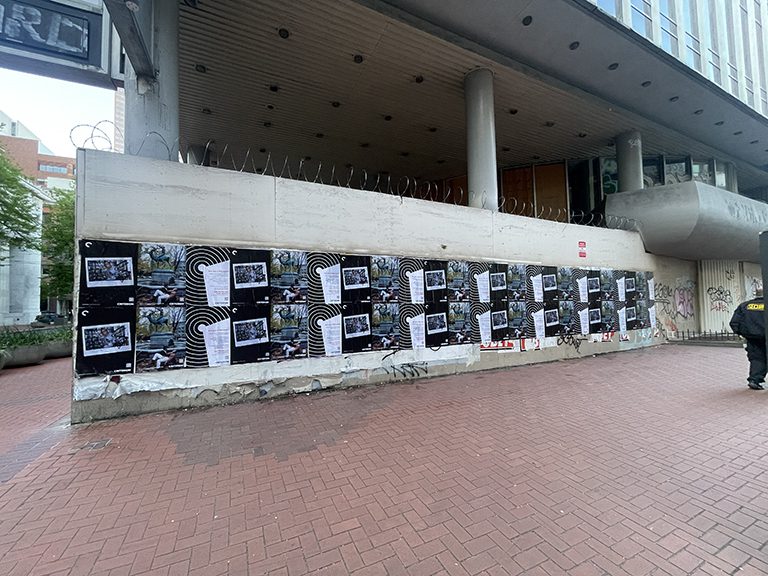
Urban postering campaigns typically use 24×36 inch sheets as the base unit. For larger visual impact, campaigns will tile multiple sheets to create a larger composite image. A two-sheet arrangement creates a 48×36 display. A four-sheet creates a 48×72 display. These tiled arrangements allow brands to create billboard-scale presence at street level using standard poster printing infrastructure.
Tiling tip: When designing a tiled multi-sheet campaign, create your master design at the final composite size and then export individual sheets from that master file. Trying to design each sheet independently almost always leads to misalignment at the seams. Design the full image first, then divide it.
How to Choose the Right Poster Size for Your Campaign
Choosing a poster size is a decision that should be driven by three questions. First, where is the poster going, and what size does that location require or accommodate? Second, who is seeing it, and from what distance? Third, what is your print budget, and how does size affect your per-unit cost?
For most outdoor advertising campaigns in urban markets, 24×36 is the answer to the first question. For indoor event and retail promotion, 18×24 or 24×36 both work well. For transit advertising, the transit authority’s spec sheet defines the answer before you even start designing.
On budget, larger sizes cost more to print, especially in large quantities. But a smaller poster in a location that demands scale is money wasted. It is better to run fewer locations with the correct size than to flood a market with posters that are too small to be noticed. Impact per location matters more than raw number of locations.
Poster Paper and Material Choices by Size
Poster size and poster material are closely linked decisions. The right paper or substrate for a 24×36 street poster is different from the right material for an 18×24 concert keepsake. Understanding the common material options helps you make decisions that match both your budget and your campaign goals.
For indoor posters, standard 80lb or 100lb gloss or matte paper is common. These substrates take ink well, hold color accurately, and produce sharp images that look professional on a wall or display surface. For concert posters intended as collectables, heavier cardstock or even specialty papers with textured finishes are used to signal premium quality.
For outdoor street posters, the material choice depends on whether the poster will be pasted to a surface or displayed in a holder. Paste-up street posters use a lightweight coated paper that bonds well to plywood, walls, and other surfaces when applied with wheat paste or commercial adhesive. These are not designed to be removed and reused. They are designed to stay on the wall for the duration of the campaign.
Transit and shelter posters often require more durable substrates because they face weather exposure, handling, and the physical stress of being installed and removed by transit crews. Heavier coated papers or synthetic substrates are common in transit contexts. Confirm material requirements with the transit authority or operator before going to print.
Weather Resistance for Outdoor Posters
If your posters are going outdoors in any format, plan for weather. Rain, humidity, sun, and wind all affect poster longevity. Standard paper posters can survive light weather exposure for several weeks if they are properly adhered to a surface. Laminated or UV-coated posters last longer. Vinyl-based substrates hold up for months in all weather conditions.
For campaigns in markets with significant rainfall or extreme temperatures, we recommend specifying weather-resistant materials even at higher cost. A poster that looks great for two weeks and then degrades looks worse than no poster at all. Material durability should match your campaign timeline.
How Poster Size Affects Campaign Budget
Print cost scales with size, but not always linearly. The 24×36 inch format tends to be the most cost-efficient for street campaigns because it fits on standard print beds and can be run in large quantities without setup penalties. Moving to larger custom sizes often introduces setup costs and slower production times that make large runs expensive.
For a street campaign, calculate your cost per location, more than your cost per poster. A 24×36 poster at $2.00 each placed in 500 locations is $1,000 in print cost. If each location requires two posters for full visual coverage, your cost doubles. If tiling three posters creates a 72×36 display, your print cost triples but your impact multiplier may be worth it.
We help clients think through these trade-offs before they go to print. The goal is always to maximize visual impact per dollar, more than to get the lowest per-unit print cost. A cheap small poster in a high-traffic location is often worse investment than a larger, more expensive poster in the same location.
Frequently Asked Questions
What is the most common poster size?
The most common poster size for general use is 18×24 inches. For street-level advertising campaigns, 24×36 inches is the most common. For movie theater one-sheets, the standard is 27×40 inches.
What size is a standard advertising poster?
A standard advertising poster used in urban marketing campaigns is typically 24×36 inches. Transit shelter posters are 48×72 inches. Subway platform posters run 68 inches wide by 24 inches tall, though this varies by transit system.
What is the average size of a poster for a concert?
Concert posters typically come in 18×24 or 24×36 inches. The 18×24 format has a long tradition in screen-printed concert poster culture. The 24×36 is more commonly used for promotional street campaigns for larger events.
What resolution should a poster be?
Posters should be designed at 300 DPI at their final print size. For very large format prints like transit shelters, 150 DPI is often acceptable because viewing distance is greater. Always confirm resolution requirements with your print vendor before submitting files.
What is the difference between a poster and a banner?
Posters are typically printed on paper and displayed flat against a surface. Banners are usually printed on vinyl or fabric and displayed hanging or stretched on a frame. Banners are used for outdoor events, trade shows, and large temporary installations. Posters are used for more permanent or semi-permanent street and indoor applications.
What poster size works best for street advertising?
For street-level advertising, 24×36 inches is the most practical and cost-effective standard format. It is large enough to command attention on a busy urban block and prints economically in large runs. For higher-impact locations, multi-sheet tiled installations using the same 24×36 sheets can create larger composite displays.
How many posters do I need for a city-wide campaign?
The number depends on the market size, campaign duration, and how densely you want to concentrate your presence. A meaningful street campaign in a single neighborhood of a major city might require 100 to 500 posters. A multi-neighborhood city campaign could require 1,000 or more to achieve real saturation and frequency.