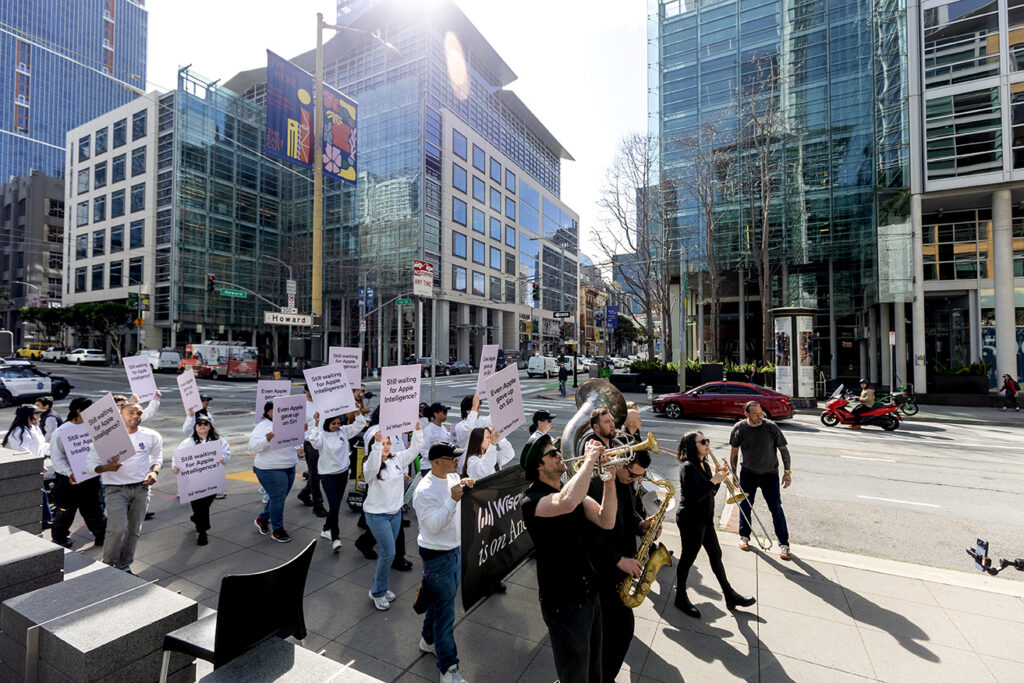
Windsor’s proximity to Detroit creates a uniquely binational convention market where brands can reach cross-border audiences through street-level campaigns that don’t require US media buying infrastructure or cross-border logistics.
Marketing strategy for brands with tight budgets requires making choices about where physical presence will generate the most commercial return. Street-level campaigns that concentrate spend in two or three high-value corridors consistently outperform campaigns that spread the same budget thin across a broad area. American Guerrilla Marketing’s location intelligence is built to identify those high-value concentrations accurately.
What makes guerrilla marketing worth understanding in depth is the gap between campaigns that generate impressions and campaigns that generate results. The best campaigns are built around audience movement patterns, not just surface availability, they place messages where the right people walk, dwell, and return repeatedly, which drives the frequency that builds real brand memory. The format also benefits from organic amplification: quality street-level work in high-visibility environments gets photographed and shared, multiplying the original media investment without additional spend.
This article covers the tactical and strategic fundamentals of guerrilla marketing, how campaigns are structured, what execution looks like in practice, how to evaluate format options against objectives and budget, and what distinguishes campaigns that move the needle from campaigns that just spend money. Whether you’re planning a first activation or optimizing an existing street-level program, the information below gives you a grounded framework for making smart decisions and getting measurable outcomes.
Why Windsor Performs for Guerrilla Marketing
Windsor rewards campaigns that stay tight. In a larger market, a weak placement strategy can be masked by sheer scale. In Windsor, weak targeting shows immediately because the audience clusters are more defined. The upside is that a smart plan can also show results faster. The University of Windsor brings substantial campus traffic into the west side of the city, St. Clair College’s main campus adds another large student base, and the downtown campus at the St. Clair College Centre for the Arts puts more than 800 students directly on the riverfront. Those are not abstract demographics. They are predictable patterns of foot traffic, transit use, nightlife movement, and social sharing.
The city also has a strong sense of local identity. Walkerville feels different from downtown. Riverside feels different from the university area. Ouellette at night behaves differently than Ouellette during lunch. That means the same campaign concept cannot simply be copied across the city without adjustment. Messaging near campus can lean into immediacy, energy, and peer visibility. Messaging downtown can be more event-driven and nightlife-oriented. Messaging near the riverfront can feel more visual, more experiential, and more shareable.
There is another reason Windsor works: repetition happens naturally. Because the market is compact and audience paths overlap, the same audience can encounter a brand in multiple contexts within a few days. A commuter sees poster creative on a weekday, notices a projection or ambassador activation on a weekend, then hears about the campaign again in a group chat. That repeated exposure is the difference between a clever stunt and an actual market impact.
Audience Density: Students, Young Professionals, and Cross-Border Attention
If a brand wants street-level attention in Windsor, the first job is understanding who is actually moving through the city. The University of Windsor is a major anchor for young adult traffic, especially along the campus edge and the Wyandotte Street West corridor. St. Clair College’s main Windsor campus is home to more than 9,000 students across more than 120 programs, and its downtown Windsor campus brings another academic audience right onto the banks of the Detroit River. That matters because it gives marketers several different student ecosystems instead of one monolithic student block.
These audiences are useful for more than youth targeting. Students in Windsor are plugged into nightlife, hospitality, apartment living, transit routes, campus events, local food spots, and social platforms that amplify physical experiences quickly. A campaign that looks dead in a static photo can still work if it lands in the right student circulation pattern. The opposite is also true: a beautiful activation in a low-energy corridor can disappear. Windsor rewards relevance over polish.
Young professionals add another layer. Walkerville, downtown restaurants, bars along Ouellette, and the riverfront all attract residents who are slightly older than the core campus crowd but still highly responsive to experiential and street-level media. For a hospitality brand, entertainment launch, beverage client, political effort, festival promotion, or retail opening, that mixed audience is ideal. It lets a campaign feel local without being trapped in a single micro-demo.
Windsor’s position across from Detroit also changes how campaigns are perceived. Brands can tap into that border-city energy without overplaying it. The skyline views from the riverfront, the international identity, and the entertainment draw all make the city feel more culturally connected than its population alone might suggest. That creates room for creative that is slightly bolder, more visual, and more urban than what some secondary markets can comfortably hold.
The Windsor Zones That Matter Most
The most important strategic decision in Windsor is not the tactic. It is the zone. A campaign should be built around a handful of corridors that align with the audience objective, then reinforced with supporting placements or activations instead of drifting all over the city.
1. University of Windsor and Wyandotte Street West
This is the obvious starting point for brands that want student visibility. The west-end campus area provides a natural mix of class traffic, off-campus housing, neighborhood retail, and bus movement. The creative that works here tends to be immediate and easy to read fast. Poster campaigns, flyer support, and ambassador activity can all perform well because the area combines repetition with social density. It is not enough to say “target students.” The smarter move is to think in terms of routines: morning coffee runs, class changes, late-night food movement, and weekend social traffic.
2. Downtown Windsor and Ouellette Avenue
Downtown is where campaigns can feel public. Ouellette Avenue gives a brand visibility in the city’s nightlife and entertainment spine, while nearby blocks connect to bars, dining, small venues, and event traffic. If the objective is broad awareness, nightlife relevance, or shareable cultural presence, downtown is usually part of the plan. The creative should feel more polished and more outward-facing here than in a campus-heavy zone. People downtown are often in motion with friends, which means big visuals and simple messages outperform copy-heavy creative.
3. Riverside Drive and the Detroit Riverfront
The riverfront is one of Windsor’s strongest visual assets. It carries walkers, leisure traffic, event traffic, and visitors moving through a more scenic version of the city. This is where projection concepts, photography-friendly installations, and premium-looking branded experiences can make sense. It is less about cluttering the environment and more about using the environment as part of the campaign. Riverside also matters because St. Clair College’s downtown campus and Centre for the Arts sit directly on the river, bringing students, arts audiences, and event-goers into the same orbit.
4. Walkerville
Walkerville gives campaigns a different tone. It has neighborhood identity, recognizable dining and bar traffic, and a more curated local feel. For brands that want credibility with young professionals, creative-class audiences, food and beverage consumers, or lifestyle-driven locals, Walkerville can outperform a generic downtown spread. The key is respecting the environment. Good campaigns here feel intentional, not sprayed everywhere.
5. Event Traffic Around the WFCU Centre and Major Venues
The WFCU Centre remains a major sports and family entertainment draw, and event-driven campaigns can use those spikes when the timing is right. The venue’s programming, from playoff hockey to basketball and touring entertainment, creates moments when audiences arrive primed for energy and group behavior. This is not an always-on zone in the same way campus or downtown is, but it is a powerful burst zone when paired with event calendars and supporting placements elsewhere in the city.
Best Campaign Formats for Windsor
Wheat Paste Poster Campaigns are often the backbone. They let a brand build rapid presence in the exact neighborhoods where attention is already concentrated. In Windsor, that means using posters to create repetition near student routes, nightlife approaches, and entertainment corridors rather than treating the tactic like random coverage. Poster campaigns work best when they are obviously intentional. One well-built cluster does more than scattered single placements ever will.
Brand ambassador programs are especially useful in Windsor because the city responds well to human energy. Ambassadors can work campus edges, nightlife queues, event entry patterns, and food-heavy corridors where static creative alone is not enough. They also help bridge awareness to action by moving people to a QR code, sample, RSVP, or direct conversation.
Projection advertising fits Windsor when the brand wants to own a moment instead of a wall. The city has enough nightlife, riverfront visibility, and event energy to support projection as a premium attention grabber, particularly when timed to weekends, entertainment programming, or launch moments. It should not be used as a gimmick. The creative needs to be bold enough to read quickly and distinct enough to feel worth documenting.
Sampling, flyer support, and street-team distribution also have a place here, especially for hospitality, beverage, entertainment, and recruitment campaigns. Windsor audiences often respond to campaigns that feel immediate and tangible. A poster says the brand exists. A well-executed hand-to-hand or sample moment says the brand showed up.
How to Shape Creative for Windsor Audiences
Creative in Windsor should be direct. The city has enough edge and enough movement to support bold work, but not so much density that brands need to overcomplicate the message. A good Windsor poster or projection should communicate in three beats: stop the eye, deliver the idea, show the next step. If the viewer has to decode the joke first, the campaign is probably too clever for the street.
Campus-facing creative can move faster and lean into social proof, urgency, launches, nightlife, music, gaming, or student identity, depending on the brand. Downtown-facing creative should feel bigger, cleaner, and more public. Walkerville work can be more refined and less shouty. Riverfront visuals should respect the environment and use it as a backdrop rather than fight it.
Brands also need to think about photographic afterlife. In Windsor, especially around the riverfront and nightlife zones, some of the campaign’s real reach comes from people snapping and reposting what they saw. That does not mean every activation needs to be a selfie trap. It means the creative should look deliberate enough that a person wants to share it without being asked. Strong typography, a single dominant image, and a clear visual hierarchy matter more than cramming in every selling point.
Finally, match the CTA to the environment. Around students and nightlife crowds, QR codes, RSVP pages, promo codes, or short-form mobile actions can work. In more passive exposure zones, the call may simply be brand recall, launch-date memory, or local recognition. Every format does not need the same ask.
Timing, Seasonality, and Event Windows
Timing can make an average Windsor campaign look smart or make a smart Windsor campaign look flat. The city has clear rhythm shifts. Academic calendars matter. Welcome periods, major campus transitions, exam relief windows, and back-to-school movement all affect how hard a student-facing program can hit. Likewise, playoff runs, concerts, festival weekends, and tourism-heavy periods can dramatically increase downtown and riverfront responsiveness.
The wrong timing mistake is spreading equal effort across dead hours and weak days. The right timing move is layering the campaign. Posters may run steadily for several weeks, while ambassadors, projection moments, or sampling bursts hit the nights or weekends when the audience is most socially active. That creates continuity without wasting budget on low-energy windows.
Weather also matters in a market like Windsor. Outdoor programs need to account for wind, rain, and temperature swings, especially if the campaign depends on field staff or evening execution. But weather planning should be operational, not fear-based. Street campaigns in Windsor do not need perfect conditions. They need smart expectations and a production approach that can hold up through the run.
Campaign Strategy & Market Considerations
The biggest strategic mistake brands make in Windsor is confusing coverage with impact. Because the city is geographically manageable, there is a temptation to hit too many zones lightly. That usually produces a campaign people sort of noticed but do not remember. A better Windsor strategy is concentration. Pick the audience, choose the top two or three movement corridors that actually matter, and build frequency there first.
For example, a student-oriented entertainment brand might focus on the University of Windsor area, Wyandotte Street West, and a downtown nightlife extension. A restaurant or beverage launch might prioritize Walkerville plus downtown weekend reinforcement. A broader civic or cultural campaign may combine downtown, the riverfront, and event-led bursts. The point is that the market plan should follow the objective, not the other way around.
Creative durability matters too. Campaigns in Windsor often work because audiences see them more than once. That means the concept cannot be disposable after a single view. It needs enough visual strength to keep reading on the third or fourth encounter. It also means production quality matters. If the materials look tired too quickly, the brand starts giving back the advantage that repetition created.
AGM treats Windsor as a city of linked micro-markets. Campus, nightlife, riverfront, neighborhood, and event traffic all connect, but they do not behave identically. Strategy comes from understanding where those overlaps help and where they blur the message. A campaign that gets this right feels local, visible, and bigger than its budget. A campaign that gets it wrong feels like random activity.
How to Measure a Windsor Campaign Properly
Street-level marketing in Windsor should be measured with the same seriousness as paid digital. The tools are just different. First, document the physical footprint. That means confirmed placements, field photography, dates, neighborhoods, and timing. Without that record, it is hard to compare response between zones or identify what actually drove lift.
Second, tie the campaign to at least one direct-response mechanism. QR codes, unique URLs, promo codes, RSVP pages, app-install pages, or geo-specific landing pages all work. Around student and nightlife audiences, low-friction mobile actions usually perform best. If the audience has to remember too much later, attribution gets muddy.
Third, read business signals by zone. Did branded search increase in Windsor during the run? Did website sessions from the target geography move? Did the venue or location see lift on the exact nights when activations ran? Did social mentions cluster around the same neighborhoods where posters or field teams were concentrated? The value is in connecting physical activity to real audience response, not in pretending one metric tells the whole story.
A solid Windsor recap should leave a client with answers, not just photos. Which zone hit hardest? Which message got documented most? Which CTA converted? Which nights delivered the best field energy? Those are the inputs that make the second campaign sharper than the first.
Frequently Asked Questions
Why is Windsor a strong market for guerrilla marketing?
Because it combines concentrated student movement, active nightlife, visible waterfront traffic, recognizable neighborhoods, and event-driven surges in a city that is compact enough for repetition to build quickly. Brands can create real presence here without having to buy an oversized footprint.
What tactics tend to work best in Windsor?
The strongest programs usually blend Wheat Paste Poster Campaigns, street teams or brand ambassadors, selective projection moments, and supporting hand-to-hand or sampling activity. The right mix depends on whether the campaign is trying to own campus energy, nightlife attention, event traffic, or a neighborhood-specific audience.
Which neighborhoods should most brands evaluate first?
Start with the University of Windsor and Wyandotte Street West corridor for student-heavy campaigns, downtown Windsor and Ouellette Avenue for nightlife and broad visibility, Walkerville for food, beverage, and lifestyle positioning, and the Riverside riverfront for scenic, event-friendly exposure.
How long should a Windsor campaign run?
Most programs benefit from at least two weeks of visible presence, and many work better across four to six weeks if the goal is recall rather than a one-night stunt. Burst activations can then be layered around event dates, campus moments, or nightlife peaks.