A trade show activation that operates only inside the official event perimeter is a campaign with a ceiling. The attendees who will visit the booth are the ones who were already inclined to visit before they arrived. The attendees who never visit are the ones who formed their floor plan in the hotel lobby and on the walk to the entrance, before any exhibitor had a chance to influence that decision.
What a Trade Show Activation Outside the Hall Actually Involves
The term “activation” is used loosely in trade show marketing. At American Guerrilla Marketing, an outside-the-hall trade show activation is a specific, planned, documented field campaign that deploys in the public spaces around the convention venue. It involves site-approval planning, staffing, creative production, route planning, field documentation, and post-campaign performance reporting. It is not a spontaneous presence; it is an executed campaign with the same rigor as any other marketing investment.
The specific tactical mix in a trade show activation depends on the convention venue geography, the target audience, the show duration, and the campaign budget. A typical multi-format trade show activation for a major show includes three to five of the following elements deployed in coordination:
LED Billboard Trucks
LED billboard trucks on the primary convention approach routes and in the hotel zone during morning arrival create the highest-visibility outdoor exposures in the convention zone. Fully documented with route logs and timestamped field photos from every deployment position.
Wheatpasted Poster Campaigns
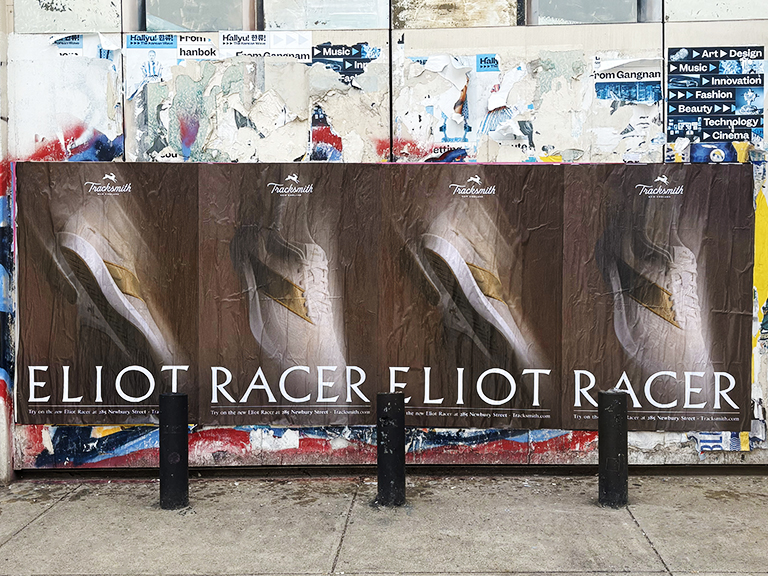
Wheatpasted poster campaigns on approved surfaces in the convention district create persistent brand presence for the full show duration. Installed the evening before opening day, documented with placement photos, and maintained through the final show day.
Sidewalk Stencils
Sidewalk stencils at the key pedestrian decision points on the convention approach routes create ground-level brand exposures that cannot be avoided on foot. Applied with water-soluble compounds, documented with installation photos, and washed away cleanly after the show ends.
Brand Ambassador Teams
Brand ambassador teams in the hotel zone during morning departure create the direct first contacts that outdoor advertising alone cannot generate. Briefed on target audience profile, qualification criteria, and call to action. Every shift produces a structured interaction log delivered to the client by end of day.
Product Sampling
For brands with physical products, sampling crews deployed at coffee queues, breakfast zones, and high-foot-traffic approach positions put the product in attendee hands before they reach the show floor. Documented with shift logs and field photos from each deployment position.
The Trade Show Activation Planning Process
We design trade show activations as integrated campaigns, not individual tactic deployments. The process starts with a briefing on the client’s objectives, target audience, booth location or off-site activation details, and campaign budget. We then develop a campaign plan that maps specific tactics to specific positions in the convention geography, sequences deployments across the show days, and allocates budget across formats based on expected impression volume and quality for each element.
The plan includes a site-approval planning schedule that identifies what site approvals are required in the host city for each tactical element and when applications need to be submitted to ensure all site approvals are in place before the show opens. It includes a production schedule for print materials, stencil templates, and any branded items used in sampling or ambassador programs. And it includes a staffing plan with briefing schedules for all field teams deployed during the show.
Execution documentation starts the day installation begins. Our field supervisors photograph every placement, log every ambassador deployment position and shift report, and submit daily field reports to the client throughout the campaign. Post-show, we compile all documentation into a post-campaign report that is the client’s complete record of what was executed and what it produced.
Trade Show Activation Campaign Examples
A technology company exhibiting at a major software industry conference in San Francisco activates in the Moscone Center district with a four-element outside-the-hall program. An LED truck runs the Howard Street and Fourth Street approach routes during morning arrival from 7:30 to 10:00 AM. A wheatpaste campaign covers three approved walls in the pedestrian zone between the main Moscone conference hotel cluster and Moscone West. Sidewalk stencils are applied at the Moscone West entrance crosswalk on Howard Street and at the pedestrian approach point from the Mission Bay hotel corridor. An ambassador team of four works the Marriott Marquis lobby during morning departure.
The combined campaign reaches an estimated 12,000 to 15,000 attendee exposures per day across all formats. Post-show booth attribution tracking shows that approximately 18% of booth visitors in a sample survey mention the outdoor campaign as a touchpoint, significantly above the baseline for shows where the client did not run an outdoor program. Qualified lead count from the show is 23% above the client’s previous year at the same show, which was run without an outside-the-hall component.
A healthcare technology company exhibiting at HIMSS in Orlando runs a three-element program at the Orange County Convention Center. Wheatpasted posters cover two walls in the hotel-to-OCCC pedestrian corridor on International Drive. Sidewalk stencils are installed at the OCCC South Concourse entrance crosswalk. An ambassador team of three works the Rosen Centre lobby during morning departure for all four show days. The ambassador program generates 340 qualified interactions over four days, with 89 direct booth visit commitments tracked in the shift logs. Post-show lead quality analysis shows that visitors who mention the outdoor program convert to qualified opportunities at a rate 34% higher than the booth’s overall visitor conversion rate.
These examples represent real campaign performance patterns that inform our planning for every new trade show activation program. The specific numbers vary by show, audience, product, and execution quality, but the directional pattern is consistent: outside-the-hall trade show activation generates measurably better booth outcomes than in-hall-only approaches.
Trade Show Activations at Major Convention Markets
We execute trade show activations at the major convention markets where the most significant industry shows are held. Our operational knowledge of each major convention market, including the venue geography, site-approval planning requirements, and local conditions that affect each tactical element, allows us to plan and execute activations efficiently in both familiar markets and new ones.
Las Vegas convention markets, including the LVCC, the Sands Expo, and Mandalay Bay, are among the most active in our portfolio. The wide commercial streets, strong outdoor advertising culture, and concentrated hotel-to-venue pedestrian corridors of Las Vegas make it one of the highest-quality outside-the-hall activation environments in any industry.
Chicago’s McCormick Place, Orlando’s Orange County Convention Center, San Francisco’s Moscone Center, New York’s Javits Center, and other major convention venues each have their own geography and site-approval planning environments that our team navigates based on direct operational experience in each market.
Trade Show Activation Creative and Messaging Strategy
The creative work across a trade show activation program must do something different from standard brand advertising. Trade show activations operate in an environment where attendees are in professional evaluation mode, processing hundreds of brand messages per day, and making rapid decisions about which brands deserve their limited floor time. The creative has to earn attention and communicate genuine value in three seconds or less.
We build trade show activation creative around a single specific claim that is directly relevant to the professional audience at that particular show. A technology show activation message speaks to a recognized workflow problem that the product solves. A manufacturing show activation message references a production challenge that the industry faces. A healthcare show activation message speaks to the clinical or operational context that the attendee lives in every day.
Generic brand awareness messages, product launch announcements with no professional context, and creative that could apply to any show for any audience perform poorly in the trade show activation environment. Specificity is the creative variable that most determines outdoor activation performance, both for the outdoor formats and for the ambassador team interactions that support them.
All creative across the activation program, including poster campaigns, stencils, LED truck displays, and ambassador handout materials, carries consistent visual identity and consistent message. An attendee who sees the LED truck, walks past the poster, and encounters the ambassador should receive the same core message from all three. Consistency across formats is what builds the cumulative recognition effect that makes the activation greater than the sum of its individual tactic parts.
Trade Show Activation Staffing and Field Management
A trade show activation is only as good as the field team executing it. Every campaign we run is staffed with field crews who are briefed specifically on the client, the audience, the message, and the documentation requirements before the first deployment day. Field supervisors are on-site for every ambassador shift and installation day, managing crew performance and handling any venue or environmental issues that arise during deployment.
Ambassador recruitment for trade show activations prioritizes individuals with genuine communication skills, professional presentation appropriate for the specific industry audience, and the ability to qualify and engage in a genuine conversation rather than simply distributing materials. A trade show activation ambassador who cannot conduct a credible professional conversation with a healthcare IT buyer or a manufacturing executive is the wrong person for the role regardless of their appearance or general friendliness.
We conduct briefings the day before each show opens or the morning of day one, covering product and market context, target audience profile, qualifying criteria, call to action, handout materials, and shift documentation process. Supervisors are available throughout each deployment day to support team members who need guidance on specific situations.
Post-Campaign Analysis and Program Improvement
Every trade show activation we run produces a post-campaign report that is the foundation for planning the next show in the client’s calendar. The report covers total activity by format and day, documented performance against plan targets, field crew observations about audience response and creative effectiveness, and any market-specific insights about the convention zone environment that should inform future planning.
Post-campaign analysis is where the institutional knowledge that makes multi-show programs increasingly effective accumulates. The second year of a trade show activation program at a specific show is better than the first because it is built on documented evidence of what worked and what did not in that specific convention zone with that specific professional audience. The third year is better than the second for the same reason.
Clients who treat trade show activations as standalone campaigns that reset entirely at each show miss the compounding improvement opportunity that comes from building on documented performance data. We design every trade show activation program with the post-show debrief and next-show planning process built in from the start, so the learning from each campaign flows directly into the next one.
Measuring Trade Show Activation ROI
We build measurement into trade show activations from the campaign planning stage. QR codes on printed materials track scans and link to unique destinations. Ambassador shift logs track contact counts and qualified interaction rates. LED truck deployments are documented with timestamped route logs that support impression count estimates. Booth teams are briefed to note when visitors mention the outdoor campaign as a touchpoint.
Post-campaign, we compile all measurement data into a performance report that gives clients the information needed to calculate cost per impression, cost per qualified contact, and the correlation between outdoor activation investment and show floor results. This data is the foundation for the next show’s activation planning and for building the business case for continued outside-the-hall investment across the client’s annual trade show calendar.
Planning Your Trade Show Activation Timeline
Trade show activation planning should begin six to twelve weeks before the show, depending on the format mix and the convention market. Multi-format programs with LED trucks, wheatpasting, stencils, and ambassador teams in major convention markets like Las Vegas, Chicago, or New York need eight to twelve weeks for site-approval planning, surface approvals, staffing, and creative production. Single-format programs in markets where we have established site-approval planning relationships can be executed in four to six weeks.
The single most common cause of trade show activation underperformance is insufficient planning lead time. Campaigns that begin planning two or three weeks before the show face site-approval planning constraints, surface availability limitations, and staffing challenges that a campaign with eight to twelve weeks of lead time does not encounter. We recommend contacting us as early as possible after confirming your show schedule, even if you are not ready to brief the campaign fully, to reserve the planning window and begin the site-approval planning process in parallel with creative development.
American Guerrilla Marketing, based in Industry City, Brooklyn, has executed trade show activations at major convention markets across the country. Our operational knowledge of each market’s site-approval planning environment, venue relationships, and convention zone geography is part of what every campaign benefits from, regardless of whether the show is in a market we have worked in before or a new one for our team.
What is a trade show activation?
A trade show activation is a brand campaign executed in and around the convention zone during a trade show, typically outside the official event perimeter. It includes outdoor advertising, brand ambassador programs, product sampling, and any branded presence that reaches the trade show audience in the public spaces surrounding the official event.
What makes outside-the-hall trade show activations effective?
Outside-the-hall activations reach attendees before they reach the show floor, during the decision-making window when booth visit plans are forming. The convention zone outside the official event is largely uncontested advertising territory, meaning a brand that activates there reaches the full attendee population with very little competition for attention.
What formats does AGM deploy for trade show activations?
LED billboard trucks on convention approach routes, wheatpasted poster campaigns in the convention district, sidewalk stencils at venue entrances, brand ambassador teams in the hotel zone, product sampling at high-traffic locations, and projection advertising on convention center buildings in the evening hours.
How are trade show activations documented?
Every format is documented with field photos, shift logs, and post-campaign performance reports. Stencil and poster installations are photographed before and after installation. Ambassador shifts produce structured interaction logs. LED truck deployments produce timestamped route documentation. The full documentation package is delivered to the client after the campaign.
How early should trade show activations be planned?
Six to twelve weeks before the show depending on format mix and city. Multi-format programs in major convention markets require eight to twelve weeks for site-approval planning, staffing, and production. Contact our team to discuss the timeline for a specific show.
Can trade show activations work for non-exhibiting brands?
Yes. Non-exhibiting brands can run full outside-the-hall activation programs in the public convention zone. The call to action shifts from a booth number to a meeting scheduling link or digital destination, but the outdoor tactics are the same and equally effective for reaching the trade show audience.
How do trade show activations integrate with booth campaigns?
Activations create pre-floor brand recognition that makes every in-booth encounter more productive. Attendees who have seen the outdoor campaign arrive at the booth with existing brand awareness, which increases dwell time, conversation quality, and lead conversion rates compared to cold walk-bys who have no prior brand exposure.
Trade Show Activation and the Outside-the-Hall Marketing ROI Question
The ROI question for trade show activations is one that every client reasonably asks. The answer requires tracking the connection between outside-the-hall campaign activities and show floor outcomes, which takes deliberate measurement design from the start. Without source attribution at the booth, the connection between the outdoor campaign and the booth results cannot be established. With it, the case for outside-the-hall trade show marketing builds with every show.
The most direct source attribution method for trade show activations is a unique QR code on all outdoor campaign materials that links to a distinct landing page or a unique booth visit scheduler URL. When that QR code generates scans, the count is directly attributable to the outdoor campaign. When booth visitors are asked how they heard about the brand at the show and mention the outdoor campaign or the ambassador interaction, those mentions are traceable first contacts.
Over multiple shows with consistent source attribution tracking, a performance dataset accumulates that answers the ROI question with specific numbers rather than general exposures. The brands that invest in this measurement discipline from their first outside-the-hall trade show activation program build a compounding evidence base for the format that makes each subsequent investment decision easier to make and easier to justify internally.
The Outside-the-Hall Trade Show Activation Commitment
A trade show activation outside the hall is a commitment to marketing before the marketing starts. It requires planning investment, site-approval planning lead time, creative production, and field crew management on top of the in-booth investment that every exhibitor already makes. For some brands, this additional complexity is a barrier. For brands that make the commitment, the results are consistent: better booth traffic quality, more intentional booth visitors, and higher qualified lead counts than in-hall-only programs produce.
The pattern holds across show types, audience profiles, and campaign budgets. The underlying dynamic is simple: attendees who have been pre-sold on visiting a booth through multiple convention zone touchpoints before they reach the show floor behave differently than attendees who first encounter the brand on the floor. They spend more time in the booth, engage more readily in product conversations, and convert to qualified leads at higher rates. Every outside-the-hall trade show activation program we have run confirms this pattern.
Campaign Architect – American Guerrilla Marketing
Frequently Asked Questions
What is a trade show activation?
A trade show activation is a brand campaign executed in and around the convention zone during a trade show, typically outside the official event perimeter. It includes outdoor advertising, brand ambassador programs, product sampling, and any branded presence that reaches the trade show audience in the public spaces surrounding the official event.
What makes outside-the-hall trade show activations effective?
Outside-the-hall activations reach attendees before they reach the show floor, during the decision-making window when booth visit plans are forming. The convention zone outside the official event is largely uncontested advertising territory, meaning a brand that activates there reaches the full attendee population with very little competition for attention.
What formats does AGM deploy for trade show activations?
LED billboard trucks on convention approach routes, wheatpasted poster campaigns in the convention district, sidewalk stencils at venue entrances, brand ambassador teams in the hotel zone, product sampling at high-traffic locations, and projection advertising on convention center buildings in the evening hours.
How are trade show activations documented?
Every format is documented with field photos, shift logs, and post-campaign performance reports. Stencil and poster installations are photographed before and after installation. Ambassador shifts produce structured interaction logs. LED truck deployments produce timestamped route documentation. The full documentation package is delivered to the client after the campaign.
How early should trade show activations be planned?
Six to twelve weeks before the show depending on format mix and city. Multi-format programs in major convention markets require eight to twelve weeks for site-approval planning, staffing, and production. Contact our team to discuss the timeline for a specific show.
Can trade show activations work for non-exhibiting brands?
Yes. Non-exhibiting brands can run full outside-the-hall activation programs in the public convention zone. The call to action shifts from a booth number to a meeting scheduling link or digital destination, but the outdoor tactics are the same and equally effective for reaching the trade show audience.
How do trade show activations integrate with booth campaigns?
Activations create pre-floor brand recognition that makes every in-booth encounter more productive. Attendees who have seen the outdoor campaign arrive at the booth with existing brand awareness, which increases dwell time, conversation quality, and lead conversion rates compared to cold walk-bys who have no prior brand exposure.