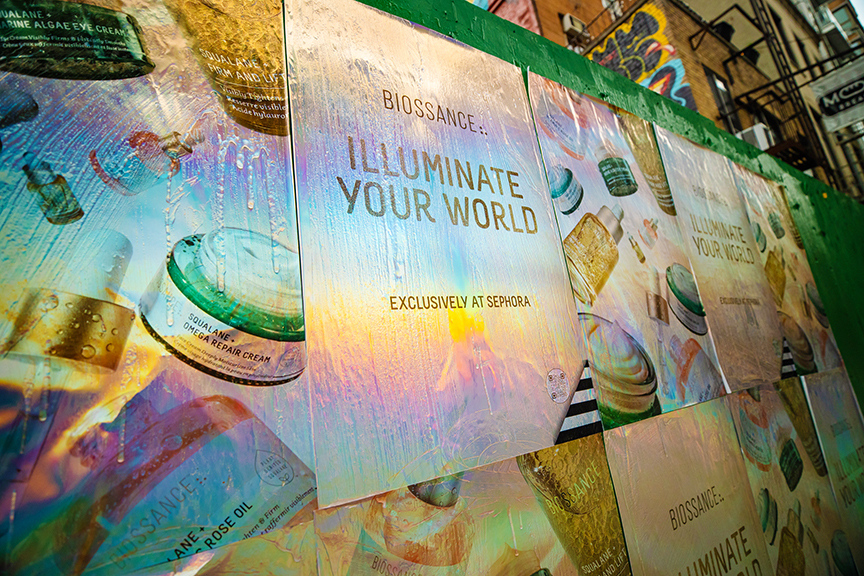
Street poster campaigns still work in 2025, but the way they work has changed. The old idea that you can cover random walls, use vague art, and call it a day is not serious strategy. Posting works now when it is planned like a real local media system. That means the wall choice matters, the route logic matters, the campaign window matters, the creative needs to read fast, and the placements have to connect to the audience’s actual path through the city.
This article is for brands, labels, agencies, event promoters, filmmakers, consumer startups, and local operators that want to use street poster advertising as a real visibility tool instead of a nostalgia prop. The short answer is that poster campaigns are still strong because they create repeated street-level impressions in places where people already move with attention. What has changed is the standard. Weak posting disappears into the background. Strong posting creates neighborhood ownership.
At AGM, we think of posting as visual territory. A good campaign should feel like it belongs to a route, not just a wall. That is what makes it memorable.
Why Posting Still Matters in 2025
People still look around. They still walk to shows, bars, campuses, retail blocks, sporting events, and late-night food. They still notice repetition in the same corridor. They still photograph work that looks sharp and timely. That is why poster campaigns remain useful even in a media world packed with screens.
Posting also solves a problem that digital alone does not solve very well. It gives a brand physical presence. A feed impression can vanish instantly. A poster campaign can make it feel like the city is talking about the launch before a person ever taps a screen. That matters for entertainment, nightlife, retail, fashion, event culture, and fast-moving launches where social proof and environmental repetition help the audience believe the thing is already happening.
It also matters because posters are flexible. They can support a national campaign in a local market, a citywide event push, a district-level takeover, a campus push, a tour stop, or a niche audience launch. The same medium serves different goals when the map and the creative are aligned.
What Changed About Poster Campaigns
The biggest change is that audiences are better at filtering out generic creative. The second change is that many cities have become more visually crowded, which means bad wall choice wastes money faster than it used to. The third change is that clients now expect the poster campaign to do more than exist. They want documentation, rollout logic, route strategy, and a reason each zone was chosen.
That is healthy. It forces the work to improve. In 2025, the strongest posting campaigns are not built around volume alone. They are built around route ownership, neighborhood fit, timing, and visual clarity.
How to Think About Posting by City, Not by Fantasy
Location-specific planning is the whole game. A poster route in Lower Manhattan should not look like a route in Silver Lake, Wicker Park, Wynwood, or Williamsburg. The city changes the wall type, the walk speed, the amount of visual competition, the density of nightlife, and the kind of audience that actually notices the work.
In dense entertainment districts, posters can be more aggressive because the environment is already loud. In cleaner retail zones, they often need stronger design restraint. In campus or music corridors, frequency and cluster logic matter more than individual hero placements. In commuter zones, simple typography and direct value carry more weight because the glance is shorter.
That is why we start with a route, not a mood board. We want to know where the audience begins the night, where they pause, where they queue, where they transfer, where they end the evening, and what walls hold attention in those moments.
The Wall Selection Standard That Separates Good Campaigns from Bad Ones
Wall selection is not just about legality or availability. It is about whether the surface can hold the campaign visually. A strong poster wall has line of sight, real pedestrian relevance, a surrounding context that supports the audience fit, and enough visibility that repeat passes actually happen. A weak wall may be technically available but worthless because people do not meaningfully look there.
We also look at what else is happening on the wall. If a location is already overloaded with competing visuals, your poster may vanish. If the surface is too broken, too hidden, too low-light, or too disconnected from the walking route, it can underperform even with good art. Good wall selection is less glamorous than creative, but it drives the result.
Creative Rules for Posting in 2025
The best poster creative in 2025 is cleaner than many clients think. Too much information kills the read. The strongest campaigns usually have one dominant headline or one unmistakable visual, a short secondary point if needed, and a simple action. If someone needs ten seconds to understand the poster, the route is probably too fast for the design.
Typography matters. Contrast matters. Scale matters. White space matters. And message discipline matters most of all. The viewer should understand the point while still walking.
QR codes can help if the route allows pause behavior, especially around lineup zones, nightlife corridors, campus paths, and event build-up windows. They should not be treated as the whole strategy. If the poster is weak, the code will not save it.
What Posting Works Best For Right Now
Poster campaigns are especially useful for concert and nightlife promotion, product and app launches, fashion drops, film and streaming titles, restaurants and bars opening in a district, cause-based pushes, and event attendance campaigns. They are also useful for brand campaigns that want local cool without pretending to be something they are not.
They can work for broader consumer brands too, but the creative and district choice have to be sharper. If the brand voice is too corporate, the poster may feel imported. When a bigger brand wants street credibility, the campaign has to earn it through tone, visual discipline, and local relevance.
How We Build a Poster Campaign Route
AGM generally starts with one of three route models. The first is a destination route, where posters build anticipation toward a venue, store, or activation. The second is a neighborhood domination route, where the audience spends time in one compact district and repetition is the main objective. The third is a multi-node route, where the brand wants visibility across a few connected neighborhoods rather than a single cluster.
Each route model needs different pacing. A destination route benefits from directional logic and escalating frequency. A domination route benefits from dense clustering. A multi-node route benefits from local adaptation so the work does not feel copy-pasted from one neighborhood to another.
Why Timing Changes the Outcome
A poster campaign tied to the wrong window can miss the whole point. Event posters need enough runway to build recognition, but not so much that the city forgets the date before it arrives. Product launches need overlap with the real purchase moment. Entertainment campaigns need the city conversation to peak near the release or show date. Seasonal campaigns have to respect weather, daylight, and local movement patterns.
Timing is also neighborhood-specific. Some districts wake up during lunch. Others matter at 11 p.m. Some are strongest on Thursdays and Fridays. Others live on weekends. The route should reflect that rather than pretending every poster works 24 hours the same way.
What Brands Get Wrong About Posting
The most common mistake is using posters when the brand message is too broad. If the campaign cannot be boiled down to a fast street read, the medium is probably wrong. The second mistake is buying too much weak inventory instead of enough strong inventory. The third is designing a poster like a digital ad. Street posters need more confidence and less clutter.
Another mistake is talking about posting like it is automatically rebellious. It is just a format. What makes it good is route logic, local fit, and strong creative. The audience can tell the difference between a campaign that feels placed with intent and one that feels lazy.
Street Poster Campaigns Need Companion Thinking
Even when posters are the lead format, the broader campaign should still make sense around them. Street teams can convert attention into action. Social capture can extend the best walls into the feed. Event signage can close the loop. A venue or store can echo the same creative language so the route feels connected. A poster campaign works better when the audience sees the same idea in more than one touchpoint.
This is also where internal content planning helps. If the campaign is pushing a local launch, the landing page, event page, or supporting blog content should carry the same tone and message. The street work should feel like the front edge of a larger rollout.
Do Not Make Up Posting Prices
Poster campaign pricing depends on city, quantity, production specs, placement density, timing, install labor, documentation, and whether the work is standalone or part of a wider rollout. If a scope is not covered by an official AGM rate already approved internally, contact AGM for a quote. That keeps the work accurate and keeps clients from planning off bad numbers.
What Good Posting Looks Like in 2025
Good posting in 2025 looks focused. It feels local. It owns a path instead of scattering itself randomly. It uses creative that reads in motion. It respects the district. It builds enough repetition for memory. And it supports a real campaign objective instead of just trying to look cool in a case study.
That is the art of posting now. Not noise. Not nostalgia. Placement with intent.
How Documentation and Reporting Improve the Next Route
One overlooked part of posting strategy is what happens after the install. Good documentation is not just proof that the posters went up. It becomes planning data for the next campaign. You can see which wall types photograph best, which corridors felt strongest, how the visual language held up against the surrounding street, and where additional density would have helped.
That matters for repeat advertisers, tour campaigns, franchise launches, and brands working across multiple neighborhoods. Once the team knows what kinds of walls, districts, and route sequences produced the strongest street presence, the next campaign gets sharper. The goal is not just to finish the install. The goal is to keep learning from the market.
How Posting Fits Into a Bigger 2025 Campaign Stack
Posters often work best as the opening layer of a broader local push. They can establish the visual idea in the street, while social content, field teams, event signage, or retail activity carry that idea into action. This is especially useful when the campaign needs to create inevitability, the feeling that the launch is already in motion and already part of the city conversation.
For example, a poster route can lead into a store opening weekend, a release event, a pop-up, or a concert date. The posters create environmental pressure. The event or activation gives the audience a place to act on what they saw. When those parts line up, the posting campaign feels less like advertising and more like city presence.
What Route Strategy Looks Like Across Different Neighborhood Types
In a nightlife district, the route often benefits from tight clustering near bars, music venues, and late-night food paths because people are moving slower and repeating the same blocks. In a shopping district, the route may need cleaner spacing so the posters feel visible without blending into every storefront message. In a campus zone, the route often works best around repeat daily paths rather than one-off hero walls. In a commuter-heavy district, fewer words and stronger contrast usually matter more than artistic detail.
Those differences sound obvious, but a lot of weak campaigns ignore them. They place the same poster the same way everywhere and then wonder why only some walls felt strong. Good route planning adapts to the neighborhood type. That is how a posting campaign starts to feel local instead of generic.
How Brands Should Review a Poster Draft Before It Goes Up
Before production, we like to ask a few simple questions. Can the headline be understood while walking. Does the image still carry from a distance. Is there one clear action. Does the design still feel sharp when printed at street scale. Would this poster make sense in the specific district where it is going, or does it feel like art without a job. If the answers are unclear, the draft is not ready yet.
That review process keeps the campaign honest. It also protects the client from paying for route coverage with art that never had a fair chance to work in the field.
Why Posting Still Belongs in the 2025 Local Mix
Posters remain useful because they make a launch visible in the same world where people choose where to go, what to attend, and what feels active in their city. That physical presence still matters. When the route is smart and the creative is direct, posting can help a campaign feel established before the audience ever clicks a link.
Frequently Asked Questions About Street Poster Campaigns
Do poster campaigns still work in 2025?
Yes. They still work well for events, nightlife, fashion, entertainment, retail launches, and local brand visibility when the route and the creative are strong. Weak posting fades fast. Good posting still gets seen and remembered.
What makes a poster campaign location-specific?
Neighborhood choice, wall type, walk speed, nightlife behavior, event timing, and audience fit all change by market and district. A route should be planned around those local conditions rather than copied from another city.
How many words should a street poster use?
Usually very few. The exact count depends on the route speed and the design, but short wins. Most effective posters communicate the point in one glance.
Should poster campaigns include QR codes?
Sometimes. They can help when the route supports stopping or queuing, but they are not a substitute for a strong poster. The base creative still has to work without the scan.
Are posters better than digital ads for local launches?
They do a different job. Digital can target and retarget. Posters give the launch physical presence in the real world. The best local campaigns often use both together.
What industries fit posting best?
Music, nightlife, fashion, food and beverage, entertainment, events, arts, app launches, and district-level retail are usually strong fits. Broader brands can use posting too if the creative and neighborhood choice feel right.
Does AGM plan routes as well as creative direction?
Yes. AGM can help shape the route logic, neighborhood strategy, creative fit, and overall campaign structure so the posting effort works like media, not decoration.
Related Pages and Articles