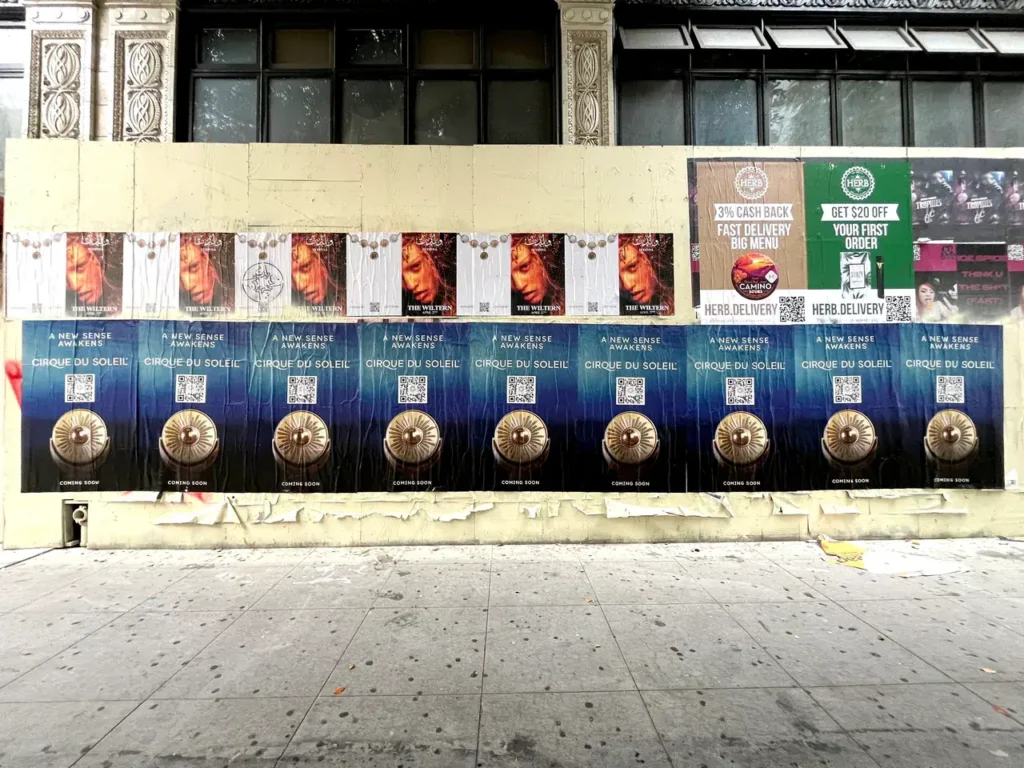
Chicago is the third-largest city in the United States and the dominant commercial and cultural hub of the Midwest. With nearly 2.7 million residents in the city proper and over 9.5 million in the Greater Chicago Metro area, it is one of the highest-density advertising markets in the country. Chicago’s nickname as the “City of Neighborhoods” reflects its genuine cultural geography: each of its 77 official neighborhoods has a distinct identity, demographic composition, and commercial character that shapes how street advertising performs within it.
For brands that want physical street presence in the Midwest, Chicago is the anchor market. A street advertising campaign that achieves visibility in the right Chicago neighborhoods reaches a consumer base that is culturally influential, economically significant, and diverse in ways that give national brands access to multiple distinct audience segments within a single city.
American Guerrilla Marketing executes street advertising campaigns in Chicago for brands that need real market presence backed by documented performance. We know Chicago’s neighborhood landscape, maintain working relationships with property owners across the city’s key campaign corridors, and deliver campaigns with GPS-verified documentation from installation through completion. This guide covers the strategy and execution of effective street advertising in Chicago.
Chicago’s Neighborhood Geography and Campaign Strategy
Chicago’s sprawling geography requires a deliberate neighborhood selection strategy. Unlike Manhattan, where walking distance covers most of the borough’s key commercial corridors, Chicago’s neighborhoods are spread across a large footprint with distinct transportation patterns and audience concentrations. Campaign location selection determines which audience segments you reach and how efficiently you reach them.
Wicker Park and Bucktown: The Creative Hub of the North Side
Wicker Park and adjacent Bucktown form Chicago’s most vibrant creative neighborhood cluster. The Milwaukee-Damen-North six-corners intersection is one of the most pedestrian-active street corners in the city. The neighborhood’s concentration of independent retail, music venues, galleries, restaurants, and the young creative professional demographic makes it the highest-priority market for lifestyle, music, fashion, and culture brands running Chicago campaigns.
Street advertising in Wicker Park and Bucktown reaches an audience that is disproportionately influential in Chicago’s consumer culture. What is noticed and talked about in Wicker Park spreads to the rest of the city. Poster placements on the neighborhood’s building walls and construction barriers command attention in a visual environment that has historically been receptive to creative, well-executed street campaigns.
Logan Square: Arts Community and Rapid Growth
Logan Square, anchored by the Logan Square Boulevards and the Blue Line train, is one of Chicago’s fastest-growing neighborhoods. Its transformation from a working-class community to one of the city’s most desirable residential areas has brought a dense concentration of artists, musicians, young professionals, and creative businesses. Milwaukee Avenue through Logan Square is one of the city’s strongest retail and foot traffic corridors outside the downtown core.
The neighborhood’s active arts scene and strong community engagement make it receptive to street advertising that demonstrates genuine creative investment. A well-designed, large-format poster in Logan Square receives attention from an audience that values craft and originality.
Pilsen: Cultural Authenticity and Community Access
Pilsen, Chicago’s largest Mexican-American neighborhood on the Lower West Side, is home to one of the most active street mural cultures in the Midwest. The neighborhood’s walls tell the story of its community through decades of public art. 18th Street, the main commercial corridor, connects a dense residential community with active retail, restaurants, art galleries, and the National Museum of Mexican Art.
For brands that want authentic engagement with Chicago’s Latino community, Pilsen is the primary market. Street advertising here requires cultural sensitivity and creative execution that respects and reflects the neighborhood’s identity. When done correctly, a campaign in Pilsen reaches a loyal, community-oriented consumer base and demonstrates brand respect for the neighborhood’s culture.
The West Loop and Fulton Market: Business and Dining
The West Loop and Fulton Market District have transformed into Chicago’s most upscale dining and commercial destination. Restaurant Row on Randolph Street, now called the Randolph Street Market District, concentrates some of the highest-profile restaurants in the city. Fulton Market, once Chicago’s meatpacking district, now houses major tech company offices, boutique hotels, and luxury residential buildings.
The daytime professional population in this area is substantial, and the evening dinner crowd that descends on Restaurant Row represents high-income consumers in a celebratory context. Street advertising placements in the West Loop and Fulton Market area reach this premium demographic in its most relevant environment.
Hyde Park: University Community on the South Side
Hyde Park, home of the University of Chicago, is the anchor of the South Side’s cultural and intellectual community. The neighborhood’s diverse, educated, and socially engaged population makes it a strong market for brands in education, publishing, arts, and social enterprise categories. 53rd Street and the Harper Court development are the primary commercial corridors for street advertising in the neighborhood.
Street Advertising Formats for Chicago Campaigns
Chicago’s dense urban environment and active outdoor culture support multiple street advertising formats that reach audiences in different contexts and at different frequency levels.
Large-Format Poster Campaigns
Chicago’s building stock, particularly in older neighborhoods like Wicker Park, Logan Square, and Pilsen, includes large masonry walls and construction-era brick buildings that provide excellent surfaces for large-format poster campaigns. Our team identifies and secures the best surface inventory in each target neighborhood and coordinates professional installation with full GPS documentation.
Transit-Adjacent Placements
Chicago’s L train system creates predictable high-traffic corridors around every station. The streets surrounding L stops in target neighborhoods see consistent daily pedestrian volumes from commuters entering and exiting the system. Street advertising placements within two blocks of key L stops in Wicker Park, Logan Square, and other target neighborhoods reach residents and commuters at consistent daily intervals, building brand frequency over the campaign window.
Sidewalk Stencil Campaigns
Our sidewalk stencil programs work well in Chicago’s walkable neighborhoods where pedestrian traffic is high and pavement surfaces are conducive to stencil applications. Directional stencils that lead audiences from transit exits toward campaign destinations, brand logos, and calls to action deployed in approach corridors to venues and events all drive awareness at the pedestrian level.
Mobile LED Billboard Deployments
Our LED billboard truck deployments in Chicago can target specific neighborhoods and time windows to reach maximum audience concentrations. Routing trucks through the West Loop during dinner service, through Wrigleyville during Cubs home games, or through the Near North Side during peak evening hours creates concentrated impression delivery to high-value audience segments.
Brand Ambassador Programs
Chicago’s active event calendar and street culture create strong opportunities for brand ambassador programs that engage consumers directly. Street teams deployed at Lollapalooza, the Chicago Air and Water Show, Chicago Marathon, neighborhood festivals, and farmers markets reach large, concentrated audiences in high-engagement contexts.
Chicago’s Regulatory Environment for Street Advertising
Chicago has a well-developed regulatory framework governing outdoor advertising that requires careful navigation for any legal street campaign.
The City of Chicago’s Outdoor Advertising Ordinances
Chicago’s Municipal Code includes specific provisions governing signage, outdoor advertising, and the use of public and private property for advertising purposes. Legitimate street advertising campaigns require documented property owner consent for every installation location. The city’s Buildings Department and Streets and Sanitation Department have enforcement authority over advertising that violates signage ordinances.
Our team maintains a network of property owners across Chicago’s key campaign neighborhoods who have agreed to hosting commercial advertising. We handle all permission documentation before any installation begins and maintain communication with property contacts throughout the campaign window. This infrastructure is what makes it possible to run legal, full-duration campaigns in Chicago that do not get removed mid-flight.
Planning Your Chicago Street Advertising Campaign
Chicago campaigns require neighborhood selection based on brand-audience alignment, season-appropriate material specifications, and clear integration with any parallel marketing activities.
Season Planning and Weather Considerations
Chicago’s winters are severe by national standards. Campaigns running November through March require weather-durable print materials and paste formulations that adhere in cold, wet conditions. Spring and fall are the optimal outdoor campaign seasons. Summer generates high foot traffic and outdoor activity that supports all street advertising formats.
Multi-Neighborhood Campaign Coordination
Many Chicago campaigns cover multiple neighborhoods simultaneously to reach different audience segments within the city. A campaign that runs poster placements in Wicker Park, Logan Square, and Pilsen in the same two-week window reaches the creative professional demographic, the arts community, and the Latino community through a single coordinated deployment. Our team manages multi-neighborhood Chicago campaigns with unified briefing, installation scheduling, and documentation across all locations.
Chicago Street Advertising for Specific Industries
Chicago’s economic diversity, cultural depth, and demographic range make it relevant for a broad range of brand categories. Each category finds its optimal neighborhood strategy based on audience concentration and neighborhood cultural fit.
Consumer Goods and CPG Brands
Chicago is one of the most important test markets in the country for consumer packaged goods because its demographic composition closely mirrors the national consumer profile. CPG brands frequently use Chicago campaigns to assess market reception before national rollouts. Wicker Park, Logan Square, and Lincoln Park are strong targets for brands reaching young professional consumers. Pilsen and Little Village are essential for campaigns targeting Hispanic consumers. Hyde Park and South Shore reach the South Side’s Black professional and family demographic.
Music and Entertainment
Chicago has one of the richest music cultures in the country, from its foundational contribution to blues and jazz to its current status as a center for electronic music, hip-hop, and independent rock. Lollapalooza, held annually in Grant Park, is one of the largest music festivals in the country. Street advertising campaigns in Wicker Park, Logan Square, and the areas surrounding major music venues during event windows reach Chicago’s music-engaged consumer base at peak concentration.
Sports and Athletics
Chicago is a sports city of the highest order, with passionate fanbases for the Cubs, White Sox, Bears, Bulls, and Blackhawks. Game-day street advertising deployments near Wrigley Field in Wrigleyville, United Center in the Near West Side, and Guaranteed Rate Field on the South Side reach concentrated sport-specific audiences in their most engaged moments. Brands in sports apparel, beverages, and athleisure find strong receptivity in these event-adjacent markets.
Healthcare and Professional Services
Chicago is home to one of the largest concentrations of hospitals, medical schools, and healthcare companies in the Midwest. The medical corridor along Chicago’s Near North Side and the professional services concentration in the Loop create a large professional audience for B2B brands in healthcare technology, financial services, legal services, and professional development. Street advertising near major hospital campuses like Northwestern Memorial and Rush University Medical Center reaches a high-income professional demographic in their daily commute corridors.
Chicago’s Transit Network as a Campaign Amplifier
Chicago’s L train system, one of the most extensive urban rail networks in the United States, creates a predictable geography of high-traffic pedestrian corridors that street advertisers can leverage systematically. Every L stop generates consistent pedestrian traffic during morning and evening rush hours and throughout the day in commercial areas. The stations in target neighborhoods are the natural starting points for location planning because they anchor the foot traffic patterns around which the rest of the neighborhood’s pedestrian activity organizes.
In Wicker Park and Bucktown, the Damen Blue Line stop anchors the six-corners intersection where the neighborhood’s highest foot traffic concentrates. In Logan Square, the Logan Square Blue Line stop puts commuters onto Milwaukee Avenue, the primary retail and restaurant corridor. In Pilsen, the 18th Street Pink Line stop connects commuters directly to the neighborhood’s main commercial street. In the West Loop, the Morgan Green/Pink Line stop, opened in 2012, has anchored the neighborhood’s restaurant and bar development.
Street advertising placements within two blocks of key L stops in target neighborhoods benefit from two distinct audience types: the commuter audience that passes these locations multiple times per weekday, building frequency with the same message over the campaign duration, and the destination visitor audience that arrives at these stops specifically to visit the neighborhood’s restaurants, bars, and retailers. Both audiences have value, but the commuter frequency dynamic is what builds brand recognition over a multi-week campaign window in a way that single-exposure placements cannot replicate.
We map our Chicago campaign location plans against the L transit network to ensure that high-priority placements are within walking distance of the transit stops that serve each target neighborhood’s primary audience entry and exit points. This transit-aware location planning is a systematic advantage that optimizes impression delivery per placement location.
Integrating Chicago Street Advertising with the Midwest Market
Chicago’s position as the Midwest’s anchor city gives campaigns run here a visibility and credibility that extends beyond the city’s borders. Chicago is the cultural and commercial reference point for consumers across the entire Midwest region. A brand that establishes strong street presence in Chicago’s key neighborhoods signals regional presence to the broader Midwest consumer market in a way that campaigns in smaller regional cities cannot replicate.
For brands planning Midwest market expansion, Chicago is the logical starting point. A well-executed Chicago street advertising campaign establishes credibility in the region’s most important market and generates documentation that demonstrates regional market investment to retail partners, distributors, and media stakeholders across the Midwest.
Our Chicago Campaign Process
We have been executing street advertising campaigns in Chicago long enough to know which neighborhoods work for which brand categories, which property owners are reliable partners, and what the city’s enforcement environment looks like in each district. That institutional knowledge makes our Chicago campaigns more efficient and more durable than campaigns managed without it.
Every Chicago campaign starts with a clear brief, progresses through location scouting and permission documentation, and delivers a final campaign report with GPS-verified photos from every installation location. For brands that want to extend their Chicago campaign with supporting tactics, we coordinate sidewalk stencil programs, brand ambassador activations, and mobile billboard deployments as components of an integrated Chicago campaign strategy. Call (646) 776-2770 to start the conversation.
Chicago’s long history as a center of American advertising, architecture, and visual culture means that its audiences bring sophisticated expectations to everything they encounter in their built environment. A street campaign that meets that sophistication, that is genuinely well-designed, well-placed, and meaningfully connected to the neighborhood where it appears, earns the city’s respect in a way that generic advertising never can. Our team understands Chicago’s neighborhoods well enough to help brands make creative and location decisions that connect authentically to each neighborhood’s specific character, and that connection is what makes Chicago campaigns last in the memory of the people who encounter them.
Frequently Asked Questions About Street Advertising in Chicago
What are the best neighborhoods in Chicago for street advertising?
Wicker Park, Bucktown, Logan Square, Pilsen, the West Loop, Wrigleyville, and Hyde Park are among Chicago’s strongest neighborhoods for street advertising campaigns. Each neighborhood has distinct audience demographics and foot traffic patterns suited to different brand categories.
Is street advertising legal in Chicago?
Street advertising is legal in Chicago when conducted on private property with documented owner consent and in compliance with the City of Chicago’s Municipal Code provisions on outdoor advertising. Chicago has an active code enforcement posture, making property permissions and regulatory compliance essential.
What types of street advertising work in Chicago’s climate?
Chicago’s harsh winters require weather-durable print materials for outdoor campaigns. Spring through fall is the strongest window for poster campaigns and sidewalk stencils. Year-round formats like mobile LED billboard trucks and indoor venue-adjacent placements work regardless of season.
How does transit-adjacent advertising work in Chicago?
Chicago’s L train system creates high-foot-traffic corridors around every elevated train stop. Street advertising placements near L stops in target neighborhoods reach commuters and residents at consistent daily intervals, creating high-frequency impression delivery that builds brand recognition over a campaign window.
Does American Guerrilla Marketing operate in Chicago?
Yes. American Guerrilla Marketing executes street advertising campaigns across Chicago’s neighborhoods including poster campaigns, sidewalk stencils, brand ambassador programs, and mobile billboard deployments. We handle full campaign logistics including location scouting, permissions, and GPS-verified documentation.
What is the best season for street advertising in Chicago?
Spring (April-June) and fall (September-October) are the strongest seasons for outdoor street advertising in Chicago. Summer generates high foot traffic and outdoor activity. Winter campaigns require weather-resistant materials and benefit from proximity to enclosed venues and heated pedestrian zones.
Frequently Asked Questions
What is street advertising chicago il?
American Guerrilla Marketing provides street advertising chicago il services across 50+ U.S. markets. Every campaign is planned, scouted, executed, and GPS-documented by our field teams. We work with regional brands and Fortune 500 companies on campaigns that require real street-level execution and documented proof of performance.
How does AGM approach chicago il?
Our process starts with a market consultation to understand your goals, target audience, and budget. We then scout locations, handle any required permissions or permits, coordinate production and installation with our local crews, and provide a full GPS-tagged photo report after the campaign runs.
What markets does American Guerrilla Marketing cover for chicago il?
We operate in 50+ U.S. markets including New York, Los Angeles, Chicago, Miami, Houston, Atlanta, Seattle, Denver, Boston, and dozens of secondary markets. Contact us to confirm availability and pricing for your specific market.
How much does a chicago il campaign cost?
Campaign pricing depends on market, format, quantity, and duration. We work with budgets ranging from targeted single-market runs to national rollouts across multiple cities. Use our RFP Builder or contact us directly for a custom quote based on your specific campaign requirements.
How do I get started with chicago il through AGM?
The fastest way to get started is to submit your campaign details through our RFP Builder at americanguerrillamarketing.com, or contact us directly at [email protected] or (646) 776-2770. Our team typically responds within one business day with availability and initial pricing.