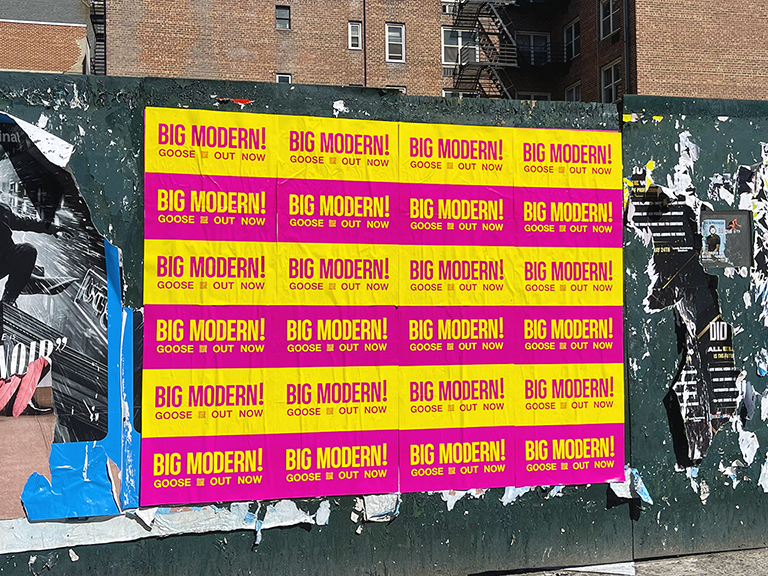
Choosing a poster size is not a trivial decision. It affects how much your campaign costs, how far away your message can be read, where your poster can physically be placed, and whether your audience stops to look or walks right past. We have been making this decision for clients in New York, Los Angeles, Chicago, Miami, and across the United States for years. We have strong opinions about what works, and this guide shares all of them.
The core answer: the two most important poster sizes in the U.S. are 18×24 inches for indoor campaigns and 24×36 inches for outdoor campaigns. Start there. Then adjust based on your specific context, budget, and goals.
How to Choose Your Poster Size: A Decision Framework
Poster size selection is not about picking what looks good on screen. It is about matching the physical format to the physical environment where the poster will live. Here is how we think through it:
Step 1: Define Your Placement Surface
Where exactly is this poster going? A venue window. A bulletin board. A construction barrier. A retail floor stand. Each surface has a specific size range it can accommodate. Measure the available space if you can. Know the dimensions of the surface before you commit to a poster size.
Step 2: Calculate Your Viewing Distance
How far away will most people be when they first see this poster? 5 feet (reading a bulletin board up close)? 15 feet (walking past a storefront)? 30 feet (across a street)? Your viewing distance determines the minimum readable poster size. Smaller posters at longer distances mean your message simply will not be read.
Step 3: Set Your Production Budget
Poster size directly drives print cost. An 18×24 is roughly half the cost of a 24×36 per unit. A 36×48 is roughly four times the cost of an 18×24. Know what your budget supports before you fall in love with a larger format.
Step 4: Consider Your Quantity
Unit cost drops significantly as quantity increases. If you are running 500 posters, the per-unit premium for going from 18×24 to 24×36 may be small enough to justify. If you are running 25 posters, the same premium may represent a significant portion of your total budget.
Step 5: Choose Your Size
With surface, viewing distance, budget, and quantity all defined, the right size usually becomes clear. If it does not, call us. We do this daily and can advise on the right format for almost any campaign context in about five minutes.
The Most Common Mistake in Poster Size Selection
Choosing the size based on what looks good in the design file rather than what works in the real world. A design that looks bold and striking on a 24×36 canvas on your monitor may look impossibly dense and unreadable when printed and hung at its actual size in its actual location. Always think about the real-world viewing experience. If you have any doubt, print a full-size test and go look at it in its intended location before your full print run.
Poster Size for Events and Concerts
The music and events industry has its own sizing conventions that have held up for decades:
Small Venue Shows
For a weeknight show at a small club, 11×17 is common and practical. High-volume, low-cost distribution across a neighborhood covers maximum surface area at minimum expense. The close viewing distances inside bulletin board and doorway environments mean the smaller size still communicates effectively.
Medium Events
A weekend event at a mid-size venue, a pop-up retail activation, or a community festival calls for 18×24. This is the size that says “this is a real event with a real budget.” It reads from across a room. It fills a window. It commands attention on a bulletin board without dominating it.
Large Events
Major concerts, festivals, brand activations, and citywide events benefit from 24×36 as the primary outdoor format. High-profile key placements at busy intersections, outside major venue entrances, and on construction barriers near the event location drive awareness to the scale the event deserves.
Poster Size for Retail Campaigns
Retail poster sizing is governed heavily by display hardware. Here is what you need to know:
Retail Display Type
Standard Poster Size
Notes
Counter card
8.5 x 11 or 5 x 7 in
Tabletop countertop placement
Shelf talker
3 x 5 or 4 x 6 in
Product shelf edge placement
Floor stand insert
22 x 28 in
Aisle end caps and entrances
Window poster
18 x 24 or 24 x 36 in
Storefront visibility from street
Door cling
18 x 24 in standard
Adhesive vinyl on glass door
Retail campaigns that do not account for display hardware end up with posters that do not fit the available fixtures. Always confirm the exact slot dimensions of the display hardware you are working with before finalizing your poster size.
Poster Size for Outdoor Campaigns
Outdoor sizing is all about viewing distance and visual competition. In a dense urban environment, your poster competes with storefronts, other posters, signage, vehicles, and the entire visual complexity of the street. These are the sizing rules we follow for outdoor campaigns:
Wide streets with both foot and vehicle traffic: 24×36 to 36×48
Large open surfaces like construction barriers: Multiple 24×36 posters tiled, or 36×48 single pieces
Window placements viewed from sidewalk: 18×24 for small windows, 24×36 for large windows
Door placements on high-traffic retail streets: 18×24 or 24×36 depending on door width
More Posters Is Not Always Better
We have seen campaigns run 500 small posters scattered across a city with minimal results, and we have seen campaigns run 50 large posters in key locations that generated significant results. Strategic placement of well-sized posters beats saturation coverage with undersized posters every time. Think quality of placement first. Then scale up quantity.
Poster Size and Brand Perception
Poster size signals brand investment. A 24×36 poster in a prime location reads as a serious campaign. A 11×17 poster in the same location reads as a grassroots effort. Neither is inherently better, but the signal they send differs significantly.
For emerging brands and artists, the 11×17 or 18×24 is appropriate because it matches the scale of the campaign and the expectations of the audience. The grassroots signal can actually be a strength in markets that value authenticity over production value.
For running brands running awareness or product launch campaigns, the 24×36 or larger format signals the scale of investment that matches the brand’s position in the market. In competitive categories, a brand that shows up with 11×17 posters while competitors use 24×36 looks underdeveloped even if the creative work is excellent.
What is the most common poster size?
The most common poster size in the United States is 18 inches by 24 inches. It is the default format at most print shops and the size used for the widest variety of event, retail, and campaign poster applications. For outdoor campaigns, 24×36 is the most common large format.
How do I pick the right poster size for my campaign?
Start by identifying your placement surfaces and measuring what fits. Then calculate the typical viewing distance at each placement. Choose a size that is readable from that distance with properly sized typography. Factor in your production budget and quantity. The right size is the one that works in the actual context, more than the one that looks good on screen.
What poster size works for both indoor and outdoor use?
The 24×36 is the most versatile format for both indoor and outdoor use. It works on large indoor walls and in display windows, and it delivers the visibility needed for outdoor street-level placements. The 18×24 is better for tight indoor spaces where the 24×36 would be physically too large.
What is the largest standard poster size?
The largest commonly recognized standard poster size is 36×48 inches. Beyond that, you move into banner, mural, and large-format signage territory that requires custom production and different installation methods. Bus shelter posters at 40×60 are also a standard in transit advertising, though they are typically produced as part of media buys rather than general print campaigns.
What poster size should I use for a small business?
For most small businesses, 18×24 is the right starting size. It is affordable in quantities of 25 to 100, fits most venue windows and display surfaces, and communicates professionally. If your primary placements are outdoor or in visually competitive environments, step up to 24×36 for key locations.
What size is a poster for a classroom or school?
For classroom and school use, 22×28 (standard paper poster board) and 11×17 (tabloid) are the most common sizes. For science fair and academic presentations, a tri-fold display board at 36×48 inches unfolded is standard. For bulletin board postings, 11×17 is typically the norm.
How does poster size affect my print file setup?
Every poster size requires a specific file setup. Work in CMYK color mode. Set your document to the exact output size. Add 0.125 inches of bleed on all four sides. Keep critical content 0.25 inches inside the trim edge. Set resolution to 150 DPI minimum at the final output size. These specs apply to every size on the list above.
Can I use the same design for different poster sizes?
Only if the aspect ratios are the same. An 18×24 design (3:4 ratio) scales cleanly to 36×48 (also 3:4). A 24×36 design (2:3 ratio) scales cleanly to 40×60 (also 2:3). Scaling between formats with different ratios requires redesigning or cropping the artwork.
Frequently Asked Questions
What is the most common poster size?
The most common poster size in the United States is 18 inches by 24 inches. It is the default format at most print shops and the size used for the widest variety of event, retail, and campaign poster applications. For outdoor campaigns, 24×36 is the most common large format.
How do I pick the right poster size for my campaign?
Start by identifying your placement surfaces and measuring what fits. Then calculate the typical viewing distance at each placement. Choose a size that is readable from that distance with properly sized typography. Factor in your production budget and quantity. The right size is the one that works in the actual context, more than the one that looks good on screen.
What poster size works for both indoor and outdoor use?
The 24×36 is the most versatile format for both indoor and outdoor use. It works on large indoor walls and in display windows, and it delivers the visibility needed for outdoor street-level placements. The 18×24 is better for tight indoor spaces where the 24×36 would be physically too large.
What is the largest standard poster size?
The largest commonly recognized standard poster size is 36×48 inches. Beyond that, you move into banner, mural, and large-format signage territory that requires custom production and different installation methods. Bus shelter posters at 40×60 are also a standard in transit advertising, though they are typically produced as part of media buys rather than general print campaigns.
What poster size should I use for a small business?
For most small businesses, 18×24 is the right starting size. It is affordable in quantities of 25 to 100, fits most venue windows and display surfaces, and communicates professionally. If your primary placements are outdoor or in visually competitive environments, step up to 24×36 for key locations.
What size is a poster for a classroom or school?
For classroom and school use, 22×28 (standard paper poster board) and 11×17 (tabloid) are the most common sizes. For science fair and academic presentations, a tri-fold display board at 36×48 inches unfolded is standard. For bulletin board postings, 11×17 is typically the norm.
How does poster size affect my print file setup?
Every poster size requires a specific file setup. Work in CMYK color mode. Set your document to the exact output size. Add 0.125 inches of bleed on all four sides. Keep critical content 0.25 inches inside the trim edge. Set resolution to 150 DPI minimum at the final output size. These specs apply to every size on the list above.