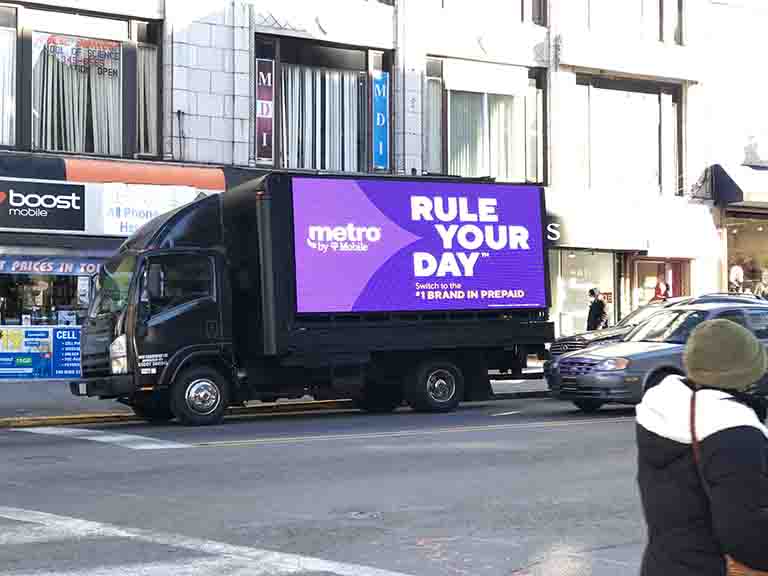
A roadshow activation takes the brand directly to consumers across multiple cities — generating encounters, content, and retail impact in each market while building a narrative that grows across the campaign’s full arc.
A roadshow activation is a brand marketing program that moves through multiple markets over a defined period, bringing a consistent brand experience to consumers in each city while generating the market-specific content, consumer interactions, and retail impact that national advertising alone cannot deliver. The format has been a core element of launch and growth marketing for consumer brands for decades, and it remains one of the most effective approaches for brands that need to build genuine consumer relationships in the markets that matter most to their business.
The defining characteristic of a roadshow activation is movement. The campaign builds momentum as it travels. Each city stop creates content and social amplification that reaches the audiences in the next city before the vehicle arrives. The team learns from each market and sharpens the activation approach. The brand story that was told in New York gets refined by the time it is told in Chicago. What started as a well-planned campaign gets better as it runs.
We have planned and operated roadshow activations ranging from four-city regional programs to twenty-city national tours. The operational complexity grows significantly with each additional market, and the planning discipline required to run a long-format roadshow without degrading execution quality over time is substantial. This article covers what it takes to plan and execute a roadshow activation that delivers what the brand needs from it.
Roadshow activations generate a type of brand-consumer relationship that national media cannot replicate. When a brand’s vehicle appears in a neighborhood, parks at a high-foot-traffic location, and creates a direct physical encounter with the consumers who live and shop in that neighborhood, something specific happens: the brand becomes real to those consumers in a way that advertising never achieves.
This is not a mystical claim. It is a well-documented psychological reality. A brand that a consumer has encountered physically — touched, tasted, smelled, discussed with a knowledgeable person — is encoded in memory differently and more durably than a brand the consumer has only seen advertised. That memory durability translates directly into brand recall, purchase consideration, and the kind of natural word-of-mouth recommendation that a satisfied consumer makes to their peers.
Multiply that encounter across a dozen cities and thousands of direct consumer interactions, and the cumulative effect on brand awareness, trial, and market penetration is significant. Roadshow activations are not a cheap way to build brand awareness — the all-in cost of a well-executed multi-city program is meaningful. But the type of brand awareness they build, and the durability of the consumer relationships they create, justifies the investment for brands that are serious about market development.
Planning a Roadshow Activation
Market Selection and Routing
Choosing which markets to include in a roadshow and in what order is a strategic decision with significant logistical and cost implications. The selection criteria are: where the target audience is concentrated, where current or potential retail distribution provides a purchase conversion point for trial generated during the tour, how efficiently the markets can be connected by driving route, and where the brand has the most developmental opportunity.
The routing order matters for efficiency and for narrative. A tour that starts on the East Coast and works its way west, or starts in a culturally influential market that sets the tone for subsequent cities, has a different story arc than one that bounces across the country in a logistically inefficient sequence. Routing logic should balance geographic efficiency (minimizing transit time and cost between markets) with strategic narrative (which market story builds on which).
Common roadshow routing patterns for brands that distribute nationally start with either coastal markets — New York and Los Angeles as the first and last stops with regional markets between them — or work through a geographic corridor: Northeast to Southeast, Midwest to Southwest, or Pacific Coast. The right pattern depends on the brand’s current distribution footprint, its priority development markets, and the driving distance between markets.
Time Per Market
How many days to spend in each market is one of the most consequential planning decisions in roadshow design. More days per market generates more consumer interactions and more retail coverage within that market, but it also means fewer total markets can be covered within the campaign’s time and budget parameters. The right balance depends on what the campaign is trying to accomplish in each market.
For awareness-focused roadshows, one to two days per market may be sufficient to make a presence and generate content. For trial-and-retail-support programs, three to five days per market allows meaningful coverage of multiple high-value locations and retail partner stops within the market. For campaigns that include media and press engagement, additional days may be needed for those activities alongside the consumer-facing activation work.
Vehicle and Equipment
The campaign vehicle is the anchor of any roadshow activation. Its format, design, and condition set the quality ceiling for every consumer encounter throughout the tour. A vehicle that looks well-maintained and professionally branded communicates brand quality before anyone approaches it. A vehicle that is dirty, has worn graphics, or shows visible mechanical issues communicates the opposite.
The right vehicle depends on what the activation needs to do in each market. A sampling-focused roadshow works well with a step van or sprinter with a service window. A roadshow that includes direct product sales, service experiences, or interactive demonstrations may need the interior space of a box truck or converted trailer. Vehicle choice is a function of activation design, not just brand aesthetics.
Staffing the Roadshow
Roadshow staffing is one of the most complex logistical elements of a multi-week tour. The options are: a traveling team that moves with the vehicle from market to market, locally sourced teams hired in each market, or a hybrid of a small traveling team supplemented by locally sourced staff in each city.
Traveling teams provide the highest consistency of execution quality because the same people who have been running the activation since the first stop are running it in every subsequent market. They learn and improve as the tour progresses. The trade-off is the cost and logistical complexity of accommodating a traveling team — hotel, meals, and travel costs across all markets add up significantly over a six- or eight-week tour.
Locally sourced teams in each market reduce travel costs but require strong local recruitment and training infrastructure in each city. The quality and availability of qualified local brand ambassadors varies by market, and the training investment needed to bring a new local team up to standard is significant in each city. Some brands use a hybrid approach: two or three traveling team members who provide continuity and quality standards, supplemented by local hires in each market who provide volume and local market knowledge.
The roadshow campaign that performs best in city 12 is better than the one that performed best in city 1 — because the team has been learning and improving across every stop. That cumulative improvement is one of the underappreciated advantages of roadshow format versus parallel simultaneous activations.
Roadshow Activation Structure and Market Examples
Roadshow Type
Markets
Duration
Typical Use Case
Regional (East Coast)
NYC, Boston, Philadelphia, DC
2 – 3 weeks
Regional launch; distribution support
Regional (West Coast)
LA, San Francisco, Portland, Seattle
2 – 3 weeks
West Coast launch; lifestyle brand expansion
Southern Circuit
Miami, Atlanta, Nashville, Austin, Dallas
3 – 4 weeks
Fast-growing market penetration
National Tier 1
NYC, Chicago, LA, Houston, Phoenix, Dallas
5 – 8 weeks
National launch; major market coverage
National Full
12 – 20+ markets
8 – 16 weeks
Comprehensive national rollout
Content Strategy for a Roadshow Tour
A roadshow activation generates natural content at every stop. The vehicle in different cities, the team in different environments, consumers in different neighborhoods reacting to the brand — all of this creates a travel narrative that is genuinely interesting on social media. But that narrative does not tell itself. It requires a content plan.
The content plan for a roadshow should establish: which platforms are priorities, what content types to produce at each stop (location reveals before arrival, day-of documentation, reaction captures, team behind-the-scenes, city-specific moments), how to advance-announce stops in each market, how to respond to user-generated content from tour stops, and how to maintain a consistent posting cadence throughout the tour regardless of operational intensity on any given day.
Advance announcements of each city stop are among the most reliably effective content pieces in a roadshow. Announcing that the vehicle will be in Nashville on Tuesday and Wednesday, with the specific planned locations, generates intentional attendance from consumers who were already interested in the brand. That intentional attendance creates a qualitatively different energy at the activation than purely organic foot traffic — and that energy shows up in photos and video content that performs better on social than content from quiet stops.
Roadshow Reporting and Market-by-Market Analysis
One of the unique analytical opportunities in a multi-city roadshow is the market-by-market performance comparison. With consistent activation formats and staffing approaches across all stops, the data from a roadshow provides a rare controlled comparison across markets. Which cities generated the highest interaction rates? Which had the best conversion to purchase? Where did social content perform best? What audience demographic differences between markets affected product reception?
This data is invaluable for future campaign planning. A brand that has run a roadshow and analyzed the market-by-market results has a much sharper understanding of where its target audience is concentrated, which markets have the most responsive consumers, and which market contexts generate the most favorable product reception. That understanding informs not just future roadshow planning but retail distribution strategy, media planning, and overall brand expansion logic.
Managing decision-maker Expectations During a Roadshow
Managing internal decision-maker expectations throughout a multi-city roadshow is an underappreciated component of program success. Brand managers, sales teams, retail partners, and executive decision-makers all have their own expectations about what the roadshow will deliver and when. Aligning those expectations with what is operationally realistic, and communicating proactively throughout the tour, is the difference between a program that is judged a success and one that falls short of expectations despite strong field performance.
The most common expectation management challenge in roadshow programs is the timeline for retail impact. A roadshow that generates consumer trial in a market does not immediately produce visible retail sales lift in that market — there is typically a two- to four-week lag between the trial moment and the first repeat purchase that shows up in retail scan data. Sales teams expecting immediate velocity increases in the weeks the vehicle is in market will be disappointed without proactive expectation-setting that explains this normal lag.
The sequencing of market stops also affects how different decision-makers experience the program. A retail partner in City 7 on the route may wonder why they are waiting weeks for the program to arrive while seeing social content from the earlier stops. Proactive communication about the tour schedule, with a clear explanation of the routing rationale, prevents the frustration that builds from feeling deprioritized when the vehicle has not yet arrived.
Real-Time Communication Infrastructure
Multi-city roadshow programs benefit significantly from real-time communication infrastructure that keeps brand managers informed about what is happening in the field without requiring them to contact the field team directly for every update. Daily field reports that arrive in the brand manager’s inbox each morning covering the previous day’s performance create a consistent information flow that allows for rapid response to both successes (identifying locations to replicate in future programs) and problems (addressing underperforming stops before the pattern compounds).
Photo documentation sent daily from each stop serves multiple purposes simultaneously. It provides visual evidence of execution quality and activation scale for internal decision-makers. It creates content for the brand’s social channels. It documents the specific locations and setups used in ways that inform future routing decisions. And it creates accountability — field teams that know their work will be photographed and shared maintain higher execution standards than those operating without documentation expectations.
Building on Roadshow Success: What Comes Next
A successful roadshow is a beginning, not an ending. The consumer awareness, trial volume, and market intelligence generated by a roadshow program are most valuable as inputs to the next phase of the brand’s market development strategy, not as stand-alone campaign deliverables.
The markets that generated the strongest roadshow performance — the highest interaction rates, the best trial-to-purchase conversion, the most social content generation — are the markets that deserve continued investment in activation programs. The roadshow has identified where the brand-consumer fit is strongest. The follow-up investment should concentrate there.
The CRM contacts generated through the roadshow represent a specific, valuable consumer segment: people who have had a positive direct encounter with the brand and have voluntarily provided their contact information. The email sequence that follows those contacts, the offers made to convert their trial to first purchase, and the ongoing marketing communication that continues the relationship all benefit from the specificity of knowing that this consumer encountered the brand in a specific context, at a specific activation stop, and responded positively enough to opt in. That context-specific knowledge makes the follow-up marketing more relevant and more effective than generic new subscriber sequences.
The retail sales data from activation markets, compared against the same period in non-activation control markets, provides the most rigorous input available for justifying continued investment in the roadshow program. If the data shows meaningful sales lift in activation markets relative to controls, the program has demonstrated ROI that supports investment in subsequent roadshow cycles. If the data shows limited lift despite strong activation metrics, it may indicate that the routing or retail distribution alignment needs adjustment before the next program cycle. Either outcome is valuable information for building a better program.
Building Long-Term Program Value
The full value of a well-executed activation program is not captured in the metrics from a single campaign. The most valuable activation programs are the ones that improve and compound over time — where each iteration generates learning that makes the next iteration more effective, where retailer and venue relationships deepen over multiple program cycles, where staff quality improves as the best ambassadors gain experience with the brand, and where consumer community presence builds as repeated encounters create familiarity and recognition.
Building this long-term program value requires treating activation investment as an ongoing commitment rather than a series of independent campaigns. Each campaign generates information: which locations performed best, which interaction approaches converted most reliably, what staff qualities made the biggest difference, how the consumer responded to the brand story and product. That information is only valuable if it is captured, analyzed, and applied to improve the subsequent program. Programs that do not close this learning loop repeat the same mistakes and miss the same opportunities cycle after cycle.
The organizational infrastructure for long-term activation programs includes: a consistent measurement framework that captures comparable data across all program cycles, a performance analysis process that extracts actionable insights from each cycle’s data, a program management structure with continuity across cycles rather than re-starting with a new team for each campaign, and a budget commitment that reflects the compounding value of sustained investment over episodic campaign spending.
Staff Development and Retention
The brand ambassadors who represent a brand in the field over multiple program cycles develop a depth of product knowledge, brand understanding, and consumer engagement skill that new hires cannot match. A brand ambassador who has been running a brand’s sampling program for two years knows how different consumer types respond to different engagement approaches, has answers to every question they are likely to encounter, and can adapt their interaction style based on years of field experience with the brand. That accumulated competence is genuinely valuable and difficult to replace when it leaves.
Investing in staff retention for high-performing brand ambassadors is one of the most cost-effective investments in activation program quality available. The combination of competitive compensation, genuine recognition of contribution, opportunities to advance within the program (from ambassador to field supervisor, for example), and a working environment that is genuinely positive and well-managed retains the people whose performance makes the program excellent. The cost of this investment is consistently less than the cost of recruiting, training, and developing the next generation of ambassadors to replace those who leave.
Consumer process Integration
Activation programs reach their full potential only when they are designed as components of an integrated consumer process rather than as standalone marketing events. The consumer who encounters a brand at an activation and has a positive experience needs a clear, frictionless path from that encounter to first purchase, and from first purchase to repeat purchase, for the activation investment to fully realize its commercial value.
The first transition — from activation encounter to first purchase — is supported by: a first-purchase incentive delivered at the activation event (a digital coupon, a loyalty program sign-up with a welcome discount, a QR code that provides a direct path to online or retail purchase), a follow-up CRM communication within 48 to 72 hours that reinforces the positive encounter and re-delivers the purchase incentive, and a retail distribution point that is accessible from the activation location so consumers can act on their purchase intent while it is fresh.
The second transition — from first purchase to repeat purchase — is supported by: a post-purchase CRM sequence that provides additional value (usage tips, recipe ideas, additional product information) rather than just promotional offers, a loyalty program that rewards repeat purchase with increasing value, and ongoing activation presence in the markets where the brand is building its consumer base. Brands that manage all of these transitions deliberately consistently achieve higher lifetime value from activation-acquired customers than those that focus exclusively on the activation event itself.
The measurement of this full consumer process — from first activation encounter through CRM capture, first purchase, repeat purchase, and eventually brand advocacy — requires data infrastructure that most brands have not fully built. The investment in this measurement infrastructure is justified by the strategic clarity it provides: knowing which activation formats, which market contexts, and which interaction designs create the highest-value long-term consumer relationships is the most important knowledge input for making activation investment decisions well.
Working with AGM on Your Activation Program
American Guerrilla Marketing designs, produces, and manages brand activation programs across all major U.S. markets. Our work spans pop-up events, mobile truck programs, retail activation campaigns, roadshow tours, sponsorship activations, and custom experiential installations. We have operated in New York City since the company’s founding and have built the field infrastructure, retailer relationships, and staff networks that make activation programs work reliably across the markets our clients need to reach.
Our process starts with understanding the specific business objective the activation program needs to achieve. We do not accept generic objectives. We ask: what specifically needs to happen in the consumer’s mind or behavior as a result of this program? Who is the specific consumer? Where are they? When are they most receptive? What encounter design will create the behavior change the brand needs? Those answers determine the program design, not the other way around.
Our production approach prioritizes execution quality over visual elaborateness. We have consistently found that a well-positioned activation with excellent staff and a quality consumer interaction delivers more commercial value than an elaborate production with mediocre execution. We invest the budget where it generates the most value in the consumer encounter, not where it photographs best in a portfolio.
Our reporting tells clients what actually happened in the field: interaction counts, product distributed, data captured, content generated, and an honest assessment of what worked and what would be done differently. We do not produce reports designed to justify the agency’s continued engagement. We produce reports designed to help clients make better decisions about how to invest in subsequent programs.
Every activation program we manage is covered by comprehensive field documentation: daily field reports during the program, photo documentation from every activation stop, and a post-program analysis that covers performance by location and market, staff observations, and specific recommendations for subsequent program cycles. Clients who engage with this reporting seriously run consistently better programs over time because the learning compounds.
We work with brands across food, beverage, beauty, personal care, technology, and lifestyle categories. We work with emerging brands that are building their consumer base from scratch and with established brands that are defending market position or expanding into new geographies. The strategic challenges are different at each stage, but the core operational principles — field execution quality, location intelligence, staff investment, measurement rigor — apply at every scale.
If you have a specific activation objective and you are trying to determine whether there is a program format and approach that can help you achieve it effectively and efficiently, we are worth a conversation. We will tell you honestly what we think will work and what we think will not, and we will give you a specific program recommendation that reflects our genuine assessment of what will produce the results you need.
Getting Started: Your Next Steps
If this article has been useful and you are now thinking seriously about building or improving an activation program for your brand, the most important immediate step is defining the specific business objective the program needs to achieve. Not a general marketing objective — a specific, measurable outcome. What needs to change in consumer behavior in which specific markets among which specific consumer segment by when?
That objective clarity drives everything downstream: the right format, the right locations, the right measurement design, the right budget allocation. Activation programs built without a clear objective tend to generate activity without impact. Programs built around a clear, specific objective tend to focus that activity on the interactions and outcomes that create genuine business value.
Once the objective is clear, the next step is defining the target consumer with enough specificity to make location decisions against. Where does this consumer spend time? At what times? In what contexts that are relevant to the brand’s product and positioning? The intersection of “where this consumer is” and “in a context that makes this brand encounter relevant” defines the activation opportunity. Finding those intersections is the core intellectual work of activation strategy.
From there, the program design follows logically: the format that creates the right consumer encounter in those contexts, the locations that access the consumer in those intersections at the right times, the staff profile and training approach that delivers the right interaction quality, and the measurement design that tells you whether the program achieved what it was designed to achieve.
Frequently Asked Questions
What is a roadshow activation?
A roadshow activation is a multi-city brand marketing program that moves a brand experience — typically anchored by a branded vehicle or portable activation unit — from market to market over a series of weeks or months. Each city stop delivers a direct consumer encounter, and the campaign builds momentum as it travels.
How long does a roadshow activation typically run?
Roadshow activations typically run two to twelve weeks depending on the number of markets and the time spent per market. Short roadshows covering four to six cities may run two to three weeks. Larger national programs covering twelve to twenty markets may run two to three months.
What is the typical cost of a roadshow activation?
Total roadshow activation costs vary widely based on vehicle type, number of cities, duration per stop, and staffing model. A four- to six-city roadshow with a branded vehicle, four staff, and logistics support typically runs $80,000 to $200,000 all-in. Larger national programs scale higher.
How do you choose which cities to include in a roadshow activation?
City selection for a roadshow is based on where the target audience is concentrated, where current or potential retail distribution is located, driving distance between markets (which affects logistics cost and efficiency), and where the brand has the most to gain in terms of market development.