
November 3, 2026
Reverse Graffiti Legality: An Honest Breakdown
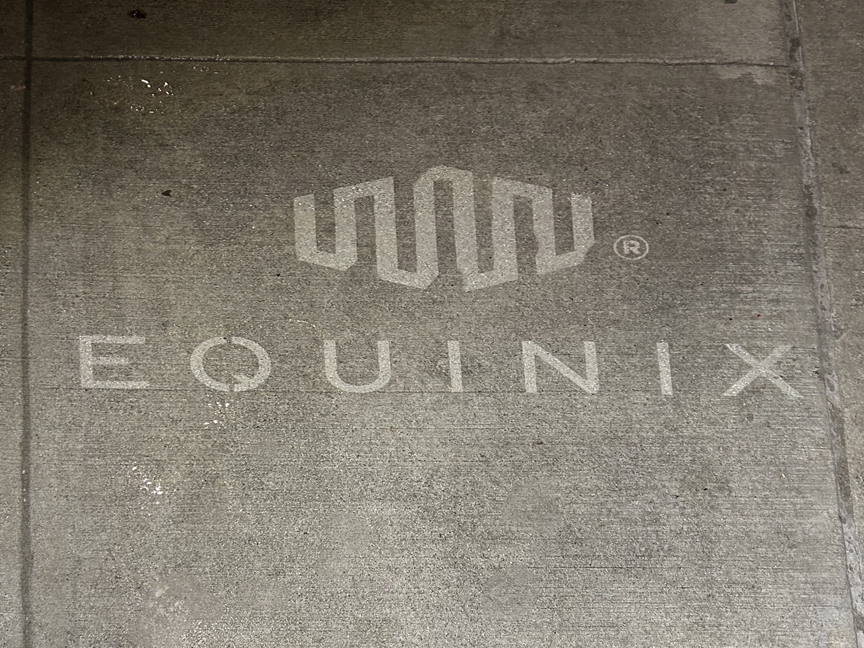
Every reverse graffiti enquiry we get arrives with the same hopeful sentence attached. “It is just cleaning, so there is no issue, right?”
I understand why people believe that. You are not adding paint. You are not sticking anything down. You are removing dirt. Intuitively it feels like the one street format that sidesteps the whole permissions headache.
In practice it does not sidestep it. It changes its shape.
This page is about that. Not a legal opinion, because I am a campaign operator and not a lawyer, and anyone in this business who hands you a confident verdict on reverse graffiti is doing you a disservice. What I can give you is the honest operational picture: who actually decides, what varies between cities, what the risk really attaches to, how we structure jobs to reduce it, and when I tell a brand the grey area is not worth it for them.
If you are weighing the format for a campaign, this is the conversation I would have with you on a call.
Why “it is only cleaning” is not the end of the argument
The cleaning framing is real and it matters. It is genuinely different from painting a wall. There is no coating applied, no adhesive, no material left behind. That difference is why property owners are so much more comfortable with reverse graffiti than with almost anything else we do.
But the framing only answers one of the questions a city might ask.
The first question is about the surface. Did you have the right to alter the appearance of that surface, cleaning or not. That is a property question, and it is answered by whoever controls the property.
The second question is about the message. Does a commercial mark placed on a surface that the public can see constitute advertising under the local code, and if so, does advertising in that location require a permit. That is a signage question, and it is answered by the municipality.
Those two questions are independent. You can have perfect permission from an owner and still be in a conversation about the second one. You can have a surface where nobody cares about advertising and still have an owner who did not consent.
“It is only cleaning” is a good answer to the first question. It is a partial answer at best to the second.
What actually varies between cities
Here is the part people find frustrating, and it is the honest core of the whole topic.
There is no single national position. Municipal codes were mostly written before anyone was pressure washing logos into sidewalks, so the format often falls into language that was drafted for something else.
Some codes define advertising broadly enough by function that the medium does not matter. Some define it by what is affixed or applied, which a cleaned image arguably is not. Some have nuisance or defacement language that turns on whether the appearance of a surface was altered without authority. Some have nothing obviously on point at all.
On top of the drafting, you have enforcement practice, and that is its own variable. A code can exist and go unenforced for years. A district can take a harder line than the rest of the same city because a business improvement group has complained. A single officer can read a situation differently from a colleague. We have seen crews work an entire night in one neighbourhood unremarked and get questioned within twenty minutes in another, in the same metro.
So the truthful statement is this. Reverse graffiti sits in a grey area. The treatment varies by municipality, it depends heavily on surface ownership and the permission behind it, and enforcement is inconsistent. Anyone who flattens that into “yes it is fine” or “no you cannot” is guessing.
What I will not do is tell you a format is legal or illegal. That is a question for your counsel and the relevant local authority with the specific site and artwork in front of them.
Where the risk actually sits
When clients say “risk” they usually picture a dramatic enforcement scene. That is not where the real exposure is, in my experience.
The practical risks, in rough order of how often they bite:
**The surface owner did not actually agree.** Someone gave verbal approval who did not have authority. A facilities manager said yes, the management company says no, the tenant said yes but the landlord controls the frontage. This causes more aborted jobs than anything else.
**Early removal.** A mark gets washed out by maintenance, by the owner after a complaint, or by a neighbouring business taking it on themselves. The campaign quietly loses placements and nobody tells the brand.
**Being asked to stop mid install.** A half finished mark is the worst outcome in this format. It looks like damage rather than design.
**Reputational, not regulatory.** A brand with a sustainability story gets questioned about runoff, or a local group reads the mark as encroachment on public space. This is rarer but it lands harder than a code question, because it is public.
**Surface damage.** Pressure lifting a coating or loosening deteriorated material. Entirely avoidable with testing and surface selection, which is why we test.
Notice that most of these are controllable. That is the useful insight. The ambiguity in the code is the part you cannot resolve. The permission chain, the documentation, the surface choice and the removal commitment are all things a competent operator controls, and they account for most of what actually goes wrong.
How we structure a job to reduce the uncertainty
This is our standard practice, and it is the honest answer to “how do you handle the grey area”.
**Private surfaces by default.** Building frontage, private plazas, parking structure decks, loading areas, campus walkways, courtyards. A privately controlled surface with an owner who wants the mark there removes the biggest single unknown.
**Written permission, naming specifics.** Not a nod on site. An email or a short agreement that names the exact surface, the dates, the artwork and the removal commitment. If the person signing is not the owner, we ask who is and we go to them.
**A check on the layers above the owner.** Lease terms, management companies, business improvement districts, campus facilities policies, historic district overlays. Owners routinely forget one of these exists until it surfaces mid campaign.
**A test mark.** Small, in an inconspicuous spot on the approved panel. It proves the surface will carry contrast and it proves nothing gets damaged. It is also a useful conversation piece with a nervous owner.
**Documentation on every placement.** Before and after photographs, timestamps, location, crew log, copy of the permission. If anyone asks a question six weeks later, there is a file.
**A removal commitment in writing, up front.** We will even out the surrounding surface on request so the mark disappears and the panel is left clean. That single commitment is the thing that converts hesitant owners more than any other argument.
**A stop rule for the crew.** If anyone with apparent authority asks us to stop, we stop, we are polite, we leave the site tidy, and we escalate it the next day rather than arguing at 3am. Nothing good has ever come from a crew debating a code interpretation on a sidewalk.
What the permission conversation sounds like
Property owners are not the obstacle people expect. Reverse graffiti is the easiest street format to get a yes on, and the reason is simple: you are offering to clean their building.
The conversation that works goes roughly like this. We explain that nothing is applied and nothing is left behind. We show them the test mark concept. We explain that the surrounding area can be evened out on request at no cost to them and that their surface ends up cleaner than it started. We hand over the dates, the artwork and the removal commitment in writing.
The objections we hear most often are about damage and about duration. Damage is answered by the test. Duration is answered honestly: it fades gradually as grime rebuilds, we cannot date it exactly, and we will remove it on request before then if they want it gone.
The objection we cannot always answer is “I would rather not have advertising on my frontage at all”, and that is a perfectly reasonable position. We move on.
Where the owner is enthusiastic, the job becomes simple. Where the owner is reluctant, I would rather lose the location than talk someone into something they will regret, because a reluctant owner is the one who washes the mark off in week one.
Runoff, and why it comes up more than people expect
The environmental question is a legitimate one and it is worth addressing directly rather than waving away.
You are putting water on a dirty surface and the resulting water carries that dirt somewhere. On most sidewalk work this is not materially different from routine building washdown, but “most” is not “all”, and some locations drain somewhere sensitive.
Our practice is to ask where the runoff goes before we schedule, to use plain water without chemical additives as the default, and to bring containment, absorbent socks or a wet vac where the site warrants it. On any site where runoff handling is genuinely unclear, we raise it with the property owner rather than assume.
Brands with a sustainability position should expect to be asked about this publicly if the campaign gets attention, and should have an answer ready that is more specific than “it is just water”.
When I tell a client the grey area is not worth it
I turn down reverse graffiti work fairly often, and these are the usual reasons.
**Regulated or scrutinised categories.** If the brand operates in a space where every marketing decision gets examined, an ambiguous format in public space is a poor trade. The upside is a nice photograph. The downside is a story about the format instead of the product. Not worth it.
**National campaigns needing identical execution.** The format varies by surface, city by city. If the brief requires every market to look the same, the grey area is the second problem and inconsistency is the first.
**Clients who want to work public surfaces without engaging the city.** I understand the appeal. I will not plan a campaign around hoping nobody notices. If a client wants genuinely public surface, the honest route is to approach the relevant department and find out what the process is in that city, and accept the answer may be slow or may be no.
**Anyone who wants a written guarantee that there will be no issue.** I cannot give one and neither can anyone else. If that guarantee is a requirement, the format is wrong for them.
**Short fuse timelines.** Permission chains take time. A campaign that needs to be live in days does not have room for owner conversations, test marks and weather windows. That is usually the point where we move the budget into a format with a cleaner approval path.
The alternative I usually point people to
When the grey area is the sticking point but the client still wants street level presence, sidewalk decals and stencils are frequently the better answer.
A printed decal applied to a surface with the owner’s permission is a far more conventional proposition. It is understood by property managers, it is removable on a known schedule, the artwork is identical in every market, and the conversation with a building owner is one they have had before.
It loses the novelty. Reverse graffiti earns coverage precisely because it is unusual, and a decal does not. But it gains predictability, consistency and a much shorter approval path, and for a lot of briefs that trade is obviously correct.
Where a brand wants both, we have run the decal programme as the backbone for coverage and consistency, and placed a small number of reverse graffiti marks on enthusiastic private frontages as the story layer. That structure gives you the photograph without hanging the whole campaign on the ambiguous format.
The approval chain on your side, not just ours
Clients spend a lot of energy on whether the city is comfortable and almost none on whether their own organisation is. That imbalance causes more cancelled campaigns than any municipal question.
The people who need to see this format before it is booked, in my experience, are the brand or creative lead, whoever owns legal or compliance review, and whoever handles corporate communications. Procurement turns up later and usually only cares about documentation.
Legal review is the one that derails late. A reviewer seeing reverse graffiti for the first time will ask whether it is permitted, and the honest answer is the grey area answer in this article. If that answer reaches them two days before install, it reads as a red flag. If it reaches them at the brief stage, alongside the written owner permission and the removal commitment, it usually reads as a managed risk. Same information, completely different reception, entirely because of timing.
So my advice to anyone considering this: take the ambiguity to your reviewers early and voluntarily. Show them the permission template. Show them that the surfaces are private and named. Show them the removal commitment. Reviewers are far more comfortable with a known unknown that somebody has already thought about than with a surprise.
Communications should also be briefed before install rather than after. If the campaign gets local attention, somebody will be asked what the format is and whether it was authorised. A prepared two sentence answer about private surfaces, owner permission and water only cleaning handles that calmly. An unprepared answer sounds defensive even when everything was done properly.
On the operational side, expect a certificate of insurance request from most property owners and nearly all commercial landlords. That is routine for any crew working on private property and it is worth confirming early, because a landlord’s insurance requirements occasionally take longer to satisfy than the permission itself.
Also worth agreeing internally before booking: who decides if a surface underperforms the test mark. Someone needs the authority to drop a location on the night without escalating it through three approval layers, or the crew ends up waiting on a decision that nobody is awake to make.
So, is it worth it?
My honest answer: yes, for the right brand, on private surfaces, with permission in writing, as a layer rather than a backbone.
It is worth it when the brand can tolerate variation, when the locations are privately controlled, when there is time to do the permission work properly, and when the goal is attention and goodwill rather than raw coverage.
It is not worth it when the brand needs certainty, uniformity, speed, or a format they can run at scale without site by site conversations.
The grey area is not a reason to avoid the format. It is a reason to run it carefully, on surfaces where somebody with authority has said yes in writing, with a removal commitment attached. That is the whole discipline.
Frequently asked questions
Is reverse graffiti legal?
It is a grey area and the honest answer is that it depends. Treatment varies by municipality, codes were mostly written before the format existed, and enforcement is inconsistent between cities and even districts. It turns heavily on surface ownership and permission. We are campaign operators, not lawyers, and we never characterise it as legal or illegal.
Do you need permission from the property owner?
Yes, and we insist on it in writing. Verbal approval from a facilities contact who turns out not to control the frontage is the single most common cause of an aborted job. Our written permission names the surface, the dates, the artwork and the removal commitment, and we check for leases, management companies and district rules above the owner.
What happens if someone asks the crew to stop?
We stop. The crew is polite, leaves the site tidy, documents where things stand and escalates the next day. Arguing code interpretation on a sidewalk at 3am helps nobody and a half finished mark reads as damage rather than design. We would rather lose the placement than create an incident.
Can reverse graffiti damage a building?
Properly executed it should not, because you are lifting deposit with water rather than abrading the substrate. Risk concentrates on painted, sealed or deteriorating surfaces where pressure can lift coatings or loosen material. We test a small inconspicuous area first and decline panels that are sealed or in poor condition rather than take the chance.
How do you remove a reverse graffiti mark?
By evening out the surrounding area with a broader wash so the contrast disappears and the panel reads as uniformly clean. It is quick and leaves the surface better than we found it. We commit to removal on request in writing before installation, which is usually what convinces a hesitant property owner to agree.
Is there a safer alternative with the same effect?
Sidewalk decals and stencils cover similar ground with a much more conventional approval path, identical artwork in every market and a known removal schedule. They lose the novelty that earns reverse graffiti its coverage. Many clients run decals as the backbone for consistency and a few reverse graffiti marks on willing private frontages as the story layer.
Request a campaign quote
If you are weighing this format, tell us the markets, who controls the surfaces you have in mind, and how much variation your brand team can live with. We will give you a straight read on whether reverse graffiti suits the brief, where the permission work will be easy and where it will not, and when a decal programme would serve you better.
We will also tell you if we think the answer is no. That conversation is free and it saves everyone a wasted month.
Request a campaign quote and we will start with the surfaces and the permissions.

Ready to Run Your Campaign?
Call us or email us. We’ll tell you exactly what we can do in your market and what it costs.
Related Services
Explore similar advertising solutions offered by American Guerrilla Marketing.
American Guerrilla Marketing — Los Angeles
Street-level campaigns in Los Angeles and nationwide. Wheatpasting, LED trucks, street teams, and more.
(646) 776-2770
Related Articles
-
How Sidewalk Decals & Stencils Runs in San Jose
November 3, 2026
-
Sidewalk Decals & Stencils in Los Angeles
November 3, 2026
-
Reverse Graffiti: How It Actually Works
November 3, 2026
-
Decal Performance in Heat and Rain: How Installs Work
November 3, 2026
-
Removable vs Permanent Decal Adhesive Explained
November 3, 2026