Posters: Complete Size, Material, and Print Spec Guide
Posters are one of the oldest advertising formats in existence. They’re also one of the most misunderstood. Most people know what a poster is. Far fewer know which size to use for their purpose, which paper weight performs in outdoor environments, what print specifications actually mean, or how a poster campaign moves from the print shop to the street.
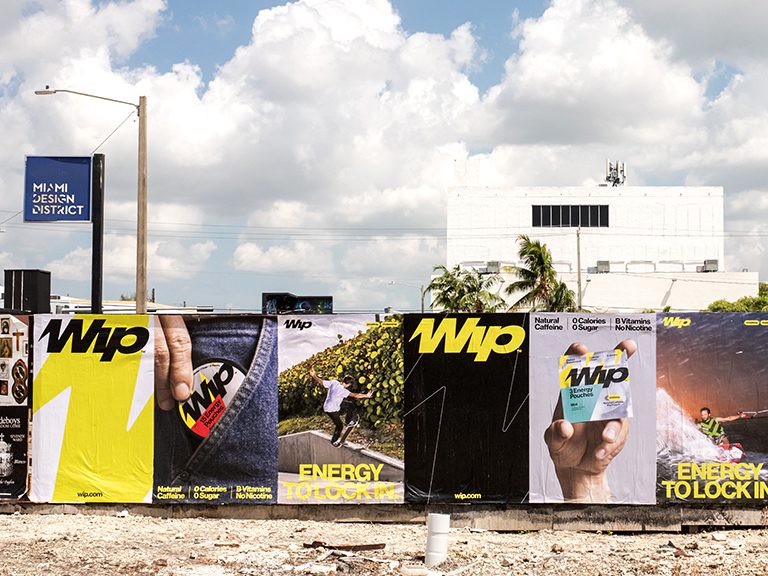
We run poster campaigns at street level across major cities every month of the year. Our crews have pasted tens of thousands of posters to construction hoarding, scaffolding planks, boarded storefronts, and plywood barriers in New York, LA, Chicago, and beyond. We know which paper holds in January wind on a scaffold on West 23rd Street, and which one turns to pulp overnight. We know which poster dimensions work at ground level where foot traffic reads them at three feet, and which dimensions are wasted in that context because you need ten feet of clearance to see them.
This guide covers everything: every standard size, every material type, print specifications, design considerations, outdoor vs. indoor performance, and how professional street campaigns actually deploy posters for maximum impact.
Poster sizes exist on a spectrum from small retail formats to large outdoor panels. The sizes below cover the full range used in commercial print, retail, events, and street advertising.
Small Format Posters (Under 18 inches wide)
8.5 x 11 inches (Letter / Mini Poster)
The standard letter format. Used for indoor bulletin board posting, bathroom stall advertising, neighborhood flyer campaigns, and any context where the viewer is close and stationary. At this size, you can use detailed type and intricate layouts. Works well for bands, local events, and small business promotions. Not effective outdoors at any viewing distance beyond arm’s reach.
11 x 14 inches (Window Poster)
A step up from letter, sized to fit standard retail window frames and interior door panels. Common in bars, restaurants, and record stores for event promotion. The aspect ratio is portrait-friendly for concert poster design. Still an indoor format at its core.
11 x 17 inches (Tabloid / Half Sheet)
One of the most common print sizes in the United States. Tabloid printers handle this format in most print shops without any specialty equipment. Used for event flyers, club nights, art show announcements, and any campaign where volume and cost efficiency matter more than visual scale. At street level, an 11×17 works in high-density pedestrian environments where viewers pass within five feet of the surface. It disappears on a wall that’s read from across the street.
12 x 18 inches (Small Street Poster)
A slight scale-up from tabloid that still fits on most digital wide-format printers without special handling. Common in neighborhood campaigns where poster volume is prioritized. Works in tight urban environments: subway corridors, narrow sidewalk passages, interior window installations.
Mid Format Posters (18 to 27 inches)
18 x 24 inches (Standard Street Poster)
This is the workhorse of street poster campaigns. 18×24 is the format our crews use more than any other for urban installations. It’s large enough to read from across a sidewalk, small enough to install quickly and carry in quantity. Construction hoarding panels read an 18×24 well. Scaffolding planks handle the proportion naturally. The format is vertical-dominant, which suits the visual rhythm of poster-lined street environments.
Print run economics are favorable at this size. Digital wide-format printers handle it without waste. Large runs on offset print lines become cost-efficient quickly. For a city-scale street campaign covering 50 to 200 locations, 18×24 is the production-efficient choice.
20 x 30 inches (Medium Large)
Less common than 18×24 or 24×36, but used in certain event and gallery contexts. The dimensions don’t align with standard print equipment as cleanly as the sizes flanking it, which makes production slightly less efficient. Used when a specific visual proportion demands it.
24 x 36 inches (Standard Large Poster / One of the Movie Poster Sizes)
24×36 is where visual scale becomes significant. At this size, a poster commands attention from across a standard city sidewalk with ease. The format accommodates both portrait layouts and environment orientations used for horizontal storefront windows.
This is a commonly requested size for event posters, music festival promotion, retail window installations, and anything that needs presence in a large-scale environment. For street campaigns on surfaces with clearance for the full height, 24×36 reads strongly. On cluttered hoarding where 18×24 panels stack and overlap, 24×36 can be harder to place cleanly.
27 x 40 inches (One Sheet / Standard Film Poster)
27×40 is the classic American movie poster size. It’s the format you see in theater lobbies, on corridor walls, and in standard poster display cases. Film studios have used this format for over 60 years. Designed to display in a standard lobby display case with snaplok frame dimensions to match.
Outside film industry applications, 27×40 is used for major concert and event promotion where the scale of the event warrants larger format. The dimensional difference from 24×36 is small but noticeable at street level.
Large Format Posters (36 inches and up)
36 x 48 inches (Large Format)
At 36×48, you’re in territory where the poster reads as a major visual statement on a standard street environment. This size is used for building-entry installations, large retail window graphics, and premium street poster placements on surfaces with enough clearance to show the full format.
Production at 36×48 requires wide-format digital printing equipment. Paper weight and finishing become increasingly important at this scale because the surface area is large enough that any warp, bubble, or paste defect is visible at a distance.
48 x 72 inches (Extra Large / 4 x 6 feet)
48×72 is near the upper boundary of what most people call a “poster” before the terminology shifts to “banner” or “large format print.” At this size, you’re creating a visual element that reads from across a street, occupies significant wall real estate, and functions more like a mini-billboard than a traditional poster.
Street campaigns using 48×72 formats are typically working on warehouse walls, large commercial storefronts, or large hoarding panels where the full dimension can be displayed without cropping. Installation at this scale requires additional crew and more careful surface preparation. Paste coverage on a six-square-foot sheet needs to be even or the drying process creates bubbles and rippling that destroy the visual quality.
Custom and Mural-Scale Formats
Beyond 48×72, campaigns enter mural territory. Large-scale poster art assembled from multiple tiled sheets can cover entire building exteriors. These multi-panel installations are assembled in register on-site, sometimes using lift equipment for anything above eight feet. The result is a mural-scale brand image at a fraction of the cost and production time of a painted mural.
We’ve assembled tiled mural campaigns on warehouse walls on Grand Street in Williamsburg and on building exteriors along Fairfax Avenue in Los Angeles that covered areas of 600 to 1,200 square feet. The production involves high-resolution panel printing, on-site registration, and paste application with careful seam management to make the tiled joins invisible at standard viewing distance.
Poster Size Quick Reference Table
Size
Dimensions
Common Use
Ideal Viewing Distance
Street Campaign Use
Mini / Letter
8.5 x 11″
Bulletin boards, flyers, handouts
1-3 feet
Limited. Indoor only.
Window Poster
11 x 14″
Retail windows, bar announcements
2-5 feet
Interior window display only
Tabloid / Half Sheet
11 x 17″
Event flyers, club nights, gig posters
3-8 feet
Yes, high-density foot traffic zones
Small Street
12 x 18″
Neighborhood campaigns, transit corridors
3-10 feet
Yes, tight urban environments
Standard Street
18 x 24″
Street campaigns, hoarding, scaffolding
5-20 feet
Primary format for most campaigns
Medium Large
20 x 30″
Events, gallery promotion
8-25 feet
Occasionally, large surface placements
Standard Large
24 x 36″
Events, retail windows, street campaigns
10-30 feet
Yes, premium locations with space
One Sheet (Film)
27 x 40″
Film promotion, major events
12-40 feet
Premium placements, lobby cases
Large Format
36 x 48″
Retail installs, premium street placements
15-50 feet
Select high-clearance walls and panels
Extra Large
48 x 72″
Building exteriors, large hoarding panels
20-100 feet
Warehouse walls, large commercial sites
Mural Scale
Custom tiled
Building exteriors, large-scale brand art
30+ feet
Multi-panel assembly on major walls
Poster Paper Types and Weights
Paper weight and stock type determine how a poster looks, how it handles in production, and how it performs in the environment where it’s installed. This is the specification decision that most brands get wrong, and it shows in the field.
Paper Weight Basics
In the United States, paper weight is measured in pounds (lb.) using a “basis weight” system that refers to the weight of 500 sheets at a standard size. This is confusing because different paper types use different standard sizes for their basis weight calculation. The result is that 80 lb. text paper and 80 lb. cover stock are completely different thicknesses.
For poster work, the relevant categories are:
Text weight paper (50-100 lb. text) is the category that covers most standard indoor poster printing. 60 lb. text is thin, flexible, and shows through when backlit. 80 lb. text is the most common for event posters, flyers, and standard street poster campaigns. 100 lb. text is heavier, stiffer, and produces richer color payoff on coated stocks.
Cover weight paper (60-120 lb. cover) is substantially heavier than text weight. 80 lb. cover is roughly twice as thick as 80 lb. text. Cover stock is used for premium poster work where rigidity is important, for retail display contexts, and for any poster that needs to stand upright without support.
Coated vs. Uncoated Stock
Coated paper has a clay-based coating applied to one or both sides (one-sided coated is “C1S”; both sides coated is “C2S”). The coating seals the paper’s fibers, creating a smooth surface that produces higher-resolution print output and more vivid color reproduction. Images print sharper. Colors are more saturated. The gloss version has a reflective surface. The matte version has a smooth but non-reflective finish. Satin falls between the two.
For indoor poster work where visual impact and image quality are the priority, coated stock consistently outperforms uncoated. The color payoff difference is noticeable.
Uncoated paper has no clay surface treatment. It’s porous, has a slightly textured surface, and absorbs ink differently than coated stock. Colors appear slightly less vibrant. But uncoated stock has properties that make it better for certain applications: it pastes more readily than coated stock in outdoor applications, it’s easier to write on, and it has a visual character that reads as less commercial and more handmade, which matters for certain design aesthetics.
For street campaigns using paste application, we typically run 80 lb. uncoated text. The porosity of uncoated stock allows paste to penetrate the paper fibers slightly, which creates a stronger bond with the surface beneath. Coated stock, particularly gloss-coated stock, can resist paste penetration and produce delamination at the edges during and after application.
Synthetic and Weatherproof Paper
For outdoor applications where longevity matters and paste application isn’t the installation method, synthetic papers offer dramatically superior durability.
Polypropylene (PP) synthetic paper is waterproof, tear-resistant, and UV-stable. It won’t absorb water, so it holds up in rain without warping or dissolving. Print quality on synthetic PP is excellent because the material accepts UV or latex inks effectively. Used for outdoor event signage, exterior window graphics, and any application where the poster needs to survive weather exposure.
Polyester film (often called Mylar in poster contexts) is the premium synthetic option. Rigid, extremely durable, and produces exceptional print quality. Used for premium display contexts, retail environments, and outdoor applications requiring long-term durability.
Vinyl is the standard material for banners and large outdoor displays. Technically a substrate rather than a paper, vinyl handles outdoor conditions indefinitely. UV-resistant vinyl maintains color fidelity for years outdoors. 13 oz. scrim vinyl is the standard for most banner work. 18 oz. blockout vinyl is used when opacity matters (double-sided prints, light-through applications).
Specialty Substrates
Adhesive-backed paper and vinyl (sticker stock) eliminates the need for paste in installation. Peel-and-stick posters apply directly to most smooth surfaces. They’re used in transit advertising, retail displays, and any context where paste isn’t feasible or permitted. Removable adhesive variants come off cleanly. Permanent adhesive is for long-term applications.
Fabric prints on woven polyester substrates offer a softer look and feel, reduced weight for large formats, and are preferred for indoor event environments, trade shows, and premium retail installations where the texture differentiates the display from standard print.
Print Resolution and Technical Specifications
Getting the print specifications right determines whether your poster looks as good on the wall as it did on screen. These are the technical parameters that matter.
Resolution (DPI/PPI)
Posters require different resolution standards at different sizes. The resolution that matters is dots per inch at the final print size, not in the original digital file.
For small format posters (up to 18×24 inches), 300 DPI at final print size is the standard. This produces sharp image reproduction visible at close viewing distances.
For large format posters (24 inches and above), 150 DPI at final print size is typically sufficient for output that’s viewed from three feet or more. Human visual acuity can’t resolve individual dots at normal viewing distance for large format prints, so the higher resolution standard used for small formats isn’t necessary and produces unnecessarily large file sizes.
For very large format work (4 feet and above), 100 DPI at final size is often adequate. Mural-scale prints are frequently run at 72 to 100 DPI because the viewing distance is substantial enough that resolution differences are invisible.
Color Mode: CMYK vs. RGB
RGB (Red, Green, Blue) is the color mode of screens. It’s additive, meaning colors are created by combining light. RGB produces vivid, saturated colors on screen, particularly in greens, blues, and electric colors that the eye associates with digital displays.
CMYK (Cyan, Magenta, Yellow, Key/Black) is the color mode of print. It’s subtractive, meaning colors are created by combining inks on a substrate. The CMYK gamut is smaller than the RGB gamut, meaning there are colors that screens can display that print cannot reproduce accurately.
All print work should be prepared in CMYK mode. Designers who build poster artwork in RGB and convert to CMYK at print time risk unexpected color shifts, particularly in saturated blue tones, electric greens, and vibrant oranges that can appear significantly muted or shifted in CMYK output. Convert to CMYK early in the design process and proof on a calibrated display to ensure the colors you see reflect what the press will produce.
Bleed and Safety Zones
Bleed is extra artwork that extends beyond the trim edge of the poster. It’s required because print-and-cut processes have a small tolerance for the cutting blade, meaning the trim line can vary slightly from where it was intended. Without bleed, any variation produces a white edge on one or more sides. Standard bleed for poster work is 0.125 inches (1/8 inch) on each side.
Safety zone (also called the safe area or live area) is the margin inside the trim edge where important content should stay. Text, logos, and critical design elements should not extend closer than 0.125 to 0.25 inches from the trim edge. Elements placed outside the safety zone risk being cut off in the final trim.
File Formats for Print
PDF is the universal standard for print delivery. Export print-ready PDFs with embedded fonts, converted outlines, or both. Include bleed. Export at press quality settings, not screen quality. Most commercial printers accept PDF/X-1a as the target format for offset work.
TIFF is the standard for raster (photographic) artwork delivered to large-format print services. Lossless compression. Full resolution. No JPEG compression artifacts.
JPEG is acceptable for digital wide-format output where the print shop’s workflow accommodates it, but PDF or TIFF is always preferable because JPEG compression introduces artifacts that become visible at large print sizes even when the compression is set to maximum quality.
Finishing Options for Posters
Finishing is applied after printing and determines the final surface quality and durability of the poster.
Aqueous Coating
A water-based coating applied inline during printing. Provides a light protective layer and a consistent surface finish (matte, satin, or gloss depending on the coating used). The least expensive finishing option. Adequate for indoor posters with normal handling. Not protective enough for heavy-use environments or outdoor applications.
UV Coating
A high-gloss protective coating cured with ultraviolet light. Produces a very high-gloss surface that makes images appear more vivid. Significantly more protective than aqueous coating. Used for premium retail display, event posters, and any application where the poster needs to look spectacular under direct lighting. The high-gloss surface shows fingerprints readily.
Lamination
A plastic film bonded to the surface of the poster. The most protective finishing option. Available in gloss, matte, and satin finishes. Standard lamination significantly increases the poster’s tear resistance and water resistance. Used for outdoor posters that will be handled repeatedly, long-term retail displays, and any application where the poster needs to survive without damage.
Encapsulated lamination (laminate on both sides) produces a fully waterproof poster that resists most environmental conditions indefinitely. Used for outdoor signage that needs to survive extended weather exposure.
Die Cutting
Custom cutting to produce shapes beyond the standard rectangle. Circles, curves, irregular shapes. Used for specific display applications and any design that benefits from the format itself contributing to the visual message. More expensive than straight-cut production and requires additional setup time.
Poster Design Principles for Different Environments
Good poster design varies significantly depending on the environment where the poster will be displayed. Here’s how we think about design for different contexts.
Indoor Retail and Event Posters
Indoor environments offer more controlled viewing conditions. Consistent lighting, defined viewing distances, and stationary viewers give you more latitude for design complexity. You can use smaller type, more detailed imagery, and more nuanced color palettes because the viewer has time to engage and the environment isn’t competing as aggressively for their attention.
Street-Level Outdoor Posters
Outdoor street environments are harsh on design. The viewer is moving. Competing visual elements surround the poster. Viewing distance is variable. Lighting ranges from direct sunlight to deep shadow. These conditions demand a different design discipline.
Our guidelines for street-level poster design:
Single dominant image. One thing to look at. Multiple images split attention and confuse the hierarchy.
Maximum contrast. Dark on light or light on dark. Mid-tone designs disappear in mixed outdoor lighting conditions. High contrast reads in sunlight, in shade, and at a distance.
Minimal type. The headline needs to be legible at ten to fifteen feet. Body copy at standard text sizes is invisible at that distance. Use type hierarchy to ensure the essential message is in the largest element, and limit secondary copy to the absolute minimum required.
Clear brand identification. The brand mark needs to be prominent enough to read at distance but doesn’t need to dominate the composition. It needs to be there unambiguously so that a person who stops and processes the image knows who sent it.
Transit and High-Speed Viewing Posters
Subway car interior cards, platform posters, and any format where viewers are in motion require the most extreme simplicity. The message needs to register in under two seconds because that’s all the time the moving viewer has. One image. One line. One brand. Everything else is noise.
How AGM Uses Posters in Street Campaigns
Poster campaigns are the foundation of our street-level work. Here’s how we actually execute them.
Location Scouting
We walk locations before we commit to them. We look at surface condition, sight lines, foot traffic patterns, and the visual context (a poster surrounded by other posters reads differently than a poster in isolation). We confirm dimensions so the format we’ve specified actually fits the intended surface. We identify access requirements: can a two-person crew get to this location with a ladder and supplies in a standard vehicle?
Paper and Paste Specification
We specify paper weight and stock for every campaign based on the environment. For January campaigns in New York where temperatures drop below freezing overnight, we adjust paste consistency and sometimes add a small amount of glycerin to slow the set and prevent cracking in the cold. For summer campaigns in high-humidity markets, we reduce paste water content to improve adhesion in conditions that slow drying.
These adjustments sound minor. On the street at 3 AM with a crew that needs to move through forty locations by 6 AM, they make the difference between a campaign that looks right in the morning and one that’s already peeling by the time foot traffic peaks.
Installation Timing
Most street poster installations happen between 10 PM and 5 AM. This minimizes interference with foot traffic, gives the paste time to cure before the morning rush, and reduces the visibility of the installation process itself. Peak installation windows in New York are typically 1 AM to 4 AM, when street activity is genuinely low even in the neighborhoods that never fully sleep.
Campaign Documentation
We photograph every location within 24 hours of installation. Context shots that show the poster in its environment, close-up shots that show the print quality. We return for second documentation visits at peak daylight foot traffic hours to capture how the campaign looks with real audience context. This documentation is used for campaign reporting and serves as client content for digital and social channels.
Poster Printing: Digital vs. Offset
Digital Wide-Format Printing
Digital wide-format printers handle everything from 13 inches to 100+ inches wide and print directly from a digital file without the plate-making step that offset requires. They’re the right choice for:
Short runs (any quantity under roughly 100-200 pieces per size)
Large format printing (anything over 24 inches)
Rush production (can print same day in most markets)
Variable content (different content per print, no plate change cost)
Digital wide-format quality has improved dramatically. For most poster applications, the output is indistinguishable from offset at normal viewing distances. Some variation in color consistency can occur across long print runs on digital equipment, which matters for campaigns requiring color-matched consistency across hundreds of prints.
Offset Lithography
Offset printing uses physical plates and produces consistent, color-accurate output across very large runs. The economics flip in favor of offset once print quantities reach several hundred to a few thousand pieces. For a street campaign running 500 posters at 18×24, offset production is typically more cost-efficient than digital and produces the most consistent color across the run.
Setup costs for offset (plate-making) are fixed regardless of quantity, which makes offset expensive for short runs and economical for long ones. Standard sheetfed offset presses accommodate sizes up to approximately 28×40 inches.
Frequently Asked Questions
What is the most common poster size?
For street campaigns, 18×24 inches is the most widely used size. For events and concerts, 11×17 and 24×36 are both extremely common. For film industry applications, 27×40 is the standard one-sheet format. For retail display, sizes range widely depending on the frame or fixture that’s being installed.
What’s the difference between poster paper and regular paper?
Posters intended for display are typically printed on coated stock (gloss or matte) that produces richer colors and sharper image reproduction than standard office paper. Weight is also higher than copy paper (typically 80 lb. text or above vs. the 20 lb. bond used in laser printers). For outdoor applications, synthetic and weatherproof substrates replace paper entirely.
What DPI should I use for a 24×36 poster?
150 DPI at final print size (24×36 inches) is the standard for large format work at this size. That means your design file should be 3,600 x 5,400 pixels at 150 DPI, or you can set it up at 300 DPI at half size and let the print software scale it. Check with your specific printer for their preferred file specifications.
How should I prepare my design file for poster printing?
Design in CMYK color mode. Add 0.125 inches of bleed on all sides. Keep important elements within 0.25 inches of the trim edge. Export as PDF (press quality) or TIFF for raster files. Embed all fonts or convert to outlines. Confirm file size maximums with your printer for large format work, as high-resolution files can be very large.
What paper should I use for outdoor poster campaigns?
For paste-application outdoor campaigns, 80 lb. uncoated text stock is our standard. The porosity of uncoated paper creates better adhesion in paste applications. For outdoor posters that will be affixed without paste (adhesive-backed, framed, or stapled), weatherproof synthetic paper or vinyl produces much greater longevity than standard paper stocks.
How do I design a poster that reads well at street level?
Keep it simple. One dominant image. One clear headline. Minimum supporting copy. Maximum contrast between foreground and background. Bold, clean typefaces at large point sizes. Avoid thin type, detailed textures, and small text. Design for a viewer who is moving and has two seconds to register your message from fifteen feet away. If it doesn’t communicate instantly at that scale and distance, simp
How long do poster campaigns typically last in the field?
Duration varies significantly by location. A poster on construction hoarding in a high-traffic SoHo block might last two to three weeks before new posters are applied over it or the hoarding comes down. A poster on a lower-traffic surface in a residential neighborhood might last months. We plan for specific duration requirements and schedule replacement visits or additional locations to maintain c