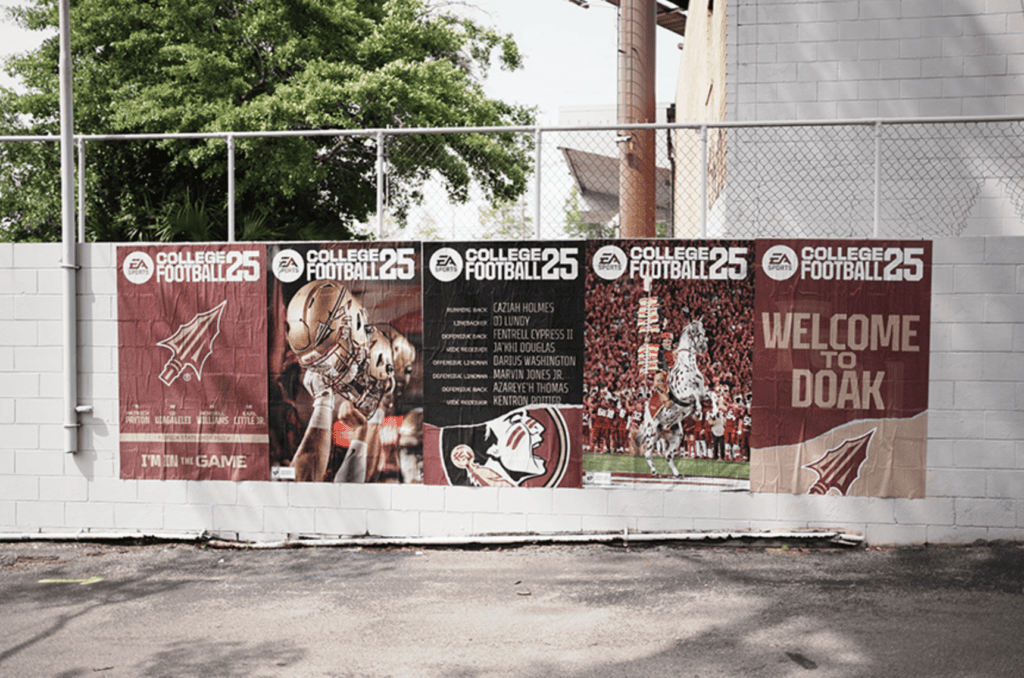
Colorado’s poster advertising market is driven by the same qualities that make the state distinctive in every other category: an outdoor-active culture, a highly educated and progressive urban demographic, and a strong appetite for visual authenticity that cuts against generic corporate messaging. Denver, Boulder, Fort Collins, and Colorado Springs each have distinct neighborhood ecosystems where poster advertising — wheat paste, wheatpasting, and professionally installed campaigns on approved surfaces — delivers reach and resonance that traditional outdoor formats struggle to match.
Our team executes poster advertising campaigns across Colorado’s major urban markets, from Denver’s RiNo Art District and the Colfax Avenue corridor to Boulder’s Pearl Street Mall and the CU Hill neighborhood. We handle location scouting, print production, installation, GPS documentation, and post-campaign photo reporting — delivering campaigns that are executed cleanly, documented precisely, and built for the specific visual culture of each Colorado market.
This guide covers the markets, the formats, the regulatory landscape, and the creative approach that makes poster advertising work in Colorado’s distinctive urban environments.
Denver’s RiNo Art District: Colorado’s Premier Poster Market
The River North (RiNo) Art District in Denver is one of the strongest poster advertising environments in the Mountain West. The neighborhood’s concentration of murals, galleries, breweries, and converted warehouse spaces creates a visual culture where street-level advertising is read as art and given genuine engagement by the 25–40 creative and tech professional demographic that dominates the district.
RiNo’s construction activity — the district has experienced sustained development over the past decade — generates a continuous supply of hoarding panels along Brighton Boulevard, Larimer Street, and the Walnut Street corridor. These hoardings are the primary poster advertising surface in RiNo: large, flat, publicly visible, and situated at eye level with the pedestrian and cyclist traffic that moves through the district daily.
Wheat paste campaigns in RiNo work best with large-format creative — 36×48 inch minimum, with multi-panel configurations on long hoarding stretches delivering maximum visual impact. The RiNo aesthetic demands bold, graphic, and visually confident creative. Campaigns that feel designed for RiNo — that reference the district’s art and music culture or demonstrate genuine visual craft — consistently outperform generic brand advertising in this market.
Colfax Avenue: Denver’s Cultural Spine
East Colfax Avenue between downtown Denver and City Park is one of the most character-rich and culturally diverse commercial corridors in Colorado. Historically the longest commercial street in America, Colfax today runs through Capitol Hill, a dense, walkable neighborhood of apartments, bars, record stores, and independent restaurants that houses Denver’s creative, LGBTQ+, and young professional demographics.
Colfax poster advertising is uniquely effective for music, entertainment, cannabis, and culture brands — the corridor’s street art tolerance and independent business culture create an environment where poster campaigns feel contextually appropriate rather than intrusive. Utility pole placements on the Capitol Hill section of Colfax, wheat paste on construction hoardings between Broadway and Colorado Boulevard, and window placements secured through business partnerships with Colfax’s independent businesses deliver consistent impressions to a highly desirable young adult demographic.
South Broadway: Denver’s Alternative Commercial Strip
South Broadway (SoBo) between Alameda and Evans Avenue is Denver’s alternative music and arts commercial strip — antique stores, record shops, tattoo parlors, and craft cocktail bars serving a deliberately counterculture audience. Poster advertising on SoBo aligns with the strip’s existing visual environment of show flyers, band posters, and independent business window graphics.
The SoBo market is ideal for brands positioning themselves against mainstream alternatives — craft food and beverage, independent media, music streaming, cannabis accessories, and experience-based brands. Wheat paste on the South Broadway commercial facades and wheatpasting on the adjacent residential streets of Baker and Overland generate consistent impressions to Denver’s most deliberately independent demographic.
LoDo and Union Station: Downtown Denver’s Premium Zone
Denver’s Lower Downtown (LoDo) — the historic warehouse district surrounding Union Station — is the city’s highest-prestige commercial zone. The mix of luxury hotels, upscale restaurants, sports bars near Ball Arena and Coors Field, and the transit hub energy of Union Station creates a foot traffic environment with broad demographic reach and high per-impression value.
Poster advertising in LoDo requires premium creative and premium surfaces. Construction hoarding placements on the Wynkoop Street and 16th Street approaches to Union Station are the primary LoDo poster targets — visible to the daily Union Station transit flow of 30,000+ commuters and visitors. The 16th Street Mall (currently undergoing renovation) pedestrian approach generates additional consistent foot traffic for placements on surrounding commercial blocks.
Boulder: Pearl Street, The Hill, and University Market
Boulder’s poster advertising market divides into two distinct zones with different demographics and different creative requirements. Pearl Street Mall — the pedestrianized downtown core — serves Boulder’s affluent professional, tourist, and tech worker population. The Hill commercial district adjacent to the CU Boulder campus serves the university’s 36,000+ students.
The Hill neighborhood is the strongest poster advertising target in Boulder for brand-to-student campaigns. 13th Street, 11th Street, and the Broadway-College Avenue intersection are the highest-foot-traffic zones in the CU vicinity — poster placements on The Hill generate sustained exposure to a student audience that is unusually brand-aware and influential in peer-to-peer product recommendation networks.
Pearl Street placements work best for lifestyle, outdoor, and premium consumer brands targeting Boulder’s upscale adult demographic. The Pearl Street aesthetic is clean and design-conscious — poster creative that fits the visual quality of Boulder’s premium retail environment generates positive associations, while cheap-looking print quality or generic creative can generate negative brand perception in this market.
Fort Collins and Colorado State University
Fort Collins is Colorado’s second-largest college market — Colorado State University brings 33,000+ students to a compact, walkable downtown with an Old Town commercial district that functions as both the student social center and the city’s primary restaurant and bar zone. Poster advertising on College Avenue and the Old Town pedestrian plaza reaches CSU students and Fort Collins’ young professional population in a shared commercial environment.
Fort Collins poster campaigns are particularly effective for music and entertainment brands — the city has a strong live music culture and the student population’s event-going habits make poster advertising on venue approaches and Old Town commercial facades a natural fit for concert, festival, and entertainment brand campaigns.
Colorado Springs: Military and Conservative Market Dynamics
Colorado Springs presents a poster advertising environment that differs significantly from Denver and Boulder. The city’s large military population (Fort Carson, Peterson SFB, NORAD, Schriever SFB) and conservative political culture create a market where brand messaging must be calibrated to a different demographic profile than the progressive outdoor-active culture of the Front Range urban corridor.
The downtown Colorado Springs core on Tejon Street and the Manitou Springs artisan district provide the strongest poster advertising environments in the Springs market — both zones serve a more creative and tourism-oriented demographic than the military-suburban residential areas surrounding them. Poster campaigns in Colorado Springs work best for outdoor recreation brands, local event promotion, and national brands seeking broad geographic coverage of the Colorado market.
Event-Adjacent Poster Campaigns: Colorado Music and Festival Scene
Colorado’s music and outdoor festival calendar creates predictable high-value windows for poster advertising campaigns. Red Rocks Amphitheatre — the iconic outdoor venue in Morrison west of Denver — draws 9,000+ attendees per show and generates pre-event pedestrian traffic through Denver’s LoDo and Capitol Hill neighborhoods as concert-goers move from their accommodations to rideshares and transit heading west. Poster campaigns timed to Red Rocks show weeks — particularly the June-September peak season — on the Downtown Denver and Capitol Hill corridors generate sustained impressions from the concert-going demographic across multiple consecutive weekends.
The Denver Music Festival circuit — Jazz in the Park, Civic Center Eats, and the host of neighborhood-sponsored summer festivals across RiNo, Highlands, and Baker — creates frequent high-foot-traffic windows in Denver’s commercial districts where timing poster deployments to festival weeks delivers 2–3x the normal daily impression rate from the concentrated event-adjacent audience.
Outside Lands is in San Francisco, but Colorado’s own Telluride Bluegrass Festival and the Telluride Film Festival create regional poster advertising opportunities for brands seeking to reach Colorado’s mountain town demographic. Guerrilla poster campaigns in Telluride, Aspen, and Steamboat Springs during major festival weeks reach the affluent outdoor-active demographic that represents some of the highest discretionary spending in the Mountain West.
Design and Print Standards for Colorado Poster Campaigns
Colorado’s outdoor-active culture and design-forward urban markets set a high creative standard for poster advertising. Posters that perform well in Denver, Boulder, and Fort Collins share a set of characteristics: bold, full-bleed imagery with strong color contrast; typography that reads clearly at distance (minimum 36pt for primary message); and a visual identity that feels authentic to the outdoor and cultural interests of the Colorado demographic rather than generically corporate.
Print quality matters more in Colorado’s weather than in most US markets. Denver’s 300 days of sunshine combined with periodic intense UV exposure degrade low-quality ink formulations faster than coastal markets. Our standard Colorado print specification uses UV-laminated stock for exposed placements and heavy-weight uncoated stock for hoarding placements that are partially weather-protected. Standard print runs for Colorado campaigns range from 50–200 prints per design, with quantity scaled to the number of placement locations and the campaign duration.
For wheat paste campaigns specifically, the Colorado climate — low humidity, high UV, occasional spring snowfall — affects adhesive performance differently than Pacific Northwest or Gulf Coast markets. Our wheat paste formula for Colorado is adjusted for low-humidity adhesion, using a higher paste-to-water ratio than our NYC or Seattle formula, which extends hold duration in Denver’s dry air while maintaining the water-solubility that makes post-campaign removal straightforward on approved surfaces.
Measuring Poster Campaign Performance in Colorado
Colorado poster advertising campaigns are documented with GPS-stamped installation photos, pre-campaign and post-campaign surface condition photos, and impression estimates based on independently verified foot and vehicle traffic counts for each placement location. Every Colorado campaign produces a photo report delivered within 24 hours of installation, with follow-up documentation at the 2-week and 4-week marks for extended campaigns.
Impression estimates for Colorado campaigns use pedestrian count data from the Denver Regional Council of Governments and city-specific traffic studies for major commercial corridors. The RiNo Art District counts, State Street Boulder pedestrian data, and Old Town Fort Collins foot traffic studies provide the demographic-specific traffic baselines that enable us to deliver Colorado clients impression estimates that are rooted in verified market data rather than industry generalization.
Brand search volume uplift during active campaign periods is an additional performance indicator we track for Colorado clients with strong digital presences. Comparing Google Trends and branded search data before, during, and after poster campaign periods in Denver, Boulder, and Fort Collins provides quantitative evidence of the awareness impact that poster advertising generates beyond the impression count alone.
Choosing a Colorado Poster Advertising Partner
The right Colorado poster advertising partner has specific location knowledge in the Denver, Boulder, and Fort Collins markets — not just general poster advertising capabilities but RiNo-specific hoarding intelligence, Mass Street Lawrence location relationships, and Old Town Fort Collins placement expertise built from direct campaign experience in those corridors. An agency without this specific market knowledge will default to suboptimal placements that deliver lower impression counts at higher costs than campaigns built on genuine Colorado location expertise.
Evaluation criteria for Colorado campaign partners: Can they name the specific hoarding positions on Brighton Boulevard or Larimer Street that deliver the highest impression counts in RiNo? Do they know the Boulder permit requirements for commercial installations in the Pearl Street Mall zone? Have they executed campaigns on Colfax Avenue during Red Rocks concert season? Agencies that answer these questions with market-specific knowledge rather than generalities have the operational grounding that protects your Colorado campaign investment. Our Colorado team is available at (646) 776-2770 to discuss your campaign planning.
Colorado Outdoor Recreation Markets: Aspen, Vail, and the Mountain Towns
Colorado’s mountain resort towns represent a specialized poster advertising market that is distinct from the Front Range urban markets of Denver, Boulder, and Fort Collins. Aspen, Vail, Breckenridge, Steamboat Springs, and Telluride each draw concentrated populations of affluent outdoor recreation enthusiasts, second-home owners, and international tourists during both ski season (November–April) and summer season (June–September). The pedestrian commercial zones of these mountain towns — Aspen’s Hyman Avenue pedestrian mall, Vail Village’s car-free core, Breckenridge’s Main Street — are some of the highest-spending-per-square-foot retail environments in Colorado and among the most receptive to premium outdoor and lifestyle brand campaigns.
Mountain town poster advertising campaigns require premium creative quality that matches the premium retail environment of these destinations. A poster that would work on RiNo’s construction hoarding in Denver would read as out of place against Aspen’s luxury retail backdrop — mountain town campaigns require the same visual quality standard as the print and digital advertising that luxury outdoor brands run in their national campaigns, adapted for the physical poster format.
Seasonal timing is the primary strategic consideration for Colorado mountain town campaigns. Ski season opening weekends (typically Thanksgiving weekend in Vail, Breckenridge, and Keystone) generate the highest single-week traffic concentrations of the winter season as enthusiasts return for the first mountain days of the year. Summer solstice weekends in June and the July 4th holiday weekend generate equivalent summer peaks. Campaigns installed 3–5 days before these peak traffic windows generate maximum fresh-poster visibility during the highest-traffic periods of the season.
Cannabis Brand Poster Advertising in Colorado: Specific Considerations
Colorado’s legal cannabis industry represents one of the most active poster advertising market segments in the state — cannabis dispensaries, brands, and delivery services use wheat paste and poster campaigns extensively in Denver, Boulder, and Fort Collins to reach the adult consumer market that their products serve. Colorado’s cannabis advertising regulations permit poster advertising for licensed adult-use cannabis businesses in specific zones, with restrictions on proximity to schools and limitations on certain types of imagery.
Our Colorado cannabis advertising team handles the specific regulatory compliance requirements for cannabis poster campaigns — ensuring campaigns deploy in permitted zones, use imagery and language that complies with Colorado’s Marijuana Enforcement Division advertising standards, and carry the required age-restriction disclosures in all printed materials. Cannabis brands that attempt Colorado poster campaigns without understanding the specific MED advertising regulations encounter enforcement issues that stop campaigns mid-execution and generate negative regulatory attention. Our compliance-first approach prevents these issues by building regulatory research into the standard campaign planning process rather than treating it as an afterthought.
Colorado Poster Advertising: Campaign Summary and Planning Considerations
Colorado’s poster advertising market rewards brands that invest in genuine creative quality and specific market knowledge in the specific neighborhoods where they are deploying. The RiNo Art District, Colfax Avenue, South Broadway, and the Boulder-Fort Collins university markets each have distinct aesthetic expectations, pedestrian traffic patterns, and demographic profiles that determine what works versus what generates indifference or negative attention.
The most important strategic advice for Colorado poster campaigns: start with location selection, not with creative. The specific surfaces available in the specific neighborhoods that serve your target demographic determine the format, size, and installation approach of the campaign — and those constraints should shape the creative brief rather than the reverse. An agency that begins the creative process before confirming specific location availability in the target neighborhoods consistently produces creative that is mismatched to the actual available surfaces and generates compromised placement quality as a result.
Our Colorado campaign planning process begins with location scouting — identifying the specific hoarding panels, approved walls, and placement positions available in the target neighborhoods during the campaign window — and builds the creative brief from those confirmed placement assets. This location-first approach is what ensures that Colorado poster campaigns are executed with the visual quality and strategic placement precision that the Colorado market demands. Contact us at (646) 776-2770 to start your Colorado campaign planning.
Colorado Poster Campaign Budget Guidance
Colorado poster advertising campaigns range in investment from $2,000 for a focused 15–20 placement single-neighborhood Denver execution to $15,000–$20,000 for a comprehensive multi-city campaign covering Denver’s RiNo and Colfax corridor, Boulder’s Mass Street, and Fort Collins’ Old Town with 100–200 total placements across a 30-day active period. The per-placement cost in Colorado is lower than coastal markets — Denver and Boulder poster placements average $30–$60 per unit including print, labor, and location scouting, compared to $80–$120 per unit in New York or San Francisco — making Colorado an unusually cost-efficient poster advertising market for the level of demographic quality and social amplification potential it delivers.
The minimum effective investment for a Colorado poster campaign that generates meaningful brand awareness in the target market is approximately $3,500–$5,000 — enough to cover 60–80 placements across two or three Denver neighborhoods with premium print quality and documented GPS placement records. Below this threshold, campaigns typically generate impressions too dispersed across neighborhoods and demographics to build meaningful brand recognition with any specific target audience segment. Contact our Colorado team at (646) 776-2770 for a specific market quote.
Frequently Asked Questions
What is poster advertising in Colorado?
Poster advertising in Colorado refers to street-level campaigns using wheat paste, wheatpasting, and professionally installed poster placements on construction hoardings, utility structures, and approved wall surfaces across Denver, Boulder, Fort Collins, and Colorado Springs. These campaigns deliver high-visibility outdoor impressions at a fraction of traditional billboard costs.
Where is poster advertising most effective in Denver?
The most effective Denver poster advertising zones are the RiNo Art District, the Colfax Avenue corridor between Capitol Hill and the Denver Art Museum, South Broadway between Alameda and Mississippi, and the LoDo warehouse district. Each zone serves a distinct Denver demographic with high outdoor advertising receptivity.
Is poster advertising legal in Colorado?
Poster advertising on private property with property owner permission is legal throughout Colorado. Our team scouts approved surfaces, secures property owner permissions where required, and ensures all campaign placements are on legally appropriate surfaces.
What poster advertising formats work best in Colorado’s outdoor markets?
Large-format, visually bold campaigns consistently outperform generic messaging in Denver and Boulder. 24×36 inch single panels are standard; 48×72 inch and multi-panel formats on construction hoardings generate premium visibility. Creative that references Colorado’s outdoor and adventure culture performs especially well.
How does poster advertising work in Boulder, Colorado?
Boulder’s Pearl Street Mall, The Hill commercial district adjacent to CU Boulder, and the Broadway corridor are the primary poster advertising markets. The Hill neighborhood near CU Boulder is particularly effective for reaching the student and young adult demographic with high-volume poster placements.
How much does poster advertising cost in Colorado?
Colorado poster advertising campaigns typically range from $2,000 for a 20-placement single-neighborhood Denver execution to $8,000–$15,000 for a multi-city campaign covering Denver, Boulder, and Fort Collins with 75–150 total placements. All costs include design, print, scouting, installation, GPS documentation, and photo reporting.
Does American Guerrilla Marketing run poster campaigns in Colorado?
Yes. Our team executes poster advertising campaigns across Colorado including Denver’s RiNo, Colfax, South Broadway, and LoDo, plus Boulder, Fort Collins, and Colorado Springs. We handle location scouting, print production, installation, GPS documentation, and post-campaign photo reports. Contact us at (646) 776-2770.