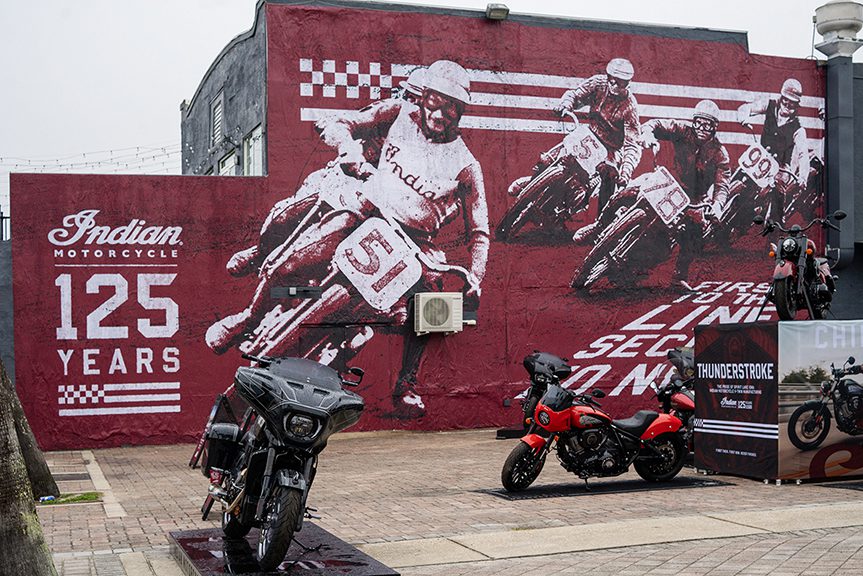
Los Angeles has more working muralists per square mile than almost anywhere in the country. Finding the right one for your project, managing the production, and protecting the result is the real work.
People ask us about muralists in Los Angeles all the time. Sometimes they mean they need an artist. Sometimes they mean they need a production company. Most of the time, they need both, and they don’t know it yet.
At American Guerrilla Marketing, we function as the connective tissue between brand clients and mural execution in Los Angeles. We work with a roster of vetted muralists, manage the full production process, and guarantee the outcome. This article walks you through how that works, what questions to ask before hiring any muralist in LA, and what the process looks like from first call to final seal coat.
The word “muralist” covers a lot of ground. There are spray can artists from the Chicano mural tradition rooted in East LA and Boyle Heights. There are photorealist painters trained in fine art. There are graphic muralists who work from digital files and translate them precisely to wall scale. There are abstract painters, lettering specialists, and illustrators. Each brings a completely different visual language to a wall.
When a brand comes to us and says “we want a mural in LA,” the first real conversation is about style. Who is the audience? What corner of the city? What emotional response does the brand want the mural to trigger? The answers to those questions narrow the field from several hundred working muralists down to a handful of the right fit.
We have worked with muralists across all of these disciplines. The ones we hire regularly are professionals. They show up. They work on schedule. They produce work that holds up to client approval and to the street. That sounds like a low bar. In LA’s mural world, it isn’t.
The most common client mistake: Hiring a muralist directly based on an Instagram portfolio without checking their process. Portfolio and production quality are two different things. We’ve repaired work from highly followed artists who had no system for surface prep, color matching, or sealing. A beautiful portfolio doesn’t guarantee a professional outcome.
LA Neighborhoods and Their Mural DNA
You can’t separate the muralist from the location. Different parts of Los Angeles have different visual vocabularies, and a muralist who fits perfectly in one neighborhood might feel out of place in another.
East LA and Boyle Heights
This is the spiritual home of the Chicano mural movement. Figures like David Alfaro Siqueiros painted here. The community has a long and documented relationship with mural art as political and cultural expression. Brands that commission work in this area should engage muralists from or deeply connected to the community. Our approach here is always to center the artist and the community relationship, more than the client’s brand goals.
Arts District
The stretch from 6th Street down to the river, between Alameda and Santa Fe, is ground zero for contemporary mural culture in LA. Traction Avenue and Hewitt Street have walls that have been painted and repainted by major international artists. The audience here is arts-savvy and the photography is constant. We place graphic, conceptual, and brand-integrated murals in this area regularly.
Melrose, Fairfax, and Beverly Grove
Fashion, streetwear, and youth culture dominate this corridor. Murals here get heavy social media traffic. Brands targeting 18-to-35 demographics with a lifestyle or fashion angle do well on these walls. Bold color palettes, strong typography, and graphic illustration work best here. We have painted on the strip between Melrose and Willoughby numerous times.
Silver Lake and Los Feliz
Indie, creative, slightly literary. The audience skews toward design-aware younger professionals. Murals that lean abstract, illustrative, or nature-adjacent do particularly well. The building sides along Sunset from Silver Lake Boulevard toward Echo Park Avenue are well-traveled and well-documented on social.
Culver City
A rapidly changing creative hub with heavy gallery presence. Washington Boulevard between Culver and Helms has seen a surge in mural work tied to the gallery scene. Brands that align with contemporary art or creative industry do well here.
How We Match Muralists to Projects
Our internal roster covers about a dozen active muralists in Los Angeles at any given time. We vet each one on four criteria: portfolio quality, production reliability, surface preparation knowledge, and communication. All four matter equally.
Style Category
Best Fit Neighborhoods
Typical Brand Fit
Graphic / Illustrative
Fairfax, Melrose, Arts District
Streetwear, tech, consumer apps
Photorealist
Mid-City, Culver City, Koreatown
Entertainment, sports, luxury
Lettering / Typography
Downtown, Hollywood, Silver Lake
Music, lifestyle, fashion
Abstract
Arts District, Venice, Los Feliz
Art platforms, hospitality, wellness
Community-tradition
Boyle Heights, Leimert Park
Culturally aligned brands, nonprofits
Managing a Mural Project in Los Angeles: What the Process Looks Like
Here is a realistic timeline for a brand mural project in Los Angeles from first call to completed installation.
Week 1-2: Brief and Wall Confirmation
We take the brand brief, establish the style direction, and confirm or source a wall location. If the client has a wall already, we assess it. If not, we pull from our network of property relationships across the city. Wall confirmation involves a site visit, surface assessment, and a conversation with the property owner about timeline and access.
Week 2-3: Design and Artist Match
We select the muralist from our roster based on style and availability. The artist develops initial sketches based on the brief. We present two or three directions to the client. Revisions happen in this phase. The design gets locked and scaled to wall dimensions before anything goes on the surface.
Week 3-4: Prep and Base Coat
Surface preparation begins. Pressure washing, crack repair, and primer application. Depending on the wall condition and size, prep can take one to three days. Base colors go on after the primer cures. We never rush this phase. Paint that goes on an improperly prepped surface will fail, and that failure is expensive to fix.
Week 4-6: Painting and Detail Work
The muralist builds the piece in layers. Background to foreground. Blocking in shapes, then adding midtone detail, then fine line work and final highlights. Our production manager checks in daily and provides photos to the client throughout. The client gets a chance to flag any concerns before the final seal coat locks everything in.
Final: Sealing and Documentation
Once the paint is fully cured, we apply a UV-protective clear coat and, for high-traffic walls, an anti-graffiti barrier coat. We do a full photo documentation shoot of the completed mural. We deliver a final image package to the client for marketing use.
On live painting events: One of the most effective formats for mural projects in LA is the live painting activation. The artist works on the wall in real time during a brand event or product launch. The process becomes the content. We have run these activations for music releases, brand launches, and retail openings throughout the city. The video content alone justifies the production cost.
What to Ask Before Hiring Any Muralist in LA
If you are considering hiring a muralist directly rather than through an agency, here are the questions you should ask before signing anything:
How do you prep a surface before painting? A muralist who can’t give you a detailed answer here is going to give you a mural that fails in 18 months.
What paint products do you use on exterior walls? UV-resistant exterior-grade acrylics are the standard. Spray paint alone is not a long-term solution on most exterior surfaces in LA.
Do you seal your work? If the answer is no, the mural will fade significantly within two years in Southern California’s sun.
Can you provide a scaled mockup before painting starts? You need to see the design at wall proportions, more than on an 8.5×11 printout.
Do you have risk insurance? For any brand or commercial project, this is non-negotiable.
Can you give me references from commercial clients? Portfolio work is not the same as commercial project delivery. Ask for client references.
Brand Murals vs. Artist Murals: Understanding the Difference
There are two distinct types of mural projects in Los Angeles. Brand murals are commissioned with a specific marketing objective. Artist murals are commissioned with the artist’s creative vision at the center. They can overlap, but the management approach is different.
Brand murals require tighter creative controls. The logo has to be precise. The colors have to match brand standards. The message has to be clear. We manage these with a detailed creative brief, approval stages, and a production checklist. The artist operates within a defined framework.
Artist murals, sometimes called community murals or commissioned art, give the artist more latitude. The brand may have input on theme or general direction, but the execution is the artist’s expression. These projects often generate more organic social media engagement because the work reads as art rather than advertising. Many of our best-performing brand campaigns use this model, where the artist’s voice is visible and the brand affiliation is credited but not dominant.
Cost Framework for Muralist Work in Los Angeles
Muralist fees in LA vary enormously based on reputation, size of wall, complexity of design, and whether you are working through an agency or directly. Here is a realistic range:
Emerging muralist, small wall (under 150 sq ft): $1,500 to $4,000 for labor and materials, not including prep or sealing.
Mid-career muralist, medium wall (150-500 sq ft): $4,000 to $12,000 for labor and materials.
Running or well-known muralist, large wall (500+ sq ft): $15,000 and up. Some high-profile muralists command $50,000 or more for large commissions.
Full production through AGM (design, artist, prep, painting, sealing, documentation): Varies. We scope each project and provide a detailed quote after site assessment.
These are rough benchmarks, not quotes. Contact us for a project-specific estimate.
Building a Long-Term Campaign Presence
Single campaigns produce results. Sustained campaigns produce market presence. The distinction matters for how campaigns in this category should be evaluated and resourced. A single poster run, a single street team day, or a single event activation creates awareness among the consumers who encounter it. A sustained campaign presence across multiple months and multiple tactic types creates the kind of repeated exposure and brand familiarity that drives real behavioral change — in consumer purchase decisions, in donor giving patterns, in event attendance and community engagement.
Sustained campaign presence does not require constant high-investment activity. It requires consistent, well-timed activity that maintains brand visibility in the target environment without exhausting the campaign budget in a single burst. A poster campaign that runs once at six weeks before a major deadline, then again at two weeks before, then supports an event at one week before creates three separate exposure moments with the same budget that a single large poster run would spend on one moment. The three-moment approach typically drives better awareness and conversion metrics than the single-moment approach because repetition — encountering the brand message more than once in the pre-decision period — is one of the most reliable drivers of consumer action.
Building the data infrastructure to support sustained campaigns is as important as the campaigns themselves. Tracking which tactic types, which locations, and which timing windows produce the highest consumer response in specific markets allows each successive campaign to be more efficient than the previous one. Brands and organizations that are on their third or fourth annual campaign with consistent tracking are operating from a significantly stronger knowledge base than those rebuilding their approach from scratch each time. The investment in tracking and analysis compounds: the data from early campaigns informs and improves all future campaigns in the same markets.
American Guerrilla Marketing works with clients on both one-time campaign executions and sustained annual campaign programs. For sustained programs, we maintain market-level performance data from all campaigns we execute, which allows us to inform each new campaign cycle with documented evidence of what produced the strongest results in the same market for comparable campaigns. If you are planning an initial campaign in a new market, we can provide historical performance context that helps set realistic expectations and identify the highest-value starting points. If you are planning a subsequent campaign in a market where we have worked with you before, we can compare the new campaign’s results directly to previous cycles.
Making the Campaign Work: Execution Principles That Apply Across Categories
The field marketing principles that produce the strongest campaign results are consistent across categories, budgets, and geographies. Precise audience targeting in specific physical locations rather than broad coverage. Activation mechanics that deliver genuine consumer value rather than simply displaying brand messaging. Locally sourced field teams who know their market. Systematic documentation that produces usable assets. Prompt and specific reporting that informs the next stop or the next campaign.
These principles apply whether the campaign is a street-level poster run for a small brand or a multi-city experiential tour for an established one. The difference between campaigns that perform at their potential and campaigns that underperform despite adequate budget and careful planning is almost always in one or more of these principles being executed imprecisely. Targeting that is slightly wrong produces poor location results that compound across the full campaign. Activation mechanics that lead with brand rather than consumer value produce low engagement rates that the best field team in the world cannot fully compensate for. Field teams that are inadequately briefed produce inconsistent consumer experiences that undermine the brand impression the campaign is designed to create.
American Guerrilla Marketing builds these principles into the production process for every campaign we operate. The pre-launch checklist that every campaign must pass before the first activation includes: audience targeting confirmed against specific location data for each market, activation mechanics reviewed for consumer value lead, field team sourcing confirmed locally in every market, briefing documents written and reviewed, documentation plan assigned with specific roles, and reporting templates ready for immediate use after each stop. This checklist is not aspirational — it is the minimum standard for a campaign to launch. Campaigns that are not ready on all dimensions get the additional time they need to be ready before the first stop, not the promise that issues will be resolved in the field.
Written by Livy Phillips, American Guerrilla Marketing.
The Role of Property Relationships in LA Mural Campaigns
Wall access is everything. You can have the best artist, the best design, and the best brand brief in the world, and if you can’t secure the right wall, the campaign doesn’t happen. In Los Angeles, wall access is a relationship business.
We have spent years building property owner relationships across the city’s highest-traffic mural corridors. Arts District building owners along Traction Avenue and Hewitt Street. Property managers in Fairfax and Melrose who maintain walls specifically for mural campaigns. Landlords in Silver Lake who welcome brand projects because the mural improves the building’s visual presence and brings foot traffic to the block.
These relationships move faster than cold outreach. When we know the property owner, we can confirm wall access in days rather than weeks. That speed matters when you’re working with a product launch timeline or an event activation window. A brand going directly to property owners without running relationships should expect four to eight weeks of back-and-forth before a wall agreement is signed. We often have that same conversation closed in a week.
Property agreements cover access windows, paint type approvals, timeline commitments, and sometimes revenue arrangements where the property owner receives a flat fee or an in-kind benefit for hosting the mural. We structure these agreements to protect the brand’s interests and give the property owner what they need to say yes quickly.
Mural Longevity and Maintenance in Los Angeles
A mural is not a one-time cost. It is an asset that requires ongoing attention to stay looking like an asset.
The two main threats to mural longevity in LA are UV degradation and unauthorized overpainting. UV hits hard on south and west-facing walls. Colors shift over years of direct sun exposure. Our sealing process uses a UV-resistant topcoat that slows this degradation significantly, but not indefinitely. Even a well-sealed mural on a south-facing wall in Culver City will show some color shift after four or five years of Southern California sun. Planning for a refresh at year four or five is a realistic approach to mural lifecycle management.
Unauthorized overpainting is less common on branded commercial murals than on unmarked walls, but it does happen. Property owners who are actively engaged with their mural, who know it represents a brand investment, tend to flag issues quickly. We advise clients to maintain a relationship with the property owner throughout the mural’s life so that any threat of unauthorized painting is caught and addressed before it becomes a completed problem.
For brands that want a specific mural to remain pristine, an anti-graffiti barrier coat is applied over the seal coat. This allows light paint or marker tags to be removed with a cleaning solution without damaging the underlying mural. We include this on high-traffic or street-level walls where the exposure to unauthorized marking is higher. It adds cost to the installation but saves significantly on future remediation.
Frequently Asked Questions
What is the best neighborhood in LA for a brand mural that generates social media traffic?
The Arts District consistently produces the highest social media documentation of any LA mural neighborhood. Melrose and Fairfax is a close second because of the concentration of streetwear and fashion audiences who photograph heavily. Silver Lake and Los Feliz produce less volume but higher-quality engagement from a design-aware audience. East LA’s Boyle Heights produces authentic community docu
Can you handle mural permitting in Los Angeles?
LA has a specific mural permit process managed through the Department of Building and Safety, and the permit requirements changed significantly following the passage of the mural local rule in 2013. The permitting status of a specific wall depends on whether it’s in a designated arts district, whether it’s on city or private property, and what the property owner’s existing permissions cover. We a
How do I find a reputable muralist in Los Angeles?
Instagram is a starting point but not enough. Look for artists who can show you commercial project references, more than their portfolio. Ask about their surface prep and sealing process. Working through an agency like AGM gives you access to a vetted roster with production management built in. > > >
What is the difference between a muralist and a graffiti artist?
The disciplines overlap heavily in practice, but the professional context differs. A muralist typically works on commissioned, authorized projects with a client brief and a defined scope. A graffiti artist’s tradition is rooted in unauthorized mark-making as cultural expression. Many of LA’s best muralists came from that tradition and now work professionally in commercial contexts. Style doesn’t
Can a muralist recreate our logo on a building wall?
Yes. Logo reproduction at scale is one of the most common mural requests we handle. It requires precise grid transfer or projection, accurate color matching from your brand guidelines, and a muralist with technical skill in precision line work. Our roster includes specialists in this type of work. > > >
How long does it take to paint a mural in Los Angeles?
From first conversation to completed and sealed mural, expect four to eight weeks for most projects. The longest phases are often design approval and surface prep, not the painting itself. A large wall in excellent condition with an approved design can be painted in as few as five days. A wall in poor condition with a complex design might take three weeks of active production. > > >
Southern California’s climate is actually one of the better environments for mural longevity. Low humidity and rare precipitation mean paint doesn’t have the freeze-thaw cycles that damage murals in colder climates. The main threat is UV. South and west-facing walls get intense sun. We use UV-resistant paints and sealers specifically to address this. A well-sealed mural in LA can look sharp for s