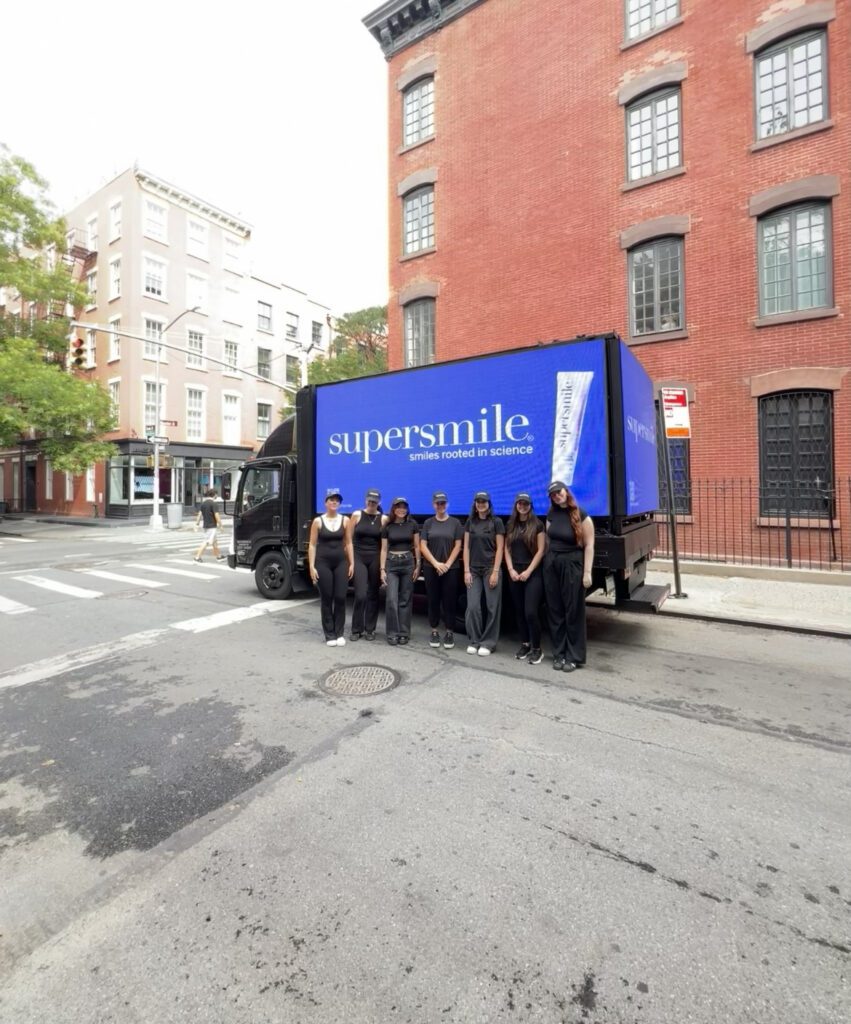
Mobile Marketing Tours: Strategy, Formats, and How to Run Them
Mobile marketing tours are more than a wrapped vehicle and a street team. Here is how the format works operationally from route planning through final market reporting.
Mobile marketing tours are vehicle-based brand campaigns that travel from city to city, creating direct consumer interactions at each stop. The plural is deliberate: most mobile marketing tour campaigns involve multiple stop types, multiple activation mechanics, and multiple markets operating under a single campaign umbrella. The campaign’s structure — the sequence of stops, the field team management, the documentation system, the reporting cadence — must be designed to handle that complexity consistently across all markets on the tour.
American Guerrilla Marketing has planned and operated mobile marketing tours for brands in consumer goods, entertainment, technology, beverage, and nonprofit categories. The operational patterns that produce the highest performance are consistent across categories: precise stop selection based on direct market knowledge, locally sourced and properly briefed field teams, activations designed around genuine consumer value, and documentation systems that capture what actually happens at each stop. This guide covers those operational patterns in enough detail to be useful for planning a first mobile marketing tour or evaluating the plan for a subsequent one.
Vehicle choice determines the physical experience the consumer has with the brand at each stop. A cargo van creates a different experience than a step van with a service window, which creates a different experience than a custom-built experiential trailer. The right vehicle for a mobile marketing tour depends on the activation mechanics the campaign requires, the consumer experience the brand wants to create, and the budget and timeline available for vehicle production.
Cargo Van: Urban Access and Affordability
A fully wrapped cargo van is the most practical starting point for mobile marketing tours with budgets under $100,000 total. Wrap production runs $2,000 to $5,000 with a two-to-three-week timeline. The van’s size advantage is real in urban markets: it can park in spaces that step vans and trailers cannot, which matters enormously when the highest-value stop locations are on dense commercial streets with limited vehicle access. Consumer interactions happen in the space around the van rather than through it, which works well for any campaign where the primary activation is the material, product, or ambassador interaction rather than the vehicle itself.
Step Van: More Surface, More Space
A step van gives substantially more exterior branding surface and more interior storage and operational space than a cargo van. The larger exterior creates more visual presence from a distance. The interior space allows for larger product or material volumes and more operational flexibility. Many step vans can be modified with a service window, which creates a specific interaction point that is more contained and more branded than open-air distribution. Wrap costs run $4,000 to $8,000 with a three-to-four-week timeline.
Experiential Trailer: The Premium Option
A purpose-built experiential trailer creates the highest-production vehicle experience on a mobile marketing tour. These trailers are designed specifically for the campaign, expanding to create branded interior spaces with built-in lighting, AV systems, product display, and consumer interaction infrastructure. Production runs $30,000 to $150,000 with an eight-to-sixteen-week build timeline. The trailer format is appropriate when the campaign objective requires the vehicle environment itself to communicate brand positioning — when the production quality of the stop needs to be high enough to justify the consumer’s time and attention as a premium experience rather than an encounter with a sampling van.
Vehicle Type
Production Cost
Lead Time
Best Application
Cargo van wrap
$2,000 – $5,000
2-3 weeks
Distribution, street team base, urban access
Step van wrap
$4,000 – $8,000
3-4 weeks
Sampling, demonstrations, service window
Experiential trailer
$30,000 – $150,000
8-16 weeks
Premium brand environments, major launches
Bicycle/cart fleet
$1,500 – $6,000
2-4 weeks
Dense urban pedestrian zones, multi-location
Planning the Tour Route
The tour route is a sequence of specific stop locations in specific cities, scheduled across a defined period. Building the route requires three parallel planning efforts: identifying the target audience’s physical concentration points in each city, identifying high-value anchor events in each market during the tour period, and confirming vehicle access and operational logistics for each planned stop location.
Target audience mapping should precede stop selection in every market. The question is not “where are there a lot of people” but “where are the people who match this campaign’s target consumer profile concentrated in this city?” A mobile marketing tour for a premium coffee brand will find its highest-quality audience at weekend farmers markets, specialty food retail areas, and design-adjacent neighborhoods in each city. A tour for a streetwear brand will find it at specific retail corridors, skate parks, and sneaker-focused shops. The stop selection follows from the audience mapping, not the reverse.
Anchor event strategy: Every tour route should include at least one anchor event per market — a confirmed high-traffic event with documented audience profiles that match the campaign’s target consumer. Anchor events provide guaranteed consumer volume on a specific date and time, which reduces the uncertainty inherent in organic stop selections at location-only spots where traffic volume can vary significantly by day, weather, and season.
In New York City, reliable anchor events for most consumer categories include the Union Square Greenmarket (Saturday and Wednesday), the Hester Street Fair (April through October weekends), and the Smorgasburg food market in Prospect Park (Sunday). In Los Angeles, the Abbot Kinney First Fridays event, the Melrose Trading Post Sunday antique market, and the Silver Lake Farmers Market (Saturday) are consistent high-quality stops. In Chicago, the Green City Market in Lincoln Park (Wednesday and Saturday) and the Renegade Craft Fair (seasonal) are reliable anchor options for most consumer categories.
Field Team Structure and Management
Every mobile marketing tour stop requires a field manager in a dedicated logistics role, a vehicle operator or lead ambassador, and at least one additional brand ambassador for consumer engagement. The field manager and brand ambassador roles must be explicitly separated and individually staffed. When a single person tries to cover both roles, operational quality degrades because the two roles require fundamentally different focus and decision-making modes.
The field manager is responsible for all logistics: vehicle positioning, setup, team briefing, consumer flow management, real-time problem-solving, and documentation. The brand ambassadors are responsible for all consumer interactions: engagement, sampling mechanics, giveaway distribution, and organic content creation. On a stop with three ambassadors, one should function as the activation lead (running the primary consumer interaction mechanic), one as the distribution lead (managing the flow of product or materials), and one as the documentation lead (capturing photos and video from the stop).
Local sourcing in every market is the non-negotiable staffing principle. Local ambassadors know their city at the operational level — which corners have afternoon shade, which neighborhoods have specific cultural context that affects how consumers respond to brand interactions, which logistical issues are specific to certain stop locations. That knowledge comes from living in the market, not from reading about it in a pre-tour brief.
Activation Design Principles
The activation is the consumer experience the tour exists to create. Every activation mechanics decision should start from the same question: what does the consumer receive from engaging, and is that thing genuinely worth their attention? An activation where the consumer receives something valuable — a product they enjoy, a photo they will share, an experience they will describe later — produces strong engagement. An activation where the consumer is offered minimal value in exchange for their attention produces weak engagement regardless of how well the vehicle is branded or how large the team is.
The most effective activation mechanics for mobile marketing tours include product sampling with consumer participation (letting the consumer be involved in the sampling process, not just receiving a pre-poured cup), photo moments with production-quality results that consumers will want to share, giveaways with meaningful prizes earned through specific consumer actions, and live product demonstrations the consumer can participate in. The common thread is consumer agency — the activation gives the consumer something to do, not just something to watch or receive passively.
Metric
How Tracked
Report Timing
Direct consumer interactions
Ambassador tally per stop
24 hours post-stop
Samples/materials distributed
Inventory count
24 hours post-stop
Photo documentation
Content creator output
48 hours post-stop
Market summary
Field manager report
Weekly during tour
Final consolidated report
Full analysis
1 week post-tour
Budget reference: A basic mobile marketing tour with a van wrap, local street teams, and a sampling program covering five to eight cities over three to four weeks typically runs $30,000 to $70,000. A premium tour with a custom-built experiential trailer and 15 or more markets runs $150,000 to $500,000. The main variables are vehicle production, market count, team size per stop, and product or giveaway cost.
Multi-City Coordination and Consistency
The operational challenge specific to mobile marketing tours — as opposed to single-market activations — is maintaining consistent brand execution across multiple cities with different local teams, different logistical environments, and different audience characteristics. The campaign brief must be specific enough that a local team executing in Dallas produces essentially the same consumer experience as a local team executing in Seattle, even though those teams have never worked together and are operating in very different physical environments.
The solution is a layered brief structure: a campaign-level brief that covers the brand, the objectives, and the non-negotiable elements of the activation, a market-level brief that covers the specific stop locations, the local audience context, and any market-specific adaptations the campaign supports, and a stop-level brief that covers the specific logistics, positioning, and execution details for each individual stop. The campaign-level brief is the same across all markets. The market and stop briefs are specific to each city and location.
Activation Mechanics That Work on Mobile Marketing Tours
The activation is the consumer experience the tour exists to create. A well-designed activation creates genuine interactions that build brand affinity and generate documentation worth using. A poorly designed one burns budget on presence without producing outcomes worth reporting or remembering.
Product sampling is the most consistently effective activation mechanic on mobile marketing tours. When the product is good, direct sampling creates the most direct path to brand preference: the consumer experiences the product in the physical world, receives something tangible, and forms an opinion based on the product itself rather than its advertising. The key design element in a sampling activation is not just providing the sample — it is creating a sampling moment that feels intentional and generous rather than mechanical and obligatory. A consumer who is handed a sample in a cup by someone who clearly wants to move through the line as fast as possible has a different relationship with that brand than a consumer who is invited to try a sample that is prepared with care and presented with genuine enthusiasm.
Photo moments are the second most consistently effective activation mechanic. They work because they create a consumer deliverable — the photo — that the consumer wants independently of any brand relationship. A photo activation where the consumer creates genuinely good content that they will post and share extends the campaign’s reach to the consumer’s entire social network. The key design element is making the photo environment good enough that the consumer would stop to take a photo there even if the brand were not present. A beautiful, well-lit photo backdrop with a distinctive visual element is worth stopping for. A branded backdrop with a logo and a tagline is not. The brand is present in both, but only the first one makes the consumer want to create the content.
Activation design principle: The consumer should want to engage with the activation before they understand that it is a brand marketing effort. If the consumer’s first thought when they see the activation is “this is an ad I’m being asked to participate in,” the activation design has not led with enough genuine consumer value. The brand should reveal itself as the provider of something the consumer already wanted, not as the premise of the entire interaction.
Giveaways and sweepstakes are effective when the prize is genuinely worth winning and the entry mechanic is genuinely accessible. A giveaway where the consumer fills out a form to win a $500 product package converts well because the prize is worth the minor effort. A sweepstakes where the consumer follows the brand on social media to enter creates a durable brand relationship for winners and non-winners alike. The key failure mode in giveaway activations is offering prizes that are too small relative to the effort required to enter, or entry mechanics that feel exploitative (requiring extensive personal data collection in exchange for entry into a drawing for a generic item). Calibrate the prize to the entry effort and make the prize genuinely something the target audience wants.
Why Mobile Marketing Tours Outperform Single-Market Activations
A single-market activation concentrates all campaign resources in one city and produces results in that city. A mobile marketing tour distributes those resources across multiple markets and produces results that compound across the tour’s geographic footprint. The compounding happens in several ways: each market’s activation generates social content that reaches audiences in other markets through the brand’s social channels, local press coverage in each market adds up to a pattern of national media presence, and the documentation from all stops tells a story of national market presence that is significantly more credible than any single-market activation can produce.
For brands building national consumer awareness, the geographic breadth of a mobile marketing tour creates something single-market activations cannot: the appearance and reality of being everywhere at once. A consumer in Chicago who sees tour content from New York, Los Angeles, and Atlanta before the tour arrives in Chicago has a higher purchase intent when they engage with the Chicago stop than a consumer encountering the brand for the first time in their home market. The cross-market documentation builds brand momentum that makes each subsequent market’s activation more effective than it would be in isolation.
Planning Timeline for Mobile Marketing Tours
Mobile marketing tour timelines are determined primarily by the vehicle type chosen. A cargo van wrap campaign can be planned, produced, and launched in four to six weeks from initial brief. A step van campaign with a modified service window typically requires six to eight weeks. A fully custom experiential trailer campaign requires a minimum of twelve to sixteen weeks from initial brief to the first stop, accounting for trailer design, fabrication, fit-out, and testing before the campaign launches.
The production timeline for the vehicle is the longest single lead time element and the one that cannot be compressed without significant risk. A trailer fabrication shop that is asked to compress an eight-week build into five weeks may produce a vehicle with quality issues that create operational problems during the tour. Build the production timeline into the campaign schedule realistically and plan the tour’s launch date from there, rather than setting a launch date and then asking vendors to meet it regardless of whether the timeline is achievable.
Beyond vehicle production, the timeline for a mobile marketing tour should account for route scouting and logistics confirmation (two to four weeks), local staffing recruitment and briefing (two to three weeks per market, run simultaneously across markets), materials production (print, product, giveaway items — one to three weeks depending on complexity), and campaign briefing and content strategy alignment (one to two weeks). Total planning timeline for a multi-city tour: six weeks minimum for a basic van campaign, twelve to sixteen weeks for a trailer-based premium campaign.
AGM’s Approach to Mobile Tour Campaign Execution
American Guerrilla Marketing has operated mobile marketing tours for brands in consumer goods, entertainment, beverage, technology, and nonprofit categories across major US and Canadian markets including New York, Los Angeles, Chicago, San Francisco, Miami, Boston, Washington DC, Atlanta, Dallas, Houston, Seattle, Denver, Philadelphia, and Toronto. Our operational approach is built on four non-negotiable principles that we apply to every tour we run.
First, we walk every planned stop location before the tour launches. Visiting a location at the same day and time as the planned stop reveals details that no amount of online research can substitute for: where foot traffic actually concentrates versus where it appears to concentrate on a map, what the ambient competition for consumer attention looks like at that specific time, whether the sightlines from the vehicle’s likely parking position create the brand visibility the campaign requires, and what logistical complications are specific to that location on that day. The stop brief we build from this reconnaissance contains specific vehicle positioning instructions, setup instructions, and notes on timing and crowd patterns that the field team uses on the day of the stop.
Second, we source locally in every market. Local brand ambassadors know their city at the level of granular operational detail that determines stop performance: which conversation openers work with the local audience, which neighborhoods have specific cultural context that affects how consumers respond to different activation mechanics, which logistical issues are endemic to certain location types in that specific city. That knowledge is not learnable from a pre-tour brief. It comes from the ambassador’s lived experience in the market. We have local staffing relationships in every major US market and in major Canadian markets that allow us to source experienced, properly vetted local ambassadors on a per-campaign basis without the overhead of maintaining a national traveling team.
Third, we build documentation into every stop at the planning stage. Every stop has an assigned content documenter. That documenter’s sole job at the stop is photo and video capture — not consumer interaction, not logistical support, but documentation. We deliver photo and video assets within 48 hours of each stop and a stop summary within 24 hours. The documentation is not an afterthought or a nice-to-have. It is a core campaign deliverable that we plan for with the same rigor we apply to vehicle positioning and activation setup.
Fourth, we report with specificity and honesty. Our stop reports contain the actual figures from each stop: actual consumer interactions, actual samples or materials distributed, actual social content generated with campaign hashtags. When a stop underperforms its expected figures, we include the analysis of why — poor weather, a competing event drawing audience away, a logistical issue that reduced the effective activation window — along with the recommendation for what to change at the next stop of the same type. Accurate reporting builds campaigns. Inflated reporting that does not reflect what actually happened produces plans that repeat mistakes rather than correcting them.
Campaign Architect — American Guerrilla Marketing
Frequently Asked Questions
What is a mobile marketing tour?
A mobile marketing tour is a campaign in which a brand-wrapped vehicle or vehicle fleet travels from market to market creating direct consumer interactions at each stop. The vehicle serves as the visual centerpiece and operational base for the field team running the activation at each location.
How much does a mobile marketing tour cost?
A basic mobile marketing tour with a van wrap, local ambassadors, and a sampling program covering five to eight cities runs $30,000 to $70,000. A premium tour with a custom experiential trailer and 12 or more markets runs $150,000 to $500,000. Vehicle production, market count, and team size are the largest budget variables.
How long does it take to plan a mobile marketing tour?
A basic van-based tour requires four to six weeks from kick-off to the first stop. A tour with a custom experiential trailer requires twelve to sixteen weeks minimum, accounting for trailer design and build time.
How many cities should a mobile marketing tour cover?
A regional tour of three to five cities is a solid starting point. A national tour of ten to twenty cities is appropriate for brands with wide consumer distribution. The minimum for meaningful national impact is typically eight to ten markets across the major US consumer regions.
How is the field team staffed?
We source brand ambassadors locally in every market, working with experienced local staffing partners. All ambassadors receive a campaign-specific brief before each stop covering the activation mechanics, the consumer engagement approach, and the documentation requirements.
What documentation does a mobile marketing tour produce?
Every stop produces photo documentation, consumer interaction figures, and product distribution counts. We deliver a 24-hour post-stop summary and a consolidated final report within one week of the last stop. Photo and video assets are available within 48 hours of each stop.