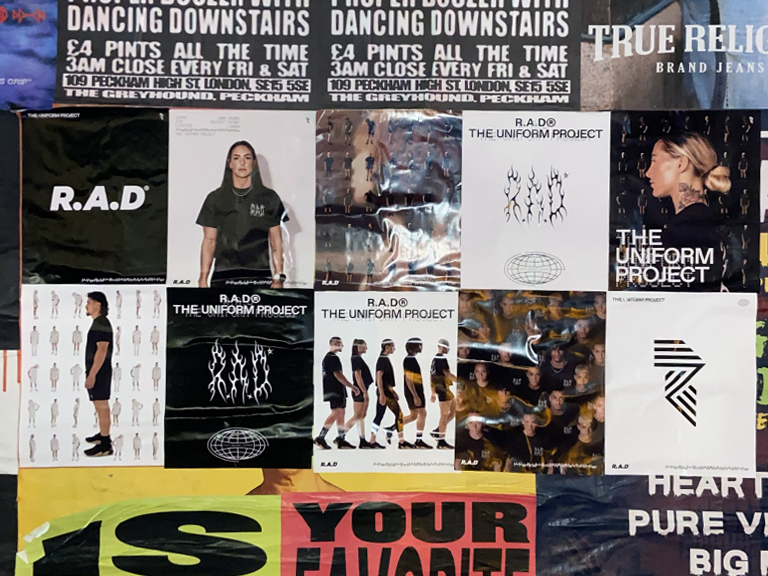
Mexico City is one of the most compelling poster campaign markets in the western hemisphere — a city of 9+ million people in the urban core with a genuinely walkable creative class in specific colonias, world-class street art culture, and building stock that includes some of the best large-format wheatpaste surfaces anywhere. It’s also a market that US-based operators consistently underserve because they either don’t know it well enough to scout it confidently or approach it through the same lens they use for US cities, which doesn’t translate cleanly.
CDMX (as the city is commonly abbreviated by residents and frequent visitors) operates on different rhythms. The pedestrian culture in the right colonias is genuinely strong — Roma Norte and Condesa have weekend foot traffic on their sidewalk restaurant and café corridors that rivals comparable blocks in Williamsburg. The street art culture here is long-established, deeply respected, and politically engaged in ways that create a sophisticated audience for quality campaign work. And the surface inventory is excellent: decades of painted stucco, lime plaster, and concrete on mid-century and turn-of-century building stock create wall conditions that accept paste reliably.
This guide covers CDMX’s primary poster campaign colonias from the ground up — colonia by colonia, with surface notes, audience profiles, and operational considerations specific to this market.
Understanding the Colonia Structure
Mexico City is organized into colonias — roughly equivalent to neighborhoods in US cities but with stronger formal definition (each colonia has defined borders and is part of an administrative delegation). For poster campaign purposes, the most relevant colonias are concentrated in the Cuauhtémoc and Benito Juárez delegations (which cover Roma, Condesa, and Centro) and in Coyoacán delegation to the south.
The key distinction between colonias for campaign planning isn’t just demographic — it’s the physical character of the streets. Some colonias have tree-lined, pedestrian-friendly avenidas that generate strong foot traffic on café and restaurant corridors. Others are more residential or commercial with different pedestrian patterns. Knowing which streets within a colonia have the foot traffic that makes poster campaigns work requires time walking the city, not just reading about it.
Roma Norte: The Creative Core
Roma Norte is CDMX’s creative professional hub — the equivalent of Silver Lake or Williamsburg in terms of demographic character and cultural density. The colonia is centered on Álvaro Obregón and the surrounding streets, with a concentration of restaurants, galleries, independent coffee shops, and design studios that generates strong pedestrian foot traffic from a 25-40 year old creative professional demographic with significant disposable income.
Scouting Roma Norte
The primary scouting corridor is Álvaro Obregón from Insurgentes west toward Sonora, and the side streets north and south: Durango, Colima, Zacatecas, and the connecting cross streets. The colonia’s tree canopy — many of Roma Norte’s streets are heavily tree-lined with mature trees — affects sight lines in ways you don’t see in comparable US neighborhoods. A wall that looks well-positioned on a map can be significantly screened by trees from the primary pedestrian approach. Scout sight lines in person during the season when leaf cover is at its heaviest.
Building surface quality in Roma Norte is generally excellent. The colonia’s architecture is predominantly early-to-mid 20th century, with smooth lime plaster or painted stucco over masonry. This surface type accepts wheat paste very well and supports large-format campaigns cleanly. Pay attention to building condition: some of the older structures in Roma Norte have moisture issues from the city’s soft subsoil and the regular seismic activity. Visible settling cracks or staining are worth noting.
Roma Norte’s café and restaurant corridor on Álvaro Obregón between Insurgentes and Querétaro generates weekend pedestrian traffic estimated at 10,000-15,000 passes per day during prime daytime hours (11am-8pm). Weekday midday traffic drops to roughly 40-50% of weekend peak. The demographic is consistently creative-professional and culturally engaged.
Condesa: Parallel Market, Slightly Different Character
La Condesa — immediately west of Roma Norte and often discussed together with it as “Roma-Condesa” — has slightly older residential character and slightly higher average income. The Parque México area is a primary pedestrian attractor: the park and the Ámsterdam Avenue oval that surrounds it generate consistent foot traffic from morning through evening. The surrounding commercial streets (Tamaulipas, Mazatlán, Ámsterdam) have strong café and restaurant density.
For most campaign purposes, Condesa and Roma Norte are complementary markets — similar demographics, adjacent geography, overlapping audiences. A campaign that covers both colonias captures a concentrated creative-professional audience effectively. Scout both together rather than treating them as separate markets.
Centro Histórico: Maximum Volume, Maximum Complexity
The Centro Histórico is the geographic and cultural center of Mexico City — one of the most densely trafficked urban pedestrian environments in the world. The Zócalo (the main plaza), the surrounding commercial streets, and the market corridors generate enormous foot traffic daily. For campaigns where raw reach is the primary metric and the audience is broad consumer Mexico City, Centro is unmatchable in volume.
The complexity is that Centro Histórico is also the most heavily regulated area of the city in terms of signage and posting. The historic district has significant restrictions on advertising that affect what’s permissible and where. Property owner permission is essential here, and the established informal operators who have agreements with building owners in the Centro are the fastest path to reliable placements. Don’t attempt Centro placements without local knowledge and existing relationships.
Surface quality in Centro is also more variable than in the younger colonias. Colonial-era stone and masonry is present alongside painted concrete and more modern surfaces. Surface assessment needs to be more careful here — paste adhesion on colonial stone is significantly more challenging than on the smooth stucco that dominates Roma Norte.
Coyoacán: Arts, Academic, Cultural Tourism
Coyoacán in southern CDMX is a distinct market — historic, relatively slow-paced, with strong foot traffic from cultural tourism (the Frida Kahlo Museum is here, as is the León Trotsky Museum) and from the significant student and academic population from the nearby UNAM campus. The colonia’s central jardin (the Jardín del Centenario and Jardín Hidalgo) and the surrounding market and restaurant streets generate consistent pedestrian traffic from a culturally engaged, educated audience.
For campaigns with cultural, arts, or educational alignment, Coyoacán reaches an audience that’s hard to access through any other CDMX market. The foot traffic is lower in volume than Roma Norte but significantly higher in cultural engagement — audiences who read what’s on the walls and think about it, rather than passing through functionally.
Polanco: Premium Brand Territory
Polanco in the northwest of the city is CDMX’s luxury neighborhood — high-end retail, five-star hotels, international restaurants, and embassies. The demographic is CDMX’s highest-income residents plus international business visitors. For premium brand campaigns, Polanco has an audience concentration that no other CDMX colonia matches.
The wheatpaste and organic poster culture is less established in Polanco than in Roma or Coyoacán — the neighborhood’s character doesn’t naturally lend itself to the format. Property owner agreements are more essential here than in the creative colonias, and the brand positioning of campaign content needs to match the neighborhood’s premium character. Generic or subculture-oriented campaign work looks out of place in Polanco; well-executed premium brand campaigns can work very well.
Operational Notes for CDMX Campaigns
Rainy season (roughly May through October) brings daily afternoon rains that affect installation scheduling. The best practice in CDMX during rainy season is morning installations that are complete before the afternoon rains begin — typically before 1-2pm depending on the season’s specific weather pattern. Surfaces need to be reasonably dry at installation; paste applied to a rain-wet wall the night before will fail.
The city’s grid is relatively navigable by car, but traffic in the Cuauhtémoc and Benito Juárez areas during morning and evening peaks is severe. Scout on foot within each colonia after driving to the general area. Scouting by car in CDMX’s creative colonias is slower than walking due to narrow streets and consistent congestion.
Operational Notes: What AGM’s Location Teams Have Learned in CDMX
We’ve scouted campaigns in Roma Norte, Condesa, Centro Histórico, Coyoacán, and Polanco. The operational context for Mexico City campaigns differs from US markets in ways that aren’t obvious from remote research but become clear quickly in the field.
Language and Property Owner Communication
Spanish is essential for any meaningful property owner outreach in CDMX. Working with a bilingual local partner is the standard approach for US-based operators running Mexico City campaigns. This applies to scout conversations with local vendors and property managers who can provide informal intelligence about specific buildings’ openness to advertising, as well as to formal permission requests. Roma Norte and Condesa’s property owners skew somewhat younger and more internationally connected than other colonias — English is occasionally workable — but relying on that is a mistake. Come with a local partner or come with strong Spanish.
Surface Quality in CDMX: What We Consistently Find
From years of scouting across Mexico City’s creative districts, the surface quality pattern we observe most consistently is this: the street-level walls in Roma Norte along Álvaro Obregón and Orizaba have excellent texture — painted plaster and concrete that accepts paste cleanly and holds longer than comparable surfaces in Condesa’s Amsterdam and Tamaulipas corridors. Condesa’s building stock skews slightly older with more varied surface quality, and testing paste adhesion on specific walls is more important there than in Roma Norte before committing to large formats.
In Centro Histórico, the architectural preservation context means that some surfaces that look ideal are historically protected structures where placement would be legally and ethically problematic. A scout in Centro needs to know which buildings are protected — which requires local partner knowledge or research into the heritage zone maps published by Mexico City’s urban planning authority. Avoid placement on colonial-era facade elements regardless of their surface quality.
Timing and Installation Windows
The morning installation window in Mexico City is typically 7-9am before pedestrian traffic builds — low foot traffic means faster work and less public visibility of the installation process. For campaigns in Roma Norte and Condesa, Saturday morning is the optimal combined window: early enough to install before the afternoon foot traffic peak, late enough that the early installation is seen by the heavy Saturday afternoon pedestrian traffic that these neighborhoods generate. During rainy season, the window shortens — installations should be complete before noon to avoid the daily afternoon rains that typically begin between 2-4pm.
The Colonia Access Map
Mexico City traffic is severe during morning and evening peaks. A scout covering multiple colonias — Roma Norte in the morning, Condesa midday, and Coyoacán in the afternoon — needs to account for 30-45 minutes of transit time between each zone even with optimal route planning. Plan scouting itineraries to minimize cross-city movement during peak hours (7-9am, 6-8pm). Mid-morning arrivals (10-11am) at more distant colonias like Coyoacán are more efficient than attempting to reach them at rush hour. Stay within a single colonia for each scout day when possible to maximize the number of walls evaluated per day.
Mexico City poster campaign surface quality snapshot from AGM field experience: Roma Norte (Álvaro Obregón, Orizaba) — excellent surface quality, strong foot traffic, active and growing creative-brand audience. Condesa (Amsterdam, Tamaulipas) — similar quality, slightly older-skewing demographic, more residential pedestrian character. Centro Histórico (around Madero, Regina) — maximum foot traffic volume, most complex legal environment, highest competition. Coyoacán (Juárez, Francisco Sosa) — lower traffic than Roma Norte, highest repeat-exposure from concentrated arts and academic community.
For brands running a first Mexico City campaign, Roma Norte is the lowest-risk starting point — the surface ecosystem is well-developed, the audience demographic is well-understood and increasingly international, and the colonia’s character as Mexico City’s primary creative-brand district means campaigns there are seen in the right cultural context. Condesa works as a parallel complement that adds slightly different audience texture. The combination of Roma Norte and Condesa as a two-colonia campaign covers the core of Mexico City’s creative-brand audience with minimal operational complexity. Centro and Coyoacán should be reserved for campaigns with the local partner relationships and operational experience to work in their specific challenges effectively.
Another field note from CDMX: wall-by-wall variation can change quickly within a single colonia. A strong block on Álvaro Obregón can turn into a weak one one street over if the sidewalk narrows, the retail mix shifts, or parked cars block the sight line. Scout on foot, slow down, and let the street tell you where the real concentration is instead of assuming the whole neighborhood performs evenly.
When the brief is broad and the budget is limited, our default CDMX recommendation is still simple: start with Roma Norte, expand into Condesa, and only push outward once the core map is strong. That keeps the campaign centered in the part of the city where creative audience density, wall quality, and operator efficiency line up best.
Start tight, learn the city block by block, then expand.
That discipline keeps a first CDMX campaign efficient, legible, and much easier to execute well.
How to Pressure-Test a City Route Before Launch
City pages get stronger when they show why one corridor beats another under real campaign conditions. That means testing the route at the hours that matter, checking whether the audience is arriving or leaving, and comparing block-level differences instead of describing the whole area as if it behaves the same way. In practice, a street with better line-of-sight and repeat exposure often outperforms a flashier stretch that looks stronger on first glance.
The route should also reflect what the campaign is actually trying to do. A nightlife push, a festival push, a retail launch, and a culture-led brand campaign may all use the same city but not the same streets. That is where local route judgment matters. The page reads better when those tradeoffs are made explicit.
Final Route Review Before the Campaign Goes Live
Before a team locks location scouting mexico city, the final review should force every recommended location to answer the same set of questions. Does the audience fit the campaign goal, does the wall read clearly from the direction people actually travel, does the timing window match when the crowd is there, and does the route still make sense once crew movement and documentation time are accounted for? That last review is where weak locations usually fall away. It is also where stronger routes become easier to defend because every stop has a specific reason for being there.
That review should also account for what happens after installation. Some locations look strong on scout day but create unnecessary maintenance, replacement, or reporting friction once the campaign is active. Others are easier to service, easier to document, and more likely to stay visually clean for the full run. When those operational details are weighed alongside visibility, the final plan gets better. It stops being a list of interesting walls and becomes a route that the client can approve with confidence and the field team can execute without improvising half the job in real time.
Frequently Asked Questions
Which Mexico City colonias are best for wheatpaste campaigns?
Roma Norte and Condesa are the highest-density creative-professional markets for poster campaigns. Coyoacán has strong arts and academic foot traffic. Centro Histórico offers maximum volume with a highly mixed audience. Polanco reaches premium brand consumers. The right colonia depends entirely on which audience the campaign is built for.
What surface types are most common in Mexico City’s creative colonias?
Mexico City has excellent painted stucco and concrete surfaces across its creative colonias. Many buildings in Roma Norte and Condesa are mid-century or early 20th century construction with smooth lime plaster or stucco over masonry — surfaces that accept paste very well. The Centro Histórico has older stone and masonry surfaces that require more careful assessment.
How does Mexico City’s altitude and climate affect poster campaigns?
Mexico City’s high altitude (2,240 meters / 7,349 feet) means lower humidity than coastal cities, which is generally favorable for paste curing. The distinct rainy season (roughly May through October) brings heavy afternoon rains that can saturate newly applied placements. Schedule installations in the morning before daily rains, or in the dry season for maximum campaign longevity.
Should US operators work with local Mexico City partners?
Yes. Mexico City’s market patterns, property owner relationship culture, neighborhood-specific norms, and regulatory environment require local expertise that takes years to develop. A well-connected local operator in CDMX brings relationships and knowledge that cannot be replicated through remote research.
What language considerations affect scouting and campaign execution in Mexico City?
Campaign content in Mexico City is most effective in Spanish, particularly for campaigns targeting local audiences in all colonias outside Polanco. Property owner and local partner communications require Spanish fluency or a reliable local interpreter. US operators who try to manage CDMX campaigns entirely in English work at a significant disadvantage.