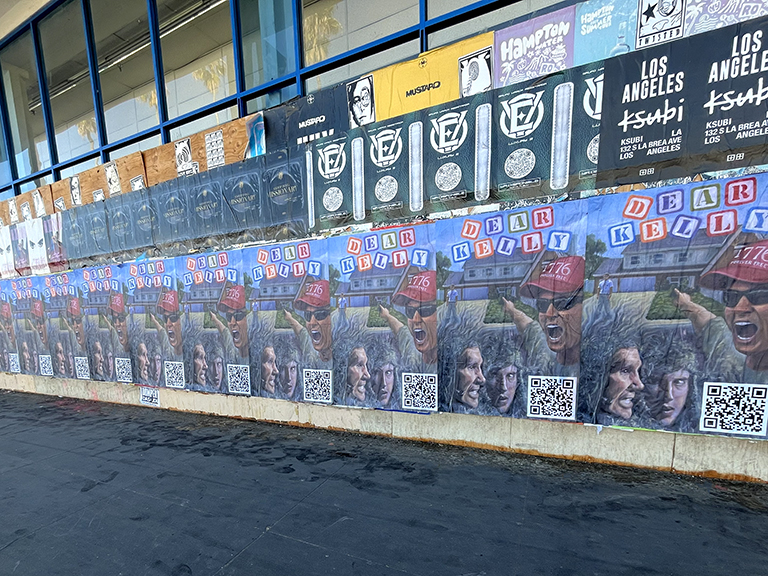
Los Angeles is one of the most visually saturated cities in the world. Billboards stack against hillsides. Painted walls cover block-long building facades. A city built around entertainment, fashion, and creative industry has developed a genuine street art and poster culture that makes it one of the most active wheatpaste markets in the country. A well-executed city takeover wheatpaste campaign in LA can create the kind of wall-to-wall presence that makes your brand feel like part of the city’s visual fabric overnight.
Our team executes city takeover wheatpaste campaigns across Los Angeles — Silver Lake, Echo Park, Downtown Arts District, Venice, Culver City, West Hollywood, and beyond. We scout locations, coordinate overnight installation, provide GPS-tagged documentation of every placement, and deliver campaigns that create genuine market saturation rather than scattered spots.
This guide covers what a city takeover wheatpaste campaign in Los Angeles actually involves, which neighborhoods produce the best results for different brand and audience types, and how to build a campaign that achieves the coverage and visual impact that makes LA wheatpaste a competitive strategy.
What Makes Los Angeles a Prime Wheatpaste Market
LA’s street culture has always been tied to visual communication. The entertainment industry generates constant promotional activity across the city’s walls — movie campaigns, album launches, streaming premieres, event marketing — which means Angelenos are accustomed to reading walls as a legitimate advertising medium. That cultural acceptance makes wheatpaste campaigns more effective here than in cities where street advertising feels intrusive or out of place.
The city’s neighborhood structure also creates natural demographic targeting opportunities. Unlike markets with a single dominant urban core, Los Angeles is a collection of distinct neighborhoods with different cultural characters and audience concentrations. A campaign can be tuned to specific audience types by selecting the right neighborhood mix, rather than trying to reach everyone through a single centralized posting zone.
Los Angeles also has a strong organic photography culture tied to its role as a social media production hub. Striking walls get photographed constantly — by residents, tourists, content creators, and passersby with significant followings. A wheatpaste campaign that occupies the right walls in the right neighborhoods generates organic social media documentation in a volume that few other markets can match.
Los Angeles Neighborhoods for City Takeover Campaigns
Neighborhood selection is the most strategically significant decision in a Los Angeles wheatpaste campaign. Different neighborhoods reach entirely different audiences.
Silver Lake and Echo Park
Silver Lake and Echo Park are the core of LA’s creative and music industry community. Record labels, management companies, music venues, independent coffee shops, and the residential population of working musicians, artists, designers, and media professionals are concentrated here. For any campaign targeting creative industry, music, entertainment, or culturally attuned consumer audiences, Silver Lake and Echo Park are mandatory first-tier neighborhoods. The posting culture is well-established and the walls are photographed consistently.
DTLA Arts District
The Downtown LA Arts District has evolved into one of the city’s premier fashion, tech, and creative industry hubs. The foot traffic mixes young professionals, creative industry workers, media and tech companies, and weekend visitors drawn by the neighborhood’s gallery scene, dining, and retail. For brands targeting urban professional and fashion-forward audiences, the Arts District offers some of the highest-quality wall inventory in the city alongside the credibility that comes from presence in an art-forward neighborhood.
Venice and Abbot Kinney
Venice and the Abbot Kinney corridor reach LA’s wellness, lifestyle, and tech community. The area’s residential and retail mix skews toward health-conscious, financially established, and culturally engaged audiences. Brands in fitness, wellness, outdoor lifestyle, DTC consumer products, and upscale entertainment use Venice placements to reach an audience that’s well-documented, photographically active, and responsive to visual communication that fits the neighborhood’s aesthetic.
Culver City
Culver City has become the entertainment and streaming industry’s operational home in LA. Amazon Prime Video, Apple TV+, and numerous production companies are headquartered here, alongside the Culver Studios complex. For entertainment industry-adjacent campaigns — streaming launches, studio projects, tech platforms — Culver City placements reach exactly the decision-makers and industry workers who determine what gets talked about in entertainment media.
West Hollywood
West Hollywood’s Sunset Strip and surrounding streets concentrate nightlife, entertainment-forward brands, and the LGBTQ+ community that has defined the neighborhood’s cultural identity. For entertainment brands, nightlife promotions, fashion, and campaigns targeting LGBTQ+ audiences, West Hollywood offers both the foot traffic and the audience alignment that makes placements particularly effective.
Fairfax and Melrose
The Fairfax and Melrose corridor is streetwear, sneaker culture, and youth fashion central in LA. Supreme, KITH, and a constellation of independent boutiques and resale shops define the neighborhood’s character. For brands in streetwear, footwear, skate, and youth-oriented consumer products, this corridor offers access to an audience that is both highly tuned to visual street culture and socially influential within its communities.
Building a Los Angeles City Takeover Campaign
A city takeover campaign differs from a standard neighborhood campaign in its intention and its geographic scope. The goal is not presence in one location — it’s the perception of ubiquity across the city’s culturally active zones.
Define the Neighborhood Mix
A typical LA city takeover campaign covers three to six neighborhoods, selected based on the campaign’s target audience and objectives. We help clients identify which neighborhoods align with their specific audience demographics and campaign goals. A music launch campaign hits Silver Lake, Echo Park, and DTLA. A lifestyle brand hits Venice, Culver City, and Silver Lake. A streetwear drop hits Fairfax, Melrose, and DTLA.
Volume Within Each Neighborhood
The saturation effect requires enough placements within each neighborhood to create genuine visual density. Too few placements in too many neighborhoods produces the same scattered result as a campaign that never attempted a takeover. We recommend minimum placement volumes for each neighborhood based on its geographic footprint and the density needed to read as saturated rather than spotted.
For a city takeover across four neighborhoods in LA, a campaign typically runs 150 to 400 posters total, distributed to create concentration in each zone rather than even spread across the full geographic coverage area.
Format Selection
Los Angeles’s wheatpaste landscape supports multiple poster formats. Standard 24×36 and 27×40 single-sheet formats work efficiently across most posting locations. Larger multi-panel snipe configurations on high-visibility walls in each neighborhood serve as anchor placements that anchor the campaign’s visual presence in each zone. We identify anchor wall candidates in each neighborhood during scouting and recommend format selections based on what each location will support.
Overnight Installation Coordination
City takeover campaigns in LA run overnight with multiple crews working different neighborhoods simultaneously. This creates the “appeared everywhere at once” effect that defines a successful takeover — by morning, every neighborhood in the campaign zone shows the campaign, with no visible sequence of installation that would give away the logistics.
Our LA crews operate overnight with full location documentation protocol. Every placement is photographed and GPS-tagged at installation time, not reconstructed afterward.
Creative Principles for LA Wheatpaste Campaigns
Los Angeles is a visually literate market. The city’s entertainment industry, design community, and social media culture mean that Angelenos have been exposed to more high-quality visual advertising than almost any other U.S. market. Generic creative does not perform well here. Campaigns that look like they were designed for a national rollout without consideration for the specific visual environment they’ll occupy register as background noise rather than compelling street communication.
Design for LA’s Visual Landscape
LA’s existing street art and mural culture sets a high visual standard that campaign creative needs to meet or exceed to generate organic social documentation. A campaign that would stand out in a market with lower baseline visual quality may disappear into Silver Lake’s or the Arts District’s already rich visual environment. We advise clients on creative standards that are calibrated to the specific neighborhoods they’re targeting — what reads as striking in the Arts District differs from what reads as striking on Fairfax.
Campaigns with bold, simple graphic approaches — strong color fields, minimal text, graphic-forward imagery — consistently outperform complex multi-element designs in LA’s visual environment. The social photography test is useful: if you can’t describe what the poster looks like in one sentence, it’s too complex for the format.
Format for LA Wall Inventory
Los Angeles has more large-scale wall inventory than most U.S. cities — building sides, parking structure facades, and the long exterior walls of commercial buildings create posting surfaces that support formats significantly larger than standard single-sheet campaigns. For campaigns with creative that benefits from scale — particularly image-forward entertainment campaigns and lifestyle brand visuals that need size to communicate their visual quality — LA’s large wall inventory is a genuine advantage.
Our location network in LA includes walls that support installations up to 20 feet wide and 10 feet tall, alongside the standard single-sheet and snipe-format walls that anchor neighborhood saturation campaigns. We recommend format selections based on the creative’s requirements and the specific neighborhoods being targeted.
Types of Campaigns That Perform Best in Los Angeles
Entertainment Industry Launches
Entertainment launches are the most natural use case for LA wheatpaste campaigns — the city is the entertainment industry’s home base, the physical environment where the creators, press, and audiences who determine which launches become cultural events all live. A streaming premiere, film release, music album drop, or video game launch that appears on the streets of Silver Lake, the Arts District, and Culver City simultaneously reaches the creative community that generates the entertainment press coverage and social amplification that turns a launch into a cultural moment.
For streaming platform campaigns specifically, LA is one of the three essential markets alongside New York and Chicago. The entertainment industry concentration in Culver City and the creative community density in Silver Lake make LA wheatpaste campaigns a standard component of major streaming launch budgets.
Fashion and Streetwear Drops
LA’s streetwear and fashion community — concentrated along Fairfax, Melrose, and the Arts District — has one of the highest engagement rates with street-level advertising of any consumer demographic. The culture of limited-release streetwear drops has built an audience that actively looks for street campaigns as signals of upcoming releases. A wheatpaste campaign on Fairfax Avenue ahead of a limited release creates anticipation and social discussion among exactly the audience whose purchases and social endorsement determine the release’s cultural significance.
Brand Entry into the California Market
For brands establishing California market presence for the first time — DTC brands expanding west, regional brands going national, international brands entering the U.S. market — an LA wheatpaste campaign creates physical credibility that digital-only launches can’t achieve. Presence on the walls of Silver Lake and Venice signals that the brand is invested in the California market and understands where its audience lives, rather than treating LA as a data point in a national digital media buy.
LA Wheatpaste Campaigns and Social Media Amplification
Los Angeles generates more organic social media content per campaign than almost any other U.S. market. The city’s concentration of content creators, social media professionals, and photographically active residents means that a campaign on the right walls will be documented and shared at rates that significantly extend its paid reach.
We factor social media amplification potential into location selection. Walls on well-trafficked pedestrian corridors, near popular coffee shops and restaurants, and in neighborhoods with high concentrations of social media active residents generate more organic documentation than equivalent walls in lower-traffic or less active zones. For campaigns where social amplification is a key objective, we build location sequences specifically to maximize the photography opportunities each placement creates.
Integrating Wheatpaste with Los Angeles Street Campaigns
City takeover wheatpaste in LA works best as part of a coordinated street-level strategy:
- Street team activations in key neighborhoods on the day after installation to capture and amplify organic social documentation and create direct audience engagement
- Sidewalk stencil campaigns extending the campaign’s visual presence onto horizontal surfaces in the highest-traffic posting zones
- Mobile LED billboard trucks routing through Silver Lake, DTLA, and Venice on launch day to amplify campaign presence with moving media
- Large-format building wraps and outdoor installations anchoring the campaign at major intersections in each neighborhood zone
Pricing and Budget Planning for LA City Takeover Campaigns
City takeover campaigns in Los Angeles involve higher costs than single-neighborhood campaigns because of the geographic scope, the higher-quality wall inventory in premium LA neighborhoods, and the coordination overhead of simultaneous multi-neighborhood overnight installation. Here is how campaign costs are structured in the LA market:
Base Campaign Costs
A standard LA city takeover campaign covering three to four neighborhoods with 150 to 300 poster placements runs between $8,000 and $20,000 all-in, including print production, location scouting, overnight installation, and GPS-tagged documentation. Campaigns at the higher end of this range use premium anchor placement formats (multi-panel snipe configurations at the best walls in each zone) alongside standard volume placements for saturation coverage.
Campaigns with expanded scope — five or more neighborhoods, 400+ placements, or premium large-format installations on the city’s most-photographed walls — are priced as custom projects based on the specific scope. We provide itemized quotes that break out each cost component so clients can evaluate scope trade-offs clearly.
Print Production
Print production for an LA campaign typically runs $800 to $3,000 depending on volume and format. Standard 24×36 single-sheet runs produce the lowest per-unit cost; larger format multi-panel configurations cost more per installation but relatively little more per impression given their higher visual impact and longer hold. Print production costs are included in all-in campaign quotes.
Rush Timeline Premiums
Standard LA campaign lead time is five to seven business days from creative approval to installation. Rush campaigns — three to four business days — carry additional premiums covering expedited print production, rush location confirmation, and crew scheduling on compressed timelines. For entertainment clients with launch dates that don’t accommodate standard lead times, rush execution is regularly available with appropriate notice and fee structure.
Measuring LA City Takeover Campaign Performance
City takeover campaigns in Los Angeles are measured through a combination of physical impression documentation, organic social monitoring, and direct response tracking for campaigns with conversion objectives.
Physical Impression Documentation
GPS-tagged photography of every placement provides the foundation for impression documentation. LA foot traffic data from providers including Placer.ai and Foursquare gives pedestrian count context for major commercial and residential corridors in each neighborhood, which we apply to placement locations to estimate daily impression delivery by zone.
Organic Social Monitoring
Social monitoring for brand mentions, campaign hashtags, and location tags during the campaign window captures the earned amplification generated by the physical placements. In LA’s socially active neighborhoods, a well-executed city takeover routinely generates dozens to hundreds of organic social posts from the first days of the campaign. Monitoring these posts provides both reach data (the follower counts of users who posted) and qualitative campaign reception data (how people describe and respond to what they encounter).
Proof of Performance
Every placement in every neighborhood receives GPS-tagged photo documentation at time of installation. Campaign reports are organized by neighborhood, with location addresses, timestamps, and photographs for each placement. For clients with agency reporting requirements or multiple stakeholders reviewing campaign performance, we format documentation to match standard marketing reporting templates.
We also provide pre-campaign scouting photographs for client approval and post-campaign location checks for campaigns requiring extended duration monitoring.
Frequently Asked Questions
What does a city takeover wheatpaste campaign in LA look like?
A city takeover campaign concentrates wheatpaste poster placements across multiple high-visibility neighborhoods simultaneously — Silver Lake, Echo Park, DTLA Arts District, Venice, and Culver City are common zones. The goal is for your imagery to appear everywhere a target audience moves within a 24-hour window.
Which Los Angeles neighborhoods are best for wheatpaste campaigns?
Silver Lake and Echo Park for creative and music industry audiences. DTLA Arts District for fashion, media, and tech. Venice and Abbot Kinney for lifestyle and wellness brands. Culver City for entertainment industry proximity. West Hollywood for nightlife and entertainment-forward brands. Neighborhood selection should match the campaign’s target demographic.
Is wheatpasting legal in Los Angeles?
Yes, with the right agreements. AGM operates only on permitted legal posting locations in LA — walls where property owners have given explicit consent. We maintain an active location network across the city’s major neighborhoods.
How much does a city takeover wheatpaste campaign in LA cost?
Costs vary based on poster volume, format size, number of neighborhoods, and campaign duration. Most LA wheatpaste takeover campaigns run between $5,000 and $25,000 depending on scale. AGM provides itemized quotes for every project.
How quickly can AGM launch a wheatpaste campaign in Los Angeles?
Standard lead time is five to seven business days from creative approval to installation. Rush campaigns can launch in three to four days with an additional rush fee. We manage print production, location prep, crew coordination, and documentation.
Do I get proof that my campaign ran?
Yes. Every placement receives GPS-tagged photo documentation with timestamps. You receive a complete post-campaign report showing every location, when it was installed, and photographs of each placement.