
November 24, 2026
Marketing Agency Poster vs the Alternatives
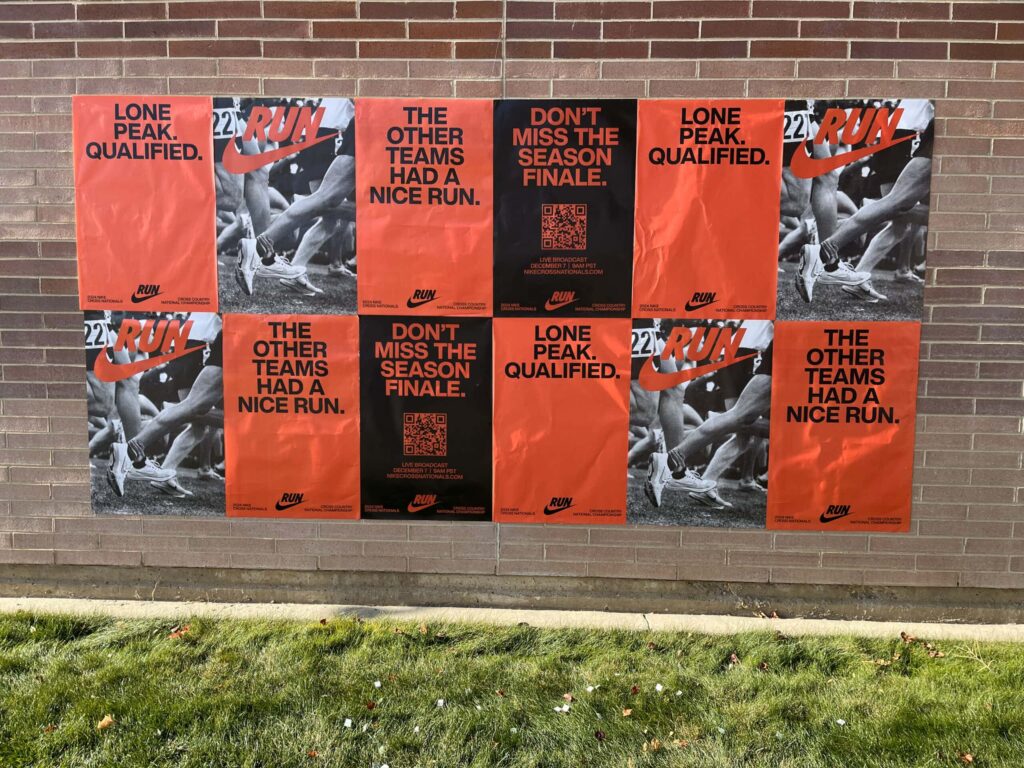
Agency planners call us at two moments. Either the street campaign was always in the plan and they need a crew who can actually execute it, or the media buy came back thin and somebody said the word posters in a meeting on a Tuesday.
The second call is the harder one, because by then the creative is locked, the dates are fixed and the format is being asked to do a job it may not be built for.
I want to use this page to be useful to the person doing the planning rather than the person approving the invoice. What a poster campaign genuinely does, what the alternatives do better, and how to tell which one your brief is actually describing.
I should say what I mean by a marketing agency poster, because the phrase covers two different searches. Some people mean a printed poster promoting an agency itself, self promotion, recruitment, conference presence. Others, and this is most of the people who call us, mean an agency commissioning a street poster campaign on behalf of a client.
This page is mostly about the second. The first gets a section near the end, because it is a real need and the answer is short.
The honest summary up front: street posters buy you density and cultural placement in specific neighbourhoods, at pedestrian eye level, with a physical artefact people photograph. They do not buy you reach, guaranteed audience numbers, or a clean impression report. If your brief needs the second list, you are looking at the wrong format and I will tell you that on the call.
What a street poster campaign actually delivers
Density, first. A poster run works by repetition inside a small geography. Thirty positions scattered across a city does almost nothing. Three hundred positions across six corridors in two neighbourhoods changes how a place feels for the fortnight it runs.
That is the product. Not impressions, saturation.
Second, placement credibility. Posters sit where people already look for information about what is happening locally. Construction hoarding, utility boxes, the plywood around a stalled development, the approved board sites outside venues. A poster in that context reads as something happening in the neighbourhood rather than as paid media. That is a real effect and it is the main reason music, film, fashion and nightlife buyers keep coming back to it.
Third, the photograph. A well placed run on a corridor people already photograph produces organic images. Not because anybody planned it, but because the artefact exists in a space people share pictures of. You cannot forecast that, and anybody who forecasts it for you is guessing.
Fourth, speed. A poster campaign can go from locked artwork to installed in days, not weeks. Print turnaround plus one or two overnight runs. For a dated release or an event announcement, nothing else at street level moves faster.
What it does not deliver: audited audience figures, demographic targeting beyond geography, guaranteed dwell time, or a tidy post campaign deck full of verified numbers. We provide dated, geotagged photographic proof of every position. That is delivery evidence, not an audience measurement, and we are straight about the difference.
The alternatives, compared honestly
Every format on this list beats posters at something. Here is where each one wins.
Classic billboards and large format static. Reach and scale. One large position on a high traffic approach is seen by far more people than an entire poster run. Billboards also come with audited traffic estimates, which makes them easy to defend inside a client organisation. They lose on cost of entry into multiple neighbourhoods, lead time, and the complete absence of cultural texture. A billboard reads as advertising because it is advertising.
Digital out of home screens. Flexibility and dayparting. You can change creative by hour, run multiple messages, react to weather or a result. You get play logs. What you lose is permanence and physicality. A screen slot is gone the moment the loop rotates, and nobody photographs a screen the way they photograph a wall.
Transit, rail and bus. Captive dwell time. Someone on a platform for seven minutes will read a long headline. That is something street posters almost never get. The trade is a slow booking cycle, strict creative approval, and an environment where your message sits next to twenty other messages.
Street Teams and handouts. Direct conversation and sampling. If the campaign needs something in a person's hand, or needs a human answering a question, posters cannot do it. Our Street Teams and Experiential crews exist for exactly that gap. The limitation is that a team covers only the hours it is standing there. Posters work at 3am. People do not.
Projection Advertising. Scale without a permanent surface. A projected image on a building face at night is large, temporary and striking, and it leaves nothing behind. It is weather dependent, it needs darkness, and it needs a viable surface and a safe operating position. It is a one night event, not a two week presence.
LED Trucks and Mobile Billboards. Targeted movement. A truck can sit outside a stadium at kick out, run a route past a conference centre, then relocate. You control where and when with precision. You do not get anything after the vehicle drives away.
Sidewalk decals and stencils. Pedestrian floor level attention in a space posters cannot reach, like the middle of a plaza or the approach to a venue door. Short lived, high noticing rate, and subject to its own permission questions.
So the real comparison is not poster versus billboard. It is whether your brief needs saturation inside a defined community, or reach across a metro. Those are different purchases.
When the agency brief is actually describing posters
A few signals that tell me the format fits.
The target is geographically concentrated. A university district, a nightlife corridor, a design neighbourhood, a festival footprint. If you can draw the audience on a map in six shapes, posters work.
The product has cultural rather than functional appeal. Records, films, streetwear, shows, openings, tours, app launches aimed at under thirties. Posters carry that. They do not carry mortgage products.
The creative is bold and short. A poster is read in under two seconds by a person walking. One image, one line, one name.
Timing is tight. You need presence next week, not next quarter.
The budget needs to look bigger than it is in one place rather than smaller than it is everywhere. Concentration is a way to punch above weight.
And the signals that tell me it does not fit: a national reach target, a requirement for audited impressions in the post campaign report, creative with a paragraph of copy, a regulated category with heavy compliance requirements, or a client who will be upset by a torn poster.
That last one is real. Posters get torn, tagged, covered and weathered. That is the medium. If the client is not prepared for their artwork to look lived in by day nine, the format will cause an argument.
How a run actually gets installed
Agencies ask for this detail more than end clients do, usually because they have to describe it in a plan.
A standard overnight run uses a two person crew per vehicle. One pastes, one watches the street and handles the ladder and the stack. Two people is the minimum that is safe and the maximum that is efficient. Three gets in the way.
A competent pair installs somewhere between forty and seventy single sheet positions in a night, depending on how tight the geography is and how much of the night is spent driving. On a dense corridor where positions are a hundred metres apart, the number is at the top of that band. Spread across a metro, it collapses.
Start time is typically between midnight and 2am and the crew works until first light or until the stack is gone. The reason is not secrecy, it is pavement traffic. You cannot set a ladder on a crowded sidewalk, and paste needs ten undisturbed minutes to grab.
Paste is wheat based, mixed on the day. Too thin and the sheet slides. Too thick and it skins over before the sheet is laid. We paste the surface, lay the sheet from the top, brush down and out to push air, then paste over the face. The over paste is what makes a poster survive rain, and crews that skip it are the reason you see sheets hanging off a wall by one corner.
Multi sheet builds are a different operation. A four or eight sheet block laid side by side needs the first panel plumb or the whole block drifts. That is slower, and on a big block build we will put four people on it.
Documentation happens during the run, not after. Each position is photographed with the time and location recorded. Those images come to the agency as the delivery record. A crew that photographs the next morning is photographing a different campaign than the one they installed.
Cities, corridors and what each one does to the work
The job is not the same in every market and the differences are physical.
New York gives you the best surface density in the country and the worst competition for it. Bushwick along Flushing and Morgan, the Lower East Side around Ludlow and Orchard, and the approaches to Williamsburg all carry heavy poster traffic, which means your sheets get covered by somebody else's within days unless the run is maintained. Maintenance passes are not optional in New York. They are the campaign.
Los Angeles is spread out, which makes drive time the dominant cost in crew hours. Positions on Melrose, on Sunset through Echo Park and Silver Lake, and around Fairfax are the ones worth the driving. The dry air is kind to paste. A sheet in Los Angeles in summer can look clean for three weeks.
Chicago is weather. Paste below freezing does not cure, it crystallises, and the sheet comes off in the first wind. From late November into March we are working short windows or we are recommending a different format. The Milwaukee Avenue corridor through Wicker Park and Logan Square is the strongest poster geography in the city.
Austin compresses around South Congress, Red River and the East Side, and the calendar matters more than the map. Festival weeks change surface availability overnight.
Miami heat and humidity are a paste problem of a different kind. Sheets dry fast on the surface and stay damp underneath, and afternoon storms test the over paste. We run earlier in the night there and we build maintenance into every brief.
Philadelphia, Portland, Seattle, Denver, Atlanta, Nashville all have working corridors. The variable is always the same three things: surface supply, enforcement temperament and weather.
Permission, ordinance and removal, framed properly
This is where I need agencies to hear me clearly, because it is the part that creates client risk.
Street poster placement sits in a grey area. There is no single national answer. Rules differ by municipality, sometimes by district within a municipality, and enforcement is inconsistent even within one city across a year. Whether a given surface can carry a poster depends on who owns it, what the local ordinance says about posting, and whether permission has been obtained.
What we control is the permission side. We work from relationships with property owners and managers who allow posting on their hoarding, boarding and private wall surfaces. We prioritise private surfaces over public infrastructure. We keep records of the permissions we hold. We do not post on residential property, on historic fabric, on fresh paint, on business frontage without the business agreeing, or on anything where removal would cause damage.
Removal is part of the job, not an afterthought. A campaign has an end date and the sheets should come down at it. Paste based posters can be soaked and scraped, and on a surface we have a relationship with, that is exactly what we do. Agencies should ask any crew they engage what the removal commitment is and get it in writing. A crew that has no answer is leaving your client's brand on a wall for six months.
I am an operator, not a lawyer, and nothing here is legal advice. What I will say is that the risk profile of a poster campaign is managed by permission, surface selection, documentation and removal, and a crew that treats all four seriously is a very different proposition from one that treats none of them seriously.
What we talk agencies out of
Thin coverage across a whole metro. The single most common brief we push back on. Splitting a run across eight neighbourhoods so every stakeholder sees one feels fair internally and achieves nothing outside. Concentrate.
Posters for a regulated category with long legal copy. It will not read and the compliance overhead will eat the schedule.
Launching with no maintenance budget. In a competitive market your sheets are covered inside a week. A run without maintenance is a one week campaign sold as a four week campaign.
Chasing a specific famous wall. Agencies arrive with a photograph of a wall they saw online. Usually it is privately controlled, already booked, or not what it looks like. We will find you equivalent surface in the same corridor, and it will work just as well.
Promising the client an impression number. We will not supply one and we would rather the agency did not invent one. What we supply is position count, geography, dates and photographic proof. Build the client expectation on that and nobody has a difficult conversation in week three.
Poster runs tied to an event less than four days out. Print, dry, cut and install all take real time. Tight is fine. Impossible is impossible, and we will say so rather than take the money and under deliver.
If you actually want a poster for your own agency
Short section, because the answer is short.
Agency self promotion posters work in two places. Recruitment, in design school and university districts where the people you want to hire actually walk. And conference presence, in the streets around the venue during the week of the event, where the format puts you in front of exactly the right few thousand people without buying anything from the organiser.
Both are small, concentrated, time boxed runs. They are the easiest kind of campaign to get right, because the geography is obvious and the audience is dense. Keep the creative confident and the message to one line, and treat it exactly like a client campaign, including the removal.
The pairing that works best
If I am building a street plan for an agency and the budget allows two formats, I pair Wheatpasting and Poster Campaigns with one high impact moment.
The posters do the two week saturation in the three corridors that matter. Then a single night of Projection Advertising, or one evening of LED Trucks and Mobile Billboards at the right location, creates the dated event that the PR and social work hangs on.
Posters build the backdrop. The moment gives you the photograph. Neither one does both jobs well on its own, and together they cost less noise than trying to force one format to stretch.
Frequently asked questions
How long does a street poster campaign stay up?
In a dry market with low posting competition, a properly over pasted sheet can look clean for two to three weeks. In a dense market with heavy competition, expect your positions to be covered by other material within about a week unless maintenance passes are scheduled. Rain, wind and surface quality all shorten it. We plan maintenance into any run longer than a fortnight.
Can you guarantee impressions for a client report?
No, and I would be careful about anybody who does. Street posters have no audited audience measurement. What we deliver is a verifiable physical record: the number of positions installed, the exact corridors, the dates, and dated geotagged photographs of each placement. Build the client expectation around delivery proof rather than modelled impression figures.
Is street poster placement allowed?
It is a grey area that depends on the municipality, the specific surface and who owns it. Enforcement varies widely and is inconsistent even within one city. We reduce risk by working from property owner permissions, favouring private hoarding and boarding over public infrastructure, documenting consent, and committing to removal. This is operational practice, not legal advice.
How fast can a campaign go live?
Faster than almost anything else at street level. With locked artwork, print and cutting take a few days, and a run of a few hundred positions installs over one or two overnight shifts. Four days from approved artwork to installed is realistic in most markets. Anything tighter starts to compromise print quality or crew safety, and we will tell you.
What happens to the posters at the end of the run?
They come down. Paste based sheets are soaked and scraped off, and on surfaces where we hold an ongoing relationship with the owner that removal is non negotiable for us. Agencies should get the removal commitment written into scope with any crew they engage, because material left up past the campaign window becomes a client reputation problem.
How does a poster run compare with a billboard for the same client?
They solve different briefs. A billboard buys reach across a metro with audited traffic estimates and reads unmistakably as paid advertising. A poster run buys concentrated presence inside specific neighbourhoods at walking eye level, with cultural credibility and a physical artefact people photograph. Choose by whether the brief needs breadth or density.
Request a campaign quote
Send us the brief, the markets, the dates and what the campaign has to achieve. We will tell you whether posters are the right answer, and if another format fits your client better, we will say which and why before you have committed anything.
We run nationwide, we document every position, and we would rather lose the booking than deliver a run we know will not hold.
Request a campaign quote.

Ready to Run Your Campaign?
Call us or email us. We’ll tell you exactly what we can do in your market and what it costs.
Related Service
Explore similar advertising solutions offered by American Guerrilla Marketing.
American Guerrilla Marketing — Los Angeles
Street-level campaigns in Los Angeles and nationwide. Wheatpasting, LED trucks, street teams, and more.
(646) 776-2770
Related Articles
-
Wheatpasting & Poster Campaigns in Columbia, South Carolina
November 24, 2026
-
What to Expect From an Advertising Campaign Poster
November 23, 2026
-
Wheatpasting and Poster Campaigns in Miami, Florida
November 23, 2026
-
Choosing Poster Locations in a City: Full Planning
November 23, 2026
-
Wheatpasting & Poster Campaigns in Pittsburgh, PA
November 23, 2026