The University of North Carolina at Chapel Hill is one of the country’s premier public research universities, with an enrollment of over 30,000 students and a campus culture that combines academic intensity with some of the most passionate college sports fandom in the country. UNC’s position in the Research Triangle — the Raleigh-Durham-Chapel Hill metro area — also places it within reach of one of the most educated, affluent, and professionally dense regional markets in the American South.
For brands targeting 18-24 college students, Chapel Hill offers a concentrated, walkable, and campaign-accessible market. Franklin Street, the primary off-campus commercial strip, creates a pedestrian corridor directly adjacent to campus where student traffic is high throughout the academic day. The university’s basketball culture creates predictable, intense audience concentration during game days that rivals any other college sports market in the country. And the broader Research Triangle context means that campaigns in Chapel Hill reach beyond the student population into a professional and graduate student market with significant purchasing power.
American Guerrilla Marketing runs college marketing campaigns across the Southeast and at universities throughout the country. This guide covers the UNC Chapel Hill market specifically: the tactics that work, the locations that matter, the timing that maximizes campaign impact, and how to structure a guerrilla marketing program that delivers real results in the Chapel Hill student market.
The UNC Chapel Hill Market: What Makes It Valuable
UNC Chapel Hill’s value as a guerrilla marketing target is a product of several factors that combine to create an unusually accessible and responsive student audience.
Campus-Town Integration
UNC’s campus and the surrounding Chapel Hill community are deeply integrated in ways that make reaching students outside the campus boundary straightforward. Franklin Street is within a short walk of virtually every campus building and serves as the de facto community center for undergraduate social life. The close proximity of campus, commercial district, and residential neighborhoods means that students move through the same accessible corridors repeatedly, creating high-frequency exposure opportunities for poster and street-level campaigns that would require much more geographic spread in a more dispersed campus environment.
Basketball Culture and Fan Identity
UNC’s basketball program is one of the most storied in college sports, and the fan identity around Tar Heel basketball is exceptionally strong. Game days — particularly home games at the Dean E. Smith Center and the annual rivalries with Duke and NC State — create audience concentration events where the town’s emotional temperature is uniquely elevated. Brands that show up during these moments, in the right way and the right location, benefit from the association with the communal experience that the fan base is having.
Research Triangle Professional Context
Chapel Hill is surrounded by the broader Research Triangle market — Durham and Raleigh, with their tech industry, pharmaceutical sector, and research institutions. This professional context affects even the student population at UNC, which has a high concentration of pre-professional, pre-med, and graduate students with more disposable income and different consumer interests than a purely traditional undergraduate population. For brands targeting high-income 22-35 consumers rather than the traditional 18-22 college demographic, the Chapel Hill market offers a relevant audience extension.
Key Locations for UNC Guerrilla Marketing
Effective location selection is the foundation of any successful campus guerrilla marketing program. At UNC Chapel Hill, these are the corridors and locations that deliver the strongest student reach.
Franklin Street
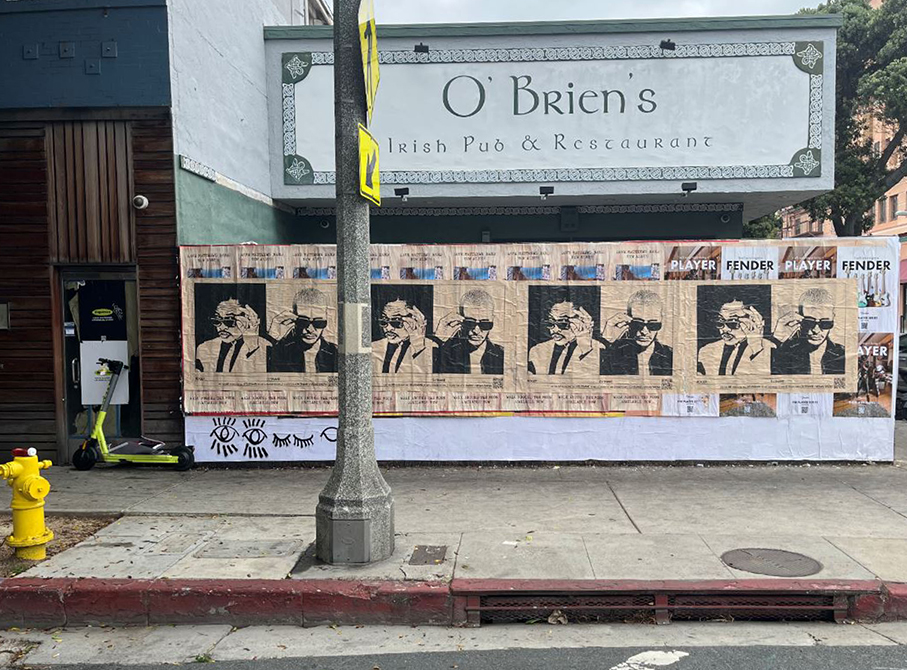
Franklin Street is the primary target for any UNC Chapel Hill campaign. The street runs adjacent to the north side of campus and concentrates the restaurants, bars, coffee shops, retail, and services that undergraduates use daily. Foot traffic on Franklin Street is heavy throughout the academic day and extends well into the evening hours on weekends. Poster placements on licensed surfaces along Franklin, street team deployment at key intersections, and sampling programs near the most-trafficked food and coffee destinations are all effective tactics in this corridor. Wheatpaste campaigns in this corridor deliver repeated impressions to the same student population as they move through the strip multiple times per week.
Carrboro and the Western Corridor
Carrboro, the town immediately west of Chapel Hill, shares the student and young professional market with Chapel Hill and adds a distinct community of artists, musicians, and independent business owners that gives the market a left-leaning, culturally engaged character. Weaver Street Market’s outdoor gathering space is one of the most organic community meeting points in the Research Triangle, drawing students, faculty, young families, and local creatives. Campaigns with positioning in food, music, sustainability, or independent brands find a particularly receptive audience in the Carrboro market.
Campus-Adjacent Residential Neighborhoods
The neighborhoods immediately east of campus — toward East Franklin and the Eastgate shopping area — and south toward Pittsboro Street and Manning Drive are heavily residential undergraduate areas. Poster placements in these corridors reach students in their daily walk-to-campus routine, creating high-frequency impressions without the competition of commercial district noise. This residential corridor targeting is most effective for campaigns building sustained brand awareness over multi-week periods rather than event-driven single-day programs.
Campaign Tactics for the UNC Market
The tactics that perform well at UNC Chapel Hill draw on the campus-town environment’s specific characteristics: walkable density, sports culture intensity, and a student population that responds well to authentic, non-corporate brand presence.
Poster Campaigns in Franklin Street Corridor
Poster campaigns on licensed off-campus surfaces along Franklin Street and in the surrounding residential and commercial corridors are the most cost-effective fixed-media format available in Chapel Hill. Posters placed in windows of participating businesses, on licensed construction or temporary surfaces, and through property-owner agreements in the student housing corridors reach the UNC student population with strong frequency. Our guerrilla marketing services in college markets include full compliance with university and municipal posting policies.
Street Team Programs
Street teams on Franklin Street during the lunch period and early afternoon class change windows reach the highest daily concentration of UNC undergraduates. Our street team programs at UNC are staffed with field reps who are briefed to engage naturally with students rather than aggressively push materials. The most effective street team interactions at college markets involve genuine value exchange: a sample, a useful branded item, or an engaging brand experience that earns attention rather than demanding it.
Basketball Game Day Activations
UNC home basketball game days create extraordinary audience concentration in the Franklin Street and stadium approach corridors. An experiential activation positioned near the Smith Center or in the Franklin Street corridor during pre-game and post-game hours reaches a uniquely engaged and emotionally primed audience. Game day activations at UNC are among the highest-engagement campus marketing windows in the Southeast.
Sampling at High-Traffic Locations
Sampling programs positioned at the most-trafficked campus-adjacent locations — the entrances to the main library, the student union, major class buildings, and popular food destinations — reach students at the natural transition points of their academic day. Our product demonstrations at UNC include staffing, branded packaging, and compliance review for any consumable products subject to state or university regulations.
Timing UNC Chapel Hill Campaigns to the Academic Calendar
Academic calendar alignment is the most important timing consideration for UNC guerrilla marketing campaigns. The student population is concentrated in Chapel Hill during fall and spring semesters, with significant gaps during winter break, spring break, and the summer period.
Fall Semester and Move-In
Move-in weekend in mid-August is the single most valuable campaign timing window for brands targeting incoming freshmen and returning students simultaneously. The energy of the first weeks of the fall semester — new students discovering their environment, returning students reconnecting with the campus culture — creates a uniquely receptive audience for brand discovery. Early fall semester is also when UNC’s football season begins, adding game-day audience concentration events to the campaign calendar.
Basketball Season
UNC’s basketball season runs from November through March, overlapping with the spring semester. Home games against Duke, NC State, and top-ranked opponents draw the entire UNC community and create Franklin Street audience surges that rival move-in weekend in audience concentration and emotional intensity. Brands that time campaigns to these game days reach the UNC community in its most unified, engaged state.
Graduation and End-of-Year
End-of-spring semester, including graduation weekend in May, creates a specific audience window with graduating seniors and their families — a demographic with clear consumer transition needs (first apartments, professional wardrobes, financial products) that brands can target through campus and downtown Chapel Hill guerrilla marketing during this concentrated period.
The Chapel Hill Creative and Arts Community
Chapel Hill and Carrboro together support one of the most vibrant independent arts and music scenes in the American South. This creative community is centered around venues like Cat’s Cradle in Carrboro, Local 506 in Chapel Hill, and a network of independent galleries, studios, and arts organizations that make the Chapel Hill-Carrboro corridor a cultural hub well beyond what its size would suggest.
Independent Music and Arts Campaigns
For music labels, independent artists, and arts organizations, the Chapel Hill market offers a uniquely receptive audience with deep engagement in independent music culture. Cat’s Cradle is one of the most respected mid-size music venues in the country, and its audience — concentrated in Chapel Hill and Carrboro — represents a tastemaker community with significant influence on regional music culture. Poster campaigns in the Carrboro corridor around major shows create the pre-event street presence that this audience particularly values as a signal of cultural legitimacy.
Environmental and Social Cause Campaigns
Chapel Hill’s progressive political culture and the Carrboro community’s strong environmental values make this market unusually receptive to campaigns from environmental organizations, social justice causes, and values-driven brands. The community’s history of civic engagement means that campaigns with genuine community resonance — not marketing pretending to be activism — are shared, discussed, and amplified through the Chapel Hill-Carrboro social network more actively than in most comparable markets.
Planning Multi-Semester U of M Programs
Brands with ongoing presence requirements at UNC Chapel Hill benefit from structured multi-semester programs rather than episodic single-campaign approaches. Here is how to structure sustained campus marketing at UNC effectively.
Anchor Campaign Moments
Multi-semester programs work best when they are structured around anchor campaign moments — move-in weekend, homecoming, basketball rivalry games, graduation — rather than continuous low-intensity presence. These anchor moments provide predictable audience concentration events that justify higher campaign investment, while lower-level ongoing presence between anchor events maintains brand visibility without requiring peak-moment budget intensity year-round. Our team develops semester-level campaign calendars for brands that want structured, sustained UNC Chapel Hill market presence.
Year-Over-Year Brand Building
Brands that maintain consistent presence at UNC Chapel Hill over multiple academic years build brand familiarity with incoming student cohorts before those students arrive — upperclassmen who have seen the brand’s campaign in previous years introduce it to incoming students through social networks and word of mouth. This year-over-year brand building creates cumulative awareness that single-semester programs cannot achieve, and it reduces the cost-per-aware-student calculation over time as the brand becomes embedded in the campus culture rather than re-introducing itself from scratch each year.
Measuring Campus Brand Equity
Annual brand awareness surveys among UNC students in target demographic segments provide data on whether multi-semester investment is building the cumulative awareness that justifies sustained marketing spend. Our team can recommend survey methodology for clients who want to track brand equity at UNC Chapel Hill over time and connect campaign investment to measurable brand awareness movement in the student population.
Multi-Campus Research Triangle Campaigns
Chapel Hill’s proximity to Duke University (Durham) and North Carolina State University (Raleigh) creates the opportunity for integrated multi-campus campaigns in the Research Triangle that reach all three major university populations with a coordinated program. A campaign that covers UNC Chapel Hill, Duke, and NC State simultaneously reaches well over 70,000 college students in three distinct but geographically close markets. Our team structures these multi-campus programs through a single project manager with standardized documentation across all three campuses.
Chapel Hill-Carrboro as a Year-Round Market
While UNC’s academic calendar creates the highest-value student campaign windows during fall and spring semesters, the Chapel Hill-Carrboro community maintains a significant population and level of activity year-round that makes it a viable market for brands with persistent market presence objectives rather than purely academic-calendar-driven campaign programs.
The year-round Chapel Hill population includes faculty, administrative staff, medical professionals from UNC Health, graduate students who remain in residence during summer, and the permanent community of residents who are not affiliated with the university but have built their lives in the Chapel Hill-Carrboro area. This non-student year-round population is educated, professional, and reasonably affluent — a valuable audience for many consumer brands even without the student population overlay that peaks during academic semesters.
Summer programming in Chapel Hill — concerts at Southeastern concerts, summer research programs that keep many graduate students in residence, and the broader Triangle summer event calendar — maintains meaningful foot traffic in the Franklin Street and Carrboro corridors even when the undergraduate population is dispersed. Brands with summer campaign objectives can execute effective programs in Chapel Hill during summer months, particularly in the Franklin Street corridor and downtown Carrboro, without being constrained to the academic semester window.
The Research Triangle’s position as a year-round professional market — with Duke and NC State providing year-round institutional activity alongside UNC — means that Chapel Hill’s strategic value as a market anchor is not solely dependent on the presence of UNC undergraduates. For brands building sustained Research Triangle market presence rather than specifically targeting the 18-22 student demographic, the year-round professional and graduate student population provides a consistent campaign foundation.
Measuring UNC Chapel Hill Campaign Performance
Campus guerrilla marketing campaigns at UNC Chapel Hill can be measured through a combination of direct observation, digital attribution, and post-campaign survey methods. Here is how to structure performance measurement for a UNC campaign that goes beyond anecdotal evidence.
For street team and sampling programs, the most direct measurement is volume-based: number of interactions completed, samples distributed, materials handed out, and QR codes scanned. These volume metrics provide a baseline for cost-per-interaction calculations and allow comparison across campaign periods and against other campus marketing programs at different universities. Our team tracks these metrics in real time during deployments and delivers quantified activity reports for every street team and sampling program.
For poster campaigns, awareness lift measurement in the target student population provides evidence of campaign effectiveness beyond impression estimates. A brief digital survey among UNC students asking about awareness of the campaigning brand, product, or service — run before and after the campaign period — quantifies the awareness movement attributable to the poster campaign window. These surveys can be administered through student social media channels or campus survey panels for a relatively low incremental cost compared to the campaign itself.
Digital attribution for campus campaigns that include QR codes or specific promotional codes provides the most direct behavioral measurement. If a poster campaign at UNC drives 300 app downloads using a UNC-specific promotional code, that is a clear, verifiable performance data point. Designing campus campaigns with attribution-enabling elements — unique URLs, campaign-specific discount codes, geofenced mobile ads that can be cross-referenced with campus physical location data — converts the physical campaign’s reach into measurable digital performance evidence that satisfies performance-oriented marketing stakeholders.
Frequently Asked Questions
What guerrilla marketing tactics work at UNC Chapel Hill?
Effective tactics at UNC include poster campaigns on licensed surfaces along Franklin Street and in adjacent neighborhoods, street team distribution during class-change and lunch hours, sampling programs at high-foot-traffic campus-adjacent locations, and event marketing during home basketball and football games and major campus events.
Where do UNC students spend time near campus?
Franklin Street is the primary off-campus commercial corridor for UNC students. Carrboro’s Main Street and Weaver Street Market area attract a broader Chapel Hill-Carrboro student community. The neighborhoods immediately south and east of campus are high-traffic residential areas.
When is the best time for a guerrilla marketing campaign at UNC Chapel Hill?
Move-in weekend in late August, home basketball game weekends (UNC basketball is one of the most intense fan environments in college sports), and the early fall and spring semesters are the highest-traffic campaign windows. Duke game days drive extraordinary audience concentration in the Chapel Hill area.
How does the Research Triangle market affect UNC guerrilla marketing campaigns?
Chapel Hill’s position in the Research Triangle — alongside Durham and Raleigh — means that campaigns in the Chapel Hill market reach not just UNC students but also a dense professional and graduate student population that is among the most educated and affluent in the South. This audience mix broadens the value of the market beyond the traditional college student target.
Can American Guerrilla Marketing execute campaigns at UNC Chapel Hill?
Yes. American Guerrilla Marketing runs college marketing campaigns at universities throughout the Southeast and across the country. Contact our team at (646) 776-2770 to plan a UNC Chapel Hill campaign.