Free Advertising Seattle | American Guerrilla Marketing
Low-cost and no-cost brand marketing tactics in Seattle. From community partnerships to street-level campaigns, here's how brands build presence in Seattle without breaking the budget.
Seattle rewards brands that move with discipline. The city is smart, weather-sensitive, and full of audiences who can tell when a campaign was rushed without being thought through. Fast marketing in Seattle is not about panic. It is about shortening the path from idea to street while keeping the details tight enough that the work still feels deliberate.
AGM works on rapid-turn programs for launches, event support, sampling pushes, mobile visibility, and neighborhood-specific awareness campaigns. The challenge is usually not whether the team can move quickly. The challenge is whether the fast plan still respects the real conditions of Seattle: rain windows, commuter patterns, event calendars, and districts that carry different kinds of attention.
This page explains how to move fast in Seattle without creating sloppy work, and where low-cost tactics can help when the budget is tight.
The strongest quick-turn campaigns cut indecision, not quality control. We simplify the brief, narrow the geography, and choose formats with low setup friction. That may mean a focused poster push, a tightly routed sampling team, or a mobile unit instead of a large build.
Weather-aware planning
Seattle can punish assumptions. Rain does not automatically cancel field work, but it changes materials, wardrobe, photography, and where the team can hold conversations comfortably. Fast plans need weather backup built in from the start.
Neighborhood selection does the heavy lifting
Capitol Hill, South Lake Union, Ballard, the University District, and Downtown all behave differently. If the location is wrong, no amount of speed saves the campaign. The fastest useful move is often narrowing to the one district where the target audience is most available.
AGM Field Note: Speed helps only when the audience can still understand the brand’s reason for showing up. Fast confusion is still confusion.
Low-Cost Tactics That Can Work in Seattle
Tactic
Why it can work
Limits
Community partnerships
Local credibility and existing foot traffic
Needs real fit with the partner
Poster clusters
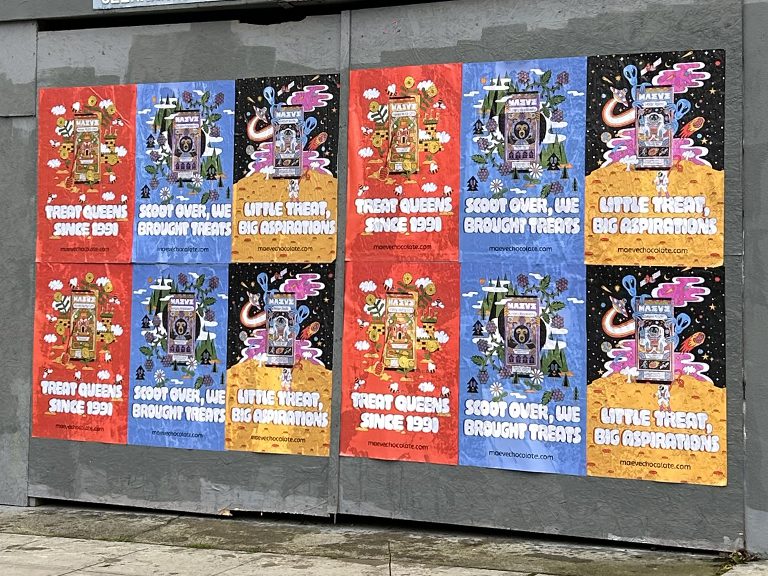
Affordable visual repetition in a few corridors
Creative has to be strong
Street sampling near anchor events
Efficient direct contact when timing is right
Needs tight staffing
Creator-friendly moments
Good for organic neighborhood spread
Requires a genuinely useful or photogenic idea
When people search for free advertising in Seattle, they are usually looking for no-waste advertising. Completely free rarely means effective. The goal should be lower-cost tactics that use existing community flow, event traffic, and neighborhood loyalty instead of buying broad media that the audience may ignore.
That often means building a small campaign with a clear local reason to exist. A useful partnership, a modest poster route, or a targeted field day can outperform a larger but unfocused spend.
Execution Priorities
For quick-turn Seattle work, we focus on message clarity, weather-ready materials, route efficiency, and strong documentation. If the campaign moves across neighborhoods, we map the route carefully and report back on which stops produced the strongest attention or conversations.
We also keep the field footprint honest. Seattle audiences tend to respond well to brands that are clear and useful rather than loud for the sake of it. A clean setup and a real offer usually do better than overbuilt theatrics.
That is why speed and restraint often go together here. The city does not need more noise. It needs a campaign that knows where it belongs.
Planning the Campaign Backward From the Street
Every strong Free Advertising Seattle program starts by imagining the live moment before any internal deck is finalized. We ask where the audience first sees the brand, what they understand in the first glance, what action we want from them, and what the field team needs in order to deliver that moment cleanly. Working backward this way keeps the plan honest. It stops the brand from building around internal language that the public will never hear. In Seattle, that discipline matters because most people decide whether to engage in seconds, not minutes.
We also build the plan around friction points rather than pretending they do not exist. Weather, delivery timing, staff call times, nearby retail congestion, changing pedestrian flow, and the quality of photo angles all affect whether a campaign feels polished. A useful field plan names those variables early and gives them owners. That is not glamorous work, but it is usually the difference between a campaign that looks sharp in the recap and one that felt uncertain on the block.
Creative Clarity Beats Sheer Volume
Brands often assume that if they make the setup bigger, louder, or busier, people will care more. In practice, the public responds better to clarity. A simple visual statement, a direct invitation, and one obvious reason to stop usually outperform a crowded build with five competing messages. This is especially true in Seattle, where people absorb more signals in a normal day than most campaign teams admit.
That is why AGM edits hard. We cut copy, reduce visual clutter, and ask whether the campaign can be understood by someone who only catches it from the corner of their eye. If the answer is no, the campaign still has work to do. Attention is earned by fast comprehension, not by piling on details. When the concept is clean, the audience helps distribute it by photographing it, talking about it, or bringing friends over to see what is happening.
The Field Team Is Part of the Creative
Clients sometimes treat staffing like a line item after the important decisions are made. That is a mistake. The staff tone, wardrobe, energy, and ability to guide interaction shape the public’s experience of the brand as much as the printed assets do. For Free Advertising Seattle, the people on site are not support pieces. They are part of the idea in motion. They translate intent into behavior.
We train teams around likely interaction patterns rather than giving them one rigid script. Some audiences want a short explanation. Some only want the product. Some want to ask questions. Some want to take a photo and move on. A mature field team can read those differences and adapt without losing brand discipline. That flexibility is one of the least visible skills in marketing and one of the most valuable when the work is happening in public.
Location Does More Than Deliver Traffic
A good location does more than put bodies near the brand. It gives context to the brand’s appearance. The same visual asset means something different depending on the block, the nearby stores, the quality of the architecture, the time of day, and the reason people were already there. In Seattle, those cues matter because audiences read place instinctively. They know when a campaign belongs and when it feels pasted in.
This is why our scouting notes go beyond volume. We log sightlines, likely stopping points, line behavior, nearby anchors, competing visual clutter, and whether the environment helps the camera. A campaign should gain force from its setting. When the setting is wrong, the brand spends money fighting the environment instead of using it. Choosing the right block is not an afterthought. It is one of the main strategic choices in the whole program.
Documentation Is a Production Layer, Not a Bonus
Campaign photography is often underplanned because teams assume the live moment will naturally look good on camera. Sometimes it does. More often, the best images require forethought: where the photographer stands, when the crowd will be thick enough, what angle shows the brand clearly, and which moments need to be captured before the light changes or the product runs low. For Free Advertising Seattle, the documentation needs to serve both memory and proof.
We treat documentation like a live production layer. There is a shot list, a sense of priority, and a clear understanding of what success has to look like in still images. The result is not only prettier content. It is better reporting. Clients can review a campaign weeks later and still understand the shape of what happened, where the audience engaged, and what deserves repeating in the next market.
How to Keep a Campaign Useful After Day One
A common waste in marketing happens after a good live execution. The event ends, the team is tired, the photos come in, and no one turns the experience into structured learning. We try to avoid that by defining the recap before the campaign starts. Which observations matter? Which neighborhoods are being compared? Which creative element is under test? Which route stops need to be mapped? By asking those questions early, the final summary report becomes much more than a gallery of images.
This matters because most brands are not running Free Advertising Seattle only once. They are deciding whether to repeat it, scale it, or adapt it. Good recap materials shorten that decision path. They help operators, leadership, and partner teams see what the market taught us. The best campaigns do not only win on the day. They make the next campaign smarter.
Common Failure Patterns AGM Watches For
The first failure pattern is over-explaining. If the idea needs too much context, people will keep walking. The second is overbuilding. Size can create presence, but it can also create drag, slower setup, and weak movement if the footprint was not shaped around real conditions. The third is false precision in reporting. A neat spreadsheet can hide a weak public response if nobody writes down what actually happened on the street.
We also watch for campaigns that ask the audience to do too much too quickly. A stranger may be willing to look, sample, photograph, or ask one question, but not all of those in the same beat. Sequencing matters. Strong programs respect the order of behavior: notice first, understand second, engage third. When that order is reversed, even good ideas can feel awkward in Seattle.
Why Physical Presence Still Matters
People still remember what they encounter in the real world differently from what they scroll past. A street-level encounter has texture, weather, noise, other people, and a sense of place. That memory can be surprisingly durable. For Free Advertising Seattle, that is the real advantage. The brand is not renting a tiny slot in an endless feed. It is claiming a moment in the physical environment where the audience already lives.
Physical presence also signals seriousness. When a brand is willing to build, staff, route, and document a public-facing campaign, it feels more committed than a brand that only publishes graphics online. That does not mean digital is unimportant. It means the physical layer still changes how the message lands. For many categories, especially launches and challenger brands, that change in perceived commitment is worth a great deal.
How We Think About Repeatability
The best campaigns are not only exciting. They are repeatable with intelligence. After a run, we ask what parts were fixed and what parts were local. Which messages can travel to another city? Which staffing notes were specific to this audience? Which locations produced strong response because of the block itself and which because of the creative? Breaking that apart helps a brand expand without blindly cloning the first execution.
Repeatability matters because brands rarely want a single isolated win. They want a playbook. Our job is to turn Free Advertising Seattle into a playbook with enough structure to travel and enough flexibility to stay honest in each market. That usually means preserving the core idea while adjusting route, staffing tone, timing, and visual emphasis based on what the city taught us.
What Clients Gain From a Better Operator
A better operator reduces uncertainty. The client does not have to guess whether the crew will show up ready, whether the route will make sense, or whether the recap will be usable. That reduction in uncertainty is easy to overlook because it is felt as calm. The day simply runs the way it should. Yet that calm is built on preparation, local knowledge, and repeated exposure to the kind of problems that show up in real campaigns.
For Free Advertising Seattle, that is often the best reason to hire AGM. We know how to move from concept to block to proof without losing the thread. The campaign stays clear, the environment stays respected, and the client ends the day with something more solid than a vague sense that people seemed interested. They end it with materials, observations, and a better map for the next move.
Budget Use and Resource Discipline
A lot of campaign waste comes from putting money into the wrong layer of the program. Brands overspend on build details the audience will never notice and underspend on the things that make the day run well, such as staffing quality, route logic, replenishment, or documentation. With Free Advertising Seattle, we try to protect the elements that preserve execution quality under pressure. A cleaner field day usually creates more value than a fancier but fragile build.
That approach is especially useful in Seattle, where the public can tell the difference between a confident execution and a high-cost mess. A disciplined plan does not feel cheap. It feels edited. The audience sees the right surfaces, the right cue, and the right human interaction. Internally, the client gets a program that is easier to repeat because the spend was attached to functions that matter rather than decoration that only looked good in mockups.
Timing Windows Matter More Than Teams Expect
Most cities behave differently across the day, but teams still fall into the trap of treating a market like a constant. Morning commuters have different tolerance than lunch crowds. Early evening shoppers behave differently from late-night social groups. For Free Advertising Seattle, timing often changes the entire read on the same exact creative. We therefore plan not only where the campaign happens but when the first meaningful audience arrives and when attention naturally drops.
This timing discipline can also save a weak route. A block that feels dead at noon may be perfect at six. A product handout that struggles during office rush may feel welcoming near an event queue later the same day. Good field planning gives the brand a chance to meet people when they are mentally open rather than merely physically present. That simple adjustment can improve interaction quality without adding budget.
What Strong Recaps Usually Include
We want the recap from a Free Advertising Seattle campaign to help three audiences at once. First, the people who were close to the work need a clear record of what happened. Second, leadership or partner teams who were not present need enough context to understand the value. Third, future operators need notes they can reuse. That means the report cannot be only a photo gallery. It needs structure.
A useful recap usually includes a short overview of the objective, key route or location notes, the best photo documentation, a summary of audience behavior, any field adjustments made in real time, and a short list of next-step recommendations. This turns a completed campaign into working knowledge. It also keeps the client from having to reconstruct the day from memory weeks later when budget or expansion decisions are being made.
Making the Brand Feel Native
One of the quiet skills in field marketing is helping a brand feel native to the place where it appears. That does not mean pretending the brand started there. It means understanding local visual codes, pace, and public behavior well enough that the campaign feels like a smart guest instead of a loud interruption. In Seattle, that often comes down to small choices in tone, layout, staff language, and location context.
When people say a campaign felt right for the city, they are usually responding to those small choices. The brand seemed to know the block. It seemed to understand what people were already there to do. It did not ask for more patience than the environment could give. That is what we are aiming for with Free Advertising Seattle. A native feel does not happen by accident. It is the result of editing, scouting, and honest local observation.
Testing Without Looking Cheap
Many clients use Free Advertising Seattle as a market test. That is smart, but testing should not look tentative. A smaller footprint can still feel intentional if the concept is clear, the visuals are tight, and the route or location choice is sharp. The audience never needs to know that the brand is learning. They only need to see that the brand showed up with purpose.
We often design pilot programs so that the client learns several things at once: which neighborhoods respond, which message angle creates conversation, what documentation style works best, and whether the idea deserves a bigger second round. The key is to set the test up so the audience experiences a coherent campaign rather than an experiment that feels half-finished. A test should still feel like a real campaign to everyone who encounters it.
How Campaigns Earn Internal Trust
A campaign can please the public and still create internal doubt if the client team cannot explain what happened afterward. That is why trustworthy operating matters. When the recap is clear, the assets are usable, and the observations are specific, the campaign earns trust inside the organization. It becomes easier for brand managers, founders, sales leads, or partners to say yes to another run because they are not relying on loose anecdotes.
Internal trust is one of the hidden outputs of good execution. Teams feel calmer about trying the next market, increasing the spend, or pairing the work with digital support because the first run produced a believable record. The value of that clarity grows over time. It turns field marketing from something mysterious into something the brand can manage, compare, and improve.
Coordination Across Channels
Most strong programs no longer live in only one channel. A street activation may need social support before the day, an email follow-up after the day, and localized recap content in the week after. Poster campaigns may need creator seeding. Mobile routes may need retail handoffs. With Free Advertising Seattle, the field layer should be aware of the rest of the campaign even if it is not doing every job itself.
That awareness helps the brand avoid contradictions. The paid ad should not promise one experience while the street crew delivers another. The recap content should not ignore the best live moments because nobody told the photographer what the social team needed. Coordination sounds basic, yet many campaigns miss it. We try to close that gap by treating field operations as one part of a system rather than a disconnected event.
Choosing What Not to Do
Some of the best strategic choices in Free Advertising Seattle are negative choices. We decide not to add another neighborhood, not to stretch the route, not to include another giveaway, not to clutter the exterior, not to run during a weak daypart, and not to chase every possible audience at once. Those decisions protect the campaign’s shape.
Clients often feel relief when those choices are made clearly. Narrowing the target usually improves the public experience because the event becomes easier to understand and easier to execute. The audience sees confidence instead of hedging. The crew feels less scattered. The recap tells a tighter story. Restraint is not lack of ambition. It is often the reason the ambition lands properly.
The Long-Term Value of Field Intelligence
Every run of Free Advertising Seattle generates local intelligence if the team is paying attention. Which block produced stronger stop behavior? Which visual got photographed first? Which explanation was too long? Which staff approach felt natural? Which time window surprised us? Those details become very powerful over multiple markets because they let the brand build a real operating memory instead of starting from zero each time.
That is part of AGM’s value in Seattle and elsewhere. We are not only executing the day. We are collecting observations that make the next day smarter. Over time, that kind of field intelligence can shape city strategy, creative hierarchy, staffing models, and even product launch timing. It gives the brand a firmer relationship with the market than broad media alone usually can.
What the Next Version of the Campaign Should Improve
Once a campaign has run, the smartest move is not to admire it. The smartest move is to ask what the next version should do better. We look at where attention formed fastest, where the message needed too much explanation, and which parts of the field plan created drag for the crew. Those notes are usually more valuable than broad praise because they show where the format can become easier to repeat. A mature marketing operator wants the second run to be cleaner than the first, not merely larger.
That improvement work often has less to do with adding new features and more to do with tightening the sequence. Maybe the brand cue needs to appear earlier. Maybe the route should drop one stop and spend more time in the strongest zone. Maybe the exterior needs less copy and a stronger visual anchor. Maybe the staff needs one better opening line instead of five optional ones. The audience rarely asks for complexity. They respond to confidence and legibility. Most campaign gains come from making the work easier to read and easier to deliver.
We also compare the public experience with the internal expectation. If the client hoped for long conversations but the environment only allowed fast exchanges, the next version should respect that reality instead of fighting it. If the event produced better photos than expected but weaker dwell time, the campaign might need a different call to action on the next pass. This is why honest field notes matter. They stop the team from repeating assumptions that the street already disproved.
There is also value in asking what should stay exactly the same. Strong location choices, useful staffing roles, good documentation habits, and a clear creative hook should be preserved when they work. Not every lesson is a correction. Some lessons are confirmations. Over time, those confirmations help the brand develop a real operating playbook rather than a loose archive of one-off events.
That long view is part of how AGM approaches campaign work. We want the client to leave with proof of execution, yes, but also with a more usable understanding of how the market responded. The best street-level campaigns do not end when the crew wraps. They become the source material for a sharper next move, a cleaner rollout in another city, or a stronger local return when the brand comes back to the same audience again.
Turning One Market Lesson Into a Repeatable Playbook
When a campaign under review is strong enough to repeat, the next question is not whether to clone it exactly. The next question is which elements belong to the core idea and which elements only worked because of a specific block, specific weather pattern, specific staff mix, or specific moment in the calendar. Brands that separate those two layers quickly build better playbooks. Brands that do not usually repeat the surface of a campaign while missing the reason it worked in the first place.
AGM approaches repeatability by breaking the program into visible and invisible parts. The visible parts are easy to notice: creative, setup, route, and documentation style. The invisible parts are just as important: how the field lead briefed the team, how the daypart affected the stop rate, how the brand invitation was phrased, and how the surrounding neighborhood either helped or fought the message. Those details become the operating notes that make future runs stronger instead of merely similar.
For clients, this distinction is useful because it turns subjective reactions into practical choices. If one neighborhood produced the best photos but another produced better conversations, the next run can be designed around the true priority. If the route felt too ambitious, the next version can simplify and still look confident. If the audience needed a faster explanation, the copy can shrink without changing the concept. Improvement usually comes from small decisions that reduce friction.
There is also a broader organizational value in this kind of review. Teams across brand, sales, retail, partnerships, and leadership often need to understand the same campaign from different angles. Some care about visuals. Some care about audience behavior. Some care about what can scale to another city. A well-structured playbook gives each of those groups a way to read the campaign without forcing them to guess what mattered. That is one reason we care so much about post-campaign materials.
The strongest playbooks are written in plain language. They do not hide behind inflated marketing phrases. They say what happened, why it happened, and what should change next time. They identify the block that worked, the visual that pulled people in, the staffing move that kept the line from slowing down, and the adjustment that saved the day when conditions shifted. When those notes exist, the campaign has a useful afterlife.
This matters because most street-level marketing is judged twice. It is judged once by the public in the live moment, and again by the internal team later when budget and expansion decisions come up. A campaign that felt lively in person can still be hard to defend if the operating notes are thin. On the other hand, a campaign with strong field records often becomes easier to support even if the client wants several changes before the next run. Good documentation gives the work room to evolve.
We also encourage brands to identify what should stay intentionally local. Not every winning detail should be standardized. Some staff language belongs to one neighborhood and would sound wrong somewhere else. Some route timing belongs to one city’s traffic pattern. Some visual cues belong to a local retail culture. The goal is not to flatten the campaign into sameness. The goal is to preserve the spine of the idea while giving each market room to feel honest.
That balance between consistency and local judgment is where experienced operators earn their keep. Anybody can copy a layout file or repeat a route on paper. Fewer teams can tell which parts of the route mattered, which parts were luck, and which parts need to be rebuilt from scratch in a new environment. Those are the calls that keep a campaign from becoming a stale template after one good outing.
Over time, a brand that works this way develops more than a collection of campaigns. It develops field memory. It knows what kinds of blocks suit the product, what staff tone fits the customer, what creative scale reads best in public, and what recap structure makes leadership comfortable saying yes again. That accumulated memory reduces waste and gives the brand more confidence when it has to move fast.
For that reason, we see every campaign as both an activation and a source of operating knowledge. The live audience gets the immediate brand experience. The client gets photos, route notes, and a clearer understanding of how the market responded. The next campaign gets a better starting point. When the work is handled properly, each run pays for more than a single day of attention. It pays for a sharper next move.
Frequently Asked Questions
How fast can a Seattle campaign launch?
Simple field or poster programs can often move in a few days to two weeks depending on materials and staffing. More complex builds need longer.
What Seattle neighborhoods tend to work best?
It depends on the audience, but Capitol Hill, South Lake Union, Ballard, Downtown, and the University District are common starting points.
Are low-cost tactics worth trying?
Yes, when they are targeted. Small community-aligned programs often outperform broad low-budget media because they feel more relevant.