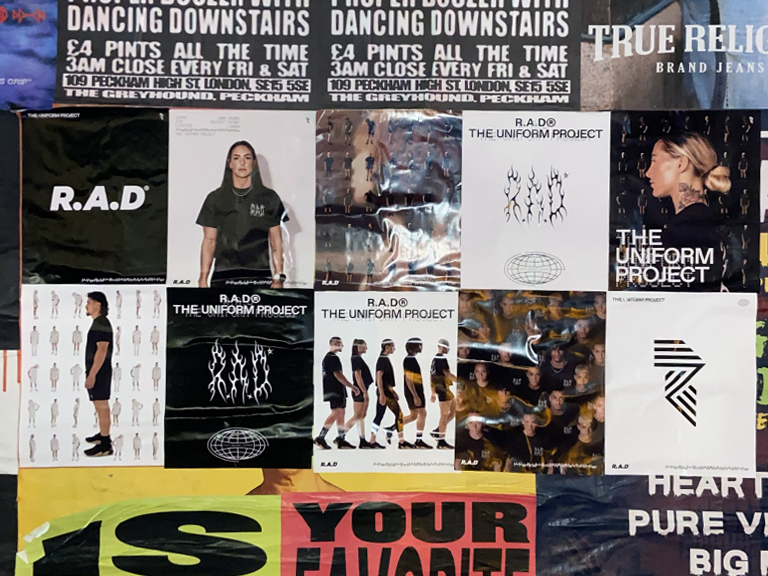
Australia’s major cities have strong street poster cultures in specific neighborhoods. Here is how fly posting campaigns work in Australian markets and how AGM supports brands running parallel activity across the US and Australia.
Fly posting in Australia follows the same fundamental mechanics as street poster campaigns everywhere: printed paper posters adhered to walls using paste, placed in neighborhoods where the target audience walks past them daily. The format has been active in Australian cities for decades, driven by the same forces that established it in US and UK markets: music promotion, fashion advertising, and the need for brands to exist physically in urban neighborhoods where their audience concentrates.
Sydney and Melbourne are Australia’s two primary fly posting markets. Both cities have specific inner-city neighborhoods with active street art cultures, dense pedestrian environments, and the youth and creative demographics that make fly posting most effective. Brisbane is a secondary market with its own active inner-city scene. Understanding how each market works, which neighborhoods deliver the right audience, and how to structure a campaign that aligns Australian activity with a US campaign is the operational picture this guide covers.
American Guerrilla Marketing is based in New York. Our direct execution capability covers US markets: New York, Los Angeles, Chicago, Miami, Austin, and others. For Australian campaigns, we work through a partner network with established local operations in Sydney and Melbourne. For brands that need simultaneous coverage in the US and Australia, we coordinate both sides of the campaign to align on timing, documentation, and campaign consistency.
Australian street poster culture developed in parallel with the music and arts scenes of the major cities. Melbourne in particular has a well-documented street art tradition that has been cultivated and celebrated by the city itself, with designated street art corridors in Fitzroy, Collingwood, and the CBD laneways that have become internationally recognized. Hosier Lane in Melbourne’s CBD is one of the most photographed street art locations in the world, and the surrounding inner-city neighborhoods maintain an active poster and street art culture that extends through the residential fabric of Fitzroy and Collingwood.
Sydney’s inner west has a similarly strong tradition. Newtown along King Street is one of Australia’s most active street poster markets, with a dense pedestrian environment, a politically and culturally engaged local population, and a tradition of progressive visual communication that goes back generations. Surry Hills and Darlinghurst, closer to the CBD, attract a fashion and creative industry audience that has made those neighborhoods into the primary location for fashion and entertainment fly posting in Sydney.
Brisbane’s inner-city fly posting scene is concentrated in Fortitude Valley and West End, two neighborhoods with active nightlife, music, and arts communities that attract the demographics most responsive to street poster advertising. The Brisbane market is smaller than Sydney or Melbourne in absolute terms but is highly targeted for campaigns in music and entertainment.
Key Neighborhoods by City
Sydney
The strongest fly posting neighborhoods in Sydney for brand campaigns are Newtown, which serves as the capital of Sydney’s inner-west scene and reaches a creative, politically engaged, youth-dominant demographic; Surry Hills and Darlinghurst, which attract a fashion and creative industry audience and have high foot traffic from hospitality, retail, and arts workers; Redfern, which has experienced significant demographic change in recent years and now functions as a hub for music, art, and creative industry activity in Sydney’s inner south; and parts of the Inner West including Marrickville and Leichhardt, which are strong for campaigns targeting an Australian-accented version of the neighborhood-rooted creative demographic.
Kings Cross, which has undergone significant transformation following lockout reforms, still attracts substantial foot traffic and is relevant for entertainment and nightlife-adjacent campaigns. The CBD itself is high foot traffic but more generic in audience character, making it better suited for brand awareness campaigns with broader demographic targets rather than culturally specific street poster work.
Melbourne
Melbourne’s fly posting scene is centered on Fitzroy and Collingwood, which together form the most active street art and poster culture corridor in Australia. Smith Street and Brunswick Street in Fitzroy carry dense foot traffic from young adults, creative workers, hospitality staff, and students, and the visual environment on both streets is highly active with posters, murals, and street art. A fly posting campaign in Fitzroy puts a brand in the middle of Melbourne’s most culturally influential neighborhood for the under-40 demographic.
Collingwood and Abbotsford, adjacent to Fitzroy, add additional surface inventory in a neighborhood that has seen significant arts and creative industry development. The precinct around the Collingwood arts district is particularly strong for campaigns targeting design, fashion, and creative industry audiences.
Brunswick, north of Fitzroy along Sydney Road, is one of Melbourne’s most active music and culture neighborhoods and is a strong market for music promotion and independent brand campaigns. The demographic is younger on average than Fitzroy and skews toward students, recent graduates, and first-movers in fashion and music taste.
In Melbourne’s CBD, the laneway network, including Hosier Lane, Degraves Street, and the surrounding area, is an internationally recognized location for street art and poster activity and attracts high foot traffic from both locals and visitors. CBD laneways are appropriate for brand campaigns that benefit from higher tourist exposure and broader demographic reach alongside the core local creative audience.
Brisbane
Fortitude Valley is Brisbane’s primary entertainment and nightlife district and is the strongest fly posting location in the city for music, events, and youth culture campaigns. The neighborhood has high foot traffic in evening hours and attracts a young adult demographic that is active in music and social culture. West End is Brisbane’s inner-city bohemian neighborhood and serves a creative and politically engaged audience comparable to Sydney’s Newtown or Melbourne’s Fitzroy. Together these two neighborhoods cover the primary target audience for most fly posting campaigns in Brisbane.
AGM Field Note: When we coordinate an Australian campaign alongside US activity, the neighborhood alignment between markets matters. If the US campaign is running in Williamsburg and Silver Lake, the Australian campaign should be in Fitzroy and Newtown, not in CBD locations with generic high foot traffic. Audience alignment across territories is what makes a global campaign coherent rather than just geographically distributed.
Running a Simultaneous US and Australia Campaign
The most common request we receive for Australian campaigns comes from brands in music and entertainment that are planning a global release or tour announcement and need simultaneous street presence in US cities and Australian markets. The logistics of a coordinated US-Australia campaign are manageable with the right lead time, and the result is a campaign that lands in multiple markets on the same day with consistent creative and documentation.
Time Zone Logistics
Australia is between fourteen and seventeen hours ahead of US Eastern time depending on daylight saving time in both countries. For a campaign designed to go up simultaneously in New York and Sydney, the Australian installation actually happens before the US installation in local time but on the same calendar date. Coordinating the installation timing to align with a global release requires advance planning to ensure the installation windows are set correctly relative to the launch moment.
For tour announcements or product releases where the launch moment is a specific time of day rather than a calendar date, we build the installation schedule backward from the announced launch time to ensure all markets are installed and visible before the announcement goes live.
Print Coordination
For US-Australia campaigns, print production runs in both territories separately. Shipping large quantities of printed posters internationally adds cost and introduces timing risk; producing print locally in each territory is almost always the more efficient approach. We coordinate with our Australian partner to ensure print specs, dimensions, and quality standards align between territories so the campaign looks consistent in both markets.
Documentation Alignment
Campaign documentation from Australian campaigns follows the same standard as US documentation: geo-tagged placement photos and a placement map for each market. We compile the full multi-territory documentation into a single campaign report so clients have a complete picture of global campaign coverage in one place.
US Campaign Pricing
For US fly posting campaigns, AGM’s installation pricing is as follows. Print production is quoted separately based on quantity, stock, and finish specifications.
Campaign Scale
Placements
Markets
Installation Price Range
Small
25 to 50
Single city
Contact for quote
Mid-Scale
75 to 200
Single city
Contact for quote
Large
200 to 500
Single or multi-city
Project-specific; contact us
Australian campaign pricing is provided by our local execution partner based on the specific markets, neighborhoods, and placement scope. Combined US-Australia campaigns at scale require four to six weeks of lead time for planning, print coordination, and crew scheduling across both territories. Contact us to discuss your full campaign scope.
Creative Considerations for Australian Markets
Australian audiences in the neighborhoods where fly posting concentrates are sophisticated about street advertising. Melbourne in particular has a highly literate street art audience that evaluates creative quality as a proxy for brand authenticity. A generic or poorly executed poster in Fitzroy will read as out of place in the same way it would in Williamsburg.
The same design principles that apply to US street poster creative apply in Australian markets: high contrast, bold typography, a single dominant message, a clear brand presence, and dimensions appropriate for the surface. The creative that works across both US and Australian markets is almost always the creative that was designed for the street environment rather than adapted from digital assets.
One practical consideration for US brands running in Australian markets: date formats, currency references, and any event-specific information need to be localized for the Australian context. A tour date listed in US date format (MM/DD) will read correctly to a US audience and confusingly to an Australian audience (who read DD/MM). Small details like this matter more than they seem, because they signal whether the campaign was produced specifically for the market or just dropped in with minimal local adaptation.
What Fly Posting Delivers in Australian Markets
The core value proposition of fly posting in Australian cities is the same as in US and UK markets: physical presence in specific neighborhoods, at street level, visible to pedestrians in their daily environment. But Australian cities have some characteristics that shape how this plays out in practice.
Australia’s major cities are relatively small by global standards. Sydney and Melbourne each have populations in the five-to-six million range, and the inner-city areas where fly posting concentrates are compact enough that a well-placed campaign with a reasonable number of placements creates a genuine sense of saturation in the target neighborhood. A campaign of 50 to 100 placements in Fitzroy and Collingwood can feel like the brand is everywhere because the geography is dense and the walking routes through those neighborhoods are predictable.
Australian social media culture is active, and street content from Melbourne and Sydney neighborhoods circulates widely on Instagram and TikTok. A well-designed poster in a recognizable Melbourne or Sydney location will generate organic social documentation in the same way it does in Williamsburg or Shoreditch. The secondary distribution from social sharing extends the reach of the physical placement to audiences well beyond the foot traffic at the wall location.
City
Primary Fly Posting Neighborhoods
Best Campaign Types
Sydney
Newtown, Surry Hills, Darlinghurst, Redfern
Music, fashion, lifestyle, entertainment
Melbourne
Fitzroy, Collingwood, Brunswick, CBD Laneways
Music, streetwear, creative brands, events
Brisbane
Fortitude Valley, West End
Music, nightlife, events, youth brands
Finding the Right Australian Fly Posting Partner
The quality of fly posting execution in Australian markets varies significantly across operators. A professional Australian fly posting company operates a managed surface network in its key neighborhoods, provides pre-campaign placement planning with specific surface identification, delivers geo-tagged documentation for every placement, and quotes clearly with print and installation as separate line items.
When evaluating Australian operators, ask which specific streets and neighborhoods their surfaces cover. Ask to see examples of past campaign documentation, including geo-tagged installation photos and a placement map. Ask whether their quote covers installation only or includes print. Ask what happens if a planned surface is unavailable on the installation night.
For US brands coordinating Australian campaigns through AGM, these evaluation criteria have already been applied to our partner selection. The partners we work with in Sydney and Melbourne operate to the documentation and placement standards we apply in US markets. We verify this through the documentation they deliver on campaigns we coordinate, and we replace partners who do not consistently meet those standards. When we refer a US brand to our Australian partner, we are extending our own operational standards to that territory, not passing the client to an unknown local vendor and hoping for the best.
Why US Brands Extend Campaigns to Australia
The brands that most commonly ask us about Australian fly posting alongside their US campaigns fall into a few categories. Music artists and labels with existing Australian fan bases use street poster activity around releases and tours to signal market presence in Australian cities in the same way they do in New York or Los Angeles. The poster campaign is proof of market commitment to the Australian audience.
Fashion and streetwear brands with global distribution use fly posting in Australian markets to mirror the street-level presence they are creating in US cities. A US streetwear brand running a campaign in Williamsburg and the Fairfax District that also runs in Fitzroy and Newtown at the same time is creating a coherent global signal of street presence. The Australian audience sees the brand alongside the US audience.
Consumer goods brands entering or expanding in Australian markets use fly posting to build physical presence in cities where they are building distribution. The format creates awareness and familiarity in neighborhoods where the target consumer shops and socializes, before the brand appears on retail shelves in those same areas.
AGM Field Note: Australia is a long way from New York, which means communication and coordination across the Pacific requires deliberate planning. When we run a combined US-Australia campaign, we build explicit communication checkpoints into the project timeline so there are no gaps between when something happens in one territory and when the other territory is informed. The time zone gap is manageable with process. Without process, it creates delays.
Print Production for Australian Campaigns
Print production logistics for Australian fly posting campaigns differ from US campaigns in format conventions and in the practical production decisions around whether to produce print locally or ship from the US.
Australian outdoor poster formats follow metric paper dimensions consistent with the ISO A-series standard used across the UK and Europe. The most common formats are A1 at approximately 23.4 x 33.1 inches, A0 at approximately 33.1 x 46.8 inches, and double A1 or double A0 configurations for larger multi-sheet applications. US brands producing creative in standard US poster dimensions (24×36, 27×40) will find the proportions close but not identical. Files need to be resized to the correct Australian dimensions before going to print to ensure that the creative fills the surface correctly and that trimming does not cut into essential design elements.
For Australian campaigns, producing print locally is almost always the better approach compared to shipping from the US. International airfreight for large poster quantities is expensive relative to local print production cost, and transit time reduces the lead time buffer available for any creative revisions or production issues. Our Australian partner coordinates local print production to the same quality standards we apply in US markets. Stock options, coating choices, and production quality are confirmed before the print run begins.
For simultaneous US-Australia campaigns, we coordinate parallel print production in both territories independently. US posters are produced through our US print network; Australian posters are produced by our Australia-side partner. The two production runs are managed to align with the same installation window, accounting for the time zone difference between territories.
Briefing an Australian Fly Posting Campaign: What to Prepare
Whether you are briefing an Australian campaign through AGM’s partner network or going directly to a local operator, the quality of the brief determines the quality of the campaign. An underdeveloped brief produces a generic campaign. A precise brief with clear audience targeting, specific neighborhood preferences, and well-specified print materials produces a campaign that executes against the right objectives.
Define the Target Audience and Neighborhood
The most important thing in a brief for an Australian fly posting campaign is the audience definition. Not just demographics, but behavioral and geographic specifics. Where does the target customer live? Which neighborhoods do they move through regularly? In Melbourne, a campaign targeting independent music fans in their mid-twenties should concentrate in Brunswick, Fitzroy, and Collingwood, not in the CBD or in suburban commercial areas. In Sydney, a campaign targeting the fashion and creative industry should be in Surry Hills and Darlinghurst, not in Bondi or the Northern Beaches.
A brief that specifies target neighborhoods by name, rather than leaving neighborhood selection entirely to the execution partner, is more likely to produce a campaign that reaches the right audience. You do not need to know every surface in every city, but knowing which neighborhoods matter to your brand’s target customer is something you can research and specify before briefing the campaign.
Creative Materials
Australian fly posting uses standard poster dimensions consistent with metric paper formats. The most common sizes are A1, A0, and double A1 (two A1 sheets combined). US brands providing creative files for Australian campaigns should confirm the required dimensions with the execution partner before preparing files, because US standard sizes do not map exactly to Australian metric formats. The file preparation process is straightforward once the dimensions are confirmed, but printing at the wrong size for the available surfaces creates a problem that is expensive to fix after production runs.
File specifications follow the same standard as US print production: CMYK color mode, 300 DPI at the final output size, with bleed included. Any creative that relies on specific Pantone matches or specialty ink effects should be flagged in the brief before production begins, because not all Australian print partners support the same specialty ink options as US production facilities.
Timeline
Allow adequate lead time for Australian campaigns, particularly when coordinating with a US campaign running simultaneously. The print production timeline in Australia is comparable to US timelines: five to eight business days for standard quantities. But shipping print materials between the US and Australia adds days and logistical complexity that is avoided by producing print locally in each territory. For any campaign where the installation date is fixed, confirm the print timeline with the Australian execution partner before finalizing the campaign schedule.
Australian Fly Posting and Street Art Culture
Australia’s street art culture is internationally recognized, particularly in Melbourne. The city’s network of designated street art laneways, the most famous being Hosier Lane in the CBD, has attracted street artists from around the world and created an environment where street visual culture is treated as a legitimate cultural form rather than as a nuisance. This cultural context shapes how fly posting lands in the key Melbourne neighborhoods.
In the neighborhoods adjacent to Melbourne’s street art corridors, the visual environment is genuinely competitive. Posters in Fitzroy and Collingwood appear alongside commissioned murals, stencil work, paste-up art, and other high-quality street visual culture. A brand poster that is designed at the same quality standard as the surrounding work reads as belonging in that environment. A poster that looks like a recycled digital ad does not. The creative bar in these neighborhoods is set by the street art culture around them, and brands that engage with that environment seriously get better results than those that treat the walls as generic outdoor media space.
Sydney’s inner west has a comparable but less formally celebrated street art culture. Newtown and Marrickville have active poster and stencil work traditions that give the visual environment an independent, politically engaged character that is distinct from Melbourne’s more arts-formal approach. Creative that resonates in Sydney’s inner west tends to have a directness and a cultural awareness that fits the neighborhood’s sensibility.
Campaign Timing in Australia
Australia’s seasonal calendar is reversed relative to the Northern Hemisphere. Summer in Australia runs from December through February; winter runs from June through August. This affects both the practical outdoor durability of fly poster campaigns and the cultural timing of campaign activity in Australian markets.
Summer in Australian cities, particularly in Melbourne and Sydney, brings high foot traffic to outdoor dining and entertainment precincts, which increases the audience exposure for fly posting in those areas. Heat and direct sun can accelerate ink fading on uncoated poster stock, which makes UV laminate coating more valuable for summer campaigns in sun-exposed locations. Winter campaigns face lower foot traffic in outdoor environments but are generally easier on print durability in most Australian markets.
Music festival season in Australia runs primarily from October through March, which is spring and summer in the Southern Hemisphere. The major festival calendar, including events in Sydney, Melbourne, and regional locations, creates strong demand for fly posting campaigns in the months leading up to festival announcements and lineups. Brands targeting the Australian music festival audience should plan their fly posting campaigns to align with this calendar rather than assuming Northern Hemisphere timing conventions apply.
For brands running simultaneous US and Australian campaigns tied to a specific product launch or release date, the time zone difference means that Australian posters go up, by local time, before US installation even begins. Managing this sequencing as a feature rather than a logistical problem, treating the Australian installation as the opening of a global campaign that rolls east across time zones, is a way to use the time difference creatively in the campaign narrative.
Frequently Asked Questions
Does AGM execute fly posting campaigns in Australia?
AGM’s direct execution markets are in the United States. For Australian campaigns, we work through our international partner network and can coordinate simultaneous US-Australia campaigns for brands that need coverage in both markets.
Which Australian cities are best for fly posting campaigns?
Sydney and Melbourne are the primary fly posting markets in Australia. Sydney’s best neighborhoods include Newtown, Surry Hills, and Darlinghurst. Melbourne’s key areas include Fitzroy, Collingwood, and Brunswick. Brisbane serves campaigns in Fortitude Valley and West End.
How does fly posting in Australia compare to US campaigns?
The format mechanics are the same: printed paper posters adhered to walls using paste. Australia’s major cities have active street art and poster cultures in specific neighborhoods that function similarly to the creative districts in New York and Los Angeles. The surface network and execution partners are market-specific.
Can I run a coordinated US and Australia fly posting campaign?
Yes. AGM can coordinate parallel campaigns across US markets and Australian cities through our partner network. Multi-territory campaigns at scale require four to six weeks of lead time for planning and coordination.
How much does a fly posting campaign cost in the US?
Poster campaigns are priced by package and market. Standard poster campaigns (24×36) start at $4,500 for 100 posters (two-week run) and $5,500 for 200 posters. Large format (48×72) campaigns start at $10,500 for 100 posters and $13,500 for 200. An optional two-week maintenance extension is $3,500. Contact AGM at (646) 776-2770 for a custom quote based on your market and objectives.
What documentation is provided for Australian fly posting campaigns?
Campaign documentation includes geo-tagged placement photos and a placement map for every surface, consistent with AGM’s standard documentation approach across all markets.
What industries use fly posting campaigns in Australia?
Music, entertainment, fashion, consumer goods, and beverage brands are the primary users of fly posting campaigns in Australia, consistent with the categories that dominate the format in US and UK markets.
How do I start planning a US and Australia fly posting campaign with AGM?
Call (646) 776-2770 or email [email protected]. Tell us your target markets, campaign dates, and brief, and we will put together a coordinated proposal covering both territories.