There is a distinction that most brands miss when they think about expo participation: the difference between exhibiting and marketing. Exhibiting means buying a booth, building a display, and staffing it for three days while attendees walk the aisles and stop when something catches their attention. That is a passive strategy executed in one of the most competitive visual environments on earth, competing with hundreds of other exhibitors for the same limited attention budget of the same attendee population.
Marketing at an expo means something different. It means understanding that the expo district extends well beyond the exhibit floor, that attendees move through a predictable geographic area for the duration of the show, and that the spaces outside the building — the hotel lobbies, the approach corridors, the lunch destinations, the evening restaurant zone — are where brands can operate without competing with a single other exhibitor because no other exhibitor is there. The floor is a battleground. The streets outside are open territory.
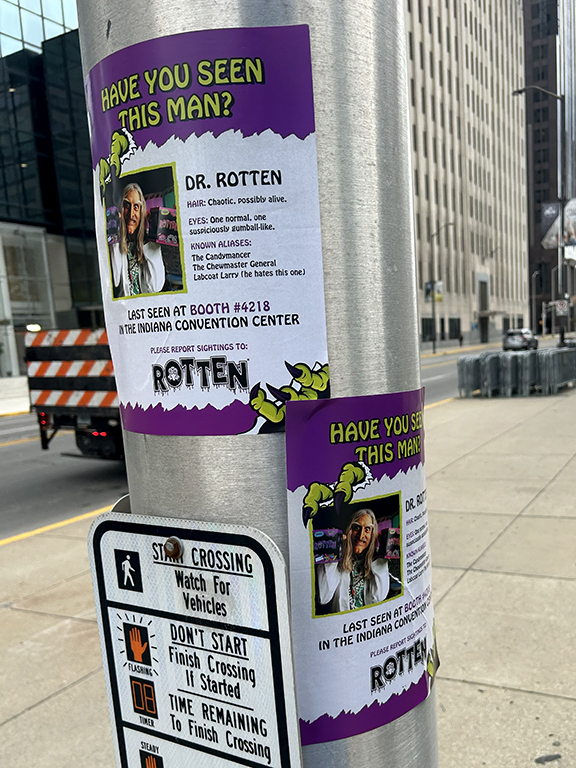
At American Guerrilla Marketing, we are an expo marketing agency that builds programs in that open territory. We deploy brand ambassador teams, run product sampling programs, route LED billboard trucks, install sidewalk stencils, and execute projection advertising at major expos and trade shows across the US. This guide explains what that work looks like and why it produces results that floor-only marketing cannot match.
What Happens Outside an Expo That Exhibitors Miss
The three days of a major expo create a temporary, highly concentrated market in the geographic area surrounding the venue. Tens of thousands of industry buyers, decision-makers, and influencers move through the same physical spaces on predictable daily schedules. They have breakfast at the same hotel restaurants. They walk the same approach corridors to the convention center. They eat lunch at the restaurants within walking distance of the venue. They network at the same bars and restaurants in the evening.
That concentration and predictability creates extraordinary marketing opportunities for brands that understand it. A well-placed ambassador team at a hotel entrance can reach a thousand attendees before 9 AM on the first show day. An LED truck on the primary approach corridor passes the same audience multiple times throughout the day. A projection on the expo center exterior during the evening networking period reaches every attendee who ventures outside the building after the show floor closes.
The Attention Environment Outside vs. Inside
Inside the exhibit hall, attendees have developed a defensive posture against marketing. They are surrounded by exhibitors competing for their attention, they are under time pressure to see what they came to see, and their decision-making bandwidth is compressed. Outside the hall, that pressure relaxes. An attendee having breakfast at their hotel is relaxed, unhurried, and has not yet processed a single marketing interaction for the day. An attendee at lunch two blocks from the venue is on a break, in a social mode, and genuinely more receptive to a brief brand conversation.
The outside-the-hall attention environment is consistently more favorable for brand interactions than the exhibit floor environment, across virtually every category of product and audience type.
Building an Expo Marketing Program: The Tactical Components
A comprehensive expo marketing program includes multiple tactical components that operate in different locations and serve different functions in the overall brand awareness and conversion strategy. We design the mix based on the expo venue geography, the attendee profile, and the brand’s specific objectives.
Brand Ambassador Deployments at Expo Approach Zones
Ambassador teams placed at expo entrance plazas, shuttle stops, and hotel lobby zones during morning approach hours represent the highest-volume contact strategy in outside-the-hall marketing. These teams initiate brief, targeted conversations with attendees at their most fresh and least marketing-fatigued moment of the day. Each interaction can include a sample, a collateral handoff, a QR code link, and a verbal message that connects the brand to the expo audience’s specific professional context.
At Natural Products Expo West in Anaheim, for example, an ambassador team at the Anaheim Convention Center entrance plazas during morning approach hours can interact with food and beverage buyers, retail chain representatives, and wellness industry decision-makers before they have been approached by a single competitor on the show floor. The professional quality of that interaction, and the novelty of the outside-the-hall placement, creates an impression that registers differently than the hundredth booth interaction of the day.
Product Sampling at Expo Hotel and Lunch Zones
For brands in food, beverage, supplements, personal care, or any physical product category, product sampling outside the expo venue is one of the highest-ROI tactics in the expo marketing toolkit. The mechanics are straightforward: a sampling team deploys at a high-traffic non-venue location, distributes samples in branded packaging with a collateral card, and uses a brief, professionally trained interaction to connect the product experience to the brand. The outside-the-hall environment makes that interaction more effective by removing the sensory competition and attendee defensiveness present on the exhibit floor.
Mobile LED Billboard Trucks on Expo Routes
An LED truck running the primary expo approach routes and hotel corridors during show hours generates high-reach, high-impression brand exposure across essentially the full attendee population. Unlike ambassador interactions, which are one-at-a-time, an LED truck impression reaches every pedestrian and vehicle passenger in its field of view simultaneously. For brand awareness objectives, the reach efficiency of mobile billboard advertising at expos is unmatched by any other field marketing format.
Sidewalk Stencils on Expo Approach Corridors
Sidewalk stencils installed on the pedestrian approach routes leading to the expo venue create a persistent, 24/7 brand presence that operates without staffing cost after installation. Every attendee who walks the approach corridor on foot, multiple times per day across the full show duration, passes through the branded sidewalk environment. For brand awareness at scale with a fixed, time-limited activation, sidewalk stencils are among the most cost-efficient formats in the expo marketing mix.
Expo Marketing Without a Booth: The Non-Exhibitor Strategy
One of the most cost-effective applications of outside-the-hall expo marketing is as a substitute for, rather than a complement to, exhibit floor participation. The cost of a meaningful exhibit presence at a major national expo, including floor space, booth construction, travel and accommodations, staffing, and show services, typically runs $40,000 to $150,000 or more. A comprehensive outside-the-hall marketing program at the same show typically runs $15,000 to $60,000 and reaches a larger share of the total attendee population.
The trade-off is in conversion depth: a booth allows longer, more detailed product demonstrations and relationship-building conversations that the outside-the-hall environment cannot fully replicate. But for brands whose objective is awareness building, audience expansion, or positioning ahead of a product launch, outside-the-hall expo marketing often produces better results per dollar than exhibit floor participation.
Our guerrilla marketing team has designed non-exhibitor expo marketing programs for brands at Natural Products Expo West, ISC West, Salesforce Dreamforce, and other major expos, consistently generating meaningful audience impressions at a fraction of the exhibit cost.
Vertical-Specific Expo Marketing: How Industry Context Shapes the Approach
Expo marketing is not one-size-fits-all across industries. A natural products expo draws a health-conscious, values-aligned professional audience whose product and brand receptivity is shaped by specific industry norms. A cybersecurity expo draws a technically sophisticated, skepticism-oriented professional population whose marketing engagement patterns are quite different from the wellness industry audience. A fashion industry expo draws a visually oriented, aesthetics-conscious audience with a different set of interaction expectations than a manufacturing industry expo.
Effective expo marketing agencies understand these vertical-specific differences and calibrate every element of the outside-the-hall program accordingly. The ambassador interaction script at Natural Products Expo West should not sound like the ambassador interaction script at ISC West. The product sampling approach at a food industry expo should not use the same conversational framing as sampling at a tech expo. The visual identity of the street-level program should align with the brand’s positioning in its specific industry context, not with a generic marketing template.
Technology Expo Marketing
Technology expo audiences respond to demo-ready, functionally credible marketing interactions. Ambassadors at tech expos should be able to answer basic product questions intelligently and position the brand in relation to the technology context of the show. Sampling at tech expos works best for products that have a direct functional utility (accessories, consumables, productivity products) rather than categories that require lifestyle context. Mobile advertising at tech expos benefits from QR code integration that allows digitally native audiences to engage with content on their own terms rather than requiring a human interaction as the conversion step.
Food and Beverage Expo Marketing
Food and beverage expo audiences are the most sampling-receptive of any professional conference population. The entire professional context of the show is built around tasting, evaluating, and comparing products, which makes outside-the-hall sampling a natural extension of the expo’s core professional activity. Product sampling at Natural Products Expo West, Fancy Food Show, or other food and beverage industry expos can be framed in professional evaluation language that resonates with buyer and retailer audiences differently from consumer-market sampling language. This professional framing — positioning the sample as a product evaluation opportunity rather than a consumer giveaway — produces significantly higher engagement and follow-through rates from the professional expo audience.
Expos Where We Have Run Outside-the-Hall Programs
Our expo marketing experience spans a wide range of industry shows and geographic markets. At Natural Products Expo West in Anaheim, we have deployed sampling teams and ambassador programs targeting the specialty food, supplement, and wellness buyer population that makes the show one of the most commercially valuable expos in the US. At ISC West in Las Vegas, we have run LED truck programs and ambassador deployments targeting the security industry professional audience that fills the Venetian Expo annually.
At Salesforce Dreamforce in San Francisco, we have executed sidewalk and street-level programs in the SoMa convention district that reach the enterprise software audience concentrated around Moscone Center during the show’s four-day run. Each expo develops a unique tactical playbook based on the venue geography, the attendee demographics, and the specific outdoor environment that the show creates in the surrounding neighborhood.
Measuring Expo Marketing Program Performance
We deliver comprehensive post-event reporting for all expo marketing programs, covering units distributed, locations staffed, impressions generated by format, and GPS documentation for all mobile deployments. QR code analytics provide direct attribution from street-level interactions to digital follow-up behavior, and we coordinate with brands’ CRM teams when a lead capture element is incorporated into the ambassador interaction workflow.
Every report is delivered within 48 hours of program completion. Brands with ongoing expo schedules benefit from our practice of comparing performance across shows, identifying which markets and which tactics produce the strongest per-unit results, and continuously refining the program structure based on accumulated field data.
Frequently Asked Questions
What does an expo marketing agency do?
An expo marketing agency builds brand presence outside the exhibit hall at the approach routes, hotel zones, and public spaces surrounding the expo venue. Tactics include brand ambassador deployments, product sampling programs, mobile billboard truck deployments on expo approach routes, sidewalk stencils near the venue, and projection advertising on expo center exteriors during evening hours.
What is the difference between exhibiting at an expo and marketing at one?
Exhibiting means buying a booth and showing up on the floor. Marketing at an expo means building brand presence across the entire expo district — the streets, hotel lobbies, approach corridors, and evening networking environment — not just in the square footage you purchased inside the hall. The two strategies serve different objectives and reach different portions of the attendee population.
Can a brand market at an expo without having an exhibit booth?
Yes. Outside-the-hall expo marketing programs operate completely independently of exhibit booth presence. Brands that cannot afford or choose not to purchase an exhibit booth use street-level expo marketing to reach the full attendee population at a fraction of the cost of floor participation.
What expos does American Guerrilla Marketing have experience with?
We have executed outside-the-hall marketing programs at Natural Products Expo West in Anaheim, Expo East in Philadelphia, ISC West in Las Vegas, Salesforce Dreamforce in San Francisco, Adobe Summit, and dozens of other major expos and trade shows across the US.
How does American Guerrilla Marketing measure expo marketing performance?
We measure through units distributed by location and shift, GPS-documented crew location and hours, QR code attribution connecting street-level interactions to digital follow-up, timestamped photo documentation, and post-event reporting delivered within 48 hours of program completion.
What is the typical cost of an outside-the-hall expo marketing program?
Programs range from $6,000 for a single-day ambassador deployment at a regional expo to $60,000 or more for a multi-tactic, multi-day program at a major national show. The range depends on tactic mix, market, team size, and program duration. Contact us at (646) 776-2770 for a detailed estimate.