Event Marketing Agencies Chicago: How to Activate Around the City’s Biggest Moments
Chicago event marketing is at its best when it shows up on the streets before the event starts. AGM builds the outdoor campaigns that reach Chicago’s event audiences where they actually live and move.
Event marketing in Chicago is one of the highest-concentration opportunities in the advertising calendar. When a brand runs a well-executed event marketing campaign in Chicago, it reaches a specific, defined audience at a moment of elevated engagement — when they are already in the city, already in a social mindset, already primed to discover and interact with new brands.
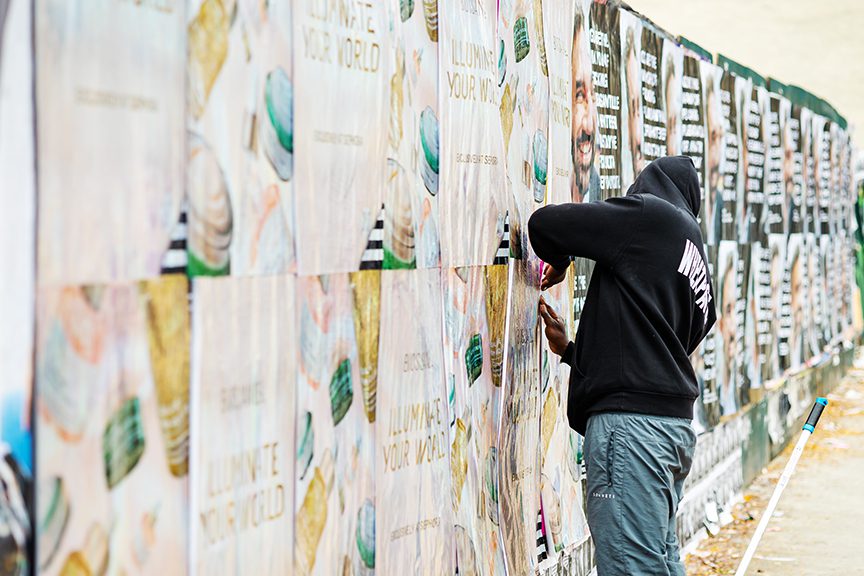
AGM has run event marketing campaigns in Chicago for over a decade. We have placed poster campaigns before festivals, executed street-level activations during music events, built guerrilla campaigns around product launches timed to major Chicago moments, and worked with brands to establish physical presence in the neighborhoods where their target audience gathers for the events they care about.
This article covers how event marketing in Chicago works from a physical advertising perspective — which events create the best campaign opportunities, which neighborhoods deliver the best street-level presence, and what an AGM event marketing campaign actually looks like in execution.
Why Physical Advertising Belongs in Chicago Event Marketing
Event marketing strategies frequently focus on the digital side: social media content, event-specific hashtags, influencer partnerships, and digital ads targeting the event’s attendee audience. These tools are useful. They are also used by every other brand that sees the same event opportunity. The digital event marketing space is crowded in ways that make differentiation genuinely difficult.
Physical advertising during events operates in a less competitive environment and reaches the audience in a different state. Someone who is at Chicago on the weekend of a major event — navigating the neighborhood, looking for food and drinks, walking between venues — is paying attention to their physical environment in a way they are not when scrolling a social feed from their couch. An outdoor campaign placed in the neighborhoods surrounding the event reaches this audience at a moment of heightened environmental awareness.
The combination of physical advertising and a defined event context also creates natural content opportunities. An outdoor installation placed near a major Chicago event becomes part of the event’s visual context. It gets photographed by attendees who are already documenting their experience. It earns organic social media coverage that extends the campaign’s reach to the event’s broader online audience.
Chicago’s Event Marketing environment
Chicago’s event calendar is one of the richest in the United States, with major events across music, sports, arts, and culture creating concentrated audience opportunities throughout the year.
Lollapalooza in Grant Park in August draws 400,000 attendees over four days, concentrating a young, affluent, music-focused audience in the South Loop and Grant Park corridor. The surrounding neighborhoods — the Loop, River North, and Wicker Park — see increased foot traffic from attendees who spend the festival weekend in the city.
Pitchfork Music Festival in Union Park in July draws a smaller but highly engaged music and culture audience concentrated in the West Humboldt Park and Ukrainian Village neighborhoods. The audience for Pitchfork is one of the most tastemaker-concentrated in the city.
The Chicago Marathon in October concentrates 45,000 runners and several hundred thousand spectators across a 26.2-mile course that passes through nearly every major Chicago neighborhood. Event marketing opportunities around the Marathon are citywide, with the highest concentrations near the start and finish in Grant Park and along the North Side spectator zones.
Chicago’s neighborhood festivals — Wicker Park Fest in August, Andersonville Midsommarfest in June, the Renegade Craft Fair in June — each concentrate specific audience types in specific neighborhoods for defined weekend periods. These smaller events often offer better event marketing ROI than larger events because the competition from other brands is lower and the audience is more specifically defined.
Best Neighborhoods for Chicago Event Marketing Campaigns
Grant Park and the South Loop (Lollapalooza and Chicago Marathon)
Grant Park is the staging ground for Chicago’s two largest annual events. Campaigns in the surrounding Loop, South Loop, and Museum Campus areas reach the concentrated event audiences both before they enter the venues and after they exit.
Union Park and West Town (Pitchfork)
Union Park’s surrounding neighborhoods — Ukrainian Village, West Town, Wicker Park — are the natural extension of the Pitchfork audience. Campaigns in these corridors before and during the festival reach the most tastemaker-oriented audience in Chicago.
Wicker Park (Neighborhood Festivals)
Wicker Park Fest and the broader summer festival circuit in Wicker Park and Bucktown concentrate the neighborhood’s resident audience in the commercial corridors. Campaigns on Milwaukee Avenue during festival weekends reach this audience at peak engagement.
The most effective Chicago event marketing campaigns are the ones that start before the event. A poster campaign running for two weeks before a major Chicago event builds awareness among the local audience who will attend. The event itself creates the high-density contact moment. The campaign that continues through and after the event captures the post-event audience who are still engaged.
AGM’s Chicago Event Marketing Campaign Formats
Pre-Event Poster Campaigns
The most reliable format for event marketing in Chicago is a poster campaign that runs in the neighborhoods adjacent to the event venue for two to three weeks before the event. This campaign reaches the local audience that will attend, builds brand awareness among people who are already thinking about the event, and creates visual presence that the campaign can reference in social media content before, during, and after the event.
Event-Day Guerrilla Activations
Street-level brand activations on or near the event day create direct contact between the brand and attendees. Sampling, interactive installations, branded giveaways, and other activation formats work best when they are integrated into the event’s natural pedestrian flow rather than competing with it. AGM plans event-day activations that fit the specific context of each Chicago event — the format that works at a music festival differs from the format that works at a marathon or a corporate convention.
Post-Event Continuation Campaigns
Some of the most effective event marketing campaigns in Chicago continue for one to two weeks after the event concludes. The post-event audience — people who attended and are still processing and sharing their experience — is a high-engagement audience for outdoor campaigns that reference the event context. A campaign that was present before and during the event has the credibility to continue the conversation after.
Chicago Event
Season
Best Campaign Neighborhoods
Audience Type
Lollapalooza
August
Loop, River North, Wicker Park
Music fans, 18-35, national and international
Pitchfork Music Festival
July
Wicker Park, West Town, Logan Square
Music/culture tastemakers, 20-38
Chicago Marathon
October
Citywide, Grant Park to North Side
Runners, health-fitness, broad demographic
Chicago Air and Water Show
August
Belmont Harbor, Lincoln Park
Families, residents, tourists
Renegade Craft Fair
June
Wicker Park, Logan Square
Independent brand loyalists, design-aware
Planning a Chicago Event Marketing Campaign with AGM
The planning process for a Chicago event marketing campaign starts with identifying the event or events that create the best audience concentration for the brand’s target consumer. From there, AGM maps the neighborhoods adjacent to those events, identifies the outdoor locations within those neighborhoods that provide the best visibility and audience access, and builds the campaign plan around the event timeline.
For brands that have an existing relationship with a Chicago event — as a sponsor, partner, or official vendor — the outdoor campaign reinforces and extends that relationship into the physical environment beyond the event venue. For brands that want to be adjacent to an event without a formal relationship, the outdoor campaign creates a presence in the surrounding neighborhood that the event’s audience naturally encounters.
AGM handles all elements of Chicago event marketing outdoor campaigns: location planning, permits and authorization, production, installation, and photo documentation. Contact us with your event, your target audience, and your timing to start the planning conversation.
Measuring Event Marketing Campaign Performance in Chicago
Event marketing campaigns in Chicago are one of the few outdoor advertising scenarios where you can correlate campaign activity directly with event-driven audience behavior. The event provides a natural timeline anchor that makes before, during, and after comparisons meaningful.
Here is how to measure the performance of a physical event marketing campaign in Chicago.
Pre-Event Awareness Metrics
In the two to three weeks before the event, track branded search volume and direct website traffic in Chicago. If the outdoor campaign is generating awareness among the local audience that will attend the event, you should see branded search and direct traffic trending upward in Chicago-specific geographic segments. This is the pre-event awareness effect of the physical campaign reaching the local audience before out-of-town visitors arrive.
Event Period Metrics
During the event period, track social media mentions, organic social shares, and event-adjacent social content. In Chicago, events concentrate socially active audiences who are actively photographing and sharing their experience. A physical brand campaign that is positioned in the event corridor or in adjacent neighborhoods may appear in event-goer social content without any additional brand action required.
Website traffic from Chicago-based IP addresses during the event period is also informative. Spikes in Chicago traffic that coincide with event dates may reflect attendees discovering the brand through the outdoor campaign and visiting the website during or immediately after the event.
Post-Event Metrics
The two to four weeks after a major event are when the retargeting value of the physical campaign is highest. The audience that was exposed to the brand during the event — through outdoor placements and potentially through the event itself — is in the retargeting pool. Post-event retargeting campaigns targeting Chicago-geographic audiences who visited the website during the event period reach the highest-intent segment of the total campaign audience.
Post-event social content — the recaps, photos, and stories that event attendees share in the days following the event — continues to create organic amplification opportunities for brands that were visibly present during the event period. Engaging with this content, resharing what fits the brand’s editorial standard, and building on the event’s social momentum extends the campaign’s effective duration beyond the physical placements.
Why Chicago Remains One of the Best Event Marketing Markets
Every major U.S. city has events. Not every city has the combination of factors that makes event marketing campaigns genuinely worthwhile in terms of return per dollar invested. Chicago has all of them: a dense, pedestrian-accessible event environment, a resident population that is actively engaged with the city’s cultural calendar, a strong media network that covers interesting brand campaigns, and a social media community that amplifies what it finds interesting.
Brands that invest in physical event marketing in Chicago are investing in the intersection of all these factors. They are not just buying poster panels near an event venue. They are placing themselves in the cultural conversation that surrounds the event — the pre-event anticipation, the during-event documentation, the post-event reflection. Physical outdoor advertising is the most durable presence in that conversation because it exists in the physical environment where the conversation is actually happening.
Phase
Physical Campaign Role
Digital Campaign Role
Key Metric
Pre-event (2-3 weeks)
Build awareness among local attendees
Targeted ads to event interest segments
Branded search lift, direct traffic
Event period
Physical presence in event corridors
Social content, real-time engagement
Organic social mentions, event-tagged content
Post-event (1-2 weeks)
Continuation in target neighborhoods
Retargeting event-period website visitors
Retargeting conversion rate, post-event traffic
Practical Next Steps for Chicago Event Marketing
If you are planning an event marketing campaign in Chicago and you want a physical outdoor component, start the conversation with AGM three to six weeks before the event date. The planning window matters more in event marketing than in evergreen campaigns because the event itself creates a hard deadline that cannot be moved. Missing the installation window by even one week eliminates the pre-event awareness phase that makes the campaign most effective.
Contact AGM with the event name and date, your target audience within the Chicago market, and the geographic area where you want outdoor presence. We will develop a location plan, confirm the timeline, and begin the production and authorization process that delivers a fully executed campaign before the event begins.
Campaign Execution: What Actually Happens on the Ground
The gap between a campaign plan and a delivered campaign is where most outdoor advertising problems occur. Understanding what professional execution looks like — and what warning signs indicate a vendor is cutting corners — helps brands make better decisions when selecting partners for outdoor advertising campaigns.
Pre-Campaign Site Survey
Every properly executed outdoor advertising campaign begins with a site survey. Before any location is confirmed on a media plan, it should be visited, assessed for surface condition, photographed, and evaluated for audience access and visibility. A location that looks strong on a map or on an aerial view may have a surface that is degraded, a sightline that is blocked by vegetation or construction, or an access issue that complicates installation.
Site surveys are not optional. They are the difference between a campaign that delivers what was planned and a campaign that has to scramble to find replacement locations at the last minute because the original list had surface problems that were only discovered at installation time. AGM conducts site surveys for every campaign, in every market, before confirming any location.
Property Authorization
Every outdoor advertising surface that is not part of a licensed commercial board network requires documented property owner authorization before installation. This authorization protects the brand, it protects the installation crew, and it protects the campaign from removal by the property owner after installation.
Brands that work with vendors who install on unauthorized surfaces are accepting risks that include campaign removal, lost investment, and inability to document the campaign for any professional or legal purpose. AGM requires property owner authorization for every private-surface placement. This is not a best practice — it is a baseline requirement.
Material Selection and Print Quality
Outdoor advertising materials need to be specified for the specific environmental conditions of the campaign location. A campaign running in Chicago in October needs materials that can withstand cold, wind, and potential precipitation. A campaign running in Los Angeles in summer needs materials that can withstand UV exposure and heat. A campaign running in Seattle needs materials that can withstand persistent moisture.
Print quality for outdoor advertising requires higher resolution and more careful color management than digital creative. An image that looks sharp on screen may appear pixelated at outdoor scale. Colors that look accurate on a monitor may appear washed out or shifted under outdoor lighting conditions. AGM’s production specifications account for these differences and require print review before any material ships to the installation team.
Installation Logistics
Professional installation logistics in dense urban markets require route planning, timing coordination, and contingency planning for unexpected access issues. In New York, Chicago, and Los Angeles, parking and access restrictions affect installation routes in ways that inexperienced vendors underestimate. An installation that should take six hours can take twelve if the route is not planned and the access issues are not anticipated.
AGM’s installation crews in each market have direct experience with the specific logistical challenges of that market. They know which neighborhoods require early morning installations before business-hour traffic builds. They know which surfaces require specific installation methods. They know how to adapt when a location is unexpectedly unavailable on installation day — and they have pre-vetted backup locations ready to replace it.
Photo Documentation Protocol
Photo documentation is the evidentiary record of an outdoor advertising campaign. It should be captured at the time of installation, at each confirmed location, with consistent framing that shows the creative in context and confirms the location. Documentation photographs taken days after installation, in low light, or at angles that obscure the location context do not meet the standard of professional campaign documentation.
AGM’s documentation protocol requires a minimum of one confirmation photograph per location at the time of installation. For larger installations, multiple angles are captured. All photographs are tagged with the date and location. The complete documentation package is compiled and delivered to the client within five business days of the campaign concluding.
Working With Multiple Advertising Channels in Parallel
Most effective brand campaigns in major cities today do not rely on a single advertising channel. They coordinate physical outdoor advertising with digital advertising, public relations, social media, and sometimes direct event activations. Understanding how to coordinate these channels effectively — timing them to maximize overlap and reinforcement — is one of the more practical skills in modern brand marketing.
Sequencing Physical and Digital Campaigns
The standard recommendation for combining physical and digital advertising is to launch the physical campaign first. The outdoor campaign builds the initial awareness and recognition that makes subsequent digital touchpoints more effective. When the digital campaign activates — paid social, PPC, retargeting — it is reaching an audience that has already been exposed to the brand through physical channels. This prior exposure changes the quality of the digital interaction.
The ideal sequencing is: physical campaign launches two to three weeks before the digital campaign reaches full intensity. During the physical campaign’s first two weeks, the brand is building awareness among the target audience in the target geography. When the digital campaign activates, it is amplifying an existing physical presence, not introducing a completely unknown brand. The combination creates a multiplier effect that neither channel alone could produce.
Using Documentation Photography as Digital Creative
One of the most underutilized aspects of physical advertising campaigns is the documentation photography they generate. Professional installation photographs, taken in real city environments with the brand creative in context, are among the most effective digital advertising creative assets available. They are authentic. They signal real-world investment. They demonstrate genuine local presence in a way that no studio photograph can replicate.
Brands that use their outdoor campaign documentation photographs as paid social and display creative consistently report higher engagement rates and lower cost-per-click than brands using studio-produced creative. The reason is simple: the audience recognizes a real place when they see it, and recognition creates credibility. An ad that shows your brand on a real wall in a real Chicago neighborhood tells the audience something more convincing than any studio shot.
Event and PR Integration
Physical outdoor campaigns are natural vehicles for press coverage when the creative is distinctive enough to be worth covering. Local media in every major city regularly covers interesting brand campaigns that appear on the streets — not all campaigns, but the ones that do something genuinely creative or culturally relevant.
Brands that want to maximize the earned media potential of their outdoor campaigns should have a PR plan in place before the campaign installs. This means identifying the local media outlets that cover brand activations and design, preparing a press release or photo essay, and having someone available to answer media inquiries when coverage inquiries come in. The campaigns that earn press coverage are the ones that are ready for it.
Campaign Reporting and What It Should Include
Campaign reporting for outdoor advertising is less standardized than digital advertising reporting, but it should include a defined set of elements that confirm campaign delivery and provide meaningful performance data.
Report Element
What It Shows
Format
Installation photo set
Visual confirmation of each placement
One image per location, full-frame
Location map
Geographic distribution of placements
Annotated map with each confirmed location marked
Location list
Confirmed addresses or descriptions of each placement
Spreadsheet or list format
Campaign summary
Overview of what was planned vs. what was delivered
Written narrative
Dates of installation
Campaign timeline confirmation
Installation date per location or overall
Digital metrics — website traffic, branded search volume, social media engagement — should be tracked separately by the brand’s analytics team and correlated with the outdoor campaign dates to assess the campaign’s contribution to these signals. The outdoor vendor provides the physical delivery documentation. The brand’s analytics team provides the performance context.
Frequently Asked Questions
What types of event marketing campaigns does AGM run in Chicago?
AGM runs poster campaigns, wheat paste campaigns, guerrilla street activations, and branded experiential setups for event marketing in Chicago. We time campaigns to coincide with major Chicago events and concentrate placements in neighborhoods adjacent to event venues.
How far in advance should a Chicago event marketing campaign be planned?
Plan four to six weeks before the event date. The physical campaign should launch one to two weeks before the event to build awareness among the local audience before the event draws out-of-town visitors. Full planning and production takes three to four weeks.
Which Chicago events create the best event marketing opportunities?
Major music festivals, marathons, fashion weeks, and neighborhood cultural events create the strongest concentrated audience moments for event marketing in Chicago. The right event depends on the brand’s target demographic and campaign objectives.
Can AGM execute event marketing campaigns without an official event sponsorship?
Yes. AGM’s event marketing campaigns operate in the public spaces adjacent to events — neighborhoods, streets, and pedestrian corridors near venues. Official event sponsorship is not required to run an outdoor campaign in these areas.
What documentation does AGM provide for Chicago event marketing campaigns?
Every campaign concludes with a photo documentation package: installation shots at each location, a campaign location map, and a summary report. This documentation supports social media content, press materials, and internal campaign reporting.
How does AGM handle last-minute timing changes for Chicago event campaigns?
Event timing occasionally shifts. AGM maintains flexibility in installation scheduling and can adjust to date changes with advance notice. We communicate proactively about any timing issues and have contingency plans built into the project timeline for all event marketing campaigns.