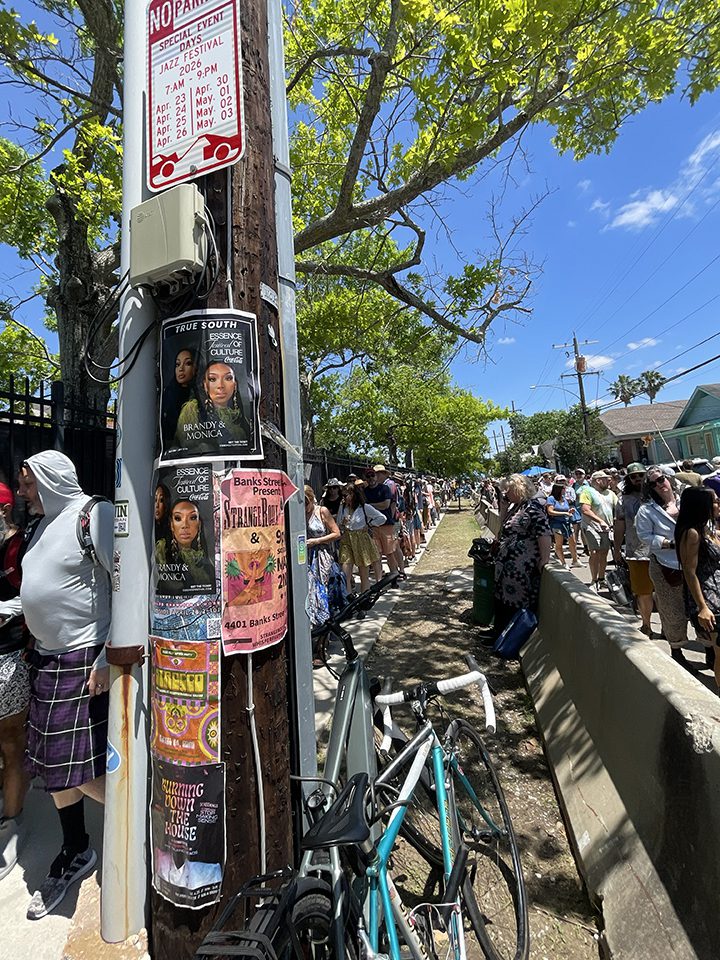
Concert tour advertising has a fundamental timing problem that most marketing formats do not share: the product, the show, exists for one night only in each market. There is no inventory to restock, no extended sales window, no opportunity to catch a customer on the second or third visit. A show that does not sell through in advance either leaves money on the table or plays to an undersized room, and neither outcome serves the artist, the promoter, or the audience that the marketing was supposed to reach.
Street-level tour advertising solves the timing problem by concentrating awareness and conversion activity in the specific market, in the specific neighborhoods where the target audience lives and moves, in the specific weeks before the show when promotional activity has maximum impact on ticket sales. A poster campaign that goes up four weeks before the show date, supplemented by street teams in music-adjacent neighborhoods two weeks out and a venue approach activation on show night, creates a multi-touchpoint promotional arc that builds the show’s cultural presence from first announcement to sold-out.
Our team has coordinated street-level concert tour advertising across 30+ market tours for major label releases, independent artist campaigns, and festival series. This guide covers the field mechanics: how we structure multi-city tour campaigns, which formats produce results in which market environments, what timing sequences maximize the return on street-level advertising investment, and how we document and report campaign execution across large-scale multi-market tour runs.
The Tour Market Map: Sequencing Street-Level Advertising Across 30 Cities
A 30-city tour does not have 30 identical markets. The markets on a major US tour range from primary markets like New York, Los Angeles, and Chicago with their own distinct neighborhood structures and fan demographics to secondary markets like Columbus, Phoenix, and Denver with smaller but highly engaged music communities. The street-level advertising strategy adapts to each market’s size, the target demographic’s geographic concentration within that market, and the specific show date timing that determines the promotional window available in each city.
In primary markets, the street-level campaign deploys across multiple neighborhoods with distinct demographic profiles, building saturation in the neighborhoods where the target fan demographic is most concentrated. A tour promoting an indie rock artist in New York deploys poster campaigns in Williamsburg, Bushwick, Greenpoint, and Astoria in Brooklyn, and in the East Village, Lower East Side, and Alphabet City in Manhattan, because those are the neighborhoods where the indie rock fan demographic lives and spends time. A tour promoting an R&B artist deploys in different Brooklyn neighborhoods, in Harlem, and in areas of the Bronx where the R&B fan demographic is most concentrated.
In secondary markets, the street-level campaign concentrates in the specific neighborhoods or corridors that concentrate the target demographic, rather than spreading across the city. In Columbus, a campaign targeting the indie music demographic concentrates in the Short North. In Denver, it concentrates in the RiNo Arts District and Capitol Hill. In Nashville, it concentrates in the Gulch and East Nashville. Each of these secondary market concentrations reflects where the target demographic lives, and a campaign that understands and targets those concentrations outperforms one that takes a city-wide approach with insufficient density in the neighborhoods that matter.
Poster Campaigns: The Foundational Format
Poster campaigns are the foundational format for concert tour street advertising for the same reason they have been the standard tool for music promotion for decades: they work in the specific environments where music fans concentrate, they create persistent visual presence that builds awareness through repetition, and they communicate the basic information that converts awareness to ticket purchase in a format that the target audience is conditioned to receive as authoritative information about upcoming shows.
A well-executed poster campaign for a concert tour achieves three things simultaneously: it tells the audience the show is happening, it communicates the date and venue clearly enough to enable immediate ticket purchase action, and it makes the show look like something worth attending through the quality of the creative and the credibility of the placement environment. A poster on the wall of an independent record store says something about the show that a generic digital ad cannot replicate: this is music that the people who run this store think is worth telling their customers about.
Our wheatpaste and poster campaigns for concert tours prioritize placement in music-adjacent environments: independent record stores, music venues, music instrument retailers, and the neighborhood environments where music fans are most concentrated. In New York, this means the blocks around Academy Records in the East Village, the streets around Rough Trade in Williamsburg, and the corridors around Music Hall of Williamsburg and Brooklyn Steel. In Los Angeles, it means the Amoeba Records area in Hollywood, the blocks around the Echoplex in Echo Park, and the Sunset Strip venue approach corridors.
Street Teams: Direct Fan Contact in the Right Locations
Street team programs for concert tour advertising create direct contact between the promotional campaign and the target fan demographic in the specific environments where that demographic concentrates. A street team deployed at a record store release event reaches active music buyers with a promotional message at the highest possible moment of music-related purchase intent. A team deployed at the venue of a different show by a related artist reaches the most directly relevant potential audience outside the show’s own direct marketing list.
The selection of street team deployment locations for tour advertising requires specific market knowledge about where the target genre’s fans concentrate in each city. Our brand ambassador agency operations for concert tour campaigns include pre-campaign market research that identifies the specific venues, retail locations, and neighborhood environments in each tour market that concentrate the highest density of the target fan demographic. This research determines the deployment schedule that maximizes the return on street team investment in each market.
Street team materials for concert tour advertising typically include show flyers, promotional merchandise samples, and direct ticket purchase incentives where applicable. The interaction protocol for concert tour street teams is brief and specific: communicate the show date and venue, direct the potential ticket buyer to the purchase channel, and leave them with a physical reminder of the show that survives the interaction and can prompt later ticket purchase action.
Venue Approach Activations: The Show Night Opportunity
Venue approach activations on show night reach two distinct audiences in a single deployment. The primary audience is existing ticket holders arriving for the show, who can receive promotional materials for upcoming dates, merchandise, and sponsor-related content while they are in the highest possible state of engagement with the artist. The secondary audience is non-ticketed pedestrians in the venue approach corridor who encounter the activation and are potentially persuaded to purchase remaining tickets.
The venue approach corridor on show night is one of the strongest single-location activation environments in any touring market. The audience density is high, the emotional engagement is maximum, and the target demographic is precisely concentrated in a specific physical location at a specific time. A brand ambassador team positioned along the venue approach corridor reaches the most motivated audience for concert-related marketing in the most accessible, concentrated way available in that market.
Venue approach activations work best when the brand ambassador team is coordinating with the venue and promoter rather than operating independently of them. When the brand is an official tour partner, venue approach activations are a standard component of the partnership activation. When the brand is conducting independent street-level marketing adjacent to the show, the activation needs to be planned with attention to the venue’s security protocols and the municipal regulations governing public space use around large event venues.
Market-by-Market Campaign Timing
The optimal timing sequence for concert tour street advertising differs based on the market size, the target demographic’s attention patterns, and the specific tour date schedule. In major markets where the show is competing for audience attention with many other entertainment options, the promotional window needs to start earlier and maintain higher frequency. In secondary markets where the show may be a more distinctive event in the local entertainment calendar, a compressed promotional window can achieve similar awareness levels.
Standard timing sequence for major market tour advertising:
Four to six weeks before the show: Poster campaign launches in the priority neighborhoods. This establishes visual presence before competing shows or events can capture the audience’s attention with their own promotions. The early poster deployment also gives the campaign maximum time for organic amplification, as music fans who photograph and share poster content extend the visual campaign’s reach into digital channels.
Two to three weeks before the show: Street team activations begin, targeting the record stores, venues, and neighborhood environments identified in the pre-campaign market research. The combination of existing poster presence and active street team contact creates a two-touchpoint sequence that converts awareness to ticket purchase intent more effectively than either format alone.
One week to show night: High-visibility placements and venue approach activations concentrate the promotional push in the final ticket sales window. Remaining ticket inventory and any price changes require last-minute promotional urgency that the final week’s activations are designed to generate.
Documentation and Multi-Market Reporting
Multi-market concert tour advertising campaigns require documentation infrastructure that can verify execution across all tour markets simultaneously. Our campaign management system for tour advertising produces GPS-tracked, timestamped photo documentation for every market deployment, consolidated into a single campaign report that shows the promoter, label, and artist management the full scope of street-level campaign execution across every tour date.
This documentation is particularly valuable for tour sponsors and brand partners who need verifiable proof of activation execution in each market. A brand that sponsors a 30-city tour and funds street-level promotional activity in all 30 markets needs documentation that the activation happened as planned in each market. Our field reporting infrastructure provides this documentation at the scale that large tour sponsorship programs require.
Our broader guerrilla marketing services for the music industry extend beyond poster campaigns and street teams to include mobile billboard trucks for high-visibility market saturation, sidewalk stencil programs for venue approach environments, and experiential activations for artist launch events and major tour kickoffs that require a larger-scale production environment than standard street-level programs.
Frequently Asked Questions
What is concert tour advertising?
Concert tour advertising refers to the promotional campaigns that build awareness and drive ticket sales across the cities on a touring artist’s itinerary. This includes street-level formats like poster campaigns, street teams, and venue approach activations alongside traditional media. Effective tour advertising in each market creates buzz that makes the show feel like an event rather than just a date on a calendar, driving ticket sales and ensuring strong attendance across all tour markets.
How far in advance should concert tour advertising start?
Street-level concert tour advertising typically launches four to six weeks before the show date in each market. Poster campaigns go up first, building visual awareness in the neighborhoods where the target audience concentrates. Street team activations begin two to three weeks out, creating direct consumer contact at venues, record stores, and fan-adjacent locations. In the final week before the show, venue approach activations and high-visibility placements maximize last-minute ticket sales momentum.
Does American Guerrilla Marketing run concert tour advertising campaigns?
Yes. Our team has coordinated street-level tour advertising campaigns across 30+ markets simultaneously for major and independent touring artists. We deploy poster campaigns, street teams, venue approach brand ambassador programs, and OOH activations in each tour market. All campaigns are GPS-tracked and documented with consolidated reporting across all markets.
What street-level advertising formats work best for concert tours?
Poster campaigns in music-adjacent neighborhoods are the foundational format for concert tour street advertising. Street teams at record stores, music venues, and fan-adjacent retail locations create direct ticket promotion contact with the target audience. Venue approach activations on show night reach the most highly motivated potential buyers. Flyer distribution in high-foot-traffic areas builds broad awareness among the casual potential audience that may convert with the right promotional incentive.
How do you coordinate concert tour advertising across multiple cities?
Multi-city concert tour advertising coordination requires a centralized campaign management structure that deploys consistent creative and messaging across all markets while adapting timing and placement to the specific tour date schedule and local market conditions in each city. We manage this through a national coordination structure with local field operators in each market who execute the campaign to a consistent brief while handling local logistics, placement, and documentation.
What neighborhoods should concert tour street teams target?
The most productive neighborhoods for concert tour street teams are those that concentrate the target fan demographic. For indie and alternative music fans: Williamsburg and Bushwick in Brooklyn, Echo Park and Silverlake in LA, Wicker Park and Logan Square in Chicago. For electronic music fans: the warehouse districts and late-night venue corridors in each major city. Genre-specific neighborhood mapping is the critical first step in planning effective tour street team deployment.
How does venue approach advertising work for concerts?
Venue approach advertising targets the pedestrian corridors that concert attendees use to reach the venue on show nights. Brand ambassador teams positioned along these approach corridors reach existing ticket holders with promotional material and intercept non-ticketed pedestrians who might purchase remaining tickets. The concentration of motivated music fans in a venue approach corridor on show night is one of the highest-value single activation environments in tour advertising.