San Diego Comic-Con International is not just a comic book convention. It has become the global stage for entertainment franchise launches, streaming platform reveals, gaming announcements, and the pop culture conversations that set consumer attention for the following twelve months. More than 130,000 badge holders pack the San Diego Convention Center each July, but the event’s real influence extends far beyond the convention floor. The Gaslamp Quarter, downtown San Diego, and the city’s entire hotel district transform into an extended activation zone where some of the most effective Comic-Con marketing happens far from the official perimeter. At American Guerrilla Marketing, we plan and execute street-level campaigns that capture the Comic-Con audience at every touchpoint outside the convention walls.
The Comic-Con Audience Is a Marketer’s Dream
Every conference has an attendee profile. Comic-Con’s profile is exceptional. The audience is not just large. It is engaged, passionate, deeply tribal about the properties and brands they love, and actively looking for new things to be excited about. Comic-Con attendees are content creators by nature. They document, post, share, and narrate their convention experience in real time, which means any brand moment that resonates with this audience generates organic amplification at a scale that is genuinely uncommon in event marketing.
The Media Density Factor
Comic-Con concentrates entertainment journalists, pop culture bloggers, YouTube creators, Twitch streamers, and social media personalities from every major franchise and genre community in one city for four days. The editorial coverage these creators generate before, during, and after the convention is enormous. Any brand that creates a genuinely interesting street-level moment during Comic-Con week has an unusually high probability of appearing in that coverage without a PR budget attached to it.
The Cosplay and Visual Culture Advantage
Comic-Con attendees are visually primed. They spend months constructing costumes, evaluating brand executions in their favorite franchises, and developing opinions about creative quality. This means that a well-executed street-level campaign around Comic-Con reaches an audience that notices design, appreciates craft, and actively evaluates brand creative against a high standard. It also means the bar is higher. Generic execution disappears entirely in a context where everyone around you is trying to create a visual moment.
Comic-Con Marketing Zones and Locations
San Diego’s downtown geography during Comic-Con week concentrates attendee activity in a relatively compact area. Understanding which zones carry which audience segments at which times is the foundation of effective campaign planning.
The Gaslamp Quarter
The Gaslamp Quarter is Comic-Con’s social headquarters. The dozen-block restaurant, bar, and retail district immediately east of the convention center fills with attendees throughout the afternoon and evening of every convention day. Thursday through Sunday evenings see peak density, with the entire Gaslamp running at capacity from 6pm through midnight. This zone is the primary outdoor activation area for brands working outside the official event perimeter.
Gaslamp activations work in multiple formats: brand ambassador programs at restaurant entrances and between the convention exits, wheatpaste campaigns on available surfaces in the district, LED billboard trucks running the Gaslamp circuit during peak evening hours, and ambient installations that create brand moments within the evening social flow.
Harbor Drive and the Convention Perimeter
Harbor Drive runs along the waterfront adjacent to the San Diego Convention Center. During Comic-Con, it functions as the primary pedestrian artery between the convention entrance and the Gaslamp Quarter. The sidewalk traffic on Harbor Drive during midday and evening peak hours is continuous and dense. Brand ambassador programs and LED truck routes on Harbor Drive reach the full convention audience during their daily transition movements.
Hall H Queue and Outdoor Overflow Areas
Hall H at the San Diego Convention Center hosts the event’s most high-profile panels. The queue for Hall H forms the night before and extends for hundreds of meters along the convention’s outdoor perimeter. The overnight Hall H queue is a concentrated, captive, and highly engaged audience that has chosen to prioritize their Comic-Con experience over hotel comfort. Brand ambassador programs with useful items for queue campers, mobile food or beverage moments, and ambient installations near the queue line reach this audience with minimal competition.
Downtown Hotel District
The Marriott Marquis, Hilton, Hyatt, and other convention-area hotels serve as home base for Comic-Con attendees throughout the week. Hotel lobbies, hotel bar areas, and the pedestrian approaches to major hotels are all high-value locations for ambassador programs during morning and evening windows. Badge holders making their way from hotel to convention to Gaslamp and back create predictable repeat movement patterns that allow a single campaign to deliver multiple exposures to the same individual.
Petco Park and East Village
The East Village neighborhood adjacent to Petco Park hosts several major brand activations and off-convention parties during Comic-Con week. The audience here skews toward the evening entertainment and media crowd, distinct from the daytime convention-floor attendee. Wheatpasting and ambient formats in the East Village capture this segment during an important socializing window.
Comic-Con Marketing Format Playbook
The format mix for Comic-Con campaigns reflects the event’s unique audience characteristics and geographic concentration.
LED Billboard Trucks
LED trucks are among the most effective Comic-Con marketing formats because they provide moving, high-visibility brand exposure throughout the entire convention geography in a single deployment. A well-programmed LED truck running the Gaslamp circuit, Harbor Drive, and hotel approach routes during peak afternoon and evening windows reaches every segment of the Comic-Con audience multiple times per day. We program content to match the pop culture context of the event and the specific audience segment present at each zone on the route.
Wheatpasting
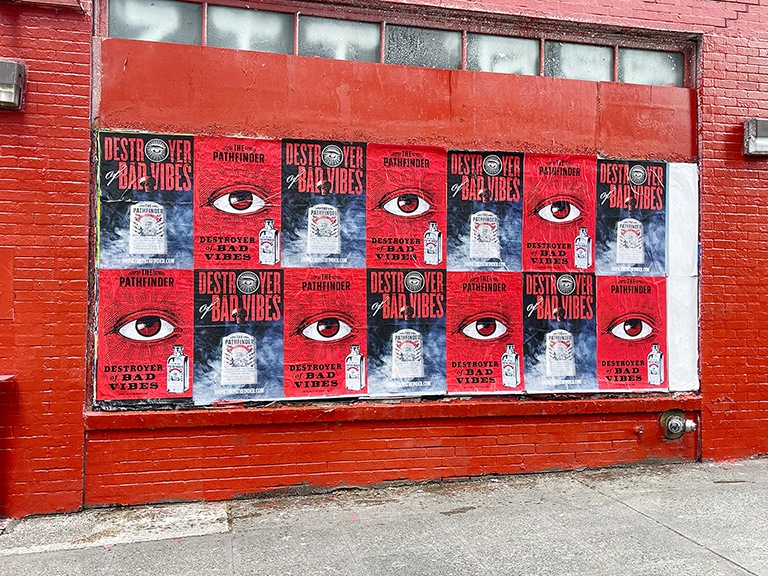
Wheatpaste campaigns in the Gaslamp Quarter and surrounding downtown blocks create static brand presence that accumulates exposures throughout the full convention week. Creative for Comic-Con wheatpaste needs to be visually striking, property-relevant where applicable, and designed to be photographed. The Comic-Con audience photographs everything interesting they see in the street. A wheatpaste campaign that earns organic documentation delivers earned media alongside its paid placement exposures.
Brand Ambassador Programs
Ambassador programs at Comic-Con require talent who are credible within the pop culture and fandom community. Our talent sourcing for Comic-Con campaigns prioritizes individuals who are genuinely engaged with the entertainment properties and brand categories relevant to the campaign. An ambassador who shares the audience’s genuine enthusiasm creates interactions that feel like community rather than advertising.
The most effective Comic-Con ambassador programs distribute physical artifacts with genuine fan value: exclusive prints, limited collectibles, branded items related to a franchise or property, or access tokens that deliver a unique experience. The Comic-Con audience has strong anti-commercial instincts and exceptional radar for inauthentic brand engagement. Functional, fan-relevant artifacts outperform generic branded merchandise every time.
Projection Advertising
Projection advertising on building facades in the Gaslamp Quarter during evening hours creates high-impact, photograph-worthy moments that generate significant organic documentation from the Comic-Con audience. A large-scale projection of franchise imagery, a brand-relevant animated sequence, or a creative visual message on a prominent Gaslamp building during peak evening hours becomes a gathering point and a social media moment simultaneously.
Ambient and Environmental Activations
Ambient formats around Comic-Con create discovery moments that complement the convention’s own atmosphere of unexpected experiences. Branded immersive installations near high-traffic pedestrian zones, unexpected visual moments in hotel lobbies, and experiential moments in the Hall H queue area all create the kind of organic, unscripted brand contact that the Comic-Con audience responds to most genuinely.
What Brands Get Wrong at Comic-Con
Comic-Con is one of the events where brand mistakes are most visible. The audience notices when a brand is trying too hard, when the activation has no relationship to the community, or when the execution quality falls below the visual standard that the event itself sets.
Generic Brand Presence
A generic brand booth, a generic ambassador team in matching shirts, a generic poster campaign with a product shot and a tagline, these formats disappear at Comic-Con because they compete with activations that have spent months developing property-specific, community-relevant creative. The Comic-Con audience will walk past a thousand generic marketing moments before noticing one that speaks their language.
Ignoring the Community
Brands that arrive at Comic-Con with no genuine connection to the properties, categories, or communities that make up the convention’s audience are received accordingly. The most successful non-entertainment-company brands at Comic-Con have found an authentic entry point: a product used by cosplayers, a service relevant to content creators, a brand with a genuine fandom connection, or a campaign creative that pays genuine tribute to the visual traditions of the medium. The community can tell the difference.
Wrong Timing
Comic-Con’s highest-value hours are not the hours you would expect. The convention floor peaks Thursday and Friday daytime. The street-level audience peaks Thursday through Saturday evenings in the Gaslamp. The Hall H queue overnight is a unique, high-engagement window that many brands ignore entirely. We build timing plans around verified attendee movement patterns rather than assumptions about when people are around.
Comic-Con Campaign Planning Timeline
Comic-Con takes place in late July. Campaign planning should begin by April at the latest, with earlier starts for campaigns involving significant production elements:
- April: Initial brief, format and zone selection, talent pool identification, location research
- May: Creative development, location scouting confirmation, talent hiring, production specs
- June: Creative production, ambassador briefing, logistics finalization, LED truck scheduling
- Early July: Installation preparation, talent final briefing, logistics mobilization to San Diego
- Convention week (late July): Full campaign in market
- Post-convention: Documentation report, social content audit, performance summary
Frequently Asked Questions About Comic-Con Marketing
What is Comic-Con marketing?
Comic-Con marketing refers to brand campaigns designed to reach the 130,000+ attendees and global media who descend on San Diego each July for San Diego Comic-Con International. It includes street-level activations in the Gaslamp Quarter, brand ambassador programs near the convention center, LED truck routes, and wheatpaste campaigns that intercept the pop culture audience where they move.
What areas of San Diego are best for Comic-Con brand activations?
The Gaslamp Quarter is the primary off-convention activation zone. Harbor Drive adjacent to the San Diego Convention Center, the downtown hotel district, Petco Park area for Hall H overflow crowds, and the Embarcadero are the highest-value locations for street-level campaigns during Comic-Con week.
How do brands market at Comic-Con without official sponsorship?
Brands execute street-level campaigns outside the convention center that intercept attendees in the Gaslamp Quarter, at hotel entrances, along Harbor Drive, and at evening event venues throughout downtown San Diego. LED trucks, brand ambassadors, wheatpasting, and ambient activations all operate outside official event perimeters.
How much does Comic-Con marketing cost?
Comic-Con street marketing campaigns typically run custom quote to $45,000 USD depending on format mix and duration. A focused four-day campaign covering the Gaslamp Quarter with LED trucks, ambassadors, and wheatpasting is significantly more cost-effective than official event sponsorships.
When should brands start planning Comic-Con marketing?
Comic-Con takes place in late July. We recommend starting planning in April or May. San Diego inventory for Comic-Con week is competitive, particularly for hotel-adjacent locations and Gaslamp Quarter surfaces. Eight to ten weeks of lead time is standard for a full campaign build.
What makes Comic-Con marketing unique compared to other conventions?
Comic-Con generates a uniquely engaged and visually sophisticated audience. The attendee base actively documents and shares everything they see on the street, making organic social amplification unusually strong. Creative that resonates with the pop culture and fandom community travels faster at Comic-Con than at almost any other event.
Can a brand market at Comic-Con without a presence inside the convention?
Yes. Many of the most memorable Comic-Con brand moments happen entirely outside the convention center. The Gaslamp Quarter, Hall H queue, and downtown hotel district all provide access to the full convention audience without requiring official exhibitor credentials or floor space.