Chicago Display Ads: Beyond Digital to Physical Brand Presence | AGM
Display advertising in Chicago means more than banner ads. The most effective display work in this city happens on the street, where people actually see it.
Most people who search for “Chicago display ads” are thinking about digital: Google Display Network banners, programmatic placements, social media ad units. That is a legitimate category, and there are plenty of digital agencies in Chicago that can manage those campaigns competently. But if you are only thinking about display advertising in digital terms, you are missing the physical display advertising environment that Chicago offers, and that environment is genuinely powerful for brands willing to use it.
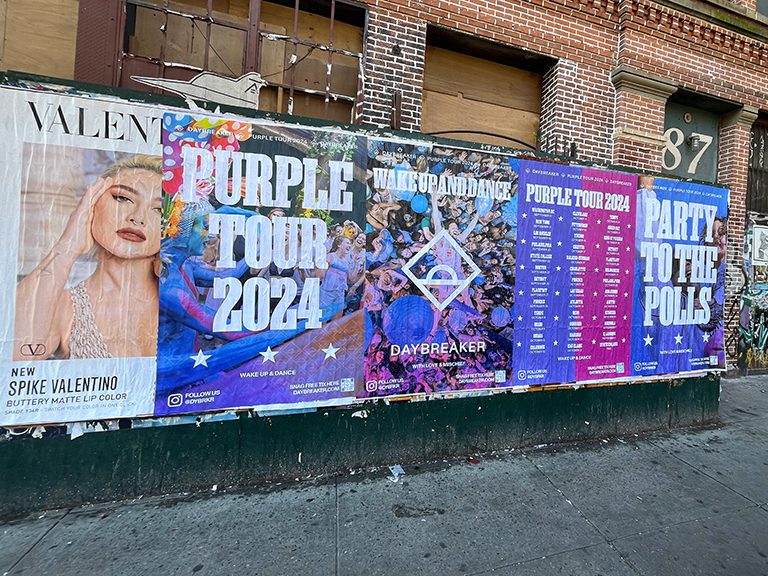
Physical display advertising in Chicago includes posters in high-traffic locations, stencil placements on sidewalks and walls, vinyl wraps on windows and structures, ambient signage in unexpected locations, and the visual presence created by brand installations throughout the city’s neighborhoods. These physical display formats have a different relationship with the viewer than a banner ad does. They cannot be blocked. They do not disappear in three seconds. They exist in the same physical space as the person looking at them.
We run physical display campaigns in Chicago as part of broader guerrilla and street marketing work. This guide covers what physical display advertising looks like in Chicago, where it works best, how to think about it alongside digital display campaigns, and what kind of results brands can expect from well-executed physical display in this market.
The Difference Between Digital Display and Physical Display in Chicago
Digital display advertising is a delivery mechanism. It places a visual brand message in front of someone while they are engaged with digital content. The viewer did not choose to see the ad. In many cases, their brain actively works to filter it out. Banner blindness is a documented phenomenon that affects a significant portion of digital display exposures. The viewer has learned, through years of exposure, to visually skip the areas of web pages and social feeds where ads appear.
Physical display advertising in Chicago operates in an environment where this filtering mechanism is less developed. When a person walks down Milwaukee Avenue in Wicker Park, they are not in the same automatic filter mode they are in when scrolling through social media. They are physically present in an environment they are actually experiencing. A poster or a stencil or a vinyl wrap in that environment competes differently than a banner ad competes in a digital feed. The person sees it because they are in the same space as it, not because an algorithm served it to them.
Recall and Memory Encoding
Physical display creates stronger memory encoding than digital display. This is consistent with what cognitive science research tells us about how the brain processes physical vs. digital stimuli. Physical experiences are processed more deeply. They involve more sensory input. They carry spatial context that connects the experience to a specific place and time. All of these factors contribute to stronger brand recall from physical display than from equivalent digital display exposure.
We see this in the data clients share with us about their campaigns. After a physical display campaign in Chicago, brand recognition surveys consistently show larger uplifts than equivalent digital spend produces in the same period. The physical exposures are doing something the digital exposures cannot: creating genuine memory traces rather than brief exposures that fade quickly.
Physical Display Ad Formats That Work in Chicago
The physical display formats available to brands in Chicago range from simple to complex, and from inexpensive to substantial. Here is how we think about the main options.
Poster and Print Placements
Poster placements in approved locations throughout Chicago neighborhoods represent one of the most cost-effective physical display formats available. The format is simple: a visually strong image on paper or vinyl, placed where your target audience will see it. The effectiveness depends entirely on the quality of the creative and the quality of the location selection. A stunning poster in a dead location is wasted. A mediocre poster in a great location earns attention it does not deserve. The best results come from excellent creative in excellent locations, and getting both right at the same time requires genuine knowledge of Chicago’s visual environment.
Stencil Campaigns
Stencil display work involves placing branded visual elements on sidewalks or approved wall surfaces using stencils and chalk-based or water-soluble materials. The format is striking because it is unexpected. A brand message on a sidewalk in Wicker Park or Logan Square is not where people expect to encounter advertising. That surprise creates a different kind of attention than a conventional poster format does. The stencil campaign that looks most like street art and least like advertising tends to perform best.
Window and Surface Vinyl
Brands with retail or restaurant partnerships in Chicago neighborhoods can use window vinyl and surface treatments to create significant visual presence without conventional signage costs. A vinyl treatment on a well-placed window on a high-traffic block can deliver millions of physical exposures over a four-week campaign window at a cost that is a fraction of equivalent digital display reach.
Transit Display
Chicago’s CTA system offers both contracted advertising placements (managed through large outdoor media networks and other outdoor media companies) and opportunities for guerrilla-style presence around transit hubs. Transit station environments have captive audiences who stand in place for one to five minutes waiting for trains. That dwell time creates significantly more opportunity for brand message absorption than a mobile advertising format where the viewer is moving past quickly.
Physical display vs. digital display: A digital display ad in Chicago typically earns 0.1 to 0.3 seconds of viewer attention. A physical poster on Milwaukee Avenue in Wicker Park is seen by every person who walks past for the duration of the campaign. The exposures are slower but significantly deeper.
Best Chicago Neighborhoods for Physical Display Campaigns
Physical display campaigns in Chicago are only as good as the locations selected. Here is our assessment of the neighborhoods that deliver the strongest results for different types of brands.
Wicker Park: Cultural Credibility and Foot Traffic
Milwaukee Avenue from North Avenue through Damen is our most-used corridor for physical display work in Chicago. The combination of high foot traffic density (particularly on weekends), culturally engaged audience demographics (21 to 35, trend-aware, responsive to interesting visual work), and a visual environment that rewards strong creative make this the strongest physical display location in the city for most brand categories.
Pilsen: Visual Competition and Social Sharing
18th Street in Pilsen is a harder environment for display work because the competition from existing mural art is genuine. But brands that earn their place in that environment, through visual quality that respects the neighborhood’s aesthetic standards, achieve exceptionally strong social media documentation from the people who encounter the work. Pilsen display campaigns that succeed tend to spread far beyond the neighborhood.
River North: Professional and Evening Traffic
The gallery and restaurant district in River North provides strong display opportunities for brands targeting professionals and creative industry adults. The evening foot traffic density on Kinzie, Clark, and Hubbard supports display placements that work in lower daylight conditions, and the gallery walk crowds on First Fridays provide specific concentration moments for brands that want to time their presence to a specific audience event.
The Loop: Volume and Commuter Reach
The Loop generates the highest daily volume of any Chicago neighborhood for pure impression count. Wacker Drive, State Street, and the Michigan Avenue corridor see enormous weekday commuter traffic. Display placements here work best for broad-reach campaigns where the goal is total impression volume rather than targeted cultural engagement.
Display Format
Best Chicago Locations
Cost Range
Best Audience
Poster placements
Wicker Park, River North, West Loop
$3,000 to $12,000
Cultural, fashion, entertainment brands
Stencil campaign
Pilsen, Logan Square, Wicker Park
$4,000 to $16,000
Music, streetwear, culture brands
Window vinyl
Retail partnerships across neighborhoods
$2,000 to $8,000
Consumer brands, product launches
Transit area display
Loop L stations, Wicker Park Blue Line
$5,000 to $20,000
Broad professional and commuter reach
Projection display
Loop, River North, Arts District
$8,000 to $25,000
Entertainment launches, high-impact events
Combining Physical and Digital Display in Chicago
The most effective Chicago display campaigns we have worked on combine physical and digital elements in a specific sequence. The physical display goes up first and creates a real-world brand presence in specific Chicago neighborhoods. The digital display then runs geofenced to the same areas, hitting the same people on their phones before and after they encounter the physical work.
This sequence works because the physical display creates a baseline of awareness that makes the digital display more effective. Someone who has already walked past a striking physical display in Wicker Park will notice a digital ad from the same brand in their Instagram feed because they have already encountered the brand in the physical world. The digital impression does not have to work as hard to register because the physical impression has already done the heavy lifting.
The reverse sequence, running digital first and then adding physical, also works but typically generates smaller combined results. The physical display tends to be more powerful at creating initial awareness, and the digital is more powerful at reinforcing and extending the brand presence the physical work establishes. Understanding that sequence is one of the practical insights we share with brands planning integrated Chicago display campaigns.
Creative Standards for Physical Display Ads in Chicago
Chicago is a city with genuine aesthetic intelligence. Its architecture, its food culture, and its music scene all reflect high standards of craft. The same standards apply to what appears on the streets. A physical display campaign that looks cheap, rushed, or generic will be noticed for being cheap, rushed, or generic. That is not a neutral outcome. A brand that puts low-quality visual work in Chicago neighborhoods is actively communicating something negative about its standards.
The creative bar for physical display in Chicago is set by the existing visual environment. Pilsen’s murals represent the top of that range. Wicker Park’s independent retail signage sets a strong middle register. The Loop’s conventional advertising environment sets a lower but still professional baseline. Any physical display campaign we run is designed to at least meet and ideally exceed the visual standard of the environment where it will appear.
That does not mean expensive production. A stencil campaign can be done at modest cost with extraordinary visual impact if the design is right. A poster campaign can be striking and memorable with a strong single image and minimal typography. The investment that matters most is design thinking, not production budget. Brands that understand this produce significantly better physical display results than brands that cut corners on creative and spend the savings on volume.
We review the visual environment of every campaign location before we finalize the creative. That review shapes format selection, color palette, scale, and placement height. A design that works as a large-format vinyl wraps needs different treatment than a design that works as a stencil on a sidewalk. The physical context of display advertising is inseparable from the creative decisions that shape it. That is something digital display does not require you to think about, and it is part of what makes physical display more demanding and more rewarding than its digital equivalent.
Measuring the Results of Physical Display Campaigns in Chicago
Physical display campaigns in Chicago are not measured the same way digital display is measured. You will not get impression tracking pixels, click-through rates, or view-through attribution. What you will get is something more durable: documentation of placement locations, estimates of foot traffic past each location, social media content generated from the campaign area, and direct business metrics from the campaign period.
Foot traffic data for major Chicago corridors is available through third-party pedestrian analytics providers. We use this data to estimate the total number of people who walked past each placement location during the campaign window. For a two-week poster campaign in Wicker Park and Logan Square, that estimate typically runs in the hundreds of thousands of physical exposures. The CPM calculation based on those estimates is consistently lower than equivalent digital display placements in the same market.
Social media monitoring during the campaign captures organic content from people who photograph and share physical display work they find interesting. A stencil campaign or striking poster installation in Wicker Park or Pilsen will generate dozens to hundreds of organic posts from people who encounter it. That earned social reach adds to the total campaign reach significantly and at no additional cost.
Physical Display Advertising in Chicago: Formats and Locations
Physical display advertising in Chicago encompasses a broad range of formats, each with specific audience reach characteristics, cost profiles, and campaign role. Understanding the format environment is necessary before allocating budget across formats that have very different capabilities and limitations.
Billboard advertising in Chicago is concentrated along the major arterials, expressways, and at the gateway intersections to major neighborhoods. The expressway billboard corridors along the Kennedy, Dan Ryan, Eisenhower, and Edens handle some of the highest daily vehicle counts in the Midwest. Reaching a car-commuting audience in volume requires expressway billboard inventory. But the audience demographics on the expressways skew toward suburban commuters rather than the city-resident consumers that most Chicago-focused brand campaigns want to reach.
Street-level billboard and wallscape formats on commercial corridors reach a different audience with better creative legibility. A 14×48 bulletin on North Milwaukee Avenue in Wicker Park or on Michigan Avenue in the Loop delivers the brand message at street level to pedestrians and slow-moving traffic with much better creative engagement than an expressway billboard seen at 65 miles per hour. The street-level formats are more expensive per face than expressway inventory, but the audience quality and engagement level justify the premium for neighborhood-focused campaigns.
Transit advertising formats, including CTA bus and El car interior cards, station platform posters, and bus shelter panels, provide the closest-proximity physical display advertising available in Chicago. A transit card seen by a CTA rider for 20 minutes during their morning commute delivers a sustained brand impression that no other outdoor format can match in dwell time. Transit advertising reaches Chicago’s transit-dependent population reliably across all seasons and all weather conditions, making it the most consistent year-round physical display format in the market.
Pavement and sidewalk stencil advertising at pedestrian level creates close-range brand contact at locations where foot traffic concentrates: near transit entrances, in the approach zones to event venues, and in the high-foot-traffic commercial blocks of Chicago’s most active neighborhoods. Stencils on Michigan Avenue approach blocks, on Navy Pier approaches during the summer season, and on the El station entrances in the Loop and Wicker Park create display advertising moments at closer range and with more directional specificity than any above-grade format.
Chicago Display Ad Campaign Planning: Location Priority
The most common mistake in Chicago display advertising campaign planning is location selection based on cost rather than audience quality. The cheapest billboard locations in Chicago are cheap because they have low traffic, poor visibility, or audiences that do not match the campaign’s target demographic. Paying more for a wall location on Wicker Park’s North Milwaukee Avenue than for a comparable-sized display in a lower-traffic neighborhood is paying for a different audience, not just a different location.
Location priority should start with a map of where the target consumer actually lives, works, and gathers in Chicago. For a brand targeting the young professional community, that map concentrates in the North Side neighborhoods from Lincoln Park to Wicker Park, in the West Loop during weekday working hours, and in the South Loop residential and entertainment district. Display advertising investment that does not appear in those concentrations is not reaching the target with the efficiency that the budget requires.
For brands targeting Chicago’s diverse community audiences, the location priority map changes completely. Campaigns targeting the Black community should concentrate in South Side commercial corridors, West Side neighborhoods, and the specific gathering places of the Black professional community in Hyde Park and Bronzeville. Campaigns targeting the Latino community should concentrate in Little Village, Pilsen, and Humboldt Park. The display advertising in each of these environments should feel native to its neighborhood, not generic urban advertising applied without community awareness.
Frequently Asked Questions
What are Chicago display ads and what formats are available?
>Chicago display ads include both digital formats (Google Display Network, programmatic, social media ad units) and physical formats (posters, stencils, window vinyl, transit displays, projection campaigns, and ambient installations in Chicago’s neighborhoods). The physical formats tend to produce stronger brand recall than digital for awareness-stage campaigns. > > >
How does physical display advertising compare to digital display in Chicago?
>Physical display cannot be ad-blocked, creates stronger memory encoding, and generates organic social documentation from people who photograph and share it. Digital display offers precise targeting, real-time optimization, and click-through tracking. The strongest Chicago campaigns combine both formats in a sequence that uses physical to establish awareness and digital to reinforce and extend it.
Where are the best locations for physical display ads in Chicago?
>Milwaukee Avenue in Wicker Park, 18th Street in Pilsen, River North’s gallery district, the Fulton Market corridor, and the Loop’s commuter corridors are the strongest physical display locations for different audience profiles. Location selection should always start with the target audience and work backward to where those people actually spend time. > > >
What does a physical display campaign in Chicago cost?
>Poster and stencil campaigns typically run $3,000 to $16,000 for a focused neighborhood campaign. Transit area and projection campaigns run $5,000 to $25,000. Full multi-neighborhood campaigns with multiple formats can run $20,000 to $60,000. We scope every campaign to the specific objective and budget. > > >
How long should a physical display campaign run in Chicago?
>Most physical display campaigns in Chicago run two to four weeks. Shorter campaigns can work for time-specific launch moments. Longer campaigns make sense when building sustained neighborhood awareness is the objective. The optimal duration depends on the format, the location, and the campaign goal. > > >
Can physical display campaigns generate social media content?
>Yes, and this is one of the most valuable outcomes of strong physical display work. A striking stencil in Wicker Park or a bold poster installation in Pilsen will be photographed by people who encounter it and shared to their social networks. That organic documentation extends the campaign’s reach beyond the physical audience and generates content the brand can use in its own channels. > > >
Does AGM manage digital display campaigns in Chicago?
>We specialize in physical street-level and experiential work. We do not manage digital display campaigns directly. We work closely with brands’ existing digital agencies to coordinate timing and geofencing around our physical campaigns, ensuring that the physical and digital work reinforce each other effectively. > > >