Brand Response Agency | American Guerrilla Marketing
Brand marketing and direct response marketing have been treated as opposites for most of marketing history. Brand people talk about awareness, emotion, and long-term equity. Direct response people talk about cost per acquisition, click-through rates, and immediate revenue. The two camps have operated with completely different metrics, different timelines, and different ideas about what success looks like.
A brand response agency refuses to pick a side. These agencies believe, correctly, that the most effective marketing builds the brand and drives action at the same time. They create campaigns that people remember and that prompt people to do something specific. The best campaigns in history have always done both. The term “brand response” is catching on because more CMOs are demanding accountability without sacrificing brand equity, and more agencies are figuring out how to deliver it.
We are American Guerrilla Marketing. We run physical campaigns that are built around this exact philosophy. Every campaign we run is designed to make the brand memorable and to move the target audience toward a specific behavior. This piece explains what a brand response agency is, what it should deliver, how physical marketing fits into a brand response strategy, and what to look for when you are evaluating agencies in this space.
The concept starts with a tension that most marketers know well. Brand campaigns build awareness and emotional connection over the long term. They are hard to attribute. The payoff is diffuse. They make everything else work better but they are difficult to justify to a CFO who wants to see what last month’s spend produced.
Direct response campaigns are the opposite. They are all about immediate, measurable action. Click this. Call now. Enter your email. Buy today. They are easy to attribute but they can erode brand equity if overused. A brand that is constantly running promotional, urgency-driven direct response messaging starts to feel desperate rather than desirable.
Brand response bridges this. It creates advertising that builds brand equity and includes a clear prompt to action. The brand is front and center. The emotional narrative is intact. But there is also a reason to respond now, a path to take the next step, and a mechanism to track whether people did.
Approach
Primary Goal
Measurement
Time Horizon
Pure Brand Marketing
Awareness and emotional connection
Recall, brand lift surveys
Long-term (months to years)
Pure Direct Response
Immediate action and revenue
Clicks, calls, conversions, CPA
Short-term (days to weeks)
Brand Response
Both: equity and action
Brand lift plus conversion tracking
Medium-term with compounding returns
Why Physical Marketing Is a Natural Fit for Brand Response
Physical marketing is inherently brand-response oriented. A street team in a neighborhood is building brand awareness through presence and human interaction. But a great street team does more than build awareness. It gives people a specific next step. A discount code. A sample to take home. A QR code that goes to a landing page. An invitation to an event. The physical interaction is the brand moment. The takeaway is the response mechanism.
We have run campaigns where street teams in Manhattan generated tens of thousands of branded interactions and each interaction included a trackable offer. The result was measurable: we could see how many people used the code, when they used it, and what they bought. The campaign built brand recognition in neighborhoods where the client had previously had low awareness. And it drove immediate conversion through the offer embedded in every interaction.
That is brand response. Not an ad that just makes you feel something and then disappears. Not a promotional blast that feels transactional and forgettable. A real human interaction that creates brand memory and gives you a reason to act.
Every physical marketing moment is a brand response opportunity. The human interaction builds the brand. The offer or next step closes the response loop. The QR code, the promo code, or the event invitation turns a brand impression into trackable action.
How Brand Response Works in Physical Campaigns
Here is how we structure a brand response approach across different types of physical marketing campaigns.
Street Team Campaigns
The team is trained on the brand story. They know the positioning. They can articulate what makes the product different. That is the brand side. The response side is the offer they carry: a discount, a sample, a QR code that goes to a specific landing page. Every handout includes both. The brand is communicated through conversation and visual materials. The response is tracked through the code or the URL.
Pop-Up Activations
A pop-up creates a brand experience. It immerses the visitor in the brand’s world for a few minutes. That is powerful brand building. The response mechanism is built into the experience: sign up to win, enter your email for early access, scan to see a product demo, purchase on the spot. The activation itself is the brand moment. The call to action turns that moment into a measurable outcome.
Event Presence
Showing up at a festival or community event builds brand visibility among your target audience. The response element is what you offer at the event: a special deal available only to event attendees, a product launch announcement, a photo activation that people share online. The brand gets visibility. The response gives attendees a reason to engage beyond just noticing the booth.
Outdoor Installations
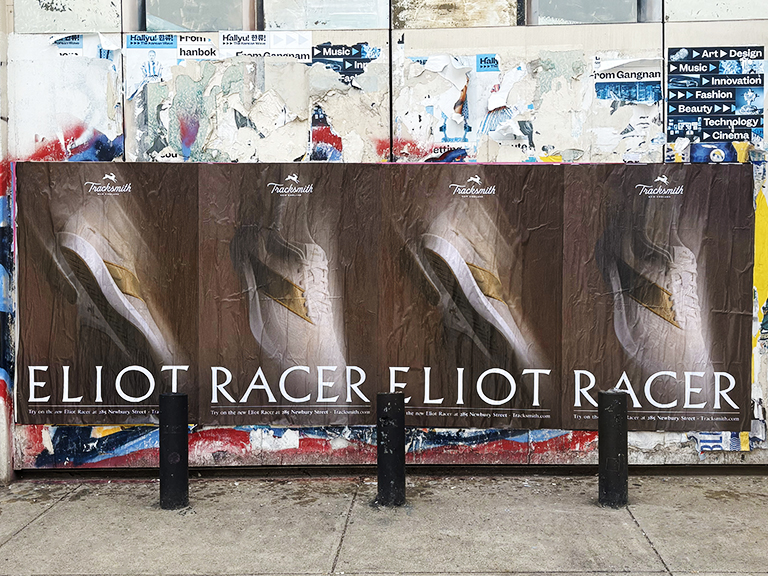
An unexpected outdoor installation in a neighborhood creates a brand moment. People stop, look, and often photograph it. The response element is a QR code, a URL, a social hashtag, or a phone number printed on the installation. People who see it and are curious have an immediate path to learn more, buy something, or sign up for something.
What Separates Strong Brand Response Agencies from Weak Ones
Not every agency that calls itself brand response actually understands how to bridge the two disciplines. Here is how to tell the difference.
They plan measurement before they plan the campaign. A real brand response agency starts by asking what success looks like and how it will be measured. They define the KPIs for both brand (awareness lift, recall) and response (conversion rate, CPA) before they design anything. Agencies that plan campaigns first and then figure out measurement after are not serious about accountability.
They understand the customer process. Brand response works because it reaches people at multiple stages of the purchase decision. An agency that only understands the top of the funnel (awareness) or the bottom (conversion) cannot build a campaign that bridges both. They need to understand what happens between first impression and purchase and design campaigns that work across that entire arc.
They use creative that serves both goals at the same time. This is the hard part. Writing an ad that is emotionally resonant AND contains a clear call to action AND does not feel like a direct response ad is genuinely difficult. Look at the agency’s creative portfolio. Does the work feel like it builds brands while also prompting action? Or does it feel like brand work with a call to action bolted on?
They can report on both brand and response metrics. If an agency can only show you click-through rates, they are a direct response shop. If they can only show you brand awareness scores, they are a brand shop. A real brand response agency shows you both and explains how they relate to each other.
The Role of Neighborhoods in Brand Response Physical Campaigns
Physical campaigns are not one-size-fits-all. The neighborhood where you deploy matters enormously for both the brand impression and the response rate. We pay close attention to this when we are planning campaigns.
A street team in the West Village in Manhattan reaches a different person than a street team in Astoria, Queens. The West Village activation might be more expensive to execute and might reach a smaller number of people, but if your product indexes strongly with a younger creative professional audience, the West Village delivers a more concentrated hit of the right people. The response rate in the right neighborhood is always better than the impression count in the wrong one.
We map target audiences before we plan geography. We look at who the client is trying to reach, where those people live and work, and what patterns of movement they follow during the times we want to activate. Then we build campaign geography around that map, not around what is cheapest or most convenient.
The best brand response campaigns are not built around high foot traffic. They are built around the right foot traffic. One interaction with the right person is worth a hundred interactions with the wrong one.
Combining Physical Brand Response with Digital Campaigns
Physical brand response campaigns are most powerful when they are layered with digital activity in the same markets during the same windows. Here is the pattern we recommend.
Run geo-targeted digital ads in the zip codes where you are running physical activations. The person who sees your street team on Saturday morning and then sees your Instagram ad on Sunday afternoon is being reached twice in two very different contexts. The physical interaction was real and human. The digital ad is a follow-up reminder. Together they create a far stronger brand impression and a much higher response rate than either produces alone.
Use the content generated by physical campaigns to fuel digital. Every street activation, every pop-up, every event produces photos and video. That content, when it feels authentic rather than staged, performs better on social channels than most produced creative. People trust it because it looks real. Because it is real.
Build landing pages that are specific to each activation. If you are running a street team in Brooklyn and the team is handing out QR codes, the landing page those codes go to should reference Brooklyn. It should feel like it was built for the person who just interacted with your team in that specific place. Personalization at this level dramatically increases conversion rates.
What Brand Response Looks Like at Scale
The brand response model works at every budget level, but it gets more powerful as you scale it across multiple markets and multiple campaigns over time. Here is what a mature brand response physical marketing program looks like.
A brand that is running physical campaigns in New York, Los Angeles, and Chicago at the same time is building awareness in three of the most influential consumer markets in the country at the same time. The cumulative brand impression across those markets creates a perception of national presence even before the brand has invested in national media.
The response data from each market tells you which markets are converting most efficiently. You learn whether a street team on Valencia Street in San Francisco’s Mission District produces a different response rate than one on North Michigan Avenue in Chicago. That learning shapes future campaign planning in ways that compound over time.
Brands that commit to multi-market, multi-wave brand response physical campaigns for six months or more consistently report that the effectiveness of each subsequent wave improves. The brand recognition built in earlier campaigns makes people more likely to respond to later ones. This is the compounding return that brand marketing promises but that most campaigns never stick around long enough to achieve.
Why American Guerrilla Marketing Is a Brand Response Partner
We have been running physical campaigns for over a decade. Every campaign we execute includes a brand component and a response component. We equip street teams with brand stories and response offers. We document campaigns in real time with field reports and photo evidence. We track conversion through unique codes and focused URLs. We report on both reach and response so clients can see the full picture.
We are not a traditional media agency and we are not a pure direct response shop. We are a physical marketing agency that takes brand response seriously. We believe that the most powerful impression you can make on a potential customer is a real human interaction in a real place, combined with a clear, compelling reason to take the next step right now.
If you are looking for a brand response agency that can execute on the street, reach us at the contact below.
What is a brand response agency?
A brand response agency creates campaigns that build brand awareness and emotional connection while also prompting immediate, measurable action. Rather than choosing between brand building and direct response, these agencies design campaigns that achieve both at the same time. The result is advertising that makes people remember a brand and also gives them a reason to respond right away.
How is brand response different from direct response marketing?
Direct response marketing focuses purely on immediate action: clicking, calling, buying, signing up. Brand marketing focuses on awareness and emotional connection over the long term. Brand response combines both, creating campaigns that build brand equity while also including a clear, trackable call to action. The measurement covers both brand lift and conversion metrics.
How does physical marketing support brand response goals?
Physical marketing creates real, memorable brand interactions in real spaces. A street team in a neighborhood builds brand awareness through presence and conversation. A trackable offer, QR code, or promo code embedded in that interaction creates a response mechanism. Together, the physical interaction and the response tool deliver brand building and measurable conversion in a single moment.
What metrics does a brand response agency track?
A good brand response agency tracks both sides of the equation. Brand metrics include recall, awareness lift, and net promoter score. Response metrics include conversion rate, cost per acquisition, promo code redemption, URL visits from campaign-specific links, and sales lift during campaign periods. The relationship between brand and response metrics tells you whether the campaign is working at both levels.
Can a small brand afford brand response campaigns?
Yes. The brand response approach is not about budget size. It is about how you design and execute campaigns regardless of budget. A small street team activation can be brand response if it includes both brand communication and a trackable response mechanism. Starting small in one market with a clear measurement plan is the right approach for brands with limited budgets.
How long does it take to see brand response results?
Response results (conversion, promo code redemption) can be visible within days of a campaign launch. Brand results (awareness lift, recall) typically take two to three months of sustained activity to show up clearly in measurement data. The most compelling case for brand response is that you can see short-term conversion results while also building long-term brand equity.
What neighborhoods are best for brand response physical campaigns in New York?
It depends on your target audience. SoHo and the West Village reach creative, brand-aware young professionals. Williamsburg and Bushwick reach a younger, more experimental audience. The Upper West Side and Park Slope reach affluent families. Midtown reaches commuters and office workers. We recommend starting in the one or two neighborhoods that most closely match your core customer profile before expanding.
How do you track conversion from a street team activation?
We use unique promo codes or QR codes that go to campaign-specific landing pages. Each activation gets its own code or URL so we can attribute conversions to specific days, neighborhoods, and team deployments. This tells you which locations produced the most response and allows us to optimize future campaigns around what actually works.
What industries benefit most from brand response physical marketing?
Consumer packaged goods, food and beverage, fashion, entertainment, fitness, technology, and retail all benefit strongly from brand response physical campaigns. The common thread is brands that sell to consumers in specific geographies and need both recognition and conversion. B2B brands can also benefit, particularly when targeting professionals who commute through urban markets.
Does American Guerrilla Marketing offer brand response campaign strategy?
Yes. We work with clients at the strategy level to define the brand message and the response mechanic before we design the field campaign. We help brands identify which neighborhoods to target, what offers to embed in each activation, and how to measure results. Campaign strategy is part of what we deliver, more than field execution.
Frequently Asked Questions
What is a brand response agency?
A brand response agency creates campaigns that build brand awareness and emotional connection while also prompting immediate, measurable action. Rather than choosing between brand building and direct response, these agencies design campaigns that achieve both at the same time. The result is advertising that makes people remember a brand and also gives them a reason to respond right away.
How is brand response different from direct response marketing?
Direct response marketing focuses purely on immediate action: clicking, calling, buying, signing up. Brand marketing focuses on awareness and emotional connection over the long term. Brand response combines both, creating campaigns that build brand equity while also including a clear, trackable call to action. The measurement covers both brand lift and conversion metrics.
How does physical marketing support brand response goals?
Physical marketing creates real, memorable brand interactions in real spaces. A street team in a neighborhood builds brand awareness through presence and conversation. A trackable offer, QR code, or promo code embedded in that interaction creates a response mechanism. Together, the physical interaction and the response tool deliver brand building and measurable conversion in a single moment.
What metrics does a brand response agency track?
A good brand response agency tracks both sides of the equation. Brand metrics include recall, awareness lift, and net promoter score. Response metrics include conversion rate, cost per acquisition, promo code redemption, URL visits from campaign-specific links, and sales lift during campaign periods. The relationship between brand and response metrics tells you whether the campaign is working at b
Can a small brand afford brand response campaigns?
Yes. The brand response approach is not about budget size. It is about how you design and execute campaigns regardless of budget. A small street team activation can be brand response if it includes both brand communication and a trackable response mechanism. Starting small in one market with a clear measurement plan is the right approach for brands with limited budgets.
How long does it take to see brand response results?
Response results (conversion, promo code redemption) can be visible within days of a campaign launch. Brand results (awareness lift, recall) typically take two to three months of sustained activity to show up clearly in measurement data. The most compelling case for brand response is that you can see short-term conversion results while also building long-term brand equity.
What neighborhoods are best for brand response physical campaigns in New York?
It depends on your target audience. SoHo and the West Village reach creative, brand-aware young professionals. Williamsburg and Bushwick reach a younger, more experimental audience. The Upper West Side and Park Slope reach affluent families. Midtown reaches commuters and office workers. We recommend starting in the one or two neighborhoods that most closely match your core customer profile before