If you’re searching for billboard advertising costs in Vermont, the first thing you need to know is that Vermont is not like any other state. In 1968, Vermont became the first state in the nation to ban all new billboard construction along state and federal highways — a decision that stands today and fundamentally shapes how any brand approaches reaching the Vermont audience through outdoor media. Understanding this reality isn’t just a regulatory footnote; it changes the entire strategy for advertising in the Green Mountain State.
This does not mean you cannot advertise outdoors in Vermont. It means the playbook is different. The inventory that exists is grandfathered and limited. The alternatives — transit advertising, airport displays, resort sponsorships, event-based media, and guerrilla marketing activation — are more effective in Vermont than in almost any other state because the absence of traditional billboard clutter means your alternative placements stand out dramatically. Vermont’s attentive, educated, and affluent consumer base responds well to creative that meets them where they actually are.
This guide covers what limited Vermont billboard inventory actually costs, what the real alternatives are, how cross-border buys capture Vermont traffic in neighboring states, and how to build an outdoor-oriented Vermont campaign that works within the state’s unique regulatory environment.
Vermont’s Billboard Ban: What It Actually Means for Advertisers
Vermont enacted its billboard ban through Act 250 and companion legislation in the late 1960s, motivated by a movement to protect the state’s scenic landscapes from the visual pollution that had swept through roadside America during the postwar decades. The law prohibits new off-premise outdoor advertising signs visible from state and federal highways. Four states have similar restrictions: Maine, Alaska, and Hawaii joined Vermont in banning highway billboards.
What Is Still Permitted in Vermont
The ban applies to off-premise billboards — signs advertising products or businesses not located at the sign’s site. On-premise signage — a business’s sign at its own location — is permitted and regulated separately by local zoning ordinances. Vermont also permits certain directional signs approved under the federal Tourist Oriented Directional Sign (TODS) program, which provides standardized brown-and-white highway directional signage for farms, agricultural producers, accommodations, and tourist attractions. These TODS signs are not advertising in the traditional sense but can direct highway travelers to specific businesses.
Grandfathered Billboard Structures
Billboards that existed before the ban are “grandfathered” — they can remain in place and continue operating as advertising structures. However, they cannot be upgraded, replaced with digital displays, or significantly altered. Over time, these grandfathered structures have diminished in number through attrition, natural deterioration, and voluntary removal. The remaining inventory is sparse, concentrated primarily in border areas and a few rural commercial corridors, and changes hands infrequently. If grandfathered billboard space is available, pricing is purely negotiated — there is no market rate to compare against.
What Vermont Billboard Advertising Actually Costs
Given the scarcity of inventory, Vermont billboard costs — where they exist at all — are not driven by standard market-rate dynamics. A grandfathered billboard structure near Burlington or Montpelier that is available for advertising might rent for $800-$3,000 per four-week period depending on traffic count, visibility, and the specific operator’s asking price. There is no competitive market pressure to drive rates into a predictable range.
Why Standard Billboard Cost Comparisons Don’t Apply in Vermont
In most states, billboard rates correlate directly to DEC (Daily Effective Circulation) — traffic count data verified by Geopath — and competition among advertisers for available inventory drives rates to their market-clearing level. Vermont has no functioning market mechanism for traditional billboard advertising. The few grandfathered structures that exist are not consistently marketed, may not be enrolled in Geopath measurement programs, and cannot be compared on a cost-per-thousand basis against inventory in neighboring markets. For practical planning purposes, assume that traditional highway billboard advertising in Vermont is not a scalable option for most campaigns.
Border Market Opportunities: NH and NY
The practical solution for brands needing highway-visible outdoor advertising to reach Vermont audiences is cross-border buying in New Hampshire and New York. The I-91 corridor through White River Junction, VT captures Vermont-originating traffic heading into New Hampshire — billboards on the NH side of I-91 near the Hanover/Lebanon area reach Vermonters traveling eastbound. I-89 through Montpelier and Burlington connects to New Hampshire at Concord — billboard inventory on I-89 in New Hampshire captures Vermont drivers heading south. The I-87 Adirondack Northway in New York captures Vermont visitors coming from the west through Plattsburgh and the Adirondack region. These cross-border buys can be structured as part of a broader New England or Northeast regional campaign, allowing you to reach Vermont audiences through adjacent market infrastructure.
Transit Advertising in Vermont: The Most Scalable Outdoor Option
Vermont’s primary scalable outdoor advertising option is transit advertising on Green Mountain Transit (GMT), the state’s public bus network serving Burlington, Montpelier, Barre, St. Albans, and several rural routes. GMT bus exterior wraps, king-size posters, and interior car cards are available to advertisers and deliver consistent, repeated exposure to Vermont’s commuter and urban transit audience.
Green Mountain Transit Advertising Rates and Formats
GMT transit advertising is procured through the transit authority and is more limited in format options than larger metropolitan transit systems. Full bus wraps, side king posters, and interior cards are the primary formats. Rates depend on fleet availability and specific route assignments. Burlington’s Church Street Marketplace area is the highest-pedestrian-density zone in the state and GMT buses serving that corridor deliver the highest-visibility transit exposures available in Vermont. For most outdoor-oriented campaigns, transit is the single best option for scalable, repeating, brand-building impressions in Vermont.
Burlington International Airport Advertising
Burlington International Airport serves approximately 1 million passengers annually, primarily business travelers, seasonal tourists, and out-of-state visitors to Vermont’s ski resorts and summer recreational destinations. Airport terminal advertising — backlit displays, concourse posters, baggage claim displays, and ground transportation area signage — delivers concentrated reach to Vermont’s highest-income and most-traveled visitor audience. Airport advertising rates in Burlington are available through the airport authority and typically run on annual contracts with seasonal availability for shorter flights. This is an underutilized channel in Vermont that punches well above its impression count for premium brand positioning.
Ski Resort and Event Advertising in Vermont
Vermont’s ski economy is one of the most concentrated high-income consumer audiences in the northeastern United States. Stowe, Killington, Sugarbush, Okemo, Stratton, and Mad River Glen collectively attract hundreds of thousands of winter visitors with high household incomes and strong brand affinity. On-premise advertising within ski resort environments is private property signage exempt from the state billboard ban and represents a genuine premium outdoor advertising opportunity.
Resort Advertising Formats and Reach
Vermont ski resort advertising options include trail map advertising (distributed to every resort visitor), lodge wall displays and banners, lift ticket holder and RFID tag advertising, sponsored events and competitions with on-mountain signage, and base lodge digital displays. Stowe Mountain Resort, owned by Vail Resorts, offers branded partnership programs through Vail’s corporate media sales infrastructure. Killington offers a mix of direct sponsorship opportunities and third-party media placements. These programs vary in pricing — contact resort marketing departments directly for current rate cards, as structures change seasonally.
Vermont Summer and Fall Events
Vermont’s summer and fall event calendar — including the Stowe Food & Wine Classic, Vermont Fresh Network events, Ben & Jerry’s concerts at the Ben & Jerry’s factory in Waterbury, and the legendary fall foliage season that draws hundreds of thousands of leaf-peepers — creates multiple event-based outdoor advertising opportunities. Event sponsorship signage, pop-up activations, and experiential marketing at Vermont’s major events reach an engaged, experiential audience that is highly responsive to brand interaction. Our experiential marketing team deploys activations at Vermont events specifically to give brands the physical audience engagement that traditional billboard advertising would normally provide. Brand ambassador programs at Vermont ski resorts, farmers markets, and summer festivals give brands human-scale engagement that sticks with Vermont’s relationship-oriented consumer culture.
LED Billboard Trucks and Mobile Advertising in Vermont
One of the most effective tools for outdoor advertising in Vermont is mobile — specifically, LED billboard trucks, which operate as vehicles and are not subject to Vermont’s billboard structure ban. Our LED billboard trucks can be deployed on Vermont public roads, at event sites, and in urban areas like Burlington’s waterfront and Church Street Marketplace. Because fixed billboard density is near zero in Vermont, a well-deployed LED truck stands out dramatically and draws attention in a way that would be impossible in a market saturated with static boards.
Burlington and Montpelier LED Truck Deployment
Burlington’s Church Street Marketplace pedestrian zone, the Burlington waterfront during summer events, and Montpelier’s State Street government and professional district are effective LED truck deployment zones. Foot traffic in these areas is high relative to Vermont’s overall scale, and the novelty of mobile digital display in a state with no digital billboards creates a memorable impression that significantly outperforms standard awareness metrics. LED trucks are also effective at Vermont ski resort access roads during peak season — the approach roads to Stowe on VT-108 and Killington on US-4 see concentrated ski traffic that creates a captive audience for mobile display advertising.
Street-Level Tactics That Work in Vermont
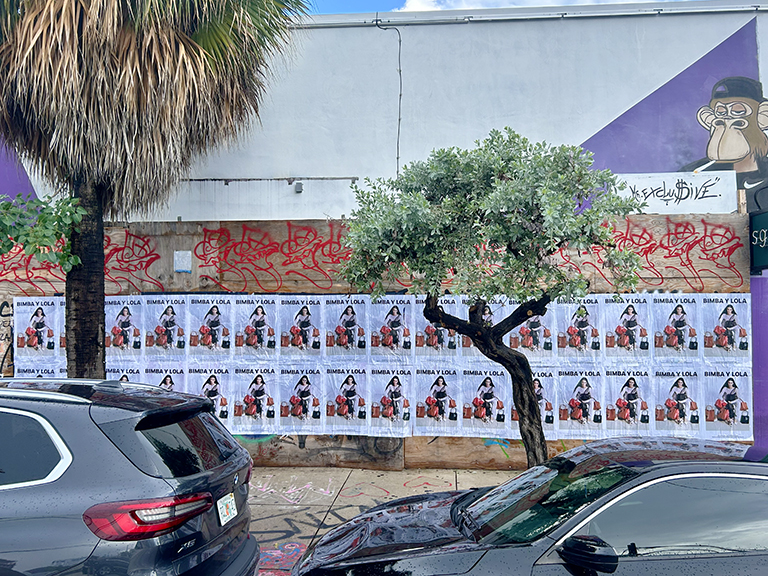
Vermont’s progressive culture, strong local business identity, and skepticism of corporate marketing actually create conditions where authentic, creative street-level tactics perform better than in most markets. Our guerrilla marketing services have executed Vermont campaigns using sidewalk stencils on Burlington’s Church Street, wheatpasting and poster campaigns in Burlington’s Old North End arts district, and street team marketing at University of Vermont events. These formats resonate with Vermont’s population in a way that feels less corporate and more community-integrated — which is exactly what Vermont consumers respond to. The absence of billboard noise means your street-level creative isn’t competing with 15 other brands for highway attention; it’s the only thing at eye level that isn’t scenery.
Building a Vermont Outdoor Campaign That Works
The most effective Vermont outdoor advertising strategy combines cross-border highway buys (capturing Vermont traffic on I-91 and I-89 in New Hampshire), transit advertising on Green Mountain Transit in Burlington, resort and event sponsorship in Vermont’s ski and foliage season windows, LED truck deployment in Burlington and at major events, and street-level activation in Burlington’s commercial and arts districts. This layered approach creates the impression volume and engagement depth that a billboard-only strategy would deliver in other states — without requiring inventory that simply does not exist.
Frequently Asked Questions: Billboard Advertising Cost Vermont
Are billboards legal in Vermont?
No new billboards have been permitted in Vermont since the state banned them in 1968, making Vermont one of only four states (with Maine, Alaska, and Hawaii) to prohibit new off-premise highway outdoor advertising. Existing billboards from before the ban are grandfathered but cannot be upgraded to digital displays. On-premise business signage and TODS directional signs are still permitted under separate regulations.
How much does billboard advertising cost in Vermont?
Vermont’s grandfathered billboard inventory is so limited that pricing is negotiated individually rather than based on market rates. Available structures can run $800-$3,000 per four-week period. However, most Vermont outdoor advertising campaigns focus on transit advertising, airport displays, resort sponsorships, LED billboard trucks, and cross-border highway buys in New Hampshire — because that is where scalable, measurable inventory actually exists.
What outdoor advertising options exist in Vermont if billboards are banned?
Available options include: Green Mountain Transit bus advertising in Burlington and regional routes; Burlington International Airport terminal displays; Vermont ski resort on-premise advertising (trail maps, lodge banners, lift ticket holders); event and festival sponsorship signage; LED billboard trucks (vehicle-based, not subject to the ban); street-level tactics including posters, stencils, and brand ambassadors; and cross-border billboard buys on I-91 and I-89 in New Hampshire capturing Vermont-originating traffic.
Can digital billboards be used in Vermont?
No. Vermont’s ban covers all new off-premise outdoor advertising structures, including digital displays. Grandfathered static billboards cannot be converted to digital. Digital signage is only permitted as on-premise business signage at your actual location. This completely eliminates programmatic digital outdoor advertising in Vermont — making it one of the few U.S. markets where this channel does not exist.
How can brands reach Vermont audiences without traditional billboards?
Effective Vermont reach strategies include transit advertising on Green Mountain Transit, airport advertising at Burlington International, ski resort sponsorships at Stowe, Killington, and Sugarbush, LED billboard truck deployments in Burlington and at events, guerrilla marketing activations at University of Vermont and Vermont festivals, streaming audio/digital geo-targeting to Vermont zip codes, and cross-border billboard buys on New Hampshire highways capturing Vermont commuter and travel traffic.
Is there outdoor advertising at Vermont ski resorts?
Yes. Vermont’s major ski resorts offer on-premise advertising exempt from the state billboard ban. Options include trail map advertising (distributed to all resort guests), lodge displays and banners, lift ticket holder advertising, and sponsored events with on-mountain signage. Stowe (Vail Resorts) and Killington both offer formal advertising programs. These placements deliver targeted access to Vermont’s highest-income seasonal audience — often more valuable per impression than a highway billboard in terms of demographic quality.
Frequently Asked Questions
What is billboard advertising cost vermont?
American Guerrilla Marketing provides billboard advertising cost vermont services across 50+ U.S. markets. Every campaign is planned, scouted, executed, and GPS-documented by our field teams. We work with regional brands and Fortune 500 companies on campaigns that require real street-level execution and documented proof of performance.
How does AGM approach cost vermont?
Our process starts with a market consultation to understand your goals, target audience, and budget. We then scout locations, handle any required permissions or permits, coordinate production and installation with our local crews, and provide a full GPS-tagged photo report after the campaign runs.
What markets does American Guerrilla Marketing cover for cost vermont?
We operate in 50+ U.S. markets including New York, Los Angeles, Chicago, Miami, Houston, Atlanta, Seattle, Denver, Boston, and dozens of secondary markets. Contact us to confirm availability and pricing for your specific market.
How much does a cost vermont campaign cost?
Campaign pricing depends on market, format, quantity, and duration. We work with budgets ranging from targeted single-market runs to national rollouts across multiple cities. Use our RFP Builder or contact us directly for a custom quote based on your specific campaign requirements.
How do I get started with cost vermont through AGM?
The fastest way to get started is to submit your campaign details through our RFP Builder at americanguerrillamarketing.com, or contact us directly at [email protected] or (646) 776-2770. Our team typically responds within one business day with availability and initial pricing.