June 16, 2026

Guerrilla Marketing Agency Hyperlocal Campaigns Local Advertising Maximum Impact Campaigns Street Advertising

Five Cities, Two Weeks: Running the Big Modern Street Takeover for Goose

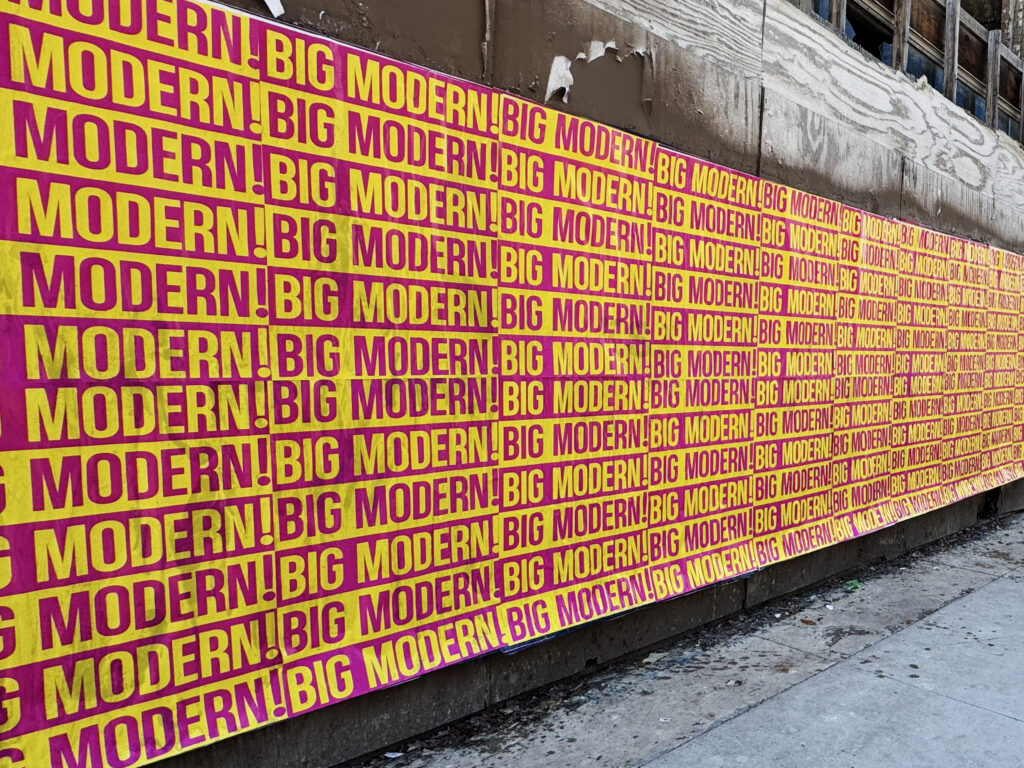
AGM wheatpasting campaign street poster installation New York City Williamsburg Bedford Avenue overnight paste crew large format poster wall

Five Cities, Two Weeks: Running the Big Modern Street Takeover for Goose is useful as a case study because it shows what street-level execution looks like when a campaign has real deadlines, real geography, and real production constraints. AGM’s interest is not just in the headline result. It is in how the work was planned, what had to be true in the field, and what decisions mattered most once the campaign was live.

Case studies are valuable when they preserve the practical details most recap pieces leave out. That includes route choice, neighborhood logic, production sequencing, field staffing, documentation, and what the client was actually trying to achieve beyond generic awareness.

Why This Case Study Matters Beyond the Story

This piece is useful not just because the Goose five-city street takeover happened, but because it shows how real field decisions stack up under time pressure. Case studies are often ruined by hindsight storytelling that removes the constraints. AGM takes the opposite approach. The point is to surface the constraints: venue timing, production limits, route density, wall quality, weather, campus traffic patterns, labor coordination, and the endless difference between what looks simple on a deck and what is actually executable at street level.

That is also what makes this page distinct from a generic “best campaigns” article. The value here is in the operating detail: who had to move first, what had to be locked before print, why specific corridors mattered, what had to be refreshed, where documentation was critical, and what the field team watched for once the campaign was live.

Who This Page Is For

This page is written for buyers who are evaluating five cities, two weeks: running the big modern street takeover for goose as a real operating decision, not as marketing theory. In practice that means brand managers under launch deadlines, growth teams trying to make a market-entry budget work harder, entertainment and event marketers who need local visibility fast, agencies looking for a field execution partner that understands street-level risk, and founders who know paid social alone is not going to create physical market presence.

It is also useful for teams who are comparing options and need to know whether this format belongs in the plan at all. The wrong use case wastes money. The right use case creates disproportionate attention because it reaches people in the exact places where recall, repetition, and local context matter. AGM’s view is practical: a format earns its place only if it matches the audience, the geography, the timeline, and the operational realities on the ground.

Campaign Objective and Constraint Stack

Every serious field campaign begins with a constraint stack. The objective may be awareness, but the actual operating question is narrower: awareness among whom, in which geography, during what time window, under what production ceiling, with what tolerance for risk, and with what post-campaign proof. In a campaign like this one, the audience concentration windows mattered as much as the creative. Missing those windows would have produced a technically completed program with a weaker business result.

AGM’s role in a case like this is part strategist and part field operator. The work is not finished when the idea is approved. It is finished when the placements are up, the market sees them in the right sequence, and the reporting package proves what happened in the real world.

How Route Logic and Surface Choice Shaped the Outcome

One of the least glamorous but most important decisions in street work is surface selection. Not all placements are equal. Some surfaces create a sightline that reads from across the block. Some are swallowed by visual clutter. Some catch the audience on the approach when their attention is available. Others catch them after the main decision point has already passed. That is why AGM still thinks in blocks, corners, waits, and turns rather than in abstract “coverage.”

For a case study like this, route logic mattered because repeated exposure was part of the strategy. The same person seeing the creative once is awareness. Seeing it on the walk-in, then again near the venue, then again on the late-night corridor turns it into memory. That sequence is built, not accidental.

What the Reporting Needed to Prove

Clients rarely need a romantic story after the fact. They need to know whether the campaign delivered what it was supposed to deliver and whether the operating model can be trusted again. AGM therefore reports around execution fidelity first: where assets went, when they went up, how the route or placement logic was followed, and what condition the install was in when documented. The richer conversation, about recall, social pickup, field reactions, and the business case for repeating the play, comes after the execution record is secure.

How AGM Measures Whether the Work Is Actually Working

Street-level marketing gets talked about too loosely, so AGM treats measurement as part of the job rather than a decorative afterthought. The first layer is proof of execution: route logs, GPS-tagged photos, installation timestamps, and crew accountability. If the work was not documented, it did not happen. The second layer is market observation: what changed in local awareness, inbound mentions, event-foot-traffic quality, sales-conversation context, branded search lift, QR scans, sampling conversion, or earned media pickup. The third layer is decision quality for the next round. Which neighborhood produced better response? Which format created the strongest recall? Which creative carried from field observation into digital conversation?

That approach matters because physical advertising rarely performs as a single isolated touch. It changes the quality of every other touch around it. A prospect who saw the campaign in the neighborhood arrives at the landing page differently. A conference attendee who remembers the truck or poster bank hears the sales conversation differently. A festival attendee who already saw the visual environment on the street responds differently to a team on the ground. AGM scopes measurement around that reality instead of pretending every result collapses into one vanity metric.

Lessons Another Brand Could Borrow from This Playbook

The transferable lesson is not that every brand needs to copy the exact surfaces or markets used here. It is that concentrated field visibility beats scattered ambition. A lot of campaigns underperform because they are designed for internal optics, lots of cities, lots of bullet points, lots of movement, instead of designed for the audience’s lived route through a place. The smarter move is often to compress harder into the environments that matter most and own them for a shorter window.

Another lesson is that documentation discipline is part of credibility. Brands that want to justify more field work later need proof that the first round was executed professionally. In practice that means the ops layer deserves almost as much attention as the creative layer.

Bottom Line

Five Cities, Two Weeks: Running the Big Modern Street Takeover for Goose works best when it is planned as field strategy instead of treated like decoration. The creative matters, but the deeper leverage comes from market choice, route logic, installation quality, timing, and the discipline to treat physical visibility like an operating system rather than a stunt. That is the perspective AGM brings to these campaigns. The brands that get the most from the channel are usually the ones that respect those details before launch, not after the field report comes back.

How the five-city plan was scoped before the first crew moved

A five-city takeover only works when the team is honest about what has to stay standardized and what has to flex by market. For a campaign like Goose Big Modern, the standard pieces are the campaign spine: creative hierarchy, reporting expectations, launch tempo, and the non-negotiable outcome the client is paying for. Everything else has to earn its place city by city.

That meant the early planning was less about making every market look identical and more about deciding where density would matter, where speed would matter, and where local field conditions would force different deployment choices. The team needed a framework strong enough to travel and a playbook loose enough to stay useful once the routes touched real streets.

What changed once the campaign hit real pavement

As soon as a multi-city run goes live, the campaign becomes a sequence of local realities instead of one elegant deck. Crew reliability changes. Placement opportunities change. Traffic patterns and weather change. Some neighborhoods overdeliver because the audience concentration is better than expected, while other planned pockets simply do not earn the time the way they looked on a map.

The value of a first-person operations story is seeing that the win rarely comes from the original assumption being perfect. The win comes from how fast the team recognizes what the street is actually giving back and shifts pressure without losing the overall campaign shape.

Why repetition mattered more than novelty

One of the biggest lessons in five-city work is that the campaign rarely wins because each city got a different trick. It wins because the message stays legible while the team creates enough repeated public contact for the audience to feel that the brand is truly present. That kind of presence is built block by block, shift by shift, not by one clever talking point.

For a brand like Goose Big Modern, that meant treating repetition as an asset rather than as something boring. The team needed repeated visibility near the right audience loops and enough operational consistency that the campaign felt deliberate in every market, even when the exact field conditions differed.

What a client should want from a takeover recap

A client should want more than a pile of proof photos from a five-city run. The useful recap explains where pressure landed, which neighborhoods showed the strongest response, where timing assumptions were right or wrong, and what the team would change if the campaign extended another week.

That kind of recap turns a one-off takeover into operating intelligence. It also proves that street work was managed like a serious marketing system rather than a loose collection of local stunts.

Lessons this case study leaves for future rollouts

The main lesson is that scaling a street campaign is less about cloning and more about control. The team has to know what is core to the idea, what is flexible by market, and what signals should trigger a change in pressure while the campaign is still alive.

That is the real value of a first-person field story. It shows that the work is not magic. It is judgment, adaptation, and repeatable operating discipline under live conditions.

How AGM would pressure-test this topic before launch

For a page like Five Cities, Two Weeks: Running the Big Modern Street Takeover for Goose, the useful next question is always how the idea would survive first contact with the real market. AGM usually pressure-tests that by looking at audience movement, timing windows, operational dependencies, creative legibility, and whether the tactic can create enough concentrated pressure to matter.

That step matters because five cities, two weeks can sound strong in theory while still being weak in practice if the route, staffing, or production assumptions are off. Good planning turns the concept into something the field can actually support.

Questions a serious buyer should ask about five cities, two weeks

A serious buyer should ask what the tactic is really supposed to do, where the audience will encounter it, what assumptions the plan is making about timing and behavior, and what proof will come back after the campaign. Those questions tighten strategy quickly because they remove the comfort of vague enthusiasm.

They also make it easier to compare options honestly. Once the role of five cities, two weeks is clear, the budget, creative direction, and success metrics all become easier to defend.

Why this subject keeps mattering in 2026

Five Cities, Two Weeks: Running the Big Modern Street Takeover for Goose still matters in 2026 because brands are still trying to win real-world attention in markets where digital saturation has made physical presence feel fresh again when it is executed well. The old logic has not disappeared. It has just become more selective and more dependent on planning discipline.

That is why the strongest teams keep returning to the same core principles: concentrated pressure, audience fit, clean execution, and honest recaps that improve the next round instead of merely documenting the last one.

Where brands should stay disciplined about five cities, two weeks

Brands usually get the best result from five cities, two weeks: running the big modern street takeover for goose when they stay disciplined about scope and avoid asking one tactic to solve every marketing problem at once. The campaign should have a defined job, a realistic target environment, and enough pressure to become noticeable where it counts.

That discipline is also what keeps the creative simpler, the operations cleaner, and the recap easier to interpret once the work is done.

What makes the next round smarter than the first

The first run is rarely the final lesson. What makes a tactic truly valuable is the team learning where the audience responded, where the route logic was strongest, and what should change before the next deployment. Street marketing improves quickly when that learning loop is respected.

That is part of why pages like Five Cities, Two Weeks: Running the Big Modern Street Takeover for Goose matter. They are not just definitions or sales copy. They are decision frameworks for building a sharper second campaign.

FAQ

What is the hardest part of a five-city takeover?

Keeping quality and reporting consistent while each market behaves differently is usually the hardest part. Scale creates more chances for drift, so the operating system has to be strong.

Do all cities need the same tactic mix?

No. The backbone can stay consistent, but route logic, staffing emphasis, and neighborhood pressure should respond to each market.

Why write the story in first person?

A first-person angle makes the operational choices clearer. It helps readers understand what the team actually saw, changed, and learned on the ground.

What should a client ask before approving a multi-city street campaign?

Ask how success will be standardized across markets, what can flex locally, how field changes will be reported, and what proof will come back after each deployment.

What makes AGM useful on campaigns like this?

AGM treats multi-market street work as an execution system. That means route logic, staffing, reporting, and adaptation are handled with the same seriousness as the creative concept.

Closing view on the Goose takeover story

The Goose Big Modern story works best as a look inside how a real street campaign gets managed once the plan leaves the deck and hits five different sets of local conditions.

That is where AGM tends to do its best work: turning movement, repetition, and field adaptation into a campaign the client can actually trust.

Justin Phillips

Justin Phillips

Justin Phillips is the founder of American Guerrilla Marketing, a...

About the Author

Ready to Run Your Campaign?

Call us or email us. We’ll tell you exactly what we can do in your market and what it costs.

American Guerrilla Marketing — Los Angeles

★★★★★ 5.0 · 34 Google reviews

Street-level campaigns in Los Angeles and nationwide. Wheatpasting, LED trucks, street teams, and more.

(646) 776-2770