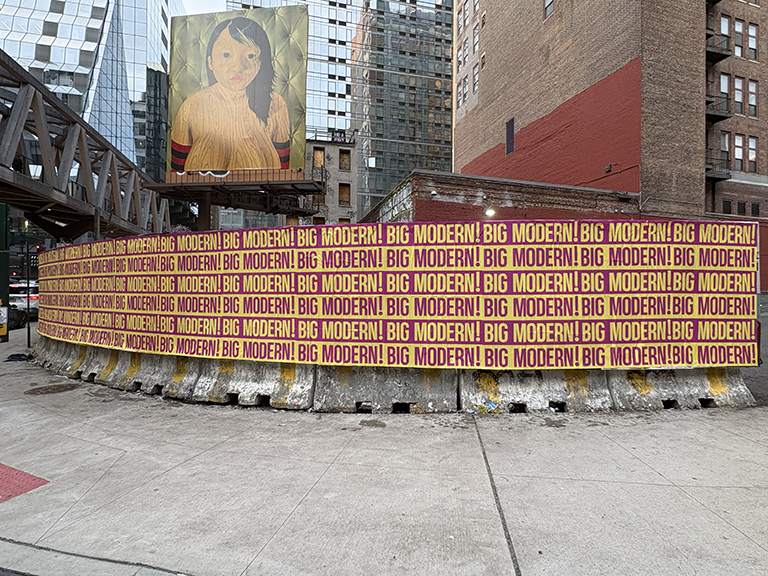
Product launches live or die on the quality of the first week. Guerrilla advertising generates the physical street presence and earned media that makes launches register as real events in competitive markets.
Every product launch is a moment in time. It either generates momentum or it does not, and the difference is almost always decided in the first week of visibility. Digital advertising alone, no matter how well targeted, does not create the sense of cultural arrival that a genuinely well-executed launch demands. The brands that launch successfully in competitive markets do something that brands running purely digital launches do not: they show up in the physical world.
We have run launch campaigns for consumer brands, tech companies, entertainment releases, CPG products, and services across every major US market. We know what the difference looks like between a launch that generates genuine word-of-mouth and earned media and one that runs out its digital budget without leaving a mark. The difference is almost always the combination of strong physical execution and the documentation and amplification strategy that extends that physical presence into digital channels.
This guide is the launch advertising playbook we have developed from field experience. It covers how to structure a launch campaign, how guerrilla advertising fits in the strategy, which markets and neighborhoods produce the best launch results, and how to plan the timeline and budget for an execution that generates real launch momentum.
Digital advertising creates awareness. Physical advertising creates belief. The distinction matters for launch campaigns more than it does for sustained brand advertising, because the primary thing a launch needs to accomplish is convincing people that something genuinely new and worth paying attention to has arrived. Digital awareness can be bought easily enough. The feeling that something is actually happening in the world is harder to manufacture without something genuinely happening in the world.
When consumers see a brand on their phone screen, they are aware of it. When they turn a corner in their neighborhood and find the brand on the wall, at scale, unexpectedly, they have an experience. Those two encounters are categorically different in what they produce. The screen encounter produces a data point. The wall encounter produces a feeling. And launch marketing needs to produce feelings, not data points, because feelings are what drive the early adoption and word-of-mouth that new products depend on.
The social media era has added a specific value to physical launch presence that was not available 20 years ago. When someone encounters a genuinely surprising brand execution in their neighborhood and photographs it, that photograph travels. It reaches the photographer’s followers, who include other people in the same neighborhood and demographic. Those followers share it further. The photograph of a physical brand moment in a culturally significant location generates a social distribution that no amount of paid digital can replicate, because it carries the implicit endorsement of the person who found it worth photographing.
The Launch Advertising Timeline
The timeline of a launch campaign determines a great deal of its effectiveness. Here is the structure that consistently produces the best results.
Six to Eight Weeks Before Launch: Brief and Strategy
The campaign brief needs to be complete at least six to eight weeks before the launch date for guerrilla components. This is not optional if the campaign involves custom materials, location-specific creative, or multi-city execution. The timeline breaks down as follows: two weeks for creative development and approval, one week for material production, one week for location scouting and crew scheduling, and one to two weeks of buffer for revisions, approval delays, and logistics complications that are inevitable in multi-city campaigns.
Rushing the front end of this timeline produces lower-quality creative, poorer location selection, and installation errors that compromise the final output. The campaign documentation that the brand will use for press and social content for the next several months is determined by the quality of these early decisions.
Two to Four Weeks Before Launch: Teaser Deployment
Teaser activity in the two to four weeks before launch creates anticipation and a sense that something is coming. Teasers work best when they are genuinely intriguing rather than obviously promotional. A series of unexpected, unbranded or lightly branded visual elements appearing in key neighborhoods in the days before launch generates curiosity from the people who encounter them. The reveal on launch day then has a context of building curiosity that makes it feel like an arrival rather than a beginning.
Teaser elements can be extremely simple: a distinctive color or shape that will be associated with the launch creative appearing in unexpected places, a single word or number, a visual motif without explanation. The goal is to make people wonder what is coming and pay attention when it arrives.
Launch Day and Launch Week: Full Saturation
The main campaign execution should hit on or immediately before launch day. The goal is saturation: the target audience should encounter the brand in multiple locations and through multiple channels in a compressed window that creates the feeling of the brand having arrived everywhere at once. This saturation effect is expensive to produce purely through paid digital. Guerrilla advertising, which can cover dozens of physical locations simultaneously with a single crew deployment, creates the saturation effect at street level in a way that feels organic rather than bought.
Launch week documentation is critical. The photographs and video captured during installation and during the first days of the campaign at street level are the raw material for press pitches, social content, and the documentation that the brand will use throughout the post-launch period. A professional documentation crew is not optional for launch campaigns; it is part of the launch investment.
Post-Launch: Sustain and Amplify
The two to three weeks after launch day are the period when the earned media and social amplification generated by the physical campaign are most valuable. Pitching documentation to press, boosting campaign photographs through paid social, and keeping the brand in consumer conversation through relevant content all extend the momentum generated by the physical launch execution.
AGM Field Note: Launch campaigns fail most often not because the creative was bad but because the timeline was compressed. Every component of a multi-city launch campaign has a minimum production time that cannot be compressed below a certain threshold without quality loss. Build the campaign timeline backward from the launch date, and add a week of buffer at every stage.
Which Markets to Prioritize for Launch Advertising
Most brands do not have the budget to execute a full guerrilla launch campaign across every major US market simultaneously. The question of which markets to prioritize is a strategic one that depends on the product, the target consumer, and the press and media network dynamics of each market.
New York
New York is the highest-priority launch market for most consumer brands and many B2B categories because of its concentration of national media. The press that matters for a national launch, national magazines, major digital media outlets, lifestyle publications, and the influential individual journalists who cover consumer brands, is overwhelmingly concentrated in New York. A launch campaign that runs in New York generates the press coverage that reaches a national audience. No other market produces this effect as reliably.
For consumer brands launching in New York, Williamsburg, Soho, and the Lower East Side are the primary guerrilla advertising neighborhoods because of their concentration of the culturally influential early adopter consumer and the documentation culture that amplifies campaign presence to broader audiences.
Los Angeles
Los Angeles is the second essential launch market for most consumer brands because of its concentration of entertainment industry, influencer, and creator community consumers. The LA-based creator economy, on Instagram, YouTube, TikTok, and the newer platforms, generates enormous social reach for launch campaigns that reach the right audiences in the right neighborhoods.
Silver Lake, Echo Park, Venice, and West Hollywood are the primary guerrilla advertising neighborhoods for launches targeting creative, millennial, and Gen Z consumers in LA. For luxury and fashion launches, Melrose and the Beverly Hills/West Hollywood border are essential territory.
Chicago
Chicago is the third-priority market for national launches because of its size, its media network, and its role as the gateway to the Midwest consumer market. Wicker Park and Bucktown in Chicago are particularly strong launch environments because of the neighborhood’s concentration of creative consumers and its strong social documentation culture.
Miami, Austin, and Other Markets
Miami, Austin, Atlanta, and Seattle are strong secondary launch markets depending on the product category. Miami’s concentration of Latin American media and the national media attention paid to Wynwood and the Design District make it a strong market for fashion, lifestyle, and consumer brand launches. Austin’s event calendar, particularly SXSW, creates concentrated moments of media attention that amplify launch campaigns significantly. Atlanta is the dominant Southeast market and the gateway to the African American consumer for brands targeting that audience.
Market
Launch Priority
Primary Value
Best Neighborhoods
New York
Essential
National press, early adoption
Williamsburg, Soho, LES
Los Angeles
Essential
Creator community, influencer
Silver Lake, Venice, West Hollywood
Chicago
High
Midwest gateway, strong media
Wicker Park, Logan Square
Miami
Medium
Latin media, lifestyle press
Wynwood, Design District
Austin
Medium
Tech, music, SXSW moment
East Austin, South Congress
Atlanta
Medium
Southeast, hip-hop culture
Ponce City, Old Fourth Ward
Creative Considerations for Launch Advertising
Launch creative has specific requirements that differ from sustaining brand advertising. The primary job of launch creative is to communicate that something new has arrived, to make that new thing feel worth the audience’s time, and to do both of those things in the four to seven seconds that a pedestrian’s attention allows at street level.
Simplicity is not optional in street-level launch creative. The instinct to communicate everything about the new product, its features, its differentiators, its price, and its value proposition, in a single execution, produces creative that communicates nothing because no one reads it. Street-level launch creative needs one image and one idea. The one idea is either “this exists” or “this is for you.” Both of those can be conveyed in a compelling visual with a very small amount of text.
Launch creative needs to be bold at scale. Small visual details that read beautifully in a pitch deck become invisible on a wall. The contrast, the color, and the typography all need to be calibrated for the actual display environment, not for the screen on which the creative is reviewed. We review all launch creative in mockups at actual scale in actual locations before approving for production.
The teaser-to-reveal arc in launch creative requires that the teaser and the reveal feel like they belong together. If the teaser is mysterious and the reveal is generic, the teaser has created expectations that the reveal does not fulfill. If the teaser is intriguing and the reveal delivers something genuinely satisfying, the arc creates a narrative that consumers remember and share.
AGM Field Note: The most common creative mistake in launch campaigns is designing for brand guidelines rather than for street-level communication. Brand guidelines are important, but they were not written for walls. The question to ask of every piece of launch street creative is whether a person walking past it at normal pace will stop, look, and understand within four seconds. If the answer is no, the creative needs to be simplified.
Earned Media Strategy for Launch Campaigns
The guerrilla advertising component of a launch campaign is most valuable when it is paired with an active earned media strategy. The physical campaign creates the story; the earned media strategy distributes that story to audiences far beyond those who encounter the physical execution.
The earned media pitch for a guerrilla launch campaign is straightforward: a brand has done something genuinely interesting in physical space in specific neighborhoods, and here is the documentation to prove it. This pitch works for local lifestyle press in the markets where the campaign runs, for category-specific trade press covering the brand’s industry, and for national marketing and advertising press that covers brand and agency creativity.
The pitch needs to be accompanied by excellent photography. Press that covers brand campaigns publishes photography of those campaigns. Poor photography gets campaigns rejected by press outlets that would otherwise have been interested in the story. The investment in professional campaign documentation photography is paid back many times over in earned media placements that use that photography.
Timing the press pitch relative to the physical campaign matters. Pitching before the campaign is installed creates promises that the campaign may not fully deliver. Pitching after the campaign has been running for several days, with excellent documentation photography in hand, gives press outlets a complete story with visual evidence. Most successful guerrilla launch press coverage happens in the three to seven days after installation.
Budget Allocation for Launch Advertising Campaigns
Budget allocation for a launch campaign that includes guerrilla components requires thinking about the relationship between the physical execution and the digital amplification differently than conventional media planning. In traditional media planning, each channel is evaluated for its standalone cost-per-reach. In guerrilla-integrated launch planning, the physical execution generates content and earned media that multiplies the value of the digital spend, so the channels need to be budgeted together rather than evaluated in isolation.
A common structure for consumer brand launch campaigns is to allocate roughly 30 to 40 percent of the total launch marketing budget to paid digital (for targeted awareness and direct response), 20 to 30 percent to guerrilla and physical execution (for street presence, documentation, and earned media potential), and 20 to 30 percent to influencer and creator partnerships (for social reach within the target community). The remaining budget covers production, documentation, and PR support.
This allocation shifts significant resources toward non-digital channels compared to a typical sustained advertising campaign, which reflects the specific needs of a launch moment. Launches require attention density and cultural presence that sustained campaigns do not need to generate at the same intensity. The guerrilla and influencer components of a launch campaign are generating the social proof and cultural credibility that justify the digital investment that follows. Without that foundation, the digital spend builds awareness into a vacuum.
What Can Go Wrong in Launch Campaigns
Understanding the failure modes of launch campaigns is as important as understanding the ideal structure. Here are the most common ways that launch advertising campaigns fail, particularly for the guerrilla components.
The first failure mode is timeline compression. Every launch has a hard deadline. When other elements of the launch preparation overrun their timelines, the marketing budget is often the first thing to have its timeline compressed. Guerrilla campaigns that should have had six weeks to plan and produce get four weeks, then three, then two. At each compression, quality is sacrificed: the creative has less development time, the materials have less production time, the location scouting is rushed. The result is a campaign that launches on schedule but underdelivers on impact.
The solution is to plan guerrilla timelines with a hard start date rather than a hard end date. Begin the guerrilla component planning six weeks before the target launch date, and treat that as an immovable constraint. If other launch elements are delayed, the guerrilla campaign may need to adjust its specific timing, but it should not lose its minimum required production window.
The second failure mode is creative development that does not account for the physical environment. Digital creative development processes, which typically involve mockups viewed on screens and approved in digital presentations, do not adequately test how creative will read at street level. Creative that looks excellent in a presentation deck can look weak, illegible, or generic when installed on a wall at actual size. The only test that matters is how the creative reads in the actual physical environment at actual scale.
The third failure mode is treating documentation as a lower priority than the execution itself. Documentation is not separate from the campaign; it is the mechanism by which the campaign extends beyond the people who physically walk past it. A campaign without excellent documentation is a campaign that exists only for the people who happen to be in the right place at the right time. The documentation multiplies the campaign’s reach to everyone who encounters it through digital channels. Treating documentation as an afterthought means leaving the majority of the campaign’s potential value unrealized.
Post-Launch: Sustaining Momentum Through the First Month
The week after launch is when most launch campaigns experience their biggest momentum challenge. The initial excitement of the launch moment fades, and the campaign needs to maintain consumer attention without the novelty advantage that launch day provides. The brands that sustain launch momentum best are the ones that plan the post-launch period as deliberately as they plan the launch moment itself.
In the first two weeks post-launch, earned media placements from press pitches sent around launch day tend to come in. These placements provide fresh distribution opportunities and allow brands to re-share content that has already been published rather than requiring new content creation. Keeping an eye on which press outlets are covering the campaign and amplifying their coverage through brand social channels extends the earned media value significantly.
In the second and third weeks post-launch, user-generated content from consumers who encountered the guerrilla campaign in the field begins to appear in social monitoring. This organic content, when it is genuinely interesting, can be amplified through brand channels (with creator permission) as authentic social proof. Brands that have a plan for identifying and responding to user-generated content from the campaign field get significantly more value from it than brands that leave it in the wild unacknowledged.
By the end of the first month post-launch, the initial campaign execution is wrapping up and the brand should have sufficient performance data to make an informed decision about the next phase of marketing. Does the guerrilla execution continue with a refresh in the same markets? Does it expand to additional markets based on strong initial performance? Does it shift toward sustained digital advertising, with the campaign documentation serving as the creative asset? These decisions are much better made with the data from the first campaign phase in hand than they are made hypothetically in advance.
Budget Allocation for Launch Advertising Campaigns
Budget allocation for a launch campaign that includes guerrilla components requires thinking about the relationship between the physical execution and the digital amplification differently than conventional media planning. In traditional media planning, each channel is evaluated for its standalone cost-per-reach. In guerrilla-integrated launch planning, the physical execution generates content and earned media that multiplies the value of the digital spend, so the channels need to be budgeted together rather than evaluated in isolation.
A common structure for consumer brand launch campaigns is to allocate roughly 30 to 40 percent of the total launch marketing budget to paid digital (for targeted awareness and direct response), 20 to 30 percent to guerrilla and physical execution (for street presence, documentation, and earned media potential), and 20 to 30 percent to influencer and creator partnerships (for social reach within the target community). The remaining budget covers production, documentation, and PR support.
This allocation shifts significant resources toward non-digital channels compared to a typical sustained advertising campaign, which reflects the specific needs of a launch moment. Launches require attention density and cultural presence that sustained campaigns do not need to generate at the same intensity. The guerrilla and influencer components of a launch campaign are generating the social proof and cultural credibility that justify the digital investment that follows. Without that foundation, the digital spend builds awareness into a vacuum.
What Can Go Wrong in Launch Campaigns
Understanding the failure modes of launch campaigns is as important as understanding the ideal structure. Here are the most common ways that launch advertising campaigns fail, particularly for the guerrilla components.
The first failure mode is timeline compression. Every launch has a hard deadline. When other elements of the launch preparation overrun their timelines, the marketing budget is often the first thing to have its timeline compressed. Guerrilla campaigns that should have had six weeks to plan and produce get four weeks, then three, then two. At each compression, quality is sacrificed: the creative has less development time, the materials have less production time, the location scouting is rushed. The result is a campaign that launches on schedule but underdelivers on impact.
The solution is to plan guerrilla timelines with a hard start date rather than a hard end date. Begin the guerrilla component planning six weeks before the target launch date, and treat that as an immovable constraint. If other launch elements are delayed, the guerrilla campaign may need to adjust its specific timing, but it should not lose its minimum required production window.
The second failure mode is creative development that does not account for the physical environment. Digital creative development processes, which typically involve mockups viewed on screens and approved in digital presentations, do not adequately test how creative will read at street level. Creative that looks excellent in a presentation deck can look weak, illegible, or generic when installed on a wall at actual size. The only test that matters is how the creative reads in the actual physical environment at actual scale.
The third failure mode is treating documentation as a lower priority than the execution itself. Documentation is not separate from the campaign; it is the mechanism by which the campaign extends beyond the people who physically walk past it. A campaign without excellent documentation is a campaign that exists only for the people who happen to be in the right place at the right time. The documentation multiplies the campaign’s reach to everyone who encounters it through digital channels. Treating documentation as an afterthought means leaving the majority of the campaign’s potential value unrealized.
Post-Launch: Sustaining Momentum Through the First Month
The week after launch is when most launch campaigns experience their biggest momentum challenge. The initial excitement of the launch moment fades, and the campaign needs to maintain consumer attention without the novelty advantage that launch day provides. The brands that sustain launch momentum best are the ones that plan the post-launch period as deliberately as they plan the launch moment itself.
In the first two weeks post-launch, earned media placements from press pitches sent around launch day tend to come in. These placements provide fresh distribution opportunities and allow brands to re-share content that has already been published rather than requiring new content creation. Keeping an eye on which press outlets are covering the campaign and amplifying their coverage through brand social channels extends the earned media value significantly.
In the second and third weeks post-launch, user-generated content from consumers who encountered the guerrilla campaign in the field begins to appear in social monitoring. This organic content, when it is genuinely interesting, can be amplified through brand channels (with creator permission) as authentic social proof. Brands that have a plan for identifying and responding to user-generated content from the campaign field get significantly more value from it than brands that leave it in the wild unacknowledged.
By the end of the first month post-launch, the initial campaign execution is wrapping up and the brand should have sufficient performance data to make an informed decision about the next phase of marketing. Does the guerrilla execution continue with a refresh in the same markets? Does it expand to additional markets based on strong initial performance? Does it shift toward sustained digital advertising, with the campaign documentation serving as the creative asset? These decisions are much better made with the data from the first campaign phase in hand than they are made hypothetically in advance.
Frequently Asked Questions
How long does an advertising launch campaign typically run?
Most effective advertising launches run eight to twelve weeks total. This includes a two-week pre-launch, a one to two week launch moment, and a six to eight week sustain phase. Shorter campaigns often fail to convert initial awareness into actual business results.
What should I include in an advertising launch for a new product?
Lead with the single most compelling thing about the product. Focus on what the product does for the customer, not what the product is. Choose channels where your target customer actually spends time. Include a clear call to action in every format. Plan for the sustain phase from day one.
Is outdoor advertising still relevant for an advertising launch?
Absolutely. Outdoor advertising creates physical presence that digital cannot replicate. When someone sees your ad on a wall in their neighborhood, it feels real in a way that a digital impression does not. Outdoor ads also reach people in a context-free moment, they are not distracted by other content. This makes outdoor one of the most effective awareness-building formats in a launch campaign.
How do I choose the right timing for my advertising launch?
Avoid major holidays, election periods, and any events that will dominate news cycles and public attention. Align with moments when your target audience is in a relevant mindset. A fitness brand launching in early January aligns with New Year’s resolution behavior. A travel brand launching in February aligns with spring vacation planning.
Can I do an advertising launch with only one channel?
Yes, but you sacrifice the compounding effect of multiple channels reinforcing each other. Single-channel launches work best when the budget per channel is high enough to create strong frequency. A focused outdoor-only launch in a single neighborhood with multiple placements can be very effective for a local business.
What metrics should I track during an advertising launch?
Track awareness metrics like reach, exposures, and brand searches. Track engagement metrics like clicks, QR code scans, and social interactions. Track conversion metrics like website traffic, phone calls, store visits, and direct sales. Not all metrics will be relevant for every campaign, but you should define your key metrics before launch and track them consistently.
How do I know if my advertising launch was successful?
Compare your pre-campaign baseline to your post-campaign numbers across each metric you defined. A successful launch creates measurable lifts in awareness, engagement, and conversion that can be directly traced to the campaign period. It also creates a documented playbook you can build on in the next campaign.