Ad Agency in Chicago | Street-Level Guerrilla Marketing | AGM
Finding an ad agency in Chicago is easy. Finding one that will deliver what you actually need — not what fits their capabilities — is the harder task. Here is what separates them.
The phrase “ad agency in Chicago” covers a spectrum so wide it is almost meaningless. At one end you have Leo Burnett, one of the largest and most historically significant agencies in the world, with thousands of employees and global operations anchored in the city. At the other end you have one- and two-person shops in Wicker Park doing brand identity work for local businesses. Everything in between operates under the same general label.
For a brand looking for an agency partner in Chicago, the label matters less than the specific capability you need. The structure of Chicago’s agency market is such that different types of agencies are genuinely better suited to different types of work. Choosing the wrong type of agency for the type of work you need is a common and expensive mistake.
The most common version of this decision is between a large agency with broad capabilities and a smaller specialist with deeper expertise in a specific area. This is not a simple better/worse question. Each option has genuine advantages and real trade-offs.
Large network agencies — the Chicago offices of Publicis, Interpublic, WPP, and Omnicom — offer breadth. They can handle strategy, creative, media planning, digital, social, and physical execution, all under one roof. They have established processes for managing complex campaigns across multiple channels and markets. They have infrastructure that independent agencies cannot match for large-scale, highly coordinated work.
What they often cannot offer is direct access to senior creative talent on mid-sized accounts. The pitch is done by the A team. The work is often done by the B team. Account managers who are a year or two into their careers are managing the day-to-day relationship. Senior strategists who appeared at the agency presentation are not looking at your work unless something goes wrong. This is the standard operating model at large agencies and it is not a secret.
Boutique independents offer a different proposition. The agency is typically smaller, which means the person pitching the account is often the person working on the account. There is less overhead, less institutional process to navigate, and more direct accountability. The trade-off is breadth — a boutique that specializes in one channel or one category may not be able to execute everything a brand needs.
What Boutique Agencies in Chicago Typically Specialize In
Chicago’s boutique agency network reflects the city’s advertising strengths and gaps. There are strong boutiques in several specific areas:
Brand Strategy and Identity
Chicago has excellent boutique strategy shops that work at the brand identity and positioning level. These agencies do not typically execute campaigns — they help brands figure out who they are, what they stand for, and how to express that consistently. For brands at the identity development stage, these are valuable partners. For brands with established identities that need campaign execution, they are one part of a larger picture.
Content and Digital Marketing
The wave of digital marketing growth that accelerated through the 2010s created a generation of Chicago boutiques focused on content strategy, SEO, paid social, and conversion optimization. These agencies are built for the digital channel stack. They typically have little to no capability in physical campaign execution, brand activations, or street-level marketing.
Experiential and Field Execution
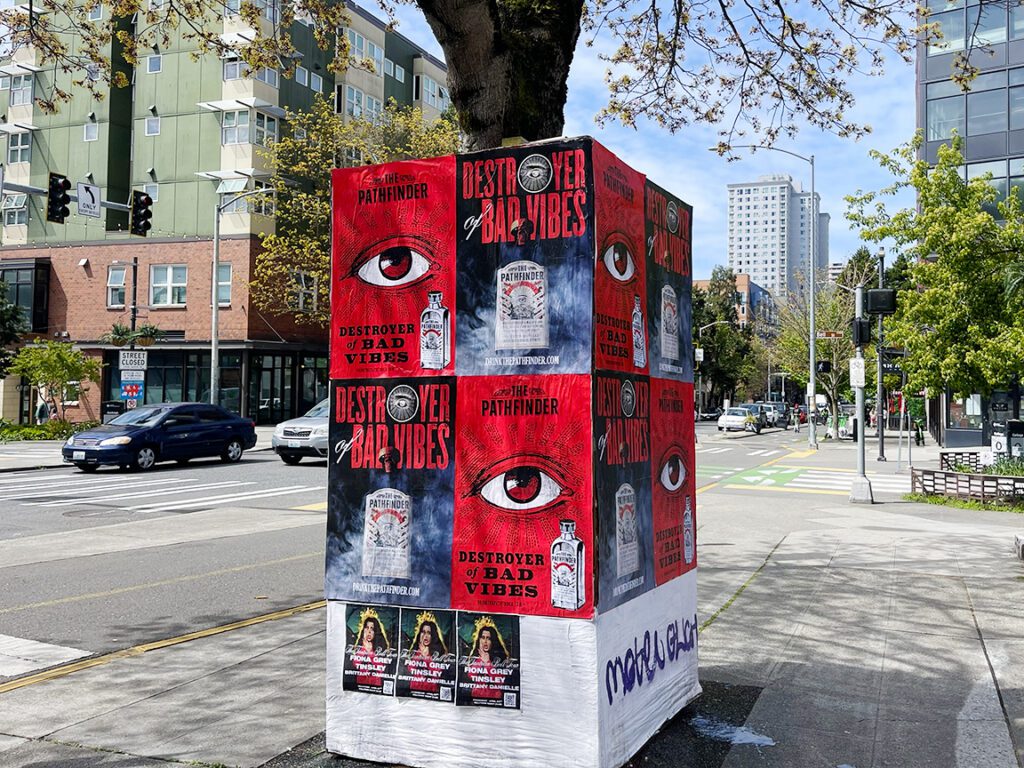
This is the category where AGM operates. Physical campaign execution — poster campaigns, wheat paste campaigns, street teams, experiential activations — requires operational infrastructure that most agencies do not maintain. You need city-specific location knowledge, staff networks, production capacity for physical materials, and logistics management across multiple simultaneous locations. This is what field execution specialists are built for.
Chicago’s boutique agency market is strong in brand strategy and digital. It is less strong in field execution. Brands that need physical campaign work in Chicago should look for specialists rather than assuming their digital agency can extend into that work — because most cannot without outsourcing it anyway.
Understanding What “Physical” Chicago Campaign Work Actually Involves
When a brand asks an agency to run a guerrilla or street-level campaign in Chicago, the execution requirements are different from a digital campaign in ways that require specific infrastructure. Most agencies that list this as a service do not fully appreciate the complexity until they are in the middle of it.
A poster campaign in Chicago, for example, requires: location selection based on foot traffic and audience data; sourcing appropriate posting locations with the right permissions or the right negotiated access; producing the physical materials at the right specs and quantities; deploying teams to the right locations at the right times with the right equipment; documenting every placement with location-specific photography; and delivering that documentation in organized, useful form to the client.
Each of those steps has failure modes. Wrong locations means reaching the wrong audience. Production errors means materials that do not look right in situ. Deployment timing errors means placements that do not reach peak traffic. Poor documentation means the client has no proof the campaign ran and cannot use the materials for internal reporting or future planning.
AGM has the infrastructure for all of these steps because we do this work constantly across multiple cities. Our Chicago operations are built on years of understanding which neighborhoods work for which audiences, where the foot traffic actually is at different times of day, and how to execute logistics across a city that spans from the dense urban core to large residential outer neighborhoods efficiently and at consistent quality standards.
What to Expect When Working With a Street-Level Specialist in Chicago
The engagement model with a field execution specialist like AGM is different from working with a full-service agency. We are not involved in your brand strategy or your media plan. We receive a brief for the physical component of a campaign and we execute it.
A typical engagement starts with a discovery call where we understand the brand, the campaign objectives, the target audience, and any constraints. We then develop a location plan and campaign proposal that specifies where the work will run, how it will be executed, what the timeline looks like, and what documentation we will deliver. The client reviews and approves. Pre-production begins. Execution runs. Documentation is delivered.
The key variables that affect what we recommend and how we price Chicago campaigns are:
Campaign duration — one-day activations, week-long campaigns, or sustained month-long runs have different logistics and staffing requirements
Geographic scope — a single neighborhood campaign versus city-wide versus the full metro area
Campaign type — poster placements, street teams, experiential events, or combinations
Target audience — which neighborhoods and which times of day reach the right people
Creative and production requirements — whether materials are provided or need to be produced
These variables shape the budget, the timeline, and the operational plan. We are direct about what we recommend and why, and we are equally direct when a proposed approach does not match the objective or the budget being considered.
Chicago-Specific Knowledge That Makes a Difference
Chicago is a large and geographically complex city. The neighborhoods have distinct characters, distinct consumer profiles, and distinct foot traffic patterns. A campaign that performs well in Wicker Park will not automatically perform the same way in Bronzeville or Rogers Park. The city’s transit system creates specific traffic concentrations around L stations that matter for poster and sampling campaigns. The lakefront has seasonal patterns that affect outdoor activation viability.
This knowledge is built through experience, not from a map. Agencies that know Chicago from field work in the city understand things that agencies running Chicago campaigns from New York or Los Angeles cannot know from a distance. They know that Milwaukee Avenue in Wicker Park is not the same as Milwaukee Avenue in Logan Square. They know the difference in foot traffic between the Blue Line and Red Line stops. They know which locations generate organic photo documentation and which do not.
For campaigns where these specifics matter — and in guerrilla and physical campaigns they almost always do — local market knowledge is not a bonus. It is the baseline for quality execution.
Physical campaigns, guerrilla, experiential, street
Brand strategy, media planning, creative
AGM and field specialists
Getting the Most From a Chicago Agency Relationship
Whether you work with a large agency or a boutique specialist, the quality of the relationship depends significantly on what you bring to it. Agencies — of any type — do their best work when they have a clear brief, responsive clients, and a defined scope. Vague briefs produce vague work. Scope creep produces budget overruns. Clients who are not available to approve decisions in a timely way slow down execution at exactly the points where speed matters.
For street-level and physical campaign work specifically, the brief should specify the target audience in enough detail to allow for location planning, the market or markets where the campaign will run, the campaign duration, the objective (awareness, sampling, event, etc.), and any creative or brand constraints. The more specific the brief, the more specific and useful the campaign plan that comes back.
The documentation standard should be agreed in advance. What does the client need to receive after the campaign runs? What format, what level of detail, what timeline? Setting this expectation at the outset avoids post-campaign surprises and ensures the documentation the client receives is actually useful for internal reporting and future planning.
Chicago’s Advertising Market in Numbers
Chicago is the third-largest advertising market in the United States by total ad spending. The Chicago DMA (Designated Market Area) reaches approximately 10 million people across the city and surrounding suburbs. The city of Chicago itself has a population of approximately 2.7 million, making it the third-largest city in the country. The broader Chicagoland area, which includes the collar counties and suburban municipalities, adds several million more consumers.
For brands planning Chicago advertising campaigns, the geographic scope of the target audience matters as much as the city itself. A campaign targeting the Chicago DMA for national reach purposes has very different logistics than a campaign targeting specific city neighborhoods for brand-building among specific consumer segments. Both are legitimate Chicago strategies, but they require different approaches, different agency partners, and different execution infrastructure.
Seasonal Considerations for Chicago Campaigns
Chicago’s climate creates seasonal patterns that affect physical advertising campaigns in ways that do not apply to digital campaigns. Outdoor placements — posters, wheat paste, and ambient installations — are most effective from April through October when pedestrian foot traffic is highest and weather allows for sustained outdoor activity. Winter campaigns in Chicago require adaptation: more transit-adjacent placements, indoor venue partnerships, and weather-resistant materials for outdoor executions.
Summer in Chicago concentrates large consumer audiences at outdoor events and along the lakefront. Lollapalooza in Grant Park draws approximately 400,000 attendees over four days in August. The Chicago Air and Water Show draws millions of people to the lakefront. Neighborhood street festivals run nearly every weekend throughout summer. Each of these events creates an advertising opportunity in the surrounding area for brands that plan their campaigns around the city’s event calendar.
Winter brings indoor concentration opportunities. The holiday shopping season concentrates consumers in the Magnificent Mile and other retail corridors. The restaurant and entertainment scene in neighborhoods like River North and Wicker Park drives evening foot traffic through the colder months. Indoor venue partnerships and transit advertising become proportionally more valuable when outdoor execution is limited by weather.
Chicago Transit Authority as an Advertising Environment
The Chicago Transit Authority operates one of the country’s most extensive urban transit networks. The L rail system has eight lines serving the city and immediate suburbs. The bus network extends coverage into every neighborhood in the city. Combined, the CTA carries over 400 million rides annually — a substantial and broadly distributed audience for transit-adjacent advertising.
Transit advertising in Chicago includes station placements at L stops, car card advertising inside rail cars, platform takeovers at high-traffic stations, and bus shelter advertising throughout the city. Different lines and different stations reach different demographic profiles. The Red Line, which runs north-south through the city’s most densely populated residential areas, carries a different demographic mix than the Blue Line running to O’Hare or the Green Line serving the South Side.
For guerrilla and ambient campaigns, the areas immediately surrounding major L stations are high-value locations. Concentrated foot traffic enters and exits these stations at consistent times, creating predictable windows for poster campaigns and street team activations. The stations themselves — particularly major hubs like Fullerton, Clark and Division, and Damen on the Blue Line — are surrounded by commercial activity that sustains foot traffic between transit peaks.
Event-Adjacent Campaign Opportunities in Chicago
Beyond the summer festival calendar, Chicago’s year-round event schedule creates sustained opportunities for campaign timing around major audience concentrations:
Chicago Bears games at Soldier Field (fall and early winter) draw approximately 60,000 attendees per game with significant foot traffic in the Museum Campus and surrounding lakefront area
Chicago Bulls and Blackhawks games at the United Center draw consistent audiences to the Near West Side with the United Center serving as the anchor of a dense pre- and post-game dining and entertainment scene
Chicago Cubs games at Wrigley Field concentrate enormous audiences in Wrigleyville and the surrounding North Side, creating one of the most active street-level advertising environments in the city during the baseball season
Major conventions at McCormick Place — including trade shows and consumer expos — bring tens of thousands of concentrated audience members to the South Side lakefront area
The Chicago Auto Show at McCormick Place draws hundreds of thousands of visitors over its two-week run in February, creating a significant opportunity for brands adjacent to the automotive category
AGM plans campaigns around Chicago’s event calendar regularly, positioning street-level executions in proximity to major event venues to reach concentrated audiences before and after events. This timing-based approach often produces better cost-per-contact outcomes than sustained campaigns without event alignment, because the audience concentration is higher and the consumer mindset is more receptive.
Chicago Campaign Integration With Digital Channels
Physical and digital campaigns in Chicago can be integrated to create a reinforcement effect that neither channel achieves alone. The strategy is straightforward: run physical placements in specific Chicago neighborhoods and simultaneously run geotargeted digital advertising to the same zip codes or geographic zones. Consumers who see the physical campaign and the digital campaign are receiving reinforced brand messaging from multiple directions, which builds brand recognition faster and more durably than either channel in isolation.
The documentation from AGM’s physical campaigns — photo documentation organized by location and date, route maps showing geographic coverage — provides the geographic data needed to align digital targeting. A poster campaign running in Wicker Park and Logan Square can be precisely matched by geotargeted paid social ads to the same neighborhoods. The result is a consumer who sees the brand in their physical environment and then sees it again in their social feed, which creates a brand familiarity that single-channel campaigns cannot build at the same efficiency.
AGM coordinates with digital agency partners when clients are running integrated physical-digital campaigns. We provide documentation and geographic coverage data in formats that digital partners can incorporate into their targeting and reporting, making the integration operationally clean rather than a manual coordination burden for the brand team.
The Chicago Consumer and What Drives Brand Loyalty Here
Chicago consumers are known for strong brand loyalties that, once established, tend to endure. The city’s working-class heritage and its strong neighborhood identity culture create consumer relationships with brands that feel personal and local in ways that are difficult to build through purely digital channels. Brands that invest in physical presence in Chicago’s neighborhoods over sustained periods earn a kind of recognition that brand managers from outside the market sometimes underestimate.
The mechanism is straightforward: repeated physical exposure in the environments where consumers live their daily lives creates familiarity and positive association that advertising cannot generate through exposures alone. A brand that is consistently present on the streets of Wicker Park for two consecutive years is not just running advertising in Wicker Park — it is becoming part of the neighborhood’s visual environment in a way that builds genuine brand recognition with the consumers who live and work there.
This is why brands that take a sustained approach to Chicago physical campaigns tend to see compounding returns over time. The first campaign builds initial awareness. Subsequent campaigns reinforce and deepen that awareness. By the third or fourth campaign wave, the brand is recognized before the consumer consciously reads the messaging, which is the highest possible level of brand recognition efficiency.
Multi-Market Chicago + Midwest Campaign Coordination
For brands using Chicago as part of a broader Midwest market strategy, the coordination between Chicago and secondary Midwest markets — Milwaukee, Indianapolis, Columbus, Kansas City, Minneapolis, Detroit — is an important logistical consideration. Chicago typically anchors the Midwest strategy as the largest and most brand-influential market in the region. Secondary markets are activated with campaign formats adapted to their specific scale and consumer character.
AGM coordinates multi-market Midwest campaigns from the Chicago anchor market outward. We execute Chicago first to establish the campaign format and document what works, then carry those learnings into the secondary markets with appropriate adaptations. This sequential approach produces better secondary market results than simultaneous multi-market launches because the Chicago campaign learnings can improve execution quality in subsequent markets.
The documentation standard for multi-market campaigns is consistent: photo documentation, route maps, and summary reports for each market, delivered within 5 business days of that market’s campaign completion, with a consolidated multi-market report covering the full campaign at its conclusion. This consolidated documentation gives the brand manager a unified view of what was executed across the Midwest and a clear basis for planning the next campaign wave.
Chicago Campaign Budgeting: What Actually Drives Cost
Physical campaign costs in Chicago are driven by several variables that brands new to the format often do not fully anticipate. Understanding these cost drivers upfront prevents budget overruns and allows for realistic campaign scoping.
The primary cost drivers for street-level campaigns in Chicago:
Geographic scope: A campaign covering three North Side neighborhoods costs less than one covering the full city. Each additional neighborhood adds location scouting, deployment time, and documentation coverage.
Campaign duration: A one-day street team activation has very different costs than a four-week poster campaign. Sustained campaigns require material replenishment and ongoing staff deployment that one-day events do not.
Campaign format: Poster campaigns have different costs from wheat paste campaigns, which have different costs from street team programs, which have different costs from experiential events. Format choice significantly affects the cost structure.
Materials production: Print production for poster and wheat paste campaigns, branded materials for street team programs, and custom builds for experiential events each have their own cost range based on volume, quality, and specifications.
Staff requirements: Street team and experiential campaigns require trained brand ambassadors. The number of staff, the training requirements, the supervision structure, and the deployment duration all affect staffing costs.
AGM provides specific budget estimates after understanding the campaign scope on each of these dimensions. We are direct about what different budget levels can and cannot achieve, and we recommend campaign structures that match the brand’s objectives to the budget it has available — not campaign structures that maximize billings regardless of fit.
Frequently Asked Questions
What does an ad agency in Chicago typically offer?
It varies by agency type. Large holding company networks offer integrated services across strategy, creative, media, and digital. Boutique independents often specialize in specific channels or categories. Execution specialists like AGM focus on physical and field execution: street campaigns, experiential activations, and direct consumer engagement.
How is working with a boutique Chicago agency different from a large network?
Boutique agencies typically offer more direct access to senior talent, faster decision-making, and more genuine investment in the account. Large networks offer more channel breadth and infrastructure for complex multi-market campaigns. The trade-offs are real and the right choice depends on what the campaign actually requires.
What should I expect from AGM as a Chicago campaign partner?
From AGM you should expect clear campaign planning, thorough pre-production, field execution that matches the brief, and comprehensive documentation delivered promptly after the campaign. We do not do everything — we do physical and experiential execution very well.
How does AGM handle multi-neighborhood campaigns in Chicago?
We plan routes and locations in advance based on target audience and foot traffic analysis. For multi-neighborhood campaigns, we deploy teams across the city simultaneously or in sequence depending on the campaign timeline, with consistent documentation standards across all locations.
Does AGM work alongside other agencies on integrated Chicago campaigns?
Yes. Many clients work with a digital or full-service agency for other channels and bring us in specifically for physical and street-level work. We coordinate directly with other agency partners when needed and provide documentation that feeds into integrated reporting.