Bus Stop Bench Advertising | American Guerrilla Marketing
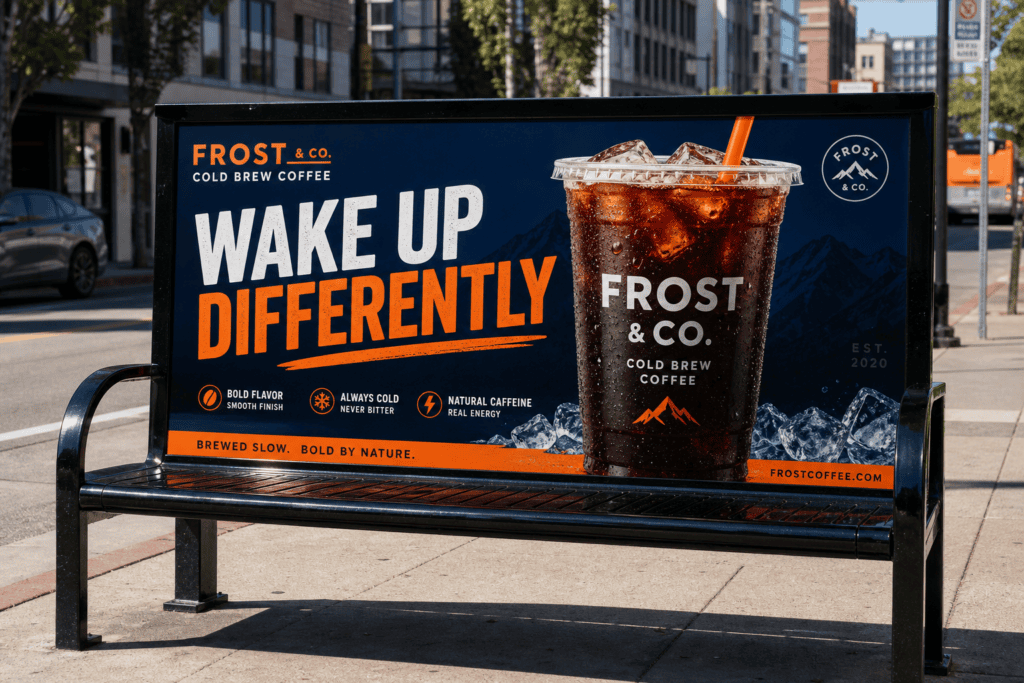
Bus stop bench advertising has been around long enough to feel old-fashioned. It is not. The reason bench advertising has persisted while so many other traditional formats have declined is simple: captive audience. A person sitting on a bench waiting for a bus has nowhere to go. They cannot skip the ad. They cannot scroll past it. They are sitting four feet away from your message for as long as the bus takes to arrive.
In most markets, that is somewhere between three and twelve minutes. Three to twelve uninterrupted minutes with your target audience, on a bench or on a panel directly above it, in a specific neighborhood, at a specific intersection, reaching a specific demographic based on where that bus route runs.
We are American Guerrilla Marketing. We run physical campaigns across major U.S. markets. We work with brands on out-of-home strategies, transit campaigns, street team deployments, and integrated physical marketing programs. Bus stop and transit bench advertising is one of the most cost-effective and under-appreciated tools in the urban physical marketing toolkit. This article breaks down how it works, what it costs, how to select the right locations, and how to build a bench advertising campaign that actually moves the needle.
The format is simple. An advertiser pays to display their message on the back of a bus stop bench, on a shelter panel above or beside the bench, or on a kiosk adjacent to the stop. The placement is typically sold as a four-week flight, though some markets offer two-week and eight-week options. The ad is printed, installed by the vendor, and left in place for the duration of the flight.
In cities with a managed transit advertising vendor (like global outdoor advertising networks or large outdoor media networks), bench and shelter space is sold through a formal booking process with rate cards and market data. In smaller markets, bench advertising is often managed by the city, the county, or a local advertising vendor who may offer more flexible terms.
The core value proposition of bench advertising is repetition. The same group of people passes through the same bus stops every weekday. A commuter who takes the Q34 bus at the corner of Main Street and Hillside Avenue at 8:15 AM sees whatever is on that bench five days a week. By week two of a four-week flight, that person has seen your message approximately ten times. By the end of the flight, they have seen it twenty or more times. That kind of frequency in a local geography is extremely hard to achieve through digital or broadcast media at a comparable cost.
Who Bus Stop Bench Advertising Is Right For
Not every brand is a natural fit for bench advertising. Here is how to think about whether it belongs in your media mix.
Brand/Business Type
Fit for Bench Advertising
Why
Local services (plumbers, dentists, lawyers)
Excellent
Hyper-local reach in specific neighborhoods and zip codes
Retail stores with nearby locations
Excellent
Reaches consumers traveling past or near the store
Consumer brands launching in urban markets
Strong
Builds frequency and recognition in target neighborhoods
Restaurants and food businesses
Strong
Reaches hungry commuters before meal decisions
Entertainment and events
Strong
Creates awareness during the pre-event consideration window
E-commerce brands with no local presence
Moderate
Works if paired with a clear URL or QR code and a strong offer
B2B brands
Limited
Hard to target a specific professional audience through bench placement
Selecting the Right Bus Stop Locations
Location selection is where bench advertising campaigns succeed or fail. A bench on a quiet residential street with low passenger volume reaches very few people. A bench on a busy commercial corridor adjacent to a grocery store, pharmacy, and four restaurants reaches a dense, relevant audience all day long.
Here is how to approach location selection intelligently.
Match the route to your target demographic. Bus routes serve specific communities. A bus route that runs through an affluent residential neighborhood carries a different audience than one that runs through a working-class commercial district. Most transit advertising vendors can provide ridership demographics by route. Use that data to select locations where the bench is likely to be seen by the people you want to reach.
Prioritize high-volume stops. Some bus stops see hundreds of boardings per day. Others see a handful. The transit authority publishes ridership data for most stops. Ask for this data before you book a location. The difference between a high-volume stop and a low-volume stop on the same route can be dramatic.
Consider the pedestrian environment. A bus stop surrounded by busy retail, restaurants, and foot traffic reaches more than bus riders but pedestrians passing by on both sides of the street. The best bench locations are ones that exist in active, walkable commercial environments where the bench is visible to a large number of people even beyond the transit users who are actually waiting.
Cluster placements around key retail or business locations. If you are a restaurant or retailer, cluster your bench placements within a few blocks of your locations. The goal is to reach people who are already in your vicinity and remind them that you exist before they decide where to eat, shop, or spend their time.
The right bus stop is more valuable than a hundred wrong ones. A high-volume stop in a high-pedestrian environment on a route that serves your target demographic is the combination you are looking for. Do not buy placements without reviewing ridership data and visit each location in person.
Creative Best Practices for Bench Advertising
A bus stop bench is not a magazine page. The creative format is specific and the constraints are real. Here is what works.
Lead with the visual. From a distance, the first thing that registers is the image or the dominant visual element. If the image does not capture attention, most people will not read the rest of the ad. Use high-contrast visuals that read clearly at a glance from across the street.
Keep the headline short. Five to seven words maximum. The person sitting on the bench has plenty of time to read a long headline, but many people passing the bench on foot do not. Design for the passing pedestrian and the bench rider will engage easily. Design for the bench rider only and you lose everyone else.
Make the call to action specific and simple. A URL, a phone number, or a QR code. Pick one. All three on a bench panel creates clutter. One clear action is infinitely more useful than three competing ones.
Consider the backlit format. Many bus shelters have backlit panels that are illuminated at night. If your placements include backlit formats, design your creative with nighttime visibility in mind. High-contrast colors and legible typography that reads well when lit from behind will produce a much better impression after dark than creative designed only for daytime viewing.
How Bench Advertising Fits into a Broader Physical Campaign
Bus stop bench advertising is most powerful when it is part of a layered physical campaign rather than a standalone tactic. Here is how we integrate bench placements with other physical marketing elements.
Bench plus street team. A street team activating in the same neighborhood where your bench placements are running creates a two-touch experience for local commuters. They see the bench on their way to the bus. They interact with the street team on the way home from work. The two exposures reinforce each other in a way that each alone cannot achieve.
Bench plus event presence. If you have event presence in a neighborhood, having bench placements near the event location drives awareness during the days leading up to the event and during the event itself. People waiting at bus stops near a venue see your message immediately before they decide whether to attend or participate.
Bench plus digital retargeting. Use geo-fencing to run digital ads to people who have been in the vicinity of your bench placements. Someone who saw your bench at a bus stop on Tuesday and then sees your Instagram ad on Thursday is being reached twice in two very different contexts. The combination creates recognition and recall that neither medium produces alone.
Bench plus mural or large format. A mural or large-format outdoor installation in the same neighborhood as your bench placements creates a consistent visual brand environment throughout the area. Someone who sees the mural on their way to the bus stop, and then sees the bench ad while they wait, is experiencing a brand that feels omnipresent in their neighborhood. That kind of local saturation creates the perception of a major brand even for brands with modest budgets.
Bench Advertising Costs: What to Expect
Pricing for bus stop bench and shelter advertising varies significantly by market size, location quality, and format type. Here is a general framework.
Market Type
Format
Typical Monthly Rate
Top 10 metro (New York, LA, Chicago)
Bench back or shelter panel
$300 to $1,200 per unit per month
Mid-size metro (Phoenix, Denver, Atlanta)
Bench back or shelter panel
$150 to $600 per unit per month
Secondary market (Raleigh, Omaha, Tucson)
Bench back or shelter panel
$75 to $300 per unit per month
Small city or suburb
Bench back (vendor-managed)
$50 to $150 per unit per month
Production costs for bench advertising are generally low. A standard bench back is a straightforward print piece with costs typically ranging from $50 to $200 per unit depending on print method and installation. Digital production (if the shelter has a digital panel) eliminates print costs but may carry a higher unit rate.
Measuring the Effectiveness of Bench Advertising
Attribution for out-of-home advertising has historically been difficult. That is changing. Modern out-of-home campaigns can be measured in several ways.
Unique URLs and QR codes. Assign a specific URL or QR code to the bench campaign. Track visits and conversions from that URL during the campaign period and compare to baseline. This does not capture everyone who sees the ad, but it captures the people who were moved to act immediately.
Foot traffic analysis. Some out-of-home vendors now offer foot traffic attribution tools that use mobile location data to measure whether people exposed to specific placements visited your store or venue. This technology has improved significantly and provides real evidence of physical conversion from out-of-home placements.
Brand awareness surveys. For longer campaigns or higher-budget programs, a simple awareness survey of people in the target geography before and after the campaign period can measure brand recognition lift attributable to the bench presence.
Sales lift in the target geography. Compare sales or inquiry volume in the neighborhoods where the bench campaign ran versus comparable neighborhoods where it did not. This approach requires some statistical care but it is one of the most direct ways to connect out-of-home placements to business outcomes.
Bench advertising frequency in a local geography is one of the most powerful awareness-building tools available to local and regional brands at an accessible price point. The key is location selection, strong creative, and integrating bench into a broader campaign rather than running it in isolation.
Digital vs. Physical: Why Bench Advertising Holds Ground
Every few years someone declares that physical advertising is dead. The argument is always the same: people are on their phones. Nobody looks at static placements. Digital is cheaper and more measurable. The data keeps proving this argument wrong, and bench advertising is one of the clearest examples of why.
Digital advertising has a skip problem. Pre-roll ads get skipped. Display ads get ignored through banner blindness. Social ads get scrolled past in under a second. The average consumer sees thousands of digital ads per day and consciously registers a fraction of them. The mental filter against digital advertising is extraordinarily strong because consumers have been trained over years that digital ads are noise.
A bench ad does not get skipped. It is physically present in the environment. The person waiting for the bus cannot close the tab on it. They are sitting with it for the full duration of their wait. Their phone is in their pocket or they are scrolling, but the bench ad is in their peripheral field the entire time. That repeated peripheral exposure builds brand recognition even when the person is not actively looking at it. That is a mechanism that digital simply cannot replicate.
The other factor is context. A bench ad appears in the physical environment of the neighborhood. It is attached to the real places where the consumer lives and moves. A digital ad appears inside a feed that has no physical context whatsoever. The bench is at the corner of Broadway and Grand in Williamsburg. That specific geography makes it contextually relevant to every single person who lives, works, or shops in that neighborhood. No digital ad can be that specifically grounded in a real place at zero marginal cost per additional local viewer.
What American Guerrilla Marketing Does with Physical Campaigns
We plan and execute physical marketing campaigns that include out-of-home placements alongside street teams, pop-up activations, and event presence. We help brands select the right physical channels for their specific audience and geography, build integrated campaigns that make those channels work together, and document results in ways that show clients what the investment actually produced.
We work in New York, Los Angeles, Chicago, Miami, and other major markets where out-of-home and transit advertising are significant parts of the urban physical media environment. If you are thinking about a bench or transit advertising program and want to understand how it fits with other physical marketing tactics, we are ready to have that conversation.
What is bus stop bench advertising?
Bus stop bench advertising is a form of out-of-home advertising where a brand’s message is displayed on the back of a public bench at a transit stop, on a shelter panel above the bench, or on an adjacent kiosk. People waiting for the bus are the primary audience, but pedestrians passing the stop also see the ad. The format delivers strong frequency because the same commuters see the same placements repeatedly throughout the week.
How much does bus stop bench advertising cost?
Costs vary by market. In major metros like New York, Los Angeles, and Chicago, bench and shelter panels typically run $300 to $1,200 per unit per month. Mid-size markets range from $150 to $600. Smaller markets are lower. Production costs for standard bench backs are typically $50 to $200 per unit including print and installation.
How do I choose the right bus stops for advertising?
Request ridership data from the transit authority or advertising vendor. Look for high-volume stops in active commercial environments that serve the demographic you are trying to reach. Visit potential locations in person to assess foot traffic patterns and the competitive visual environment. Cluster placements near your retail locations if you have physical storefronts.
How long should a bench advertising campaign run?
A minimum of four weeks is recommended to build meaningful frequency with the local audience. Eight to twelve weeks produces stronger awareness lift because the repeated exposure compounds over time. Campaigns shorter than four weeks may not achieve sufficient frequency to move brand awareness metrics.
What creative size do I need for bus stop bench advertising?
Standard bench back sizes vary by vendor and market but commonly range from 30×20 inches to 48×24 inches. Shelter panels are typically larger, in the range of 40×60 inches or 46×68 inches. Your vendor will provide exact specifications. Produce creative at the exact specified dimensions with bleed margins as required.
Can I use a QR code on a bench advertisement?
Yes. A QR code can be an effective response mechanism on a bench ad because people waiting for the bus have time to pull out their phones and scan. Place the code prominently, keep it simple, and make sure the landing page it goes to is mobile-optimized and loads quickly. A slow-loading landing page will lose the conversion even if the person takes the step of scanning.
How is bench advertising different from billboard advertising?
Billboards are designed for vehicle traffic and the creative is seen from a distance at driving speed. Bench ads are seen up close by pedestrians and transit riders at a standstill. The creative requirements are different: bench ads can carry more detail and a longer headline because the audience has time to read. Location strategy is also different because bench placements are tied to the transit network while billboards are tied to vehicle traffic corridors.
Does bus stop bench advertising work for small businesses?
Yes. It is actually one of the most accessible out-of-home formats for small businesses because you can run a single unit or a small cluster of units in your specific neighborhood at a relatively low cost. A dentist, restaurant, law firm, or local retailer can achieve meaningful local brand recognition through consistent bench placements in their immediate service area.
How do I know if my bench advertising is working?
Assign a unique URL or QR code to the campaign and track those conversions. Compare sales or inquiry volume in the neighborhood during the campaign period to the period before it. If you have multiple bench placements, assign different codes to each location to identify which stops produce the most response. For longer campaigns, a simple brand awareness survey in the target geography can measure recognition lift.
Can bench advertising be combined with other marketing tactics?
Absolutely. Bench advertising is most powerful as part of a layered physical campaign. Pair it with a street team in the same neighborhood, event presence nearby, or geo-targeted digital ads reaching people in the vicinity of your placements. Each additional touchpoint reinforces the others and increases overall campaign effectiveness well beyond what any single tactic produces alone.
Frequently Asked Questions
What is bus stop bench advertising?
Bus stop bench advertising is a form of out-of-home advertising where a brand’s message is displayed on the back of a public bench at a transit stop, on a shelter panel above the bench, or on an adjacent kiosk. People waiting for the bus are the primary audience, but pedestrians passing the stop also see the ad. The format delivers strong frequency because the same commuters see the same placement
How much does bus stop bench advertising cost?
Costs vary by market. In major metros like New York, Los Angeles, and Chicago, bench and shelter panels typically run $300 to $1,200 per unit per month. Mid-size markets range from $150 to $600. Smaller markets are lower. Production costs for standard bench backs are typically $50 to $200 per unit including print and installation.
How do I choose the right bus stops for advertising?
Request ridership data from the transit authority or advertising vendor. Look for high-volume stops in active commercial environments that serve the demographic you are trying to reach. Visit potential locations in person to assess foot traffic patterns and the competitive visual environment. Cluster placements near your retail locations if you have physical storefronts.
How long should a bench advertising campaign run?
A minimum of four weeks is recommended to build meaningful frequency with the local audience. Eight to twelve weeks produces stronger awareness lift because the repeated exposure compounds over time. Campaigns shorter than four weeks may not achieve sufficient frequency to move brand awareness metrics.
What creative size do I need for bus stop bench advertising?
Standard bench back sizes vary by vendor and market but commonly range from 30×20 inches to 48×24 inches. Shelter panels are typically larger, in the range of 40×60 inches or 46×68 inches. Your vendor will provide exact specifications. Produce creative at the exact specified dimensions with bleed margins as required.
Can I use a QR code on a bench advertisement?
Yes. A QR code can be an effective response mechanism on a bench ad because people waiting for the bus have time to pull out their phones and scan. Place the code prominently, keep it simple, and make sure the landing page it goes to is mobile-optimized and loads quickly. A slow-loading landing page will lose the conversion even if the person takes the step of scanning.
How is bench advertising different from billboard advertising?
Billboards are designed for vehicle traffic and the creative is seen from a distance at driving speed. Bench ads are seen up close by pedestrians and transit riders at a standstill. The creative requirements are different: bench ads can carry more detail and a longer headline because the audience has time to read. Location strategy is also different because bench placements are tied to the transit