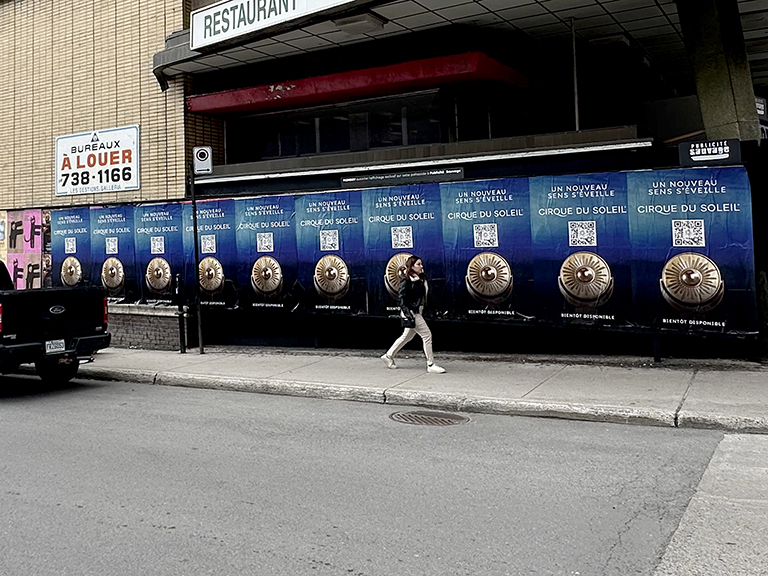
Posters normally come in a handful of well-running sizes. The most common is 18 inches by 24 inches. That is the size you see at concerts, in venue windows, and across most general event and retail campaigns. The next most common is 24 inches by 36 inches, which is the go-to for outdoor and high-visibility placements. Below those two, 11×17 is a widely used small format. Above them, 27×40 and 36×48 handle large-scale applications.
We manage poster campaigns across the United States, working in cities like New York, Los Angeles, Chicago, and Miami. We know which sizes printers stock, which dimensions campaigns actually use, and why the normal sizes became normal in the first place. This guide gives you the full picture.
The word “normally” is doing a lot of work here. Posters are normally one size in a music venue and normally a different size in a movie theater. The dimensions above represent the normal range for each distinct context. The 18×24 is the closest thing to a universal normal across contexts.
Why These Sizes Became Normal
Normal poster sizes developed over decades through a combination of print technology, display hardware, and cultural habit. Here is how each size earned its place:
11×17: The Tabloid Normal
Tabloid paper (11×17) is the largest size handled by standard office printing equipment. Because so many organizations had access to tabloid printers, the format became the default for self-produced posters. Bulletin board management also favored this size because it fits two or three 11×17 posters per standard board without overwhelming the space. The size became normal because it was accessible without requiring specialized equipment or significant production cost.
18×24: The Standard Normal
Commercial large-format printers are typically built around roll widths of 24 or 36 inches. An 18×24 poster can be produced two-up on a 36-inch roll, making it extremely cost-efficient for print shops to produce. This production efficiency drove prices down, which drove demand up, which made the format standard. The 18×24 also fits in a range of standard frames and display cases that manufacturers produce for consumer and commercial markets.
24×36: The Outdoor Normal
At 24 inches wide, this poster fits cleanly on most commercial printers without waste. At 36 inches tall, it fills a standard commercial storefront window or door panel with minimal adjustment. The 24×36 format reads from 20 to 30 feet, which makes it effective across a wide range of outdoor street-level environments. Print shops that specialize in large-format output often treat this as their default output size.
27×40: The Film Industry Normal
The movie industry standardized on 27×40 for the theatrical one-sheet early in the 20th century, and display infrastructure was built around those dimensions. Theater lobby cases, transit advertising frames, and collector poster storage systems were all designed around the 27×40 standard. The format persists because changing it would require replacing enormous amounts of existing display infrastructure.
How Normal Poster Sizes Vary by Region
The U.S. and international markets use different normal sizes. In the U.S., the 18×24 and 24×36 dominate. In Europe and most of the rest of the world, the ISO A-series paper system is standard. Here is how the two systems compare:
U.S. Normal Size
U.S. Dimensions
Closest ISO Size
ISO Dimensions
Small Poster
11 x 17 in
A3
11.7 x 16.5 in
Standard Poster
18 x 24 in
Between A2 and A1
A2: 16.5×23.4; A1: 23.4×33.1
Large Poster
24 x 36 in
Larger than A1
A1: 23.4 x 33.1 in
Wide Format
36 x 48 in
Close to A0
A0: 33.1 x 46.8 in
If you are working with international suppliers or printing campaigns for both U.S. and European markets, you will need to adjust your files. The proportions of U.S. and ISO sizes differ. A 24×36 file will have different proportions than an A1 file, which means artwork cropping or scaling is required to use the same design at both sizes.
The Two Normal Sizes You Need to Know
For the vast majority of poster campaigns in the United States: 18×24 inches for indoor and general use. 24×36 inches for outdoor and high-traffic placements. These two sizes account for most poster production in the country. Master them and you are ready for most campaigns.
Normal Poster Sizes for Specific Campaign Types
Concert and Music Promotions
The music industry has used 18×24 as the normal poster size for decades. Walk into any record shop, music venue, or bar in New York, Austin, Nashville, or Seattle and you will see 18×24 concert posters everywhere. For major touring acts with bigger budgets, 24×36 is normal for high-profile outdoor placements around the venue and in key commercial districts.
Restaurant and Bar Promotions
Restaurants and bars typically use 18×24 for event promotions, menu boards, and seasonal campaigns. Window posters at this size are visible from the sidewalk and fit most restaurant windows without dominating the glass. Some establishments use smaller formats inside (11×17 for table-level displays) and 18×24 or 24×36 for window-facing promotions.
Brand Awareness Campaigns
For brand campaigns focused on awareness rather than specific events, 24×36 is often the normal choice in urban markets. The larger format signals investment. It holds more visual real estate for brand imagery, lifestyle photography, or abstract design. An 18×24 works for brand campaigns in tighter spaces or on a smaller budget.
Political and Advocacy Campaigns
Political posters in urban environments are typically 18×24 for indoor use and 24×36 for outdoor and storefront applications. Yard sign-style displays, which are technically a type of poster on rigid backing, are typically 18×24 or 24×36 on Coroplast (corrugated plastic) substrate for weather resistance.
Designing Within Normal Poster Sizes
Normal poster sizes have specific design implications that many first-time designers miss:
Typography Must Scale to Distance
The normal viewing distance for an 18×24 poster is 8 to 15 feet. At 15 feet, text needs to be approximately 72 points or larger to read reliably. Most first-time poster designers underestimate this and produce posters with beautiful small type that no one can read from the sidewalk. Design for the viewing distance, not the screen.
Images Must Be High Resolution
A photo that looks sharp on your phone or computer screen will look grainy on a 24×36 print if the source image is not high enough resolution. Source images at 150 DPI or higher at the final output size. Vector graphics scale perfectly at any size and are always the best choice for logos, icons, and simple shapes.
Bleed and Safe Margins Are Not Optional
Every professional poster print requires bleed (0.125 inches of extra print area outside the trim line) and a safe area (0.25 inches inside the trim line where no critical content should appear). Ignoring these guidelines produces posters with white edges or with important design elements cut off by trimming.
Poster Design Checklist for Normal Sizes
Before you send any poster file to print: confirm your canvas is set to the exact output size. Add 0.125-inch bleed on all sides. Keep critical content 0.25 inches from all edges. Set color mode to CMYK. Confirm resolution is 150 DPI minimum at the final size. Embed or outline all fonts. Export as a print-ready PDF or high-resolution TIFF.
What size are posters normally?
Posters in the United States are normally 18 inches by 24 inches for most indoor and general applications. For outdoor and high-visibility placements, 24 inches by 36 inches is the normal large format. The 11×17 is a common small poster format for campuses and tight indoor spaces.
Is there one single normal poster size?
The closest thing to a universal normal is 18×24 inches. It appears in more contexts than any other single format. But different industries have their own norms: film uses 27×40, retail uses 22×28, outdoor campaigns use 24×36. The 18×24 is the broadest common ground.
What is the normal size of a poster for a school project?
For school projects and academic presentations, the normal size is either 22×28 for a paper poster board or 36×48 for a tri-fold display board that stands on its own. The 11×17 is also common for smaller academic bulletin board displays.
What is the normal size of a concert poster?
Concert posters are normally 18×24 inches. This has been the standard in the music industry for decades. It is large enough to carry the event name, date, and key visuals, and small enough to fit in a typical venue window.
How do I know if my poster size is normal?
If your poster is 11×17, 18×24, 22×28, 24×36, or 27×40, you are working with a recognized industry standard. If your dimensions fall outside these sizes, you are working with a custom format that may cost more to print and may not fit standard display hardware.
What resolution do I need for a normal poster?
For an 18×24 poster at 150 DPI, you need a file that is 2,700 by 3,600 pixels. At 300 DPI, that doubles to 5,400 by 7,200 pixels. For a 24×36 at 150 DPI, you need 3,600 by 5,400 pixels. Design at the final output size, not at screen size.
Can I print a normal poster at home?
The 11×17 size prints on tabloid-capable home printers. True standard poster sizes (18×24 and larger) require commercial large-format printing equipment. Most local print shops and online vendors offer these sizes at reasonable prices.
Does normal poster size include the frame?
No. Poster sizes refer to the paper or print dimensions only. Frame size refers to the inner dimensions that hold the print. Most 18×24 frames have an inner opening of exactly 18×24 inches. Some frames have mats that reduce the visible area. Always confirm the inner print opening size when purchasing frames for standard-size posters.
Frequently Asked Questions
What size are posters normally?
Posters in the United States are normally 18 inches by 24 inches for most indoor and general applications. For outdoor and high-visibility placements, 24 inches by 36 inches is the normal large format. The 11×17 is a common small poster format for campuses and tight indoor spaces.
Is there one single normal poster size?
The closest thing to a universal normal is 18×24 inches. It appears in more contexts than any other single format. But different industries have their own norms: film uses 27×40, retail uses 22×28, outdoor campaigns use 24×36. The 18×24 is the broadest common ground.
What is the normal size of a poster for a school project?
For school projects and academic presentations, the normal size is either 22×28 for a paper poster board or 36×48 for a tri-fold display board that stands on its own. The 11×17 is also common for smaller academic bulletin board displays.
What is the normal size of a concert poster?
Concert posters are normally 18×24 inches. This has been the standard in the music industry for decades. It is large enough to carry the event name, date, and key visuals, and small enough to fit in a typical venue window.
How do I know if my poster size is normal?
If your poster is 11×17, 18×24, 22×28, 24×36, or 27×40, you are working with a recognized industry standard. If your dimensions fall outside these sizes, you are working with a custom format that may cost more to print and may not fit standard display hardware.
What resolution do I need for a normal poster?
For an 18×24 poster at 150 DPI, you need a file that is 2,700 by 3,600 pixels. At 300 DPI, that doubles to 5,400 by 7,200 pixels. For a 24×36 at 150 DPI, you need 3,600 by 5,400 pixels. Design at the final output size, not at screen size.
The 11×17 size prints on tabloid-capable home printers. True standard poster sizes (18×24 and larger) require commercial large-format printing equipment. Most local print shops and online vendors offer these sizes at reasonable prices.