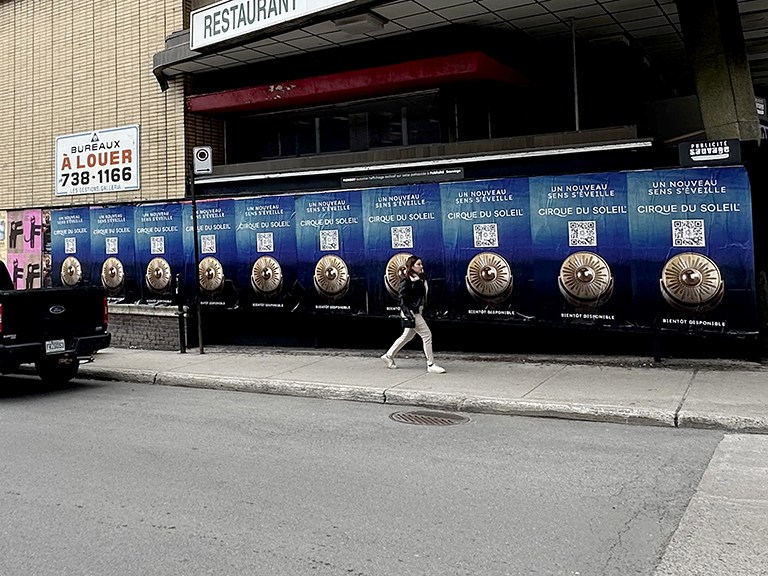
Chicago Advertising Agencies | Guerrilla Marketing Specialists 2026
Chicago has a long advertising history. It also has a lot of agencies that talk big and execute small. Here is how to tell the difference before you sign anything.
Chicago built some of the most iconic advertising in American history. Leo Burnett started here. The city has shaped beer brands, fast food categories, and global retail chains from advertising offices a few blocks from Lake Michigan. That legacy attracts talent and reputation. It also attracts a lot of agencies that coast on the city’s reputation instead of building their own.
If you are looking for a Chicago advertising agency, you are looking in one of the most competitive agency markets in the country. The range is enormous: holding-company giants with thousands of employees, independent creative shops with ten people and a strong point of view, media buying specialists, experiential firms, digital studios. All of them use the word “agency.” Almost none of them do the same thing.
This guide is written from the perspective of a company that does guerrilla, experiential, and street-level advertising in Chicago. We are American Guerrilla Marketing. We work in Wicker Park, on the Riverwalk, around Wrigley Field, down Milwaukee Avenue, and across the neighborhoods that make Chicago one of the best physical advertising markets in the country. What we know about advertising in this city comes from the street, not from a research deck.
Types of Chicago Advertising Agencies and What Each Actually Delivers
The agency environment in Chicago is genuinely diverse. Understanding what category an agency falls into before you brief them saves months of misaligned expectations.
Large Full-Service Agencies
Chicago’s large agencies have deep roots in broadcast, print, and national brand work. They are built for complex, multi-channel campaigns with significant media budgets. They bring strategic planning, research departments, and creative capabilities across every channel. The tradeoff is structure. Large agencies move slowly. Decision-making goes through layers. A brand with $5 million in media budget is not a priority client at a shop built for $50 million accounts.
These agencies are the right choice when your campaign requires deep media buying, national broadcast, complex regulatory review, or a brand strategy rebuild. They are usually the wrong choice when you need fast, physical, street-level presence in Chicago neighborhoods.
Independent Creative Boutiques
Chicago has a healthy network of independent creative shops. These agencies typically employ between five and forty people, focus heavily on brand strategy and visual identity, and work with brands that want a strong creative direction but do not have massive media budgets. Their strength is the quality and distinctiveness of their ideas. Their weakness is execution breadth. Many of them do not run field campaigns or buy media. They concept; other partners execute.
Digital and Performance Agencies
A large portion of what Chicago calls “advertising agencies” today are primarily digital performance shops. Paid search, paid social, programmatic display, email, and analytics. These firms are strong when the goal is measurable digital performance. They typically have little to no capability in physical media, street work, or experiential.
Guerrilla and Experiential Agencies
This is the category AGM operates in. Guerrilla and experiential agencies plan and execute physical campaigns: street teams, poster installations, stencil campaigns, sampling programs, pop-ups, and ambient activations. The good ones in this category have their own crews, their own scouting knowledge of Chicago’s neighborhoods, and direct accountability for what happens on the street. The less capable ones broker work to local vendors and hope the execution holds up.
OOH and Media Buying Specialists
Out-of-home media specialists buy billboard space, transit placements, and large-format advertising placements. They know the Chicago OOH inventory, negotiate rates, and manage placement contracts. They typically do not run street-level experiential campaigns. AGM buys OOH and manages non-traditional formats. We work across both categories.
Agency Type
Best For
Chicago Examples
AGM’s Role
Large full-service
National campaigns, broadcast, brand rebuilds
Holding-company shops in the Loop
Not our category
Creative boutique
Brand identity, campaign concepting
River North and West Loop studios
Execution partner for concepts they create
Digital / performance
Paid social, search, programmatic
Wicker Park and River North digital shops
Complement with physical campaign layer
Guerrilla / experiential
Street-level campaigns, sampling, events
AGM
Primary campaign execution
OOH specialist
Billboard and transit buying
Chicago-based OOH shops
Complementary channel for street campaigns
What Chicago Advertising Agencies Should Know About This Market
Chicago is not a generic urban market. It has specific conditions that shape how advertising works here, and agencies that do not know those conditions produce generic results.
Chicago’s Neighborhood Segmentation Is Real and Matters
The distance between the Loop and Pilsen is about four miles. The cultural distance is much larger. A campaign that resonates on the Magnificent Mile means almost nothing in Logan Square. An activation built for the Wicker Park Saturday night crowd performs differently than one built for the Lakeview Sunday morning crowd. Chicago’s neighborhoods have real identities, real resident demographics, and real community standards about what kind of brand presence feels appropriate versus intrusive.
We adjust every campaign plan to the specific neighborhood where it will run. That is not a preference. It is a requirement for the work to land correctly.
Seasonality Changes Everything
Chicago’s outdoor advertising environment changes completely between May and November versus December through April. Summer brings outdoor foot traffic, festival crowds, and Riverwalk saturation. Winter concentrates pedestrian traffic in transit corridors, enclosed retail environments, and covered walkways like the Chicago Pedway system connecting buildings downtown. An agency that does not adjust campaign formats to the season is wasting money on summer placements that will be ignored by people walking with their heads down into a January wind.
Event and Sports Culture Drives Predictable Traffic Spikes
Chicago’s sports culture creates predictable audience windows that good advertising agencies plan around. Cubs home games at Wrigley Field. Bulls and Blackhawks nights at the United Center. Bears games at Soldier Field, which is surrounded by lakefront foot traffic even on non-game days. The areas within a half-mile of each of those venues during event windows offer advertising conditions that rarely exist on regular days.
Field note: The two-block radius around Wrigley Field on a Sunday afternoon Cubs game brings more than 40,000 people through a concentrated area. That is not a Chicago media stat. That is a field observation from crew deployments we have run in that area. The concentration is unlike anything you see in a typical city block.
How AGM Works as a Chicago Advertising Agency
We are specialists. We do not try to be everything. What we offer is the deepest possible capability in street-level and experiential advertising in Chicago’s specific market. That depth is what makes us the right partner for campaigns where physical presence matters.
Our process for a Chicago campaign starts with understanding your goal. More than “increase awareness” as a goal, but specifically: Who do you need to reach? Where do they spend time in Chicago? What do you want them to do or feel when they encounter your brand? What does success look like in concrete terms for this campaign?
From that conversation, we build a location plan. We identify specific blocks, specific timing windows, and specific formats that match your objective and your audience. We walk the locations ourselves. We check the surface conditions for installation formats. We note the foot traffic patterns at the specific times of day and days of week we’re planning to work. Only then do we commit to a campaign plan.
Our crew handles the execution. Our supervisors are present. Our documentation is immediate and thorough. You see what happened, where it happened, and when it happened. Every time.
What Makes a Chicago Advertising Campaign Actually Work
We have run campaigns in Chicago that worked well and we have seen campaigns run by others that did not work at all. The difference is almost never about budget. It is almost always about specificity.
A campaign with a clear, specific target demographic, a clear geographic focus, a clear message, and a format that matches the environment where it runs will outperform a generic campaign with twice the budget. The brands that brief us with those specifics get better results. The brands that brief us with vague objectives get a process of discovery that takes longer but is still necessary before the work can be any good.
The Formats That Perform Best in Chicago
Poster installations: Strong in River North, Wicker Park, and Logan Square. The density of independent retail and cultural venues in those neighborhoods creates natural inventory for high-visibility placements.
Stencil campaigns: Best on heavy foot traffic pedestrian surfaces in neighborhoods where street art is already part of the visual environment. Pilsen, Wicker Park, and Bridgeport all have that character.
Street teams and sampling: Strongest in the summer months on the Riverwalk, at Navy Pier, and in high foot traffic retail corridors like Armitage in Lincoln Park.
Pop-up activations: Fulton Market and the West Loop have become the city’s best pop-up destination neighborhoods. Restaurant and nightlife traffic is high, dwell time is longer, and the audience is in an experiential mindset.
OOH placements: The Mag Mile and transit corridors across the L system offer mass reach for brands that need broad Chicago awareness alongside their street-level work.
Field note: Combining a poster campaign in a neighborhood with a geofenced digital ad running to devices in the same zip code doubles the touch-point frequency without doubling the cost. We recommend that pairing to every client who has a digital team they can coordinate with.
Choosing the Right Chicago Advertising Agency for Your Category
The agency that wins a national pharma account and the agency that wins a streetwear launch are not the same agency. Chicago’s advertising environment has specialized enough that the right choice depends almost entirely on what category you are in and what problem you are trying to solve.
Consumer Goods and CPG
CPG brands in Chicago often split their work across multiple agency types. A creative boutique develops the brand identity and campaign concept. A digital shop runs paid social and search. An experiential agency like AGM handles physical sampling, street team programs, and in-market activations. The coordination between these partners is the client’s responsibility, but the individual agencies need to be excellent at their specific piece.
For CPG brands launching new products in Chicago, the Riverwalk sampling program during summer is one of the highest-contact-per-dollar opportunities in the market. We have run product trials for food, beverage, and personal care brands on the Riverwalk corridor that produced thousands of first-taste moments in a single weekend. Those moments drive trial data that focus groups cannot replicate, and they create organic social content when the product and the experience are both done right.
Entertainment and Music
Entertainment and music brands need speed and cultural credibility. A tour stop in Chicago needs street-level presence in Wicker Park and Pilsen, more than a billboard on the expressway. The audience for a music release that matters to a young Chicago consumer is walking down Milwaukee Avenue, not driving the Eisenhower. We have run poster and street team campaigns for music clients in Chicago timed to release dates, show announcements, and ticket on-sale windows. The placement locations and timing matter enormously for this category.
Food and Hospitality
Restaurant and hospitality brands in Chicago benefit from neighborhood-specific advertising more than almost any other category. A new restaurant opening in Fulton Market needs to reach the Fulton Market foot traffic, the River North nightlife crowd, and the Lincoln Park weekend diners. Those are three different audiences in three different neighborhoods. We have run campaigns for food and hospitality clients that hit all three at the same time with tailored materials and crew positioning in each neighborhood, then followed up with a geofenced digital layer on the same zip codes during the same week.
Fashion and Retail
Chicago’s retail advertising environment is competitive at the luxury end of the Mag Mile and distinctive at the independent retail end of Wicker Park and Logan Square. Fashion brands that want to reach Chicago’s style-conscious consumer need presence in both environments, approached differently. Poster campaigns and street installations in Wicker Park create cultural credibility with a creative-class audience. A pop-up or sampling activation near the Mag Mile or in the Fulton Market area reaches a higher-income consumer with more retail buying power. We adjust the format and the aesthetic to match each environment rather than running the same material everywhere.
How Chicago’s Neighborhood Structure Shapes Agency Strategy
Chicago advertising agencies that understand the city’s geography and neighborhood culture consistently outperform those that apply generic urban market strategies to a city that rewards specificity. The 77 officially designated community areas of Chicago are not marketing segments. They are genuinely distinct communities with their own cultures, demographics, economies, and relationships to brands. Agencies that engage this specificity produce campaigns that feel native to Chicago’s neighborhoods. Agencies that ignore it produce campaigns that could have run in any American city.
The Loop and its surrounding neighborhoods, River North, the West Loop, and the South Loop, represent the professional and commercial heart of the city. Campaigns that need to reach Chicago’s professional class during working hours should anchor in this geography. The density of offices, restaurants, hotels, and transit infrastructure in the Loop makes it the highest-volume contact environment for business-oriented advertising in the city.
Moving north, the neighborhoods from Lincoln Park through Wicker Park and Logan Square represent a continuous belt of culturally active, millennial-heavy communities with strong coffee shop culture, independent retail, and arts scenes. These neighborhoods are the sweet spot for brands targeting educated young professionals with disposable income and a strong local cultural identity. Campaigns in this belt feel authentically Chicago rather than generically urban when they engage the specific aesthetic and cultural references of each neighborhood rather than applying a single creative template.
The South and West Sides represent Chicago’s largest and most culturally complex advertising environments. The communities from Bronzeville through Chatham, Englewood, and South Shore on the South Side, and Austin, Humboldt Park, and Little Village on the West Side, contain more than half the city’s population and significant consumer spending that is consistently underinvested in by mainstream agency campaigns. Agencies that can credibly and respectfully engage these communities access a loyal consumer base that has strong reactions to brands that show genuine investment in their neighborhoods.
Evaluating a Chicago Advertising Agency: What to Look For
Before engaging any Chicago advertising agency, the conversation should cover a few specific questions that reveal whether the agency’s capabilities match the campaign requirements.
The first question is geographic specificity: can the agency name specific neighborhoods, specific streets, and specific campaign tactics that work in the communities you want to reach? An agency that talks about “Chicago” as a unified market without differentiating by neighborhood lacks the local intelligence that Chicago campaigns require.
The second is cultural knowledge: does the agency have genuine relationships with the communities it claims to be able to reach? For campaigns in Chicago’s diverse neighborhoods, agency staff composition and community relationships matter as much as claimed expertise. An agency whose team has never lived or worked in the South Side is not well-positioned to plan authentic South Side advertising without significant partnership with community-embedded organizations and artists.
The third is execution capability: for street-level campaigns, does the agency have its own field teams or does it rely entirely on third-party contractors? Agencies with their own Chicago field operations have better quality control, faster deployment, and more reliable performance data than those who assemble contractors for each campaign.
Chicago Advertising Agency FAQs
Planning Your Chicago Advertising Budget
Budget allocation for Chicago advertising depends on your goals, your timeline, and what formats you’re using. Here is a realistic overview of what Chicago campaign costs look like across different formats and scopes.
A focused two-week street team program in one neighborhood, with a crew of four to six working weekend shifts, typically runs $8,000 to $15,000 including labor, materials, supervision, and documentation. A coordinated multi-neighborhood campaign running three to four weeks with multiple formats and daily crew deployment runs $25,000 to $60,000. Large-scale brand activations with custom fabrication, event components, and multiple simultaneous locations can exceed $100,000.
The smallest meaningful campaigns we run in Chicago start around $3,500 to $5,000 for a focused one-format, one-neighborhood, one-week program. Below that threshold, the output is not enough to build awareness. It is a test more than a campaign. We are honest about that with clients who come to us with limited budgets. We would rather scope a campaign correctly than overpromise on a budget that cannot deliver the coverage the objective requires.
For brands deciding between digital and physical advertising in Chicago, the calculus is not either/or. The best-performing campaigns we have seen use both: physical presence to create real-world brand moments, and digital layers to amplify those moments to people who were not there when they happened. The Wicker Park consumer who walks past a striking poster installation on Saturday shares it on social media. Their followers who live in Lincoln Park see it and search the brand on Sunday. The physical campaign created an organic digital event that the digital campaign alone would not have generated.
The Physical Advertising Layer: What Chicago-Specific Field Marketing Adds
Chicago’s street-level advertising environment rewards brands that understand the city’s specific physical geography. The Loop’s pedestrian grid, where State Street and Madison Street create the zero point of the city’s address system, generates the highest concentration of weekday foot traffic in the city. A brand with poster campaign coverage around the State/Madison intersection during the lunch window on a weekday reaches a cross-section of Chicago’s professional class that is nearly impossible to replicate through any other physical format outside of the CTA transit system.
Beyond the Loop, Chicago’s neighborhood commercial districts each have their own foot traffic patterns and demographic profiles. Milwaukee Avenue in Wicker Park generates high weekend foot traffic from across the city, particularly on Saturday afternoons when the neighborhood’s cafes, vintage shops, and restaurants draw a young professional and creative class audience from the North Side and beyond. Randolph Street in the West Loop carries a weekday lunch crowd of tech workers, restaurant industry professionals, and the broader creative economy that has settled in the neighborhood over the past decade.
Armitage and Halsted in Lincoln Park reach a high-income residential demographic during weekend shopping hours. 18th Street in Pilsen carries the foot traffic of the neighborhood’s arts community on Third Friday gallery walk nights and the broader Latino community throughout the week. 79th Street in Auburn Gresham and 87th Street in Chatham are the commercial spines of South Side communities that represent significant consumer spending consistently underinvested in by brand advertising campaigns.
Each of these corridors has its own audience character, its own timing patterns, and its own creative standard for the advertising that appears in its environment. Brands that run the same campaign across all of them are treating Chicago as a single market. Brands that differentiate by corridor and neighborhood are using Chicago’s physical geography as a precision targeting instrument that no digital platform can fully replicate.
Field note: The most effective physical advertising campaigns in Chicago are the ones built around specific locations selected for specific audience reasons, not around what is available or cheap. The questions we ask before selecting any Chicago location: who is on this block? When? Why are they here? What are they likely to be thinking about? How does this brand fit into what they are already experiencing? The answers to those questions determine whether a campaign location produces genuine brand contact or just outdoor exposure that disappears from memory before the next intersection.
Chicago’s public transit system creates a physical advertising infrastructure that extends this geographic specificity into a city-wide network. The CTA El system’s seven lines connect Chicago’s neighborhoods to each other and to the Loop in ways that make transit-adjacent advertising placements valuable not just for the riders they reach but for the neighborhoods they connect. A brand advertising in the Belmont station on the Red/Brown/Purple Line convergence reaches riders heading to and from Lakeview, Lincoln Park, Boystown, and the Loop in a single location. The audience diversity at a major transfer station like Belmont or Chicago Avenue gives a single placement reach across multiple demographic profiles simultaneously.
Frequently Asked Questions
What are the best advertising agencies in Chicago for street-level work?
For guerrilla, experiential, and street-level advertising in Chicago, the best agencies are those with their own field crews, documented Chicago campaign history, and specific neighborhood knowledge. AGM is our answer for that category. Large holding-company agencies typically do not do this work at all.
How do Chicago advertising agencies charge for campaigns?
Pricing models vary by agency type. Creative boutiques typically charge project fees or retainers. Digital agencies often charge a percentage of ad spend. Guerrilla and experiential agencies like AGM typically charge based on campaign scope: crew size, duration, formats, and geographic coverage.
Is Chicago a good city for guerrilla marketing?
Chicago is one of the best cities in the country for guerrilla marketing. The neighborhood diversity means you can reach very specific demographics with targeted geographic campaigns. The foot traffic density in key areas is high. The street culture in neighborhoods like Wicker Park and Pilsen is receptive to unconventional brand presence.
Do advertising agencies in Chicago typically handle both digital and physical campaigns?
Most do not. Digital agencies focus on digital. Experiential agencies focus on physical. Full-service agencies claim to do both but often subcontract the physical work to field vendors. AGM focuses exclusively on physical street-level and experiential work. We coordinate with digital partners but do not run digital campaigns ourselves.
How do I know if an advertising agency actually has Chicago experience?
Ask them to name specific streets and neighborhoods where they have run campaigns. Ask for timestamped field documentation from Chicago work. Ask who runs their Chicago crew and how they supervise field operations. Genuine Chicago experience produces specific answers. Vague answers reveal that the agency does not have real local presence.
What is the best neighborhood in Chicago for brand activations?
It depends on your target demographic. Wicker Park and Logan Square index highest for 21 to 35 creative-class consumers. Fulton Market and the West Loop are best for affluent professionals. Lincoln Park and Lakeview reach a family and upper-middle-income demographic. The Riverwalk and Millennium Park area reaches tourists and summer foot traffic of all demographics.
Can AGM run campaigns outside Chicago in other US cities?
Yes. We run campaigns nationally. Chicago is one of our strongest markets, but we also operate extensively in New York, Los Angeles, and other major US cities. For brands that need coordinated multi-city campaigns, we manage the full scope.