3Plains and Outdoor Industry Marketing: What Brands in Hunting, Fishing, and Outdoor Lifestyle Need
The outdoor industry has its own marketing culture, its own consumer behavior patterns, and its own deeply embedded skepticism toward corporate-sounding campaigns. Understanding that culture is the starting point for any campaign that expects to work.
There is a company called 3Plains that does web design and digital marketing specifically for outdoor industry brands. They are based in the Midwest, they know the space, and they serve a niche that most general agencies do not understand. When brands in hunting, fishing, and outdoor lifestyle start researching their marketing options, 3Plains comes up. So does American Guerrilla Marketing, though for different reasons and different kinds of work.
This article is not about 3Plains specifically. It is about what outdoor industry marketing actually requires, where the specialty agencies fit, and where a guerrilla and experiential firm like AGM fits alongside or instead of them. If you are a brand in this space trying to figure out your marketing options, this should give you a clear map.
The outdoor consumer is not like most other consumer segments. People who hunt, fish, backpack, climb, or spend significant time outdoors tend to have deeply held values about authenticity, self-reliance, and a distrust of anything that feels manufactured or performative. That is not a cliche. It shapes every single campaign decision.
A paid social ad that shows a model in spotless camo gear holding a rifle she has clearly never touched will not convert. An outdoor consumer will clock it immediately. The same is true for brand voice that uses marketing-speak, mission statements full of corporate language, or content that could have been written by someone who has never been in the field.
The brands that do well in this space, from large players like Sitka Gear and YETI to smaller specialty manufacturers, earn credibility first. That credibility comes from product quality, from the people behind the brand, and from marketing that feels like it comes from people who actually do this stuff. That is the baseline. Everything else is built on top of it.
The Agency network for Outdoor Brands
Most general ad agencies have no meaningful experience in the outdoor space. They will take the work, they will do generic digital campaigns, and they will produce content that looks fine to people who do not know the industry. Outdoor consumers will see through it instantly.
That is why specialty agencies like 3Plains exist. They understand the audience, the terminology, the seasonal rhythms of hunting and fishing calendars, and the specific platforms where outdoor consumers actually spend their time. For web development, content strategy, and digital presence, a specialist makes sense.
But the outdoor industry also needs the kinds of work that specialty digital agencies are not built to execute: trade show activations, street-level campaigns at outdoor events, experiential marketing at venues where the audience physically gathers, and guerrilla tactics that build brand recognition in the places where outdoor consumers actually show up.
AGM has run outdoor and sporting brand campaigns at events, in urban markets where outdoor lifestyle culture is strong, and in regions where the category has high purchase density. The work is different from a digital campaign, and the results look different too — but they are documented the same way: photo documentation, route maps, and summary reports.
Where Outdoor Brands Spend Their Marketing Dollars
The outdoor industry as a whole spends heavily on trade shows, digital content, and media partnerships. Hunting and fishing publications, both print and digital, have loyal audiences that still convert. Podcast advertising in the outdoor space has grown significantly because the format suits the audience’s media habits — people listen while driving to hunting areas, while fishing, while doing outdoor work.
But the spend on physical, experiential, and street-level marketing has lagged behind. Part of that is because outdoor brands tend to be operationally lean. They are often founder-led or have small marketing teams. They do not always have the bandwidth to execute complex field campaigns. And they sometimes do not know which agencies to call for that kind of work.
The result is that many outdoor brands do good digital work and good trade show work but miss the middle layer: the street-level and experiential campaigns that build the kind of physical presence that complements digital campaigns and creates brand recognition in the real world.
Trade Shows as Marketing Environments
The outdoor industry runs several major trade shows that function as de facto marketing environments. SHOT Show in Las Vegas is the major firearms and shooting sports trade event. ICAST in Orlando is the primary fishing trade show. The Outdoor Retailer show, which moves between Denver and Salt Lake City, covers the broader outdoor and recreation space.
These events draw tens of thousands of industry buyers, retailers, media, and consumers depending on the show format. For brands at these events, the official booth is only part of the story. The real marketing opportunity is in the surrounding environment: the hotels where attendees stay, the restaurants and bars where they gather after show hours, the streets near the venue.
Guerrilla and ambient campaigns near major outdoor trade shows can reach the same audience the show reaches without the booth cost. Sticker campaigns, poster campaigns, ambient placements in hotel lobbies and bars frequented by show attendees, street teams working the perimeter of venues — all of these work in this context because the audience is concentrated and the competition for their attention inside the show floor is extremely high.
For outdoor brands with limited booth budgets, a street-level campaign near the trade show venue can actually outperform a booth in terms of brand awareness built per dollar. The audience is the same. The cost is a fraction. The creative execution has to be strong, but that is always true.
Geographic Concentration of Outdoor Consumers
Outdoor consumers are not distributed evenly across the country. Hunting participation is highest in states like Texas, Pennsylvania, Wisconsin, Michigan, Georgia, and the Dakotas. Fishing participation is high in Florida, Texas, Minnesota, Michigan, and along major river corridors. Outdoor recreation and hiking concentrations are high in Colorado, Utah, Montana, Washington, and North Carolina.
For brands running physical and experiential campaigns, this geographic data matters. A poster campaign or street-level activation makes more sense in markets where the target consumer density is high. A campaign in rural western South Dakota, for example, reaches a very different audience than the same execution in Denver or Salt Lake City, where outdoor lifestyle is a cultural identity for a significant portion of the urban population.
Urban outdoor consumers are actually a substantial and underserved segment. The hunting and fishing audience tends to be concentrated in rural and suburban areas, but the broader outdoor lifestyle market — people who buy technical gear, follow outdoor brands, spend on recreation — includes significant urban populations in cities like Denver, Salt Lake City, Bozeman, Asheville, Bend, and Missoula. These markets respond well to street-level and experiential campaigns that connect outdoor brands to urban consumers who identify with that culture.
Market Type
Primary Outdoor Audience
Best Campaign Tactics
Key Cities
Rural/suburban hunting regions
Hunters, shooters, gun owners
Event sponsorships, local partnerships
Rural TX, PA, WI, SD
Coastal fishing markets
Saltwater anglers, boaters
Marina activations, coastal event presence
Tampa, Charleston, Galveston
Urban outdoor lifestyle markets
Gear buyers, trail runners, climbers
Street campaigns, experiential, retail
Denver, SLC, Asheville, Bend
Mountain recreation corridors
Hikers, skiers, backpackers
Gateway town presence, resort activations
Bozeman, Flagstaff, Lake Tahoe
Trade show markets
Industry buyers, media, consumers
Ambient, street teams near venue
Las Vegas, Orlando, Denver
What Specialty Digital Agencies Do Well
Agencies that specialize in outdoor industry digital marketing bring genuine value in specific areas. Web design for outdoor brands requires understanding the visual language of the category — the photography standards, the product-forward layouts, the content that resonates with this specific audience. Getting that wrong reads immediately.
Content marketing and SEO for outdoor brands requires knowledge of the search terms, the consumer questions, the seasonal content calendar, and the specific topics that drive traffic in this space. Someone who does not know the difference between rifle hunting seasons and archery seasons, or who cannot write credibly about gear selection, is not going to produce content that ranks or converts in this market.
Email marketing and CRM for outdoor brands benefits from knowledge of purchase patterns tied to licensing seasons, equipment cycles, and event calendars. A general email marketer does not know that a hunting brand’s email list should receive different content in August (season preparation) than in February (post-season, gear deals).
These are real specializations, and agencies that have them are worth working with for digital work. The question is what they cannot do, and what that gap costs brands who never fill it.
What Guerrilla and Experiential Marketing Adds
The outdoor industry is an experience-first category. People who buy hunting gear buy it because they plan to use it in situations that are physically demanding, emotionally significant, and deeply tied to their identity. The same is true for fishing, climbing, and serious outdoor recreation. The product is not just a purchase — it is part of a way of life.
That makes experiential marketing unusually well-suited to outdoor brands. When someone touches your product, sees it being used correctly by people who clearly know what they are doing, or encounters your brand in a context that resonates with their own outdoor experience, that is a stronger connection than any digital ad can create.
The challenge is execution. Running a genuine outdoor experiential campaign requires people who understand the environment — not just marketing people, but field people. A brand demo that goes wrong because the staff does not know how to use the gear will do more damage than good. AGM brings execution discipline to experiential work: advance site assessment, trained staff, clear brand protocols, and documentation that shows what happened and where.
Product Sampling at Outdoor Events
Outdoor expos, hunting and fishing tournaments, trail races, and conservation events draw concentrated audiences of exactly the consumers outdoor brands want to reach. These events range from large national gatherings like the National Wild Turkey Federation convention to regional hunting expos run by state wildlife agencies and local organizations.
Sampling and product demonstration at these events works because the audience is already self-selected. They are there because they care about the category. Getting product into their hands, demonstrating it correctly, and having brand representatives who can have genuine conversations about the product creates a different quality of brand contact than anything digital.
Poster and Ambient Campaigns in Outdoor Markets
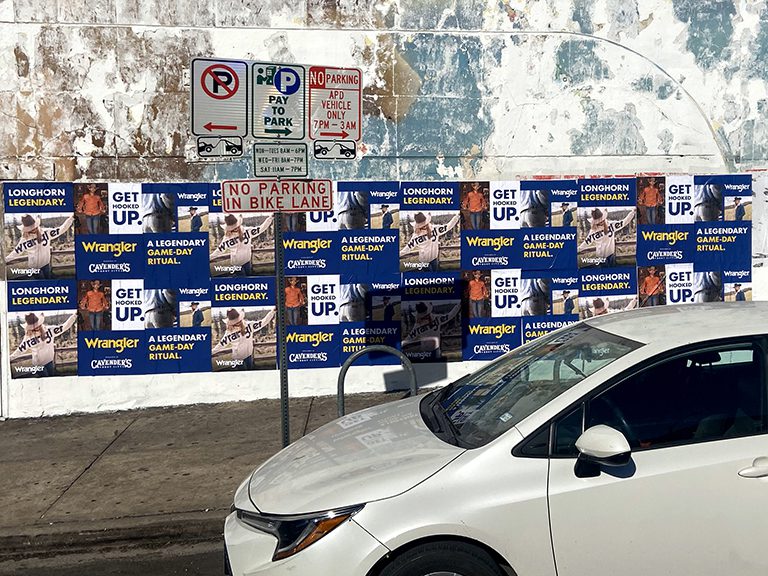
In markets where outdoor consumers concentrate — the areas around major trailheads, fishing access points, hunting supply stores, firearms dealers, and sporting goods retailers — a well-placed poster campaign or ambient execution can build sustained brand visibility over weeks. These are not digital ads that disappear when the budget runs out. Physical placements stay in place, get seen repeatedly, and build the kind of brand familiarity that converts over time.
For outdoor brands expanding into a new market or trying to build recognition in a specific region, a focused physical campaign in the right locations delivers visibility that digital campaigns in the same geography cannot replicate on the same budget.
The Channel Mix for Outdoor Brands
The outdoor brand marketing channel mix that actually works is not complicated, but it requires honesty about what each channel does and what it costs.
Digital content and SEO builds long-term organic traffic and supports the customer research process. Outdoor consumers are thorough researchers. They read reviews, watch field tests, compare gear extensively before buying. Strong digital content supports that research process and positions your brand favorably during it.
Email marketing is high-use in this category because outdoor consumers who opt in tend to stay subscribed longer than average and respond well to content-heavy emails that feel like they come from someone who knows the subject. The list is an asset if you treat it right.
Social media in the outdoor space is dominated by Instagram and YouTube for visual content, with Facebook maintaining strong reach with older demographics including a significant portion of the hunting market. TikTok has grown in the outdoor space faster than many brands expected, particularly for fishing content and hunting preparation.
Physical and experiential campaigns — trade show presence, event activations, street-level campaigns in target markets — fill the layer that digital channels miss. They create brand awareness and product familiarity with people who might never encounter a digital ad, and they reinforce digital messaging with physical presence that builds credibility.
The outdoor consumer’s skepticism of marketing means that physical presence often carries more weight than digital reach in this category. A brand that shows up where the consumer actually is — at the expo, at the trailhead, at the trade show — earns attention that a digital campaign cannot buy at any price.
What AGM Has Actually Done in This Space
AGM has executed campaigns for brands operating in the outdoor and sporting goods space, including street-level campaigns in markets with high outdoor consumer density, trade show environment activations, product sampling at outdoor events, and experiential campaigns that put products in front of consumers who were already in the category mindset.
The work requires understanding the audience, which means not making rookie mistakes — using the wrong terminology, putting brand representatives in situations they are not prepared for, or creating creative that clearly comes from someone who has never been in the field. We brief staff specifically for this kind of work and we are direct about what we do not know when a category requires specific technical expertise.
What we bring that specialty digital agencies do not is the ability to physically execute in the real world: to put people in the right locations with the right materials at the right time and to document what happened. That is different work from building a website or running a media buy, and it requires different infrastructure, different relationships, and different operational discipline.
Choosing the Right Marketing Partners for an Outdoor Brand
For most outdoor brands, the right answer is not a single agency that handles everything. The category is specialized enough that you need genuine expertise in the specific channels you are running, and that expertise rarely concentrates in one shop.
A specialty digital agency handles web, content, SEO, and email. A PR firm with outdoor industry connections handles media placement and editorial relationships. An experiential and guerrilla firm like AGM handles physical execution — events, street campaigns, trade show environment work, product sampling. A media buyer who knows the outdoor category handles paid media placement in the right publications and platforms.
The coordination between these partners matters. Campaign timing, creative consistency, and shared documentation standards keep the work from fragmenting. That means someone on the brand side needs to own the integration, or one of the agency partners needs to play that coordinating role.
What does not work is hiring a general agency that claims to understand outdoor consumers without evidence to support that claim, and discovering the gap only after the campaign has run and produced mediocre results.
Marketing Function
Right Partner Type
What to Look For
Web design and development
Outdoor industry specialist
Portfolio with outdoor brands, visual fluency
Content and SEO
Outdoor industry specialist
Demonstrated category knowledge, field credibility
Event experience, staff quality, documentation process
Trade show environment work
Guerrilla/ambient specialists
Track record near major trade show venues
The Trade Show Environment Opportunity
To be concrete about one of the highest-value opportunities in outdoor brand marketing: the area surrounding major outdoor trade shows is consistently underutilized by brands that are spending heavily on booth space inside the venue.
Consider SHOT Show at the Sands Expo in Las Vegas. Tens of thousands of buyers, media, and industry professionals descend on a concentrated area for several days. They stay at hotels along the Strip and near the convention center. They eat at a predictable set of restaurants. They walk the same corridors. An ambient campaign in those hotels, a street team working the area, or a targeted distributed campaign in the right locations reaches the exact same people the booth reaches — but at a much lower cost per contact and without the noise of thousands of competing booths.
The same logic applies at ICAST in Orlando, at Outdoor Retailer in Denver, at regional hunting shows. The people in the building are the same people in the surrounding area. The building has $50,000 booth fees and a decade-long waitlist. The street outside is open.
This is the kind of work AGM does. We have executed around major trade venues across multiple industries. The outdoor category is particularly well-suited to this approach because the attendees are self-selected, concentrated, and tend to notice creative work that speaks to their interests.
Building Brand Presence in Outdoor Lifestyle Cities
For outdoor lifestyle brands — gear, apparel, footwear, accessories — building presence in the cities where outdoor culture is strongest pays dividends beyond those markets. Denver, Salt Lake City, Asheville, Portland, Seattle, Bozeman, and similar cities are home to concentrated populations of people who identify strongly with outdoor activity, buy at higher rates than the national average for outdoor gear, and are tastemakers whose preferences influence broader consumer trends.
A strong physical presence in these markets, built through poster campaigns, retail partnerships, event presence, and community sponsorships, creates brand recognition with the exact consumers whose endorsement matters most. These are not secondary markets. For many outdoor brands, they are the primary markets for brand-building work.
Street-level campaigns in Denver’s Capitol Hill or Baker neighborhoods, in Salt Lake City’s Sugar House district, in Asheville’s River Arts District — these reach active outdoor consumers in contexts where they are actually living their lives, not just browsing gear at a trade show. That context matters for how the brand lands.
Documentation and Measurement for Outdoor Campaigns
One of the persistent challenges in outdoor industry marketing — and in physical and experiential marketing generally — is documentation. Brand managers who can show clear attribution from digital campaigns often struggle to make the case for physical spend because the documentation standards are lower and the measurement is less precise.
At AGM, we document physical campaigns with photo documentation, GPS-tagged location data, and summary reports that show what was placed, where it was placed, and when. For experiential work, we add staff logs and activation-level notes. This documentation does not provide the same precision as digital attribution, but it gives brand managers something concrete to show internal decision-makers, and it allows for honest comparison with other channels on a cost-per-location or cost-per-contact basis.
For outdoor brands that have not invested in physical campaigns before, having this documentation framework in place from the start matters. It makes the case for future investment when the campaign delivers results, and it provides a clear record when refinements need to be made
Frequently Asked Questions
Does AGM work with outdoor and hunting brands?
Yes. AGM has worked with brands in the outdoor, sporting, and lifestyle verticals on guerrilla, experiential, and street-level campaigns. We understand the culture and the consumer.
How is marketing to outdoor consumers different from mainstream marketing?
Outdoor consumers are skeptical of corporate-sounding messaging. They respond to authenticity, expertise, and brands that demonstrate genuine field knowledge. Campaigns that feel staged or disconnected from actual outdoor activity tend to fail in this market.
Can guerrilla marketing work for outdoor brands at trade shows and events?
Absolutely. Events like SHOT Show, ICAST, and regional hunting expos are prime locations for guerrilla activations. Street-level tactics outside venues, ambient placements near event centers, and experiential setups that draw trade show traffic all work well.
What markets are most important for outdoor brand campaigns?
It depends on your category. Hunting brands often prioritize the Southeast, Texas, Midwest, and Mountain West. Fishing brands target coastal markets and major lake regions. Outdoor lifestyle brands tend to focus on cities with active outdoor cultures like Denver, Salt Lake City, Bozeman, and Asheville.
How does AGM document campaign results for outdoor clients?
We provide photo documentation, route maps, and campaign summary reports. For experiential activations, we include staff logs, location data, and any consumer interaction metrics captured during the event.