What Are Activations in Marketing? A Practical Guide (2025) | AGM
An activation is not an advertisement. It is a direct encounter between a brand and a consumer — physical, real, and memorable in a way that media exposure simply cannot achieve.
The term “activation” gets used loosely in marketing, which leads to confusion about what it actually means and why it matters. At its core, an activation in marketing is any program or event designed to create a direct, physical encounter between a brand and a consumer — one where the consumer actively engages with the brand rather than passively receiving a message from it.
A consumer who sees a television commercial has been exposed to a brand. A consumer who samples a product from a branded truck, visits a brand pop-up, participates in a brand-created event, or interacts with a brand ambassador in a retail setting has been activated. That distinction — exposure versus encounter — is what separates activations from advertising and explains why activations generate different and often stronger marketing outcomes.
Understanding what activations are, why they work, what forms they take, and how to measure them is the foundation for brands deciding whether to invest in this type of marketing program and how to do it effectively.
A marketing activation is a direct-to-consumer program that creates a physical brand encounter designed to drive a specific behavioral outcome: product trial, purchase, brand awareness, social content creation, data capture, or some combination of these objectives. The activation is the event, experience, or interaction through which that encounter is created.
The word “activation” in this context means bringing something latent into an active state. A brand awareness campaign creates passive knowledge that the brand exists. An activation turns that passive awareness into an active relationship — the consumer has now touched, tasted, experienced, or discussed the brand rather than simply having heard of it. That shift from passive to active relationship is what the word “activation” is capturing.
The distinguishing feature of an activation versus other marketing formats is the physical, direct nature of the consumer encounter. Digital advertising delivers a message through a screen. Out-of-home advertising delivers a visual message in the environment. An activation creates a real-world interaction where the consumer is present and engaged, the brand is physically represented, and something happens between them — a sample is shared, a conversation takes place, a product is demonstrated, an experience is created.
Types of Activations
Marketing activations take many different forms depending on the brand’s objectives, the target consumer’s behavior, and the environment in which the activation takes place. The major categories are:
Sampling Activations
The most widespread form of brand activation. A brand representative offers the consumer a sample of the product — a taste of a food or beverage, a trial-size personal care product, a demonstration of a technology product. The sample creates direct product trial, which is the most powerful driver of initial purchase for most consumer categories. Sampling activations happen at retail locations, public events, mobile truck stops, campus locations, and anywhere else the target consumer can be reached directly.
Pop-Up Activations
A temporary brand presence created in a specific location for a defined period. Pop-up activations can be simple (a branded table in a high-foot-traffic location) or complex (a custom-designed immersive environment that occupies a significant space). The defining characteristic is the temporary, often unexpected nature of the presence, which creates a sense of discovery and urgency that drives engagement and social sharing.
Mobile Activations
Brand activations delivered through or from a branded vehicle — a truck, van, or converted trailer that travels to where the target consumer is and creates a brand encounter at that location. Mobile activations are highly flexible, can reach multiple markets, and create strong visual brand presence through the vehicle itself. They are particularly effective for sampling programs, direct retail, and brand awareness campaigns.
Event Activations
Brand presences at events — music festivals, sporting events, trade conferences, community celebrations — where the brand creates an activation footprint within the event environment. Event activations benefit from the concentrated audience and high-energy context that events create, but require a design approach that stands out within a competitive environment of other brand presences.
Retail Activations
Activations that take place within or adjacent to retail environments, designed specifically to influence consumer purchase decisions at the point of sale. In-store sampling programs, branded in-store events, and retailer-adjacent pop-ups are all forms of retail activation. These programs are particularly powerful because they place the brand encounter directly at the moment when the consumer is deciding what to buy.
The most ambitious form of activation — custom-designed, often large-scale brand environments that create immersive consumer experiences. These activations are designed for maximum social content generation and brand story communication, typically in high-visibility urban locations for a period of days to weeks. They require significant creative and production investment and generate proportionally high earned media and social amplification.
An activation creates something that advertising cannot: a memory formed through direct physical experience. That type of memory encodes differently in the brain, is more durable, and translates more reliably into purchase behavior and advocacy.
Why Activations Work: The Psychological Basis
The effectiveness of activations relative to advertising is grounded in well-established principles of memory formation and consumer psychology.
Physical, multisensory experiences create stronger memory traces than passive media consumption. A consumer who tasted a product, touched a package, or smelled a fragrance has engaged multiple sensory channels simultaneously. The resulting memory is richer, more specific, and more durable than the memory formed from seeing a two-dimensional advertisement. That memory durability directly translates to better brand recall, higher purchase consideration, and more natural word-of-mouth recommendation.
The principle of active participation also matters. A consumer who chooses to engage with an activation — who decides to walk up to a sampling station, who enters a pop-up space, who has a conversation with a brand ambassador — has made a small commitment to the brand through that choice. That active commitment creates psychological ownership of the experience in a way that passive ad exposure does not. The consumer feels like they discovered something rather than being marketed to, which produces fundamentally different brand affinity.
Human interaction specifically adds a layer of trust that media cannot provide. A brand ambassador who provides a genuine, knowledgeable recommendation creates a person-to-person trust relationship with the consumer. That trust is more powerful than any advertising claim because it is based on a real interpersonal interaction rather than a brand’s own communication about itself.
Activation Formats and Their Business Objectives
Activation Type
Primary Business Objective
Typical Measure
Best Category Fit
Sampling (retail)
Trial and immediate purchase
Sales lift; conversion rate
Food, beverage, personal care
Pop-Up (street level)
Awareness, trial, social content
Interactions; content generated
Consumer lifestyle brands
Mobile Truck
Multi-market sampling; brand awareness
Samples distributed; market reach
Food, beverage, personal care
Event Activation
Audience-aligned brand encounter
Interactions; CRM captures
All categories; event-relevant brands
Experiential Installation
Brand awareness; social content
Content reach; earned media
Premium and lifestyle brands
How to Measure Activation Results
Activations are measurable, but the right measurement framework depends on the specific objective the activation was designed to achieve. Applying the wrong metrics produces misleading results — an awareness-focused installation should not be evaluated primarily on immediate purchase conversions, and a retail sampling program should not be evaluated primarily on social content generated.
The standard measurement framework for activations covers:
Direct interaction counts — actual consumer interactions documented at the activation, not estimated foot traffic
Product samples distributed or units sold — a direct measure of trial delivery at sampling events and direct sales at retail activations
CRM captures — email sign-ups, social follows, app downloads, or other data points that create ongoing consumer relationships
Sales lift — measured through retail scan data comparing activation stores against matched control stores during and after the activation period
Content generated — photos and videos posted to social media from the activation, and the audience they reached
Brand tracking — changes in awareness, consideration, and preference scores in the market where the activation ran
Not every activation program will have all of these metrics available or relevant. The measurement plan should be established before the activation launches, specifying which metrics will be tracked, how they will be tracked, and what targets they are measured against.
How Activations Work Alongside Advertising
One of the most productive ways to think about activations is as the complement to advertising that creates the consumer relationship advertising can only point toward. A consumer who has been exposed to a brand’s advertising has received information about the brand — what it claims to do, what it looks like, what it costs. But information alone does not create relationship. Activations create relationship by giving the consumer a direct experience of what the brand actually delivers.
In practice, the combination of advertising and activation is more powerful than either alone. Advertising builds awareness and creates favorable brand associations that make the activation encounter more effective: a consumer who already has a positive impression of a brand from advertising is more receptive to engaging with the brand’s activation than a consumer encountering the brand for the first time. Activation builds the direct experience and personal relationship that makes advertising more effective: a consumer who has tasted a product and liked it recognizes subsequent advertising for that product with a favorable prior experience rather than neutral awareness.
The sequencing of advertising and activation matters. Pre-activation advertising that builds awareness and favorable associations in the target market before the physical activation runs creates the audience predisposition that improves activation performance. Post-activation advertising that reaches consumers who participated in the activation reinforces the physical experience and continues the relationship. The most effective integrated programs build the sequencing logic from the start, not as an afterthought.
Activation as Content Generation
Activations are increasingly understood as content generation programs as much as direct consumer encounter programs. A well-designed activation in a visually distinctive location, staffed by enthusiastic brand representatives, creates an environment that generates organic social content from attendees and from the brand’s own documentation team. That content has properties that make it particularly valuable for marketing purposes beyond the physical event itself.
Content generated at activations is authentic in a way that studio-produced brand content is not. The people in the photos and videos are real consumers having real reactions in real environments. The brand is present in the content not as a corporate entity but as something people are engaging with voluntarily and visibly enjoying. That authenticity is precisely what makes user-generated content from activations so valuable in social media environments where consumers are increasingly skeptical of polished, produced brand content.
The Business Case for Activation Investment
Brands deciding whether and how much to invest in activation programs need a business case that connects activation spend to business outcomes in a way that justifies the investment relative to other marketing channel options. Building that business case requires understanding the specific mechanisms through which activation creates business value and the measurement approaches that capture that value quantitatively.
For consumer goods brands where trial drives initial purchase, the core business case for sampling-based activation is straightforward: the cost per sample delivered through activation programs, compared against the conversion rate from sample to first purchase, produces a customer acquisition cost that can be compared against digital advertising, retail promotion, and other acquisition channels. For most CPG brands in competitive categories, well-executed activation sampling programs produce customer acquisition costs that compare favorably against the alternatives.
For brands where brand equity is the primary investment objective — premium lifestyle, fashion, luxury adjacent categories — the business case is built on brand tracking data: changes in awareness, consideration, and preference scores in markets where activation programs ran compared against markets where they did not. The challenge is establishing the measurement infrastructure before the activation runs, which requires ongoing brand tracking surveys in enough markets to generate reliable comparative data.
For brands investing in social content generation through high-production activations, the business case is built on the total social reach and earned media value generated by the activation-driven content, compared against what the same reach would cost in paid media. For activations that generate substantial organic social content through a combination of brand content production and attendee sharing, the earned media value can be multiples of the activation production cost.
Common Activation Mistakes and How to Avoid Them
After planning and executing hundreds of activation programs across consumer categories and markets, certain failure patterns emerge with enough consistency to be worth documenting explicitly as warnings rather than discovering through experience.
Activating in the wrong location for the target consumer is the most common and most avoidable mistake. It results from choosing locations based on convenience, familiarity, or visual impressiveness rather than on evidence that the target consumer is actually there in sufficient numbers at the right time. Pre-scouting every location and validating it against the target consumer profile before committing to it prevents this failure.
Under-investing in staff relative to the physical activation is the second most common mistake. Brands spend heavily on production — the vehicle wrap, the display, the experiential elements — and then staff the activation with people who are available and affordable rather than people who are genuinely excellent brand representatives. The consumer encounter quality, which is the primary determinant of activation effectiveness, is determined by the staff, not the production. The investment balance should reflect this.
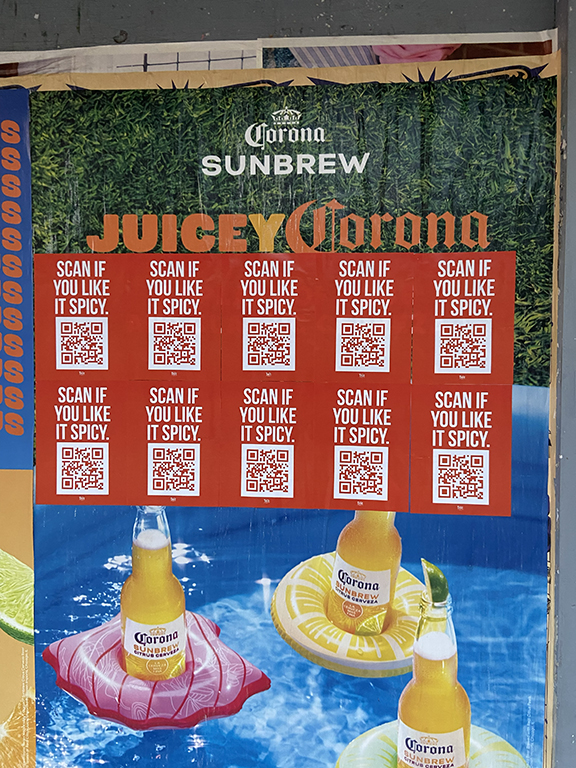
Running activations without data capture is the third common mistake. Every consumer who engages positively with a brand activation is a potential ongoing relationship. Without a mechanism to capture contact information from those consumers, the activation creates a one-time encounter with no follow-through capability. The data capture mechanism — whether a QR code, a digital sign-up, or a simple email capture form — should be built into every activation from the start.
Building Long-Term Program Value
The full value of a well-executed activation program is not captured in the metrics from a single campaign. The most valuable activation programs are the ones that improve and compound over time — where each iteration generates learning that makes the next iteration more effective, where retailer and venue relationships deepen over multiple program cycles, where staff quality improves as the best ambassadors gain experience with the brand, and where consumer community presence builds as repeated encounters create familiarity and recognition.
Building this long-term program value requires treating activation investment as an ongoing commitment rather than a series of independent campaigns. Each campaign generates information: which locations performed best, which interaction approaches converted most reliably, what staff qualities made the biggest difference, how the consumer responded to the brand story and product. That information is only valuable if it is captured, analyzed, and applied to improve the subsequent program. Programs that do not close this learning loop repeat the same mistakes and miss the same opportunities cycle after cycle.
The organizational infrastructure for long-term activation programs includes: a consistent measurement framework that captures comparable data across all program cycles, a performance analysis process that extracts actionable insights from each cycle’s data, a program management structure with continuity across cycles rather than re-starting with a new team for each campaign, and a budget commitment that reflects the compounding value of sustained investment over episodic campaign spending.
Staff Development and Retention
The brand ambassadors who represent a brand in the field over multiple program cycles develop a depth of product knowledge, brand understanding, and consumer engagement skill that new hires cannot match. A brand ambassador who has been running a brand’s sampling program for two years knows how different consumer types respond to different engagement approaches, has answers to every question they are likely to encounter, and can adapt their interaction style based on years of field experience with the brand. That accumulated competence is genuinely valuable and difficult to replace when it leaves.
Investing in staff retention for high-performing brand ambassadors is one of the most cost-effective investments in activation program quality available. The combination of competitive compensation, genuine recognition of contribution, opportunities to advance within the program (from ambassador to field supervisor, for example), and a working environment that is genuinely positive and well-managed retains the people whose performance makes the program excellent. The cost of this investment is consistently less than the cost of recruiting, training, and developing the next generation of ambassadors to replace those who leave.
Consumer process Integration
Activation programs reach their full potential only when they are designed as components of an integrated consumer process rather than as standalone marketing events. The consumer who encounters a brand at an activation and has a positive experience needs a clear, frictionless path from that encounter to first purchase, and from first purchase to repeat purchase, for the activation investment to fully realize its commercial value.
The first transition — from activation encounter to first purchase — is supported by: a first-purchase incentive delivered at the activation event (a digital coupon, a loyalty program sign-up with a welcome discount, a QR code that provides a direct path to online or retail purchase), a follow-up CRM communication within 48 to 72 hours that reinforces the positive encounter and re-delivers the purchase incentive, and a retail distribution point that is accessible from the activation location so consumers can act on their purchase intent while it is fresh.
The second transition — from first purchase to repeat purchase — is supported by: a post-purchase CRM sequence that provides additional value (usage tips, recipe ideas, additional product information) rather than just promotional offers, a loyalty program that rewards repeat purchase with increasing value, and ongoing activation presence in the markets where the brand is building its consumer base. Brands that manage all of these transitions deliberately consistently achieve higher lifetime value from activation-acquired customers than those that focus exclusively on the activation event itself.
The measurement of this full consumer process — from first activation encounter through CRM capture, first purchase, repeat purchase, and eventually brand advocacy — requires data infrastructure that most brands have not fully built. The investment in this measurement infrastructure is justified by the strategic clarity it provides: knowing which activation formats, which market contexts, and which interaction designs create the highest-value long-term consumer relationships is the most important knowledge input for making activation investment decisions well.
Working with AGM on Your Activation Program
American Guerrilla Marketing designs, produces, and manages brand activation programs across all major U.S. markets. Our work spans pop-up events, mobile truck programs, retail activation campaigns, roadshow tours, sponsorship activations, and custom experiential installations. We have operated in New York City since the company’s founding and have built the field infrastructure, retailer relationships, and staff networks that make activation programs work reliably across the markets our clients need to reach.
Our process starts with understanding the specific business objective the activation program needs to achieve. We do not accept generic objectives. We ask: what specifically needs to happen in the consumer’s mind or behavior as a result of this program? Who is the specific consumer? Where are they? When are they most receptive? What encounter design will create the behavior change the brand needs? Those answers determine the program design, not the other way around.
Our production approach prioritizes execution quality over visual elaborateness. We have consistently found that a well-positioned activation with excellent staff and a quality consumer interaction delivers more commercial value than an elaborate production with mediocre execution. We invest the budget where it generates the most value in the consumer encounter, not where it photographs best in a portfolio.
Our reporting tells clients what actually happened in the field: interaction counts, product distributed, data captured, content generated, and an honest assessment of what worked and what would be done differently. We do not produce reports designed to justify the agency’s continued engagement. We produce reports designed to help clients make better decisions about how to invest in subsequent programs.
Every activation program we manage is covered by comprehensive field documentation: daily field reports during the program, photo documentation from every activation stop, and a post-program analysis that covers performance by location and market, staff observations, and specific recommendations for subsequent program cycles. Clients who engage with this reporting seriously run consistently better programs over time because the learning compounds.
We work with brands across food, beverage, beauty, personal care, technology, and lifestyle categories. We work with emerging brands that are building their consumer base from scratch and with established brands that are defending market position or expanding into new geographies. The strategic challenges are different at each stage, but the core operational principles — field execution quality, location intelligence, staff investment, measurement rigor — apply at every scale.
If you have a specific activation objective and you are trying to determine whether there is a program format and approach that can help you achieve it effectively and efficiently, we are worth a conversation. We will tell you honestly what we think will work and what we think will not, and we will give you a specific program recommendation that reflects our genuine assessment of what will produce the results you need.
Getting Started: Your Next Steps
If this article has been useful and you are now thinking seriously about building or improving an activation program for your brand, the most important immediate step is defining the specific business objective the program needs to achieve. Not a general marketing objective — a specific, measurable outcome. What needs to change in consumer behavior in which specific markets among which specific consumer segment by when?
That objective clarity drives everything downstream: the right format, the right locations, the right measurement design, the right budget allocation. Activation programs built without a clear objective tend to generate activity without impact. Programs built around a clear, specific objective tend to focus that activity on the interactions and outcomes that create genuine business value.
Once the objective is clear, the next step is defining the target consumer with enough specificity to make location decisions against. Where does this consumer spend time? At what times? In what contexts that are relevant to the brand’s product and positioning? The intersection of “where this consumer is” and “in a context that makes this brand encounter relevant” defines the activation opportunity. Finding those intersections is the core intellectual work of activation strategy.
From there, the program design follows logically: the format that creates the right consumer encounter in those contexts, the locations that access the consumer in those intersections at the right times, the staff profile and training approach that delivers the right interaction quality, and the measurement design that tells you whether the program achieved what it was designed to achieve.
Frequently Asked Questions
What are activations in marketing?
Activations in marketing are physical, direct brand experiences designed to create genuine consumer encounters with a brand. They can range from a sampling event in a retail environment to a full experiential installation in a public space. The defining characteristic is that they are active — they create real, physical interactions between the brand and the consumer rather than passive media exposure.
How do activations differ from advertising?
Advertising delivers a brand message to a consumer through a media channel (TV, digital, print, outdoor). The consumer is a passive recipient. Activations create direct physical encounters where the consumer is an active participant — they taste the product, use it, interact with brand representatives, visit a brand space. The physical, multisensory nature of activations creates stronger and more durable brand memories than advertising.
What types of activations are most common?
The most common types of activations are: in-store sampling programs, branded pop-up events in high-foot-traffic locations, mobile truck activations, event-embedded brand footprints at festivals and sporting events, temporary retail pop-ups, and experiential installations in public spaces. The right type depends on the brand’s campaign objective, target audience, and budget.
Brands invest in activations because they create types of brand-consumer relationships that advertising cannot: direct product trial that removes purchase barriers, memorable physical encounters that drive brand recall, social content generation from attendees that extends reach organically, and data capture opportunities that create ongoing consumer relationships. Activations are particularly effective for product launch, market expansion, and consumer loyalty building.