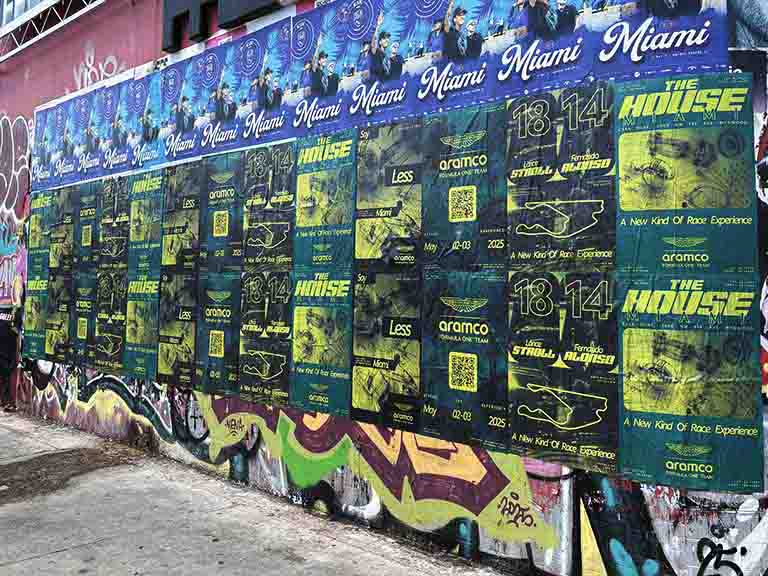
Events have always been a brand communication vehicle. Event experiential marketing is what happens when you stop treating them as communication channels and start treating them as experience environments — and the difference in outcomes is significant.
Most brands run events. Fewer brands run event experiential marketing programs. The difference is not in having an event versus not having one. It is in how the event is designed, what outcome it is oriented toward, and what discipline is brought to its execution.
A standard marketing event communicates. An experiential marketing event creates an experience. Attendees leave the first kind of event knowing things about the brand. They leave the second kind feeling something about it. That feeling is what drives purchase behavior, advocacy, and the peer-to-peer brand communication that no advertising budget can substitute for.
Event experiential marketing operates from a framework that is distinct from standard event planning in its core orientation.
Standard event planning starts with: what do we want to communicate, and how do we organize the event to deliver those communications efficiently? Experiential event planning starts with: what do we want attendees to feel when they leave, and what physical environment, human interactions, and designed moments create that feeling reliably?
Those starting points produce different events. The first produces events that are organized presentations. The second produces events that are designed experiences. The emotional outcomes are categorically different.
Step 1: Define the Target Emotional State
What should an attendee feel when they leave the event? Not know — feel. Excited about the product. Confident in the brand’s quality. Connected to the brand’s community. Personally identified with the brand’s values. Impressed by the brand’s execution quality. These are specific emotional states, and they require different experience design to produce.
Step 2: Identify the Peak Moment
Every experiential event should have one moment designed to be the emotional peak of the attendee’s experience. The first taste of the product. The reveal of the new collection. The view from the rooftop at sunset. The moment the brand’s quality is undeniable because the attendee just experienced it directly. Everything in the event design should build toward and support that moment.
Step 3: Design the process
The attendee’s path through the event should create a designed emotional arc. Entry establishes the event’s register. The middle builds anticipation and depth. The peak delivers. The exit seals. This arc does not happen by scheduling — it is designed deliberately into the spatial layout, the staff interaction sequence, and the physical environment design.
Step 4: Build Content Infrastructure
The event is also a content factory. Professional content capture, designed photo moments, social sharing mechanisms, and a post-event publishing plan should be integrated into the event design from the start. The physical event reaches the attendees. The content reaches everyone they know who was not there.
Step 5: Measure Against the Objective
Establish pre-event baselines for the metrics that correspond to the event’s primary objective. Post-event, measure against those baselines to assess whether the event actually moved the needle on the outcome it was designed for. This measurement discipline separates event programs that improve over time from ones that repeat the same approach indefinitely without knowing whether it works.
The most common failure mode in event experiential marketing is starting with the production brief rather than the experience brief. Venue, catering, entertainment, branding — these are production elements. They create the container. The experience brief defines what should happen inside that container and how it should make people feel. When the production brief comes first, the experience tends to be whatever fills the venue that was booked. When the experience brief comes first, the venue and production are selected to serve the experience.
Event Experiential Marketing Formats
Consumer Brand Events
Public-facing consumer events that bring the brand’s world to life for general consumers. These range from high-volume sampling activations at transit hubs to full immersive brand installations in dedicated spaces. The design challenge is creating a consumer experience that produces genuine engagement at scale — which requires both environmental design and a staffing approach that maintains interaction quality across hundreds or thousands of encounters.
Product Launch Events
Launch events that treat the product reveal as an experience moment rather than an announcement moment. The pre-reveal build, the reveal itself, the post-reveal product trial — all three phases require specific design to produce the press and consumer response the launch needs. A launch event that does not create genuine excitement about the product before the product is even presented is underdesigning the most controllable brand communication moment available.
Trade Events and Industry Activations
Trade shows and industry events are brand activation opportunities that most companies execute poorly. The standard trade show booth — a square of carpet, a table, some branding panels — communicates nothing distinctive about the brand. A brand activation within a trade show that creates a genuinely different physical experience from surrounding booths produces dramatically different results in terms of buyer engagement, follow-up meeting rate, and post-show conversion.
Community and Cultural Events
Events that serve the brand’s community rather than marketing to it create a different quality of brand relationship. When a brand creates something genuinely good for its community — a beautiful event in a park, a gathering that connects like-minded people, a celebration of something the community cares about — the brand’s role as enabler of that experience builds brand affinity that marketing presentations cannot.
Event Format
Primary Objective
Budget Range
AGM Approach
Consumer brand event
Trial, awareness, content
$25K – $150K
Sensory design + staff protocol
Product launch event
Press, purchase intent, advocacy
$50K – $300K
Reveal arc + curated guest list
Trade / industry event
Buyer engagement, pipeline
$20K – $100K
Stand-apart environmental design
Community event
Loyalty, advocacy, brand trust
$15K – $75K
Genuine service model, experience quality
The Post-Event Phase: Where Most Programs Leave Value on the Table
Event experiential marketing programs typically invest heavily in the pre-event creative development and the day-of execution, and relatively little in the post-event phase that determines how much of the value generated is captured and extended.
The 48 hours following an event are the highest-engagement window for event content. Attendees are still talking about it. Social algorithms are serving content about it at higher rates. Media are most responsive to follow-up during this window. The brand that has a post-event content plan executing immediately after the event closes captures a disproportionate share of the total campaign impact.
The post-event plan should cover: content publishing schedule for each channel, media follow-up communications, attendee follow-up (email, social amplification of their content), and the start of the data analysis that will inform the next event. This work is not glamorous, but it is where the event investment either compounds or dissipates.
Event Experiential Marketing Across the Brand Lifecycle
Event experiential marketing programs serve different functions at different stages of a brand’s market cycle. Understanding which format and approach serves each stage helps in allocating experiential investment where it produces the strongest return.
Early Stage: Building First exposures
New brands entering a market have a unique advantage in event experiential marketing: every consumer encounter is a first impression, entirely within the brand’s control. The first time a consumer encounters a brand through a live event, they form a foundational mental model. That first impression is easier to create than to change. An early-stage brand that invests in high-quality first exposures through event experiential programs — targeting the right consumers, in the right contexts, with the right experience quality — builds brand equity that compounds in value as the brand grows.
Early-stage event experiential programs should prioritize depth over volume. A smaller number of high-quality first exposures, with consumers who are genuinely in the brand’s target audience and who have a genuine experience worth retelling, produces stronger brand foundations than a high volume of shallow exposures with a broader consumer base.
Growth Stage: Driving Adoption
Brands in the growth stage use event experiential marketing to accelerate trial adoption among consumers who have awareness but have not yet made their first purchase. At this stage, the event format should create the specific conditions that make the first trial moment as compelling as possible — the right context, the right product presentation, the right conversation that provides enough context to make the product’s qualities undeniable.
Growth-stage programs also benefit from community-building formats: events that gather the brand’s existing early adopters and new prospects together, where the enthusiastic early adopters serve as organic brand advocates. Peer recommendation from a genuine brand enthusiast is more persuasive than staff advocacy at a brand event, and well-designed community events create the conditions for this organic advocacy to happen naturally.
Mature Stage: Defending Market Position and Building Loyalty
Mature brands use event experiential marketing to reinforce loyalty among existing customers and defend against competitive encroachment. Programs that create exclusive experiences for loyal customers — rewarding their relationship with the brand through access, recognition, and genuine value — produce higher retention rates than price-based loyalty programs at comparable cost. A loyal customer who has attended a brand event remembers it as a positive personal experience. A loyal customer who received a discount remembers only that the brand gave them a lower price.
Event Experiential Marketing in Different Geographic Markets
Event experiential marketing produces different results in different geographic markets, and programs should be designed with market-specific knowledge rather than assuming that a format that worked in one market will perform identically in another.
New York is the most event-saturated consumer market in the United States. Consumers in Manhattan encounter brand activations and events constantly. To break through in New York, an event experiential program needs to be genuinely distinctive — visually, conceptually, and experientially different from the activations consumers have learned to ignore. The program that would generate strong engagement in Austin or Denver may be invisible in New York because the baseline for what counts as interesting is so much higher.
Los Angeles has strong visual culture — the city runs on aesthetics and content creation — which makes photo-forward event experiential programs particularly effective. Events that create genuinely photogenic environments in the right neighborhoods (Silver Lake, Venice, West Hollywood, Highland Park) attract content-creating consumers and generate high organic social content volumes. The challenge in LA is the dispersed geography — there is no single concentrated pedestrian corridor with the density of Manhattan or even Chicago’s Wicker Park, which means programs need to be highly specific about which pocket of the city they are targeting.
Chicago rewards directness and genuine quality. Programs that deliver real value — a great product in a real context, a genuine event that serves the community rather than presents to it — perform strongly. Programs that are heavy on production aesthetics and light on substance perform worse in Chicago than in more brand-saturated coastal markets, because Chicago consumers’ expectation of getting something real in exchange for their attention is harder to manage with surface-level execution.
Common Event Experiential Marketing Questions Answered
How do you choose between a pop-up and an event for a product launch? Pop-ups work when the product experience requires dwell time and exploration, and when organic discovery is part of the communication objective. Events work when the announcement moment needs a concentrated audience at a specific time, and when the launch narrative requires a specific order of information revelation that a self-paced pop-up cannot ensure. Most product launches benefit from a combination: an event-format launch for press and key influencers, followed by a consumer-facing pop-up that extends the launch window for the broader audience.
How do you measure the success of an event experiential program against paid media alternatives? The most direct comparison is cost-per-engaged consumer: the cost of producing the event divided by the number of consumers who had a genuine engagement (30+ seconds of direct brand interaction or active content creation). Compare this to the cost-per-engaged consumer in the same demographic through paid social advertising, defined as the cost per click or conversion. For most consumer categories targeting adults in urban markets, event experiential programs achieve cost-per-engaged-consumer rates that are competitive with paid social at a fraction of the median engagement quality.
The Event Experiential Marketing Brief: What Good Ones Contain
The brief that drives an event experiential marketing program determines the quality of every downstream decision. A brief that answers the right questions specifically produces focused creative work and precise execution. A brief that answers them generically produces generic programs.
Five questions every event experiential marketing brief should answer specifically:
One: What is the one thing we need this program to change? Not all the things the brand wants to improve — the single most important behavioral or perceptual change the program should produce. Everything else is secondary.
Two: Who specifically is the target consumer? Not a demographic range — the specific person. What are they doing in their life right now that makes them receptive or unreceptive to this brand? What specific context would put them in the most receptive possible state for a brand encounter?
Three: What specific moment should the consumer be able to describe to someone the next morning? The brief should specify the story, not just the emotional state. A target story: “I was standing there, and the person asked me what one thing I wanted my skincare routine to fix — and when I told them, they said ‘that’s exactly what this is designed for’ and showed me why. Then I tried it and it was clear immediately.” A target emotional state without a story: “consumers should feel that this brand understands them.”
Four: What specific content outputs does the program need to generate, and for what channels? The hero photography shot. The social video clip. The press image. These should be specified, not assumed.
Five: What pre-program baselines are established, and what post-program measurements will demonstrate success? The measurement framework should be operationalized in the brief, not designed after the program runs.
Event Experiential Marketing Partners: What the Best Relationships Look Like
The most productive event experiential marketing relationships are long-term partnerships where the agency has accumulated genuine brand knowledge over multiple programs. These relationships produce better programs at lower effective cost per program because the foundational work — brand understanding, consumer knowledge, vendor relationships, staffing network — has been built and does not have to be rebuilt from scratch for each engagement.
Brands that treat every experiential program as a new agency selection process pay a premium in ramp-up time and lost institutional knowledge. A new agency spends the first program understanding the brand, the consumer, and the market. The second program benefits from that understanding. The third program builds on what the second program revealed. The fifth program is informed by the cumulative learning of four prior programs and is measurably better and more efficient than the first one. That compounding improvement is the real ROI of a sustained agency partnership.
Common Questions About Event Experiential Marketing Budgets
Budget questions are among the most common and most important in event experiential marketing planning. Here are direct, specific answers to the questions that come up most frequently in program planning conversations.
What is the minimum budget for an effective experiential event? There is no absolute minimum, but effective experiential programs become harder to produce below $8,000 to $10,000 because the minimum components — venue, staff, content capture, and some level of physical design — become difficult to fund adequately at lower levels. Street-level sampling programs with no physical installation can run effectively at lower budgets because they eliminate the venue and fabrication costs.
What is the single highest-ROI budget allocation in experiential event programs? Staff quality and training consistently produces the highest return on incremental investment. The difference in conversion rate between poorly prepared and well-prepared staff is typically larger than the difference produced by equivalent incremental investment in physical production quality. If there is a budget tradeoff between more production investment and more staff preparation investment, the staff investment usually wins on ROI.
How should the budget be split between the event day and post-event activities? A common error is allocating nearly the entire budget to the event day and leaving minimal budget for post-event content publication, media follow-up, and attendee communications. We recommend allocating at least 10 to 15 percent of the total program budget to post-event activities, because this is where a significant portion of the event’s total value is captured through content amplification and follow-up conversion.
How does multi-market deployment affect per-market cost? Multi-market programs achieve economies of scale on centralized costs (creative development, content brief development, brand standards documentation, reporting frameworks) while the per-market costs (venue, staffing, local production) remain relatively fixed per market. The total program cost for a 5-market program is typically 3.5 to 4 times the cost of a 1-market program, not 5 times, because the centralized costs do not scale linearly with market count.
Making Experiential Programs Work for Your Brand’s Specific Situation
Every brand faces a unique combination of objectives, consumer targets, market conditions, and budget constraints. The principles discussed throughout this article apply universally, but their specific application requires calibration to your brand’s unique situation. Here is a framework for that calibration.
Start with an honest assessment of your brand’s current consumer relationship. Are you building awareness from near-zero, converting aware non-trialists, deepening loyalty among existing customers, or defending against competitive encroachment? The answer determines which experiential format is most efficient: awareness programs need scale and content generation, trial conversion programs need context precision and conversation quality, loyalty programs need community creation and exclusivity, and competitive defense programs need direct product comparison and quality demonstration.
Then assess your current live consumer touchpoint quality. Where does your brand currently have direct physical encounters with consumers? How good are those encounters? Are they creating genuine brand exposures or simply processing consumers transactionally? The most efficient starting point for experiential investment is almost always improving the quality of existing touchpoints before creating new ones. A brand that has poor quality encounters at its existing touchpoints will create poor quality encounters at new ones unless the design discipline that determines quality is applied consistently across all of them.
Finally, build the measurement infrastructure before the first program runs. Define success with specificity. Establish baselines against which success will be measured. Specify the data that will be collected and how it will be collected during the program. Identify the analysis that will connect the data to the success definition after the program ends. This measurement discipline is the difference between a program that teaches you something and a program that just happens. The program that teaches you something produces compounding value — each program generates learning that makes the next one better. The program that just happens produces no such compounding effect.
AGM is a full-service experiential marketing and brand activation agency headquartered in New York, operating nationally. We bring the strategy, creative, production, staffing, content, and measurement capabilities that experiential programs require to every market we serve. The best time to start the conversation about your brand’s experiential program is before the next product launch, the next market entry, or the next competitive challenge puts you in a position where the program needs to happen faster than it should be planned. Contact us to discuss what the right program looks like for your brand’s specific objectives.
Working With AGM on Your Experiential Marketing Program
AGM has spent years building the field capability, market knowledge, and production infrastructure that produces experiential marketing programs that actually work. Our approach starts from the consumer and the objective, not from a preferred format or a standard program template.
When we engage with a new program brief, we spend the first phase asking the questions that most agencies skip: what specifically do we need to change in the consumer’s behavior or belief, and what is the specific encounter design most likely to produce that change for this consumer in this market? The answers to these questions drive every decision that follows — the format, the location, the physical design, the staffing approach, the content strategy, and the measurement framework.
We produce complete post-program reports that connect every program’s activity data to the specific objectives set before the program launched. We measure what changed, not just what happened. We deliver honest analysis of what worked and what would be done differently, because the brands we work with use that analysis to make every subsequent program better than the last.
Our primary markets are New York, Los Angeles, Chicago, Miami, and Austin, with national program execution capability across the United States. Our programs span formats from street-level sampling operations with conversation protocols to large-scale immersive installations to multi-market touring programs. We are a full-service partner from brief development through post-program reporting.
If you are planning an experiential marketing program — whether you are running your first activation or your fiftieth — we would be glad to have a conversation about your specific objectives and what the right approach looks like for your brand. The conversation starts with your brief. The clearer and more specific that brief is, the more useful the conversation will be. We can also help you develop the brief if you are still in the objective-clarification stage. Either way, the right time to start is before the pressure of an imminent launch date compresses the planning window.
Key Takeaways for Brands Evaluating This Program Type
Regardless of the specific program format, scale, or market, the brands that consistently produce strong experiential marketing outcomes share a few foundational practices that are worth summarizing as actionable takeaways.
Define the outcome before the format. The format should serve the objective, not the other way around. Every program decision — venue, staffing, content strategy, timing — should be evaluated against whether it serves the specific outcome the program was designed to produce. When decisions are made for reasons unrelated to the program objective (the venue was available, the format is one the agency knows well, the timing was convenient), program quality suffers.
Invest in staff quality as a primary creative decision. The physical environment is the context. The staff are the experience. In every direct interaction program, the conversion rate is determined primarily by the quality of the human encounter, not the production quality of the environment. Under-investing in staff selection and training while over-investing in physical production is the most common budget allocation mistake in experiential marketing. The correction is treating the staff brief with the same rigor and investment as the production brief.
Design content before designing the environment. Specify the hero photograph. Specify the 30-second video clip. Specify the social-first moments. Then evaluate the physical design against these content specifications before fabrication begins. Content that is designed into the activation from the start is more specific, more visually compelling, and more useful across more channels than content that is improvised on the activation day.
Measure outcomes, not just activities. Attendance counts, contacts made, samples distributed — these are activity metrics. Brand consideration lift, purchase conversion rate, content reach, retail velocity improvement — these are outcome metrics. The program that produces high activity and low outcomes is failing. The measurement infrastructure to distinguish between the two requires pre-program baselines and post-program outcome measurement that most brands do not currently have in place for their experiential programs. Building this infrastructure is the most valuable investment available for brands that want to improve their experiential marketing ROI over time.
Frequently Asked Questions
What is event experiential marketing?
Event experiential marketing uses live events as vehicles for delivering brand experiences rather than brand messages. Every element of the event — physical environment, staff, activities, flow, and content capture — is designed to create a specific emotional response that builds lasting brand memory.
How does event experiential marketing differ from standard event marketing?
Standard event marketing focuses on delivering messages and generating leads at events. Event experiential marketing focuses on creating emotional experiences that change how attendees feel about the brand. The first measures exposures. The second measures memory, purchase intent, and behavioral change.
What is the ROI of event experiential marketing?
ROI depends on the program objective: for trial-focused programs, it is measured in purchase conversion rates versus the cost per qualified trial. For brand programs, it is measured in brand sentiment lift and media value of coverage generated. For community programs, it is measured in loyalty metrics and referral behavior.
How do you measure dwell time at experiential events?
Through staff observation and entry/exit counting, timed observation of sample visitors, and data from any digital engagement points in the experience. Average dwell time is one of the most important predictive metrics for memory formation and conversion outcomes from experiential events.