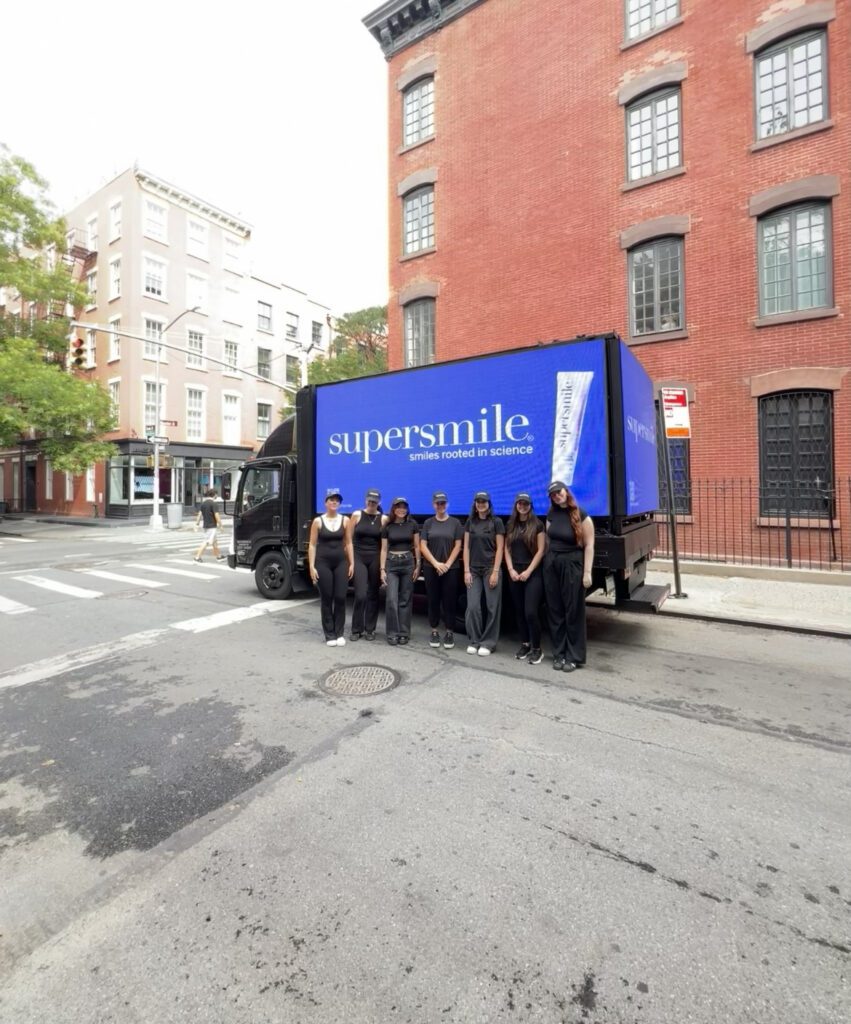
Of all the tactics available for driving booth traffic at an expo, a well-briefed street team in the right position at the right moment is the most direct. A trained brand ambassador who approaches the right person, opens with a specific and relevant message, qualifies interest in the first thirty seconds, and delivers a compelling booth visit invitation creates a first contact that no outdoor advertising format can replicate. The human element is irreplaceable.
The Convention Zone as a Street Team Environment
The show floor is a difficult environment for street team work. Every exhibitor is competing for attendee attention in the same space. Attendees on the show floor are in evaluation mode and actively managing their time against a floor plan. They are less receptive to unplanned interactions than they are in the convention zone outside the hall.
The convention zone surrounding a major expo is a different environment. Attendees in the hotel lobby, at the coffee queue, on the sidewalk between the hotel and the venue entrance, are in a lower-pressure state. They are organizing for the day, not executing a floor plan. A brief, relevant, well-executed street team interaction in this zone reaches an attendee who has the mental space to engage, receive a message, and form the booth visit intention that the street team is designed to create.
This is why our expo street team programs focus on the convention zone rather than the show floor. The access is public, the attendee state is receptive, and the competition for attention is minimal. A brand that deploys a street team in the hotel lobby on opening morning is reaching the same qualified audience as every exhibitor inside the hall, in an environment where almost no other exhibitor is present.
Where Expo Street Teams Operate
Hotel Zone Morning Deployment
The primary conference hotel lobbies during the morning departure window are the most productive street team zone at any expo. Attendees gathering in the lobby before heading to the convention center are concentrated, accessible, and in the exact moment when they are deciding which booths to prioritize for the day. A street team member who approaches the right person here can turn “I might check that booth out” into “I have the booth number in my hand and a specific reason to go.”
We time hotel zone deployments to the morning departure peak, typically 7:30 to 10:00 AM on each show day. Our field crews are already in position when the first attendees appear in the lobby, and they maintain presence through the peak departure window before repositioning to the pedestrian approach for the mid-morning arrival flow.
Pedestrian Approach Corridor
The main pedestrian corridor from the conference hotel cluster to the convention center entrance is a high-volume street team zone that captures the entire foot-traffic flow from hotels to hall. On the approach route, attendees are in motion but not yet in the show environment. A brief, relevant interaction is possible without the feeling of interrupting something important.
Street team positioning on the approach corridor is based on our pre-show walk of the convention geography. We identify the two to three positions where foot traffic is most concentrated and where the pedestrian flow has a natural pause, such as a crosswalk wait or a corner where the route turns. These pause points are the highest-quality interaction opportunities on the approach route.
Convention Center Entrance Areas
The outdoor area immediately adjacent to convention center entrances is a transition zone where attendees are moving from outdoor to indoor but have not yet entered the show environment. Security check lines, badge scan queues, and entrance plaza areas create brief stationary moments that street team members can use for quick, targeted interactions.
Entrance area operations require coordination with venue security and site-rule alignment with any convention center access policies. We manage this coordination in advance and brief our teams on the specific boundaries and procedures for each venue.
Shuttle Stop and Transit Zone Coverage
For conventions where dedicated shuttle service runs between hotels and the venue, shuttle stop zones are high-value street team positions during peak service periods. Attendees waiting for shuttles are stationary for several minutes and are in a conversational, social state rather than a hurried transit state. A street team member at a shuttle stop can conduct longer, higher-quality interactions than at most other convention zone positions.
We map shuttle routes and schedules in advance for every convention where this tactic is planned, identifying the stops with the highest volume and the most favorable wait time dynamics.
Street Team Briefing: What Makes the Difference
The quality of an expo street team program is determined primarily by the quality of the briefing that every team member receives before the first deployment. We conduct briefings the day before the show opens or the morning of day one, covering six areas that determine performance in the field:
Product and market context. Every team member needs to understand what the client makes, who buys it, and what problem it solves. Not at a marketing pitch level, but at a genuine conversational level. A team member who does not understand the product cannot qualify a prospect or answer a basic question about why the booth visit matters.
Target buyer profile. Who specifically should the team approach and prioritize? What job title, company type, and buying context identifies a high-value prospect? This targeting criteria guides every approach decision in the field.
Qualifying question sequence. The first 30 seconds of a street team interaction are where qualified leads are separated from courtesy contacts. The qualifying question sequence, typically two to three questions about role, problem, and timeline, gives the team member the information needed to decide whether to extend the interaction toward a booth visit commitment or deliver a brief polite close.
Call to action and booth details. The specific invitation to the booth, the reason the prospect should make time to visit, and the booth number are the three pieces of information every prospect should leave with. These need to be delivered consistently and memorably.
Handout materials. Team members carry handout materials that carry the booth number, the reason-to-visit message, and a QR code for further engagement. The handout is the physical leave-behind that keeps the booth visit intention alive after the interaction ends.
Documentation process. Every team member logs their interactions in a structured shift log. This documentation is not optional; it is a core part of the program deliverable and the basis for post-campaign performance reporting.
Lead Qualification in the Field
Not every person a street team member speaks to is a qualified prospect for the exhibitor’s booth. The qualification process at first contact is what separates a street team that generates high-quality booth traffic from one that generates high volumes of casual walk-bys who are not actually buyers.
We train our expo street team members to qualify in the first thirty seconds of a conversation using a natural conversational approach, not a formal interrogation. The qualifying questions are embedded in the natural conversation flow: “Are you with a team here for the show?” identifies company context. “What space are you in?” identifies relevance. “Have you had a chance to see [category] at the show yet?” identifies awareness and intent. These questions produce the qualification data points without creating the feel of a sales qualification call in the middle of a hotel lobby.
Qualified prospects receive the full booth invitation: specific reason to visit, booth number, handout with QR code, and a conversational commitment to the visit. Non-qualified contacts receive a brief, genuine, respectful close with a handout. The distinction is made in the field in real time based on the team member’s assessment of fit, guided by the briefing criteria.
Performance Documentation and Reporting
Every expo street team shift produces a structured performance report. Each team member’s shift log captures total contacts, qualified interactions by that team member’s assessment, direct booth visit commitments, handout distribution counts, and any notable observations about the attendee audience or field conditions that day.
At the end of each deployment day, we compile the shift logs into a daily performance summary and deliver it to the client. This allows the client to track cumulative performance across show days, see how qualified contact volume correlates with booth traffic patterns, and make day-over-day comparisons to assess which deployment positions and time windows are producing the strongest results.
Post-campaign, we compile a full program report covering total program performance, per-deployment analysis, creative material performance, and any qualitative observations from field supervisors. This report is the starting point for planning the next show’s street team program and for building the case for continued investment in the format.
What Good Expo Street Team Results Look Like
The benchmark for a well-executed expo street team program combines a high qualified interaction rate with a strong booth visit commitment rate. In our experience with expo street team programs across technology, healthcare, manufacturing, and consumer goods shows, qualified interaction rates of 25 to 40% of total contacts and booth visit commitment rates of 45 to 60% of qualified interactions are achievable with well-briefed teams in the right deployment positions.
Integrating Expo Street Teams with Other Outside-the-Hall Tactics
Expo street teams produce the strongest results when they operate as part of a multi-format outside-the-hall campaign. A street team in the hotel zone creates direct first contacts. Wheatpasted posters in the pedestrian corridor create ambient exposures between hotel and venue. Sidewalk stencils at the convention entrance create a final reminder at the transition point into the show floor.
An attendee who has three branded touchpoints before reaching the show floor arrives with a level of brand familiarity that a single format cannot create. The street team interaction is the most personal and direct touchpoint in this sequence. The outdoor formats reinforce the message and booth location with every subsequent pass through the convention zone.
For clients running guerrilla marketing programs at multiple expos per year, we build the street team program as a repeatable operational framework that improves with each deployment. The briefing materials evolve based on field performance data. The positioning strategy is refined based on what produced the best results at the previous show. The qualifying criteria are sharpened based on which first contacts converted to actual booth engagements.
What are expo street teams?
Expo street teams are trained brand ambassador crews deployed in the convention zone surrounding an expo or trade show. They create first-contact exposures with attendees in the hotel zone, on pedestrian approach routes, and at convention entrances, generating qualified leads and driving direct booth traffic outside the official show floor environment.
Where do expo street teams operate?
Expo street teams operate in the public pedestrian zones around the convention venue: hotel lobbies during morning departure, pedestrian approach corridors, coffee and breakfast queues, shuttle stops, and the outdoor areas adjacent to convention center entrances.
How are expo street team members briefed?
Each team member receives a detailed briefing covering the client’s product and market, the target attendee profile and qualifying criteria, the specific booth visit call to action, the handout materials, the qualifying question sequence, and the interaction documentation process.
How do expo street teams track performance?
Team members maintain structured shift logs tracking total contacts, qualified interactions, direct booth visit referrals, and handout distribution counts. Shift reports are compiled and delivered to the client after each deployment day. A full post-campaign performance report is provided at the end of the show.
Can expo street teams qualify leads as well as generate them?
Yes. Well-briefed team members ask qualifying questions in the first 30 seconds of a conversation to determine if the attendee matches the target buyer profile. Qualified attendees receive a full warm booth invitation. Non-qualified contacts receive a brief interaction and a handout. Qualification at first contact is what separates leads from generic contacts.
What is the difference between expo street teams and standard ambassador programs?
Expo street teams are specifically briefed, timed, and positioned for the convention zone environment. They operate in the pre-floor decision window when attendees are forming booth visit plans. The briefing, positioning strategy, and qualification criteria are all built for the specific dynamics of the convention zone, not a general event or retail environment.
How early should expo street teams be booked?
Campaign Architect – American Guerrilla Marketing
Frequently Asked Questions
What are expo street teams?
Expo street teams are trained brand ambassador crews deployed in the convention zone surrounding an expo or trade show. They create first-contact exposures with attendees in the hotel zone, on pedestrian approach routes, and at convention entrances, generating qualified leads and driving direct booth traffic outside the official show floor environment.
Where do expo street teams operate?
Expo street teams operate in the public pedestrian zones around the convention venue: hotel lobbies during morning departure, pedestrian approach corridors, coffee and breakfast queues, shuttle stops, and the outdoor areas adjacent to convention center entrances.
How are expo street team members briefed?
Each team member receives a detailed briefing covering the client’s product and market, the target attendee profile and qualifying criteria, the specific booth visit call to action, the handout materials, the qualifying question sequence, and the interaction documentation process.
How do expo street teams track performance?
Team members maintain structured shift logs tracking total contacts, qualified interactions, direct booth visit referrals, and handout distribution counts. Shift reports are compiled and delivered to the client after each deployment day. A full post-campaign performance report is provided at the end of the show.
Can expo street teams qualify leads as well as generate them?
Yes. Well-briefed team members ask qualifying questions in the first 30 seconds of a conversation to determine if the attendee matches the target buyer profile. Qualified attendees receive a full warm booth invitation. Non-qualified contacts receive a brief interaction and a handout. Qualification at first contact is what separates leads from generic contacts.
What is the difference between expo street teams and standard ambassador programs?
Expo street teams are specifically briefed, timed, and positioned for the convention zone environment. They operate in the pre-floor decision window when attendees are forming booth visit plans. The briefing, positioning strategy, and qualification criteria are all built for the specific dynamics of the convention zone, not a general event or retail environment.
How early should expo street teams be booked?
Four to six weeks before the show for standard deployments. Contact us at [email protected] or call (646) 776-2770 to discuss timeline and availability for a specific show.
How early should a brand start planning?
For most campaigns, the smart move is to start planning at least two to four weeks before the launch window so production, routing, staffing, and reporting are all lined up.
What makes one market perform better than another?
Market fit depends on audience density, neighborhood behavior, route efficiency, and whether the creative belongs in that setting. The busiest city is not always the best city.
Can AGM bundle this with other services?
Yes. AGM often combines this work with supporting formats so the campaign has stronger repetition and cleaner reporting across the whole run.
How does AGM quote pages like this?
We quote from official rate cards where they apply, then scope the remaining production, staffing, and routing details to the actual job.