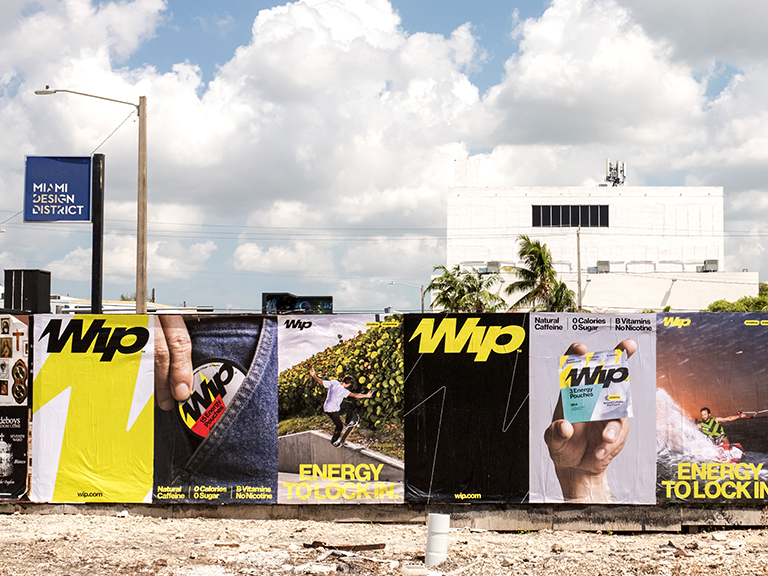
There are a lot of field marketing companies. They vary enormously in what they actually deliver. Some are excellent. Some are adequate. Some should not be in the business. Telling them apart from a capabilities deck or a website is genuinely difficult because the marketing that field marketing companies produce for themselves rarely gives you an accurate picture of the field marketing they produce for their clients.
We are American Guerrilla Marketing, a guerrilla and field marketing company based in New York. We execute street team programs, brand ambassador campaigns, product sampling, experiential activations, and mobile advertising programs for consumer brands nationwide. We are transparent about how we work, what we deliver, and where the limits of our capabilities are. This guide gives you the framework to compare field marketing companies effectively, including how to evaluate us and how to make the decision that is right for your program.
Field marketing is the category of marketing that happens in physical environments rather than on screens. Field marketing companies plan and execute programs that put brand representatives in front of consumers at retail, on campuses, at events, in neighborhoods, and wherever the target audience spends time in the real world.
The specific services that field marketing companies offer include:
Street team deployment and management
Product sampling and in-store demonstrations
Brand ambassador programs
Experiential marketing and event activations
Mobile advertising through bikes, vehicles, and human-carried displays
Campus marketing programs
Trade marketing and retail support
Not every company does all of these things at the same level of quality. A company that is excellent at large-scale in-store sampling programs may be mediocre at street team activations. A company that is strong at campus marketing may have limited experience with event-based experiential programs. Understanding what a specific company is genuinely excellent at, versus competent at, versus weak at, is one of the most important evaluation tasks when comparing options.
The Questions That Separate Field Marketing Companies
These are the specific questions that reveal the most about how field marketing companies actually operate. Ask them to every company you are evaluating and compare the answers.
How Do You Recruit the People You Deploy?
The quality of the people a field marketing company puts in the field is the primary determinant of program quality. A company that recruits from relevant communities, applies genuine fit criteria, and maintains a quality standard through a structured vetting process produces better field teams than one that fills rosters through generic labor platforms and financial incentives.
Strong answers to this question are specific: we recruit from fitness communities for health brand programs, we recruit from food culture networks for CPG food programs, we maintain a vetted roster in each of our primary markets and recruit fresh for programs with specific requirements. Weak answers are vague: we have a large network of brand representatives across the country. Large networks of unknown quality are not an asset.
How Do You Train Your Teams Before Deployment?
Training is the second most important variable in field team quality. A motivated, well-fit representative who is poorly trained still produces poor results because they do not know the product, the messaging, or how to handle the range of interactions they will encounter in the field. Strong field marketing companies invest seriously in pre-deployment training. They can describe specifically what their training covers: product knowledge, key messages, interaction protocols, reporting procedures, and how to handle common field situations.
Who Manages the Team Once They Are in the Field?
Unsupervised teams drift from their briefing. The quality of what happens in an unsupervised field activation is lower, often significantly lower, than the quality of what was planned. Strong field marketing companies have active field management structures that maintain accountability throughout every deployment, not just before and after. Ask specifically who is in the field during a deployment and what that person’s role and authority is.
What Does Your Reporting Look Like?
Ask to see a sample report from a comparable program. The report will tell you immediately what the company values. Photo reports with quantity metrics show a company that optimizes for deliverables that are easy to produce. Reports with qualitative field observations, honest assessment of what worked and what should change, and meaningful outcome data show a company that takes accountability for actual program quality.
AGM Field Note: When we do a competitive review with a brand that has worked with other field marketing companies before, the most common complaint we hear about the previous company is not that they did not show up. It is that they showed up and nothing notable happened. The team was there. The samples were distributed. The flyers went out. And the brand cannot point to a single measurable outcome from the program. We address this by designing for outcomes from the brief stage, not by adding measurement retrospectively to a program that was not designed with outcomes in mind.
How Field Marketing Companies Price Their Services
Pricing across field marketing companies varies widely and the price differences do not always reflect quality differences in the way buyers expect. Here is how we think about pricing transparency in the field marketing industry.
Street team and brand ambassador programs are typically priced by the shift, by the day, or by the program with specific deliverables. Our street team rates run from $389.99 per six-hour shift for a standard member to $589.99 per shift for a premium member. Brand ambassador rates follow the same structure: $389.99 standard, $489.99 professional, $589.99 premium. Product demo and sampling programs follow the same range.
These rates reflect the quality of the people we deploy, the training they receive, the field management overhead, and the reporting we deliver. Companies with rates significantly below this range are typically compromising on one or more of these elements. Companies with rates significantly above this range may have meaningful quality advantages we would want to understand, or they may simply have higher overhead costs that do not translate to better program results.
Service
Standard Tier
Professional Tier
Premium Tier
Street team member
$389.99 / 6-hr shift
N/A
$589.99 / 6-hr shift
Brand ambassador
$389.99 / 6-hr shift
$489.99 / 6-hr shift
$589.99 / 6-hr shift
Product demo specialist
$389.99 / 6-hr shift
N/A
$589.99 / 6-hr shift
Overtime (all tiers)
$65 / hour
Travel days
$275 / day
Evaluating Field Marketing Companies: A Framework
Here is a structured framework for comparing field marketing companies during a competitive review.
Capability Assessment
List the specific capabilities your program requires: street teams, sampling, event activation, mobile advertising, campus programs, and so on. Evaluate each company against this list specifically. A company that is excellent at three of your five required capabilities and weak on the other two is a different choice than one that is competent across all five. Know what you need and evaluate against what you actually need.
Reference Checks on Comparable Programs
Ask for references from programs that are similar to yours in type, scale, and market. Check those references specifically about execution quality, team quality, field management, and reporting. A reference for a large retail sampling program is not the same as a reference for a guerrilla street team campaign, even from the same client. Match references to program types.
Sample Report Review
Before signing, ask to see full sample reports from comparable programs. The report tells you more about what you will receive than any capabilities presentation. A company that cannot produce a strong sample report will not produce strong reports for your program.
Observation Option
Ask whether you can observe a live deployment from a comparable program before committing. Companies with strong field quality welcome this. Companies that are reluctant are signaling that they have something to hide about the gap between their proposal and their execution.
AGM Field Note: We have won competitive reviews by being the only company willing to let the brand observe an active deployment before making their decision. Every brand that observed our field execution committed to the program. Not because the observation was a sales pitch. Because what they saw in the field matched what we had described in the proposal. Field marketing companies that execute at the quality they describe have no reason to keep you away from the field. The ones that do have a reason are the ones with the gap between proposal and reality to protect.
What Makes AGM Different as a Field Marketing Company
We are a guerrilla marketing agency that brings genuine strategic thinking, creative execution capability, and full field accountability to every program we run. We are not the biggest field marketing company. We are one of the most capable in the specific programs we execute: street teams, brand ambassador campaigns, sampling programs, mobile advertising, and integrated guerrilla activations.
We work in all major U.S. markets. We have executed programs in New York, Chicago, Los Angeles, Miami, Boston, Washington DC, Philadelphia, Atlanta, San Francisco, Seattle, and many other markets. We understand local markets, not just how to deploy people to them. We plan routes, timing, and location strategy based on actual knowledge of each market, not on assumptions from a national operation.
We report honestly. When something does not go as planned in a deployment, we tell the client, we document it, and we explain what we did to address it. We do not paper over field problems with post-edited photo reports. We treat every client relationship as a long-term partnership and act accordingly.
Frequently Asked Questions About Field Marketing Companies
How many field marketing companies should we evaluate?
Three to five is a reasonable number for most programs. Evaluating more than five creates significant process overhead without proportional improvement in selection quality. Fewer than three may not give you a sufficient range of options to make a genuinely informed choice. We recommend a structured evaluation with a consistent set of criteria applied to every company in the review.
Should we choose a large company or a smaller specialized company?
It depends on your program requirements. Large companies offer scale and national coverage. Smaller specialized companies offer depth of expertise in specific program types and often better accountability at the individual program level. For guerrilla and street-level programs specifically, we consistently outperform larger generalist agencies because it is the core of what we do, not one of many service lines.
What is a reasonable timeline for selecting a field marketing company?
Two to four weeks for a structured competitive review is typical. Rushing the selection process to hit an arbitrary timeline often results in a poor selection decision. If the program has a hard start date, work backward from that date to determine when the selection must be complete and build the review process to fit that constraint.
Can we use different field marketing companies for different markets?
Yes, and sometimes this is the right choice when a national program benefits from regional specialists in specific markets. The coordination overhead of working with multiple companies is real but manageable. We have worked as the lead agency on programs where regional specialists handled specific markets under our coordination. We have also worked as a regional specialist under the coordination of a national lead agency. Both structures can work when communication is clear and expectations are aligned.
How do we manage a field marketing company once the program launches?
Clear expectations, regular reporting, and willingness to ask questions when reports do not match what was planned. Strong field marketing companies welcome active client engagement. They provide detailed reports and are available to discuss what the reports show. A company that provides minimal reporting and is difficult to reach once the program launches is not a company you want to continue working with.
What is the best way to give a field marketing company feedback during a program?
Directly and promptly. If something in a field report looks wrong, or if a deployment observation raises questions, raise them immediately rather than waiting for end-of-program review. Strong field marketing companies use mid-program feedback to improve execution in real time. Waiting until the program ends to raise concerns means the opportunity to improve is gone. We actively solicit mid-program feedback and make adjustments based on it.
Do field marketing companies handle strategy or just execution?
Strong ones do both. We bring strategic input from the first brief conversation through the program structure, location selection, timing, team design, and measurement approach. We are not a pure execution company that does what it is told without strategic involvement. We have opinions about what will work and we share them. Clients who engage us as strategic partners get better programs than clients who treat us as pure execution contractors.
Can field marketing programs complement digital campaigns?
Absolutely, and this is how we recommend most field programs be structured. A digital campaign running simultaneously in the same market and targeting the same consumer demographic compounds the brand recognition effect of the field program. The consumer who encounters the brand in the field and then sees it in their digital feed registers the second encounter as confirmation rather than a first introduction. The two channels reinforce each other when run together with coordinated messaging.
Work with the Right Field Marketing Company
We are available for a direct conversation about your program, your brand, and whether we are the right company for the work. We will give you an honest assessment of our capability and our fit for your program. If we are not the right choice for something you need, we will say so. If we are, we will tell you exactly how we would approach it and what you should expect.
How American Guerrilla Marketing Approaches This Work
We are a New York-based guerrilla marketing agency with national reach. We plan every program around a clear objective and a specific target audience. We execute with trained, briefed, supervised teams. We report honestly on what we delivered. And we build long-term relationships with clients who want a marketing partner that treats their budget as seriously as they do.
Our pricing structure is transparent. Street team members run from $389.99 to $589.99 per six-hour shift depending on tier. Brand ambassadors run the same range. Product demonstration specialists run the same range. We do not hide fees or build surprise add-ons into program invoices. We tell you what the program costs upfront based on the specific scope you need.
We operate in all major U.S. markets and have executed programs across more than forty cities. Our primary strength is in New York, Chicago, Los Angeles, Miami, Boston, Washington DC, Philadelphia, Atlanta, and San Francisco. In each of these markets, we have established rider relationships, retailer relationships, event access protocols, and local market knowledge that materially improves the quality and efficiency of program execution compared to a national agency deploying generic teams to unfamiliar markets.
We are honest about what field marketing can and cannot do. It is not a replacement for advertising. It is not a shortcut to brand building. It is a powerful complement to other marketing channels when it is strategically designed, professionally executed, and measured honestly. We do our best work when clients treat us as strategic partners, bring us into campaign planning early, give us honest briefs, and evaluate performance against realistic expectations for what field marketing programs deliver.
If you are looking for a field marketing partner who will tell you what you need to hear rather than what you want to hear, who will build a program that fits your budget and serves your objectives, and who will execute that program at a professional standard in the field, we are that partner. Call us and let’s have a direct conversation about your brand, your market, and what we can build together.
Building a Program That Delivers in the Real World
The gap between a field marketing program that delivers genuine results and one that generates an expensive activity report with nothing to show for it comes down to three variables: strategic clarity in the brief, professional quality in the execution, and honest accountability in the reporting. When all three are present, field marketing programs create meaningful, measurable brand outcomes. When any of the three is missing, the budget gets spent without proportional returns.
We start every program engagement with a strategic conversation, not a price negotiation. We need to understand the brand deeply enough to make genuinely useful strategic recommendations. That means understanding the product, the target consumer, the competitive environment the brand operates in, the specific market we are activating in, and the specific outcome the client needs the program to produce. Without that understanding, we can execute tactics competently but we cannot build a program that is strategically sound.
Professional execution is what we are known for and what we protect as the foundation of every client relationship we have. Our field teams are trained, briefed, supervised, and held to clear performance standards. We do not deploy teams without field management. We do not finalize programs without creative review. We do not accept sample quality that does not represent the brand accurately. We do not allow route drift without field supervisor intervention. These standards exist because field marketing quality is the only thing that determines whether a program generates genuine consumer impact or generates the appearance of activity.
Honest reporting is the accountability mechanism that makes the whole system function. We deliver reports that tell clients what actually happened: where the program was strong, where it was weak, what we did to address problems when they arose, and what we recommend for the next program cycle based on what we learned. We do not optimize our reports for optics. We optimize them for usefulness. A client who gets an honest, useful report from a program that underperformed in specific areas can make better decisions with that information than a client who gets a glowing report that conceals what went wrong.
Field Marketing Program Economics: Getting Value from Your Investment
Field marketing programs are an investment, and like any investment, they require a clear-eyed view of what they return relative to what they cost. Here is how we think about the economics of field marketing across the main program types we execute.
Street team programs generate a specific type of value: direct, human-scale brand encounters with the target consumer in the physical environments where they spend their time. The cost of a six-hour shift with a trained, briefed, supervised street team member running from $389.99 at the standard tier to $589.99 at the premium tier reflects the cost of a professional who represents your brand competently in every interaction they conduct during that shift. The return on that investment is the number and quality of direct brand encounters generated during the shift and the downstream brand recognition and purchase consideration that those encounters produce over time.
Sampling programs generate a different type of value: direct product trial among the target consumer in contextually appropriate environments. The cost of a sampling program includes specialist staffing, sample production and logistics, equipment, field management, and reporting. The return is measured in trial volume, purchase intent lift, retailer velocity data, and long-term brand adoption among the consumers who had a positive first product experience. For brands with genuinely strong products, the ROI on well-executed sampling programs is among the highest in the marketing mix.
Mobile advertising programs, including billboard bikes, LED display bikes, and vehicle-based advertising, generate the value of brand presence in premium access environments. The cost reflects the unique access value of the format: being in Central Park, on the Lakefront Trail, at a major outdoor market is not the same as being on a commercial street. The premium access environment is what the format delivers and what justifies the investment relative to static or vehicle-restricted formats.
Across all program types, the most reliable way to maximize return on investment is to be specific about the objective, design the program specifically to achieve that objective, execute at a professional standard, and measure against the specific outcome the program was designed to produce. Generic programs generate generic results. Specifically designed, professionally executed programs generate the specific outcomes they were built for.
Common Questions We Get from Brands Starting Field Marketing Programs
We have introductory conversations with brands evaluating field marketing programs every week. Here are the questions we hear most often and the honest answers we give.
“How much does a field marketing program cost?” It depends entirely on the scope. A two-person street team for one week in one market is a modest investment. A twenty-city sampling program with twenty specialists per market and full field management is a significant one. We size programs based on objectives and build budgets based on the specific scope required to achieve them. We do not have a standard package price because no two programs are the same.
“How do I know if field marketing will work for my brand?” We evaluate fit based on the brand, the product, the target consumer, and the specific objective. For consumer brands with genuinely strong products targeting specific urban demographics in environments where field marketing operates effectively, it almost always works when it is executed at quality. For brands where the fit is less clear, we say so and recommend whether a test program or a different approach makes more sense.
“How do you ensure the team represents our brand appropriately?” Through recruitment based on genuine product-audience fit, thorough pre-deployment training, active field management throughout every shift, and honest performance reporting that holds teams and supervisors accountable for quality. We have multiple layers of accountability built into every program precisely because brand representation quality is the non-negotiable foundation of field marketing value.
“What if we are not happy with the results?” We have a direct conversation about it. We review the program data together, assess what worked and what did not, and make a recommendation about how to adjust the next program cycle to address the shortcomings of the current one. We do not tell clients that disappointing results are an inherent limitation of the format. We assess whether the issue was strategic, creative, or executional and address it specifically in the next program design.
Why Brands Choose American Guerrilla Marketing
We are a guerrilla marketing agency that has been executing field campaigns in New York and across the United States for years. We are not a large agency with a field marketing division and a hundred other service lines. Field marketing and guerrilla activation is what we do. It is the focus of our team, our systems, our relationships, and our expertise. That focus produces consistently better results than the same service delivered by a generalist agency with many competing priorities.
Our team includes field marketing strategists who have planned and executed programs in every major market in the country, riders and brand ambassadors who represent our clients with professionalism and genuine brand knowledge, field supervisors who manage every deployment with active oversight rather than passive check-ins, and account managers who maintain client communication throughout every program with the transparency and responsiveness of a genuine partner.
We do not have a minimum program size that prevents smaller brands from working with us. We have worked with single-location restaurants, emerging food brands with three grocery store placements, and campaign-stage startups launching their first product. We have also worked with national CPG companies, major entertainment brands, and Fortune 500 companies running simultaneous programs in twenty markets. The program structure scales. The quality standard does not vary by client size.
Our rates are straightforward and transparent. Street team and brand ambassador programs run from $389.99 per six-hour shift for standard members to $589.99 per shift for premium members. Product demonstration programs run the same range. Add-ons including overtime at $65 per hour, travel days at $275 per day, and hotel per diem at $65 per day are billed separately when applicable. There are no hidden fees. The program cost you agree to at the start is the program cost on the invoice at the end.
We operate in all major U.S. markets with primary strength in New York, Chicago, Los Angeles, Miami, Boston, Washington DC, Philadelphia, Atlanta, and San Francisco. In secondary markets, we work with established local execution partners whose quality standards we have verified and whose work we manage directly. Every program we run regardless of market gets the same strategic input, the same training standards, and the same reporting quality that defines our programs in our primary markets.
Our reporting is honest, specific, and delivered on time. We do not celebrate mediocre results or hide field problems behind polished photography. When a program encounters issues, we document them, explain what we did about them, and recommend how to avoid them in the next program cycle. Clients who work with us on an ongoing basis get better programs over time because our reporting gives both parties the information needed to continuously improve the strategy and execution.
If you are looking for a field marketing partner who takes your brand as seriously as you do, who delivers professional execution in the field, and who reports honestly on what the program accomplished, we are ready to have that conversation. Call us at (646) 776-2770 or email [email protected]. We will respond quickly and give you the direct, useful answers you need to make a good decision about your next field marketing program.