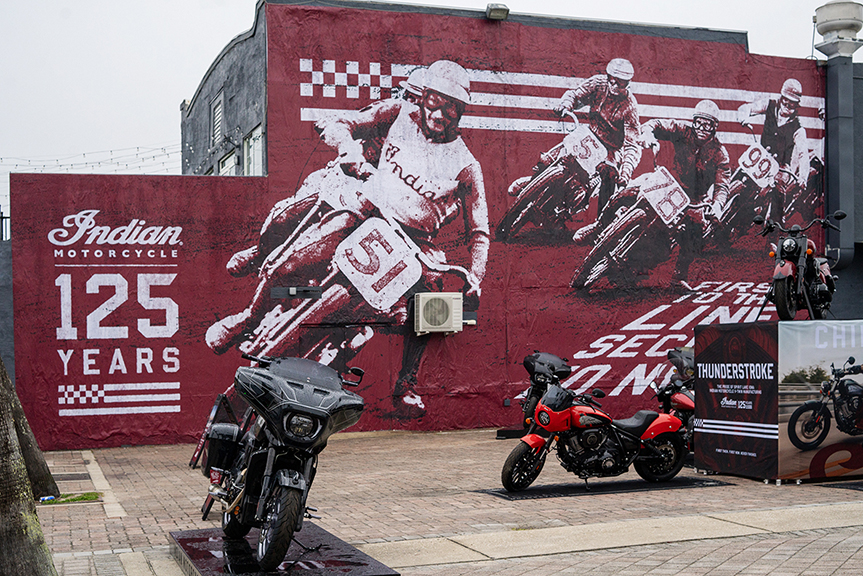
Hand Painted Murals | American Guerrilla Marketing
Hand-painted murals are created by real artists using real paint on real walls. That process produces something fundamentally different from any printed format: a work that integrates with the physical environment and becomes part of the neighborhood’s visual identity rather than a commercial message layered over it.
There is something about paint on a wall that printed vinyl cannot replicate. Part of it is physical texture: the paint follows the wall’s surface, sitting in its contours and irregularities, becoming part of the material of the building. Part of it is the visible evidence of human labor: the brushwork, the scale, the technical accomplishment of a skilled artist covering hundreds of square feet with controlled and deliberate mark-making. And part of it is the immediate recognition that what you are looking at is an original work, not a reproduction.
These qualities are what make hand-painted murals valuable as advertising beyond their size and visibility. They communicate something about the brand’s relationship to craft, to place, and to the community where the mural lives. A brand that commissions a hand-painted mural is saying, in a non-verbal way, that it values the neighborhood enough to commission genuine artistic production in it. That communication is perceived and processed by the people who live and work in that neighborhood whether or not they consciously register it.
We produce hand-painted murals for brand advertising campaigns across the United States. We work with vetted muralists in New York City, Los Angeles, Chicago, and other major markets. We manage the full production process from wall sourcing through completed installation and documentation. Here is a complete guide to hand-painted murals for brand advertising.
What Distinguishes Hand-Painted Murals from Other Wall Formats
The distinction between a hand-painted mural and a printed vinyl wall graphic is functional, not just aesthetic. Understanding the differences helps clarify when hand-painted work is the right choice and when printed formats might serve better.
Authenticity That Audiences Perceive Immediately
People can tell the difference between a hand-painted mural and a printed reproduction at a glance, and often from a significant distance. The visual signals of hand-painted work are unmistakable: texture, brushwork variation, the integration of paint with wall surface, the subtle imperfections inherent in human creation at scale. In urban neighborhoods where the audience is visually sophisticated, this authenticity is not a minor preference. It is the difference between a mural the community embraces and one it dismisses. The artistic community in particular is exquisitely sensitive to this distinction and their reception of the work determines much of its organic social media documentation.
Organic Social Documentation at Higher Rates
Hand-painted murals consistently generate more organic social media documentation than equivalent-scale printed vinyl murals in the same neighborhoods. The reasons are multiple: hand-painted work has more visual interest at close range because of its texture and brushwork, it invites interaction and closer examination in a way that flat printed reproduction does not, and it signals to the neighborhood’s creative community that the brand invested in real artistic production rather than just scaling up a print job. That signal generates a social media seeding effect from the artistic community that compounds into broader organic reach through shares and follows.
Multi-Year Longevity
Properly produced exterior hand-painted murals using quality paints and sealants outlast printed vinyl in comparable conditions. Vinyl is subject to peeling, bubbling, UV fading, and moisture infiltration at seams. High-quality exterior paint, properly applied to a well-prepared surface, holds adhesion and color for years in most climates. In Southern California, where humidity is low and freeze-thaw cycles do not occur, quality hand-painted murals routinely last five to seven years. This longevity creates sustained physical presence at no additional media cost for the entire time the mural remains on the wall.
Artist Reputation as Community Credibility
When a recognized artist paints a brand mural, the artist’s existing reputation and community relationships transfer partially to the brand work. The artist’s followers document the work. Other artists acknowledge the quality. The local creative community signals to the broader neighborhood that this is genuine art worth engaging with, not corporate communication dressed as art. That credibility transfer is not available at any price through printed production, regardless of the quality of the print.
AGM Field Note: Paint integrates. Print is applied. The visual difference between a hand-painted mural and a vinyl print is immediately perceptible to anyone who looks closely. The paint enters the wall’s texture. The vinyl sits on top of it. That integration quality is a significant part of what makes hand-painted murals feel like they belong in the environment. It is also what makes printed reproductions read as advertising to audiences even when the design is excellent, because the flat surface quality carries a visual signal that registers as commercial rather than artistic.
How Hand-Painted Murals Are Produced
Understanding the production process helps you set realistic expectations for timeline, cost, and creative involvement at each stage.
Surface Assessment and Preparation
The wall surface determines what preparation is required before painting begins. Brick walls in good condition often accept paint directly after thorough cleaning. Stucco walls may need a block-filler primer to provide a stable painting surface. Metal surfaces require rust-inhibiting primer and metal-compatible topcoats. Painted surfaces in poor condition need pressure washing, loose paint removal, crack patching, and spot priming before the mural base coat is applied.
Surface preparation is the foundation of mural longevity. Murals painted on inadequately prepared surfaces fail earlier than they should. We assess surface condition at the wall evaluation stage and account for preparation scope in the project timeline and budget. Surprises during preparation extend the schedule and can compromise the production. We avoid them by doing thorough assessment upfront.
Design Transfer to Wall Scale
Translating a design from a small digital file to a wall that might be 40 feet wide and 30 feet tall requires one of two techniques: grid-based manual scaling, or projected image tracing. Grid scaling divides the design into equal sections that the muralist reproduces at wall scale by correspondence. Projection tracing uses a large-format projector to project the image onto the wall at full scale, allowing the muralist to trace the composition before filling in with paint. Both techniques are valid. Grid scaling produces a looser, more hand-made quality. Projection allows more precise reproduction of complex compositions with photographic elements or detailed lettering.
Paint Application Sequence
Painting proceeds systematically. Background areas go in first, establishing the overall color field of the composition. Mid-ground elements come next, adding the primary visual masses of the design. Detail work, lettering, and fine elements are applied last. Working large to small and background to foreground ensures that the production sequence does not create technical problems where fine detail needs to be painted over later background areas.
Base colors and large fill areas are applied with rollers and large brushes for efficiency. Detail work and lettering use smaller brushes or spray equipment depending on the artist’s technique and the specific design requirement. Final quality review and touch-up is done after the primary painting is complete and before the protective coat is applied.
Protective Coat and Finish
UV-protective clear coat is applied over the completed mural. This sealant extends color life substantially and makes the painted surface easier to clean if unauthorized tags are applied over it. In high-UV climates like Los Angeles, this step is essential. In northern climates, it also protects against moisture infiltration and freeze-thaw stress. We apply clear coat on every exterior mural production regardless of climate. Omitting it to save a small amount of production cost shortens the mural’s effective lifespan significantly.
Hand-Painted Murals vs. Printed Vinyl: The Honest Comparison
Hand-painted murals are not the right choice for every situation. Here is an honest comparison of the two formats across the dimensions that matter most.
Criterion
Hand-Painted Mural
Printed Vinyl Mural
Authenticity
Very High
Low
Organic Social Documentation
Very High
Moderate
Longevity
4–8 years
2–4 years
Photographic Accuracy
Moderate (skill-dependent)
Very High
Color Accuracy
Good
Excellent (Pantone-matchable)
Production Timeline
4–8 weeks total
2–4 weeks total
Community Reception
Positive to enthusiastic
Neutral to positive
When photographic accuracy in the design is essential, when brand color standards require Pantone precision, or when the campaign timeline is compressed, printed vinyl has real functional advantages. When authenticity, community reception, organic social documentation, and longevity are the primary criteria, hand-painted murals win across every dimension.
Artist Selection: The Most Consequential Creative Decision
The artist is not a commodity that can be swapped for any equivalent skilled muralist. Artist selection determines whether the work connects to the neighborhood’s visual culture, how it is received by the community, and how much organic social media documentation it generates. These outcomes vary significantly based on artist choice.
Technical Capability
Every artist we work with has demonstrated technical capability at exterior wall scale. Murals at 20 to 40 feet or larger require specific skills that not every talented studio artist possesses: understanding of how designs read at scale and distance, experience with the limitations and possibilities of exterior paint at scale, physical capability and comfort working at height on lifts and scaffolding, and the project management discipline to execute large-scale work on a professional timeline with a production crew. These are professional production skills, not just artistic ones.
Stylistic Fit
Artist style needs to fit the creative direction of the brand campaign and the aesthetic character of the neighborhood. An illustrative graphic style that works beautifully for a consumer products brand in a commercial area may feel completely disconnected in a neighborhood with a strong abstract or political mural tradition. We brief artists with specific direction and review their proposed concepts against brand guidelines and neighborhood context before any work begins.
Community Position
An artist who is genuinely embedded in the creative community of the neighborhood where the mural will live brings a different kind of value than an equally skilled artist working outside their home community. Local artists have existing relationships with the neighborhood’s creative network. They know who will notice the work and talk about it. They have credibility that makes the work’s reception different in quality and reach from an outside artist’s equivalent work in the same location. For campaigns where community reception is a primary objective, local artist selection is a strategic choice, not just a preference.
What Hand-Painted Murals Cost
Hand-painted mural costs reflect the labor intensity of the production method. A skilled muralist team painting hundreds of square feet with professional materials takes multiple days on site, which represents real labor cost in addition to materials, equipment, and project management. That cost is real and needs to be evaluated against the multi-year value the installation creates.
All-in project estimates for hand-painted murals:
Small mural project, approximately 10 feet: $24,300 to $36,100
Mid-size mural project, 20 to 30 feet: $37,300 to $75,100
Large premium mural project, 40 feet or larger: $102,000 to $176,000 or more
Design complexity affects cost. Simple designs run $18,000 to $24,000. Mid-level designs run $28,000 to $55,000. Premium 3D or photorealistic designs run $72,000 to $110,000 or more. Lead muralist fees run $3,600 to $6,000; assistant muralist fees run $1,200 to $2,200 each; project manager fees run $1,500 to $2,000. Equipment costs (scissor lift, boom lift, lighting, generator) and materials (paint, clear coat, prep materials) add to the production total. All estimates are subject to confirmation after wall scouting and project scoping.
AGM Field Note: The right way to evaluate the cost of a hand-painted mural is over its full lifespan, not against a single campaign period. A mural that costs $45,000 to produce and remains on a high-foot-traffic wall for six years costs $7,500 per year of continuous physical street-level presence. That annualized calculation looks very different from the upfront number. Comparing it to what rotating outdoor advertising in the same neighborhood costs over the same six years reveals the genuine economic logic of the format. Most brands that evaluate mural advertising this way find the math compelling. Most brands that only look at the upfront cost do not get past the sticker.
Markets Where We Produce Hand-Painted Murals
We execute hand-painted mural campaigns in all major US markets. Our primary production markets include New York City (Brooklyn, Manhattan, Queens), Los Angeles (city-wide), Chicago, Miami, Nashville, Austin, Atlanta, Seattle, Boston, and Washington DC. We also execute campaigns in secondary markets with strong foot traffic and active creative communities, including Portland, Denver, Philadelphia, San Francisco, and others.
National multi-city campaigns are a particular strength of our operation. We have coordinated simultaneous hand-painted mural productions in four and five cities within the same campaign window, managing artist teams, production crews, equipment, and materials across multiple markets simultaneously. The infrastructure for this kind of multi-market execution is built and operational. Brands that need national reach with a single unified mural campaign aesthetic can achieve it.
Documentation and Reporting
Professional documentation of a completed hand-painted mural is as important as the installation itself. The documentation creates the owned media assets the brand uses in marketing, provides the visual content for press outreach, and establishes the baseline against which organic social media documentation can be compared.
Every AGM mural project includes a professional photography package shot at multiple angles and distances, lifestyle photography with people interacting with the mural in its neighborhood context, video documentation suitable for social media use, and a post-campaign report covering pedestrian traffic data, social media monitoring results, and any earned media coverage the installation generated. Documentation is shot by professional photographers, not production crew with phones.
Frequently Asked Questions
What makes hand-painted murals better than printed vinyl for brand advertising?
Hand-painted murals have physical texture, visible brushwork, and an organic integration with the wall surface that printed vinyl cannot replicate. This authenticity drives stronger community reception, more organic social media documentation, and greater longevity than equivalent-scale printed installations in the same neighborhoods.
How long do hand-painted murals last?
A properly produced exterior hand-painted mural using quality paints and UV-protective clear coat sealant typically lasts four to eight years depending on wall orientation, climate, and surface preparation quality. In mild climates like Los Angeles, longevity is toward the upper end of that range when UV protection is properly applied.
How much does a hand-painted mural cost?
All-in project estimates range from $24,300 to $36,100 for small murals around 10 feet, $37,300 to $75,100 for mid-size projects at 20 to 30 feet, and $102,000 to $176,000 or more for large premium installations at 40 feet or larger. Design complexity, wall location fees, and optional add-ons affect final cost.
How are hand-painted murals produced?
Production begins with surface preparation (cleaning, patching, priming), followed by design transfer to wall scale using grid or projection methods, then paint application from large background areas to progressively finer detail work, and finishing with UV-protective clear coat sealant. A team of two to three muralists typically installs a mid-size mural in two to four on-site days.
What paints are used for exterior hand-painted murals?
Exterior-rated latex and acrylic paints formulated for outdoor use are the primary medium. Spray paint is also used for specific design elements. All paints used in AGM productions are selected for exterior durability and UV resistance. A UV-protective clear coat is applied over the finished mural to extend color life and protect against fading.
Do hand-painted murals generate more social media content than printed vinyl murals?
Consistently, yes. Hand-painted murals generate more organic social media documentation than equivalent-scale printed vinyl murals in the same neighborhoods. The visible craftsmanship, physical texture, and authentic quality of hand-painted work invite more engagement and appreciation from creative communities that are most active in generating and sharing visual social content.
Can hand-painted murals include photographic imagery?
Yes, though photographic realism requires highly skilled muralists working in a photorealistic technique, which is the most time-intensive design tier. For designs that need photographic imagery alongside painted elements, a hybrid approach combining digital printing with hand-painted work is often more practical and cost-effective.
How long does it take to produce a hand-painted mural?
From initial brief to completed installation, most hand-painted mural projects take four to eight weeks. Wall sourcing and negotiation takes one to three weeks. Design development and approval takes one to two weeks. On-site painting takes two to five days depending on scale and complexity.
What cities does AGM produce hand-painted murals in?
We produce hand-painted murals in New York City, Los Angeles, Chicago, Miami, Nashville, Austin, Atlanta, Seattle, Washington DC, Boston, and other major North American markets. National multi-city campaigns are a particular strength of our production operation.
How do we start a hand-painted mural project with AGM?
Call (646) 776-2770 or email [email protected] with your project brief. We will follow up to discuss wall options, creative direction, timeline, and scope.