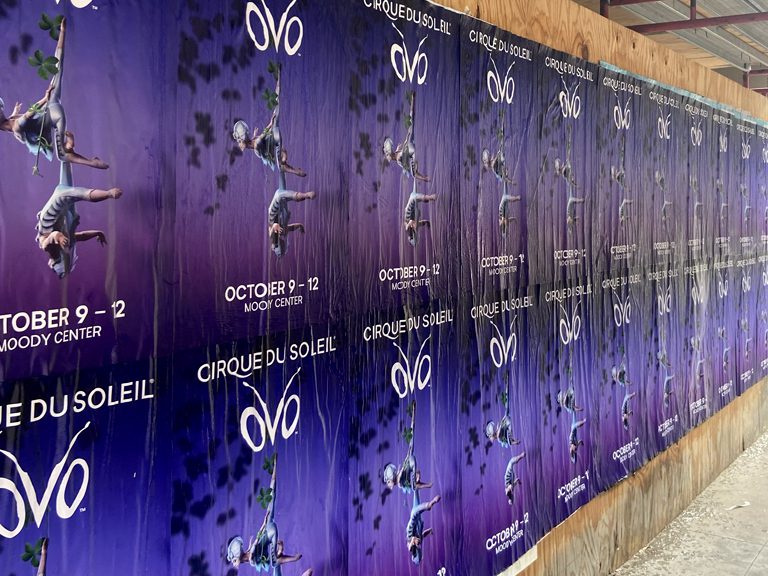
Fly posting is a term with specific origins, a clear meaning, and a practical role in contemporary advertising. Here is the full picture.
Fly posting is a term you encounter in advertising, arts promotion, and street marketing contexts, and it is one of those phrases where the specific meaning matters more than it might seem. Used precisely, it refers to a specific format and application method. Used loosely, it gets applied to various types of outdoor poster placement that have different characteristics and different implications for anyone trying to plan or evaluate a campaign.
At American Guerrilla Marketing, we use the term in its specific sense, and we think understanding its precise meaning is genuinely useful for anyone working with or commissioning street poster campaigns. This article unpacks the meaning of fly posting from multiple angles: the etymology, the technical definition, the cultural meaning, the relationship to similar terms, and what the format means in practice for brands running campaigns today.
Fly posting means placing printed posters on outdoor surfaces using paste or adhesive, typically in urban environments at street level. The printed material is pressed against the surface with paste applied both behind the poster (to bond it to the surface) and over the top (to seal it and improve durability). The result is a poster that is integrated into the surface of the wall rather than attached to it as a frame or panel would be.
The core meaning has three essential elements:
Physical print: A printed poster, typically on paper. This distinguishes fly posting from digital out-of-home advertising, projection campaigns, or painted murals.
Paste adhesive: Applied to adhere the poster to the surface. The traditional adhesive is wheat paste (flour and water), which gives the American variant of the practice its name “wheatpasting.”
Outdoor urban surfaces: Walls, hoardings, scaffolding panels, and other flat surfaces in urban environments with significant pedestrian traffic.
That is the core meaning. Everything else in discussions of fly posting — the neighborhoods, the formats, the industries, the cultural associations — builds from this foundation.
The Etymology: Where “Fly Posting” Comes From
The phrase “fly posting” originates in British English. It has been documented in use since at least the early nineteenth century. To understand the meaning fully, it helps to understand what both words meant in their historical context.
The Meaning of “Fly”
“To fly” in this context is an archaic usage that means to move quickly, to do something with speed, or to do something without going through formal channels or arrangements. It carried connotations of lightness, speed, and a certain informality — the opposite of the slow, formal, bureaucratic. A “fly” approach was a fast, unencumbered approach.
This usage shows up in several British English expressions of the period: a “flysheet” was a loose printed sheet distributed quickly in public; a “fly-by-night” described someone who moved fast and left no lasting footprint. “Fly posting” fit this pattern: posting done quickly, lightly, without the formal weight of contracted site arrangements.
The Meaning of “Posting”
“Posting” in the context of advertising and public communication meant displaying printed material in a public place. “Bill posting” was the established commercial trade in Britain by the early nineteenth century, covering the arrangement and display of printed advertising on walls and hoardings under formal commercial contracts. To “post” a bill or a notice was simply to put it up in a place where people could see it.
The Combined Meaning
Together, “fly posting” described the practice of quickly placing posters in public spaces without the formality of the commercial bill-posting trade. The theater promoter who sent a crew out at night to paper the walls near a playhouse was fly posting. The entertainment impresario who hired a bill-posting company to manage a scheduled campaign across contracted sites was bill posting. The distinction was about speed, formality, and the presence or absence of pre-arranged site contracts.
This historical distinction between formal bill posting and informal fly posting is still visible in the modern advertising environment, though the lines have blurred significantly. Professional fly posting agencies like AGM now operate with property-owner relationships and managed routes — the operational sophistication of the old bill-posting trade — while maintaining the speed and street-level character that defined fly posting from the beginning.
Fly Posting vs. Related Terms
Fly posting exists alongside a cluster of related terms that describe the same or similar activities. Understanding the relationships between these terms helps clarify the specific meaning of each.
Term
Origin
Core Meaning
Connotations
Fly posting
British English
Pasting printed posters to outdoor surfaces
Speed, informality, street culture
Flyposting
British English
Same as fly posting (single word variant)
Same as fly posting
Wheatpasting
American English
Same activity, named for the adhesive
Street art, DIY, independent music
Bill posting
British/general
Historically: contracted wall advertising; now used broadly
Commercial, formal, organized
Street postering
General
Any form of poster placed in street environment
Neutral descriptor, broad use
Poster campaign
General
Any organized effort to place posters publicly
Broad, includes formal outdoor advertising
Fly Posting vs. Wheatpasting
These terms describe exactly the same activity. Fly posting is the British English term; wheatpasting is the American English term for the same practice. The American term focuses on the adhesive material (wheat paste) rather than the application speed and informality implied by “fly.” In practice, both terms are understood across markets, and choosing between them is largely a matter of audience and context rather than any difference in meaning.
Fly Posting vs. Bill Posting
Bill posting historically referred specifically to the organized commercial trade of contracting wall space and selling it to advertisers — the industry that eventually developed into modern outdoor advertising. Fly posting was the more informal, faster, less formally arranged alternative. Today, the terms are sometimes used interchangeably, though fly posting retains its connotations of street-level immediacy and speed.
Fly Posting vs. Outdoor Advertising
Outdoor advertising is a broad category that includes fly posting but also billboards, transit advertising, bus shelters, digital out-of-home, and other formats. Fly posting is street-level and paste-applied; most other outdoor advertising formats involve elevated, framed, or digital placements on purpose-built advertising structures. The distinction matters for campaign planning: the two formats serve different purposes, reach audiences in different ways, and have different cultural associations.
AGM Field Note: When clients ask us about “fly posting,” they sometimes mean specifically the paste-on-surface format, and sometimes they mean any kind of street-level poster placement. We clarify early because the operational details, pricing, and campaign design implications are different. Getting the terminology right upfront avoids confusion downstream.
The Cultural Meaning of Fly Posting
Beyond its technical definition, fly posting carries a set of cultural meanings that are relevant to anyone using the format in a brand context. These meanings shape how audiences read fly posting campaigns, and understanding them helps in making better decisions about when and how to use the format.
Association with Authenticity
Fly posting’s roots in independent music and arts promotion give it a cultural association with authenticity that formal outdoor advertising does not carry. A brand that appears on walls using the same format that independent artists, musicians, and cultural organizations have used for decades is, by extension, claiming a place in that tradition. This claim can be genuine — when the brand actually has a meaningful relationship with the cultural scene it is posting in — or it can be hollow, when the format is adopted purely for its aesthetic associations without any underlying cultural connection.
Audiences, particularly younger urban audiences, read this distinction. A fly posting campaign for a brand that is clearly culturally engaged with the neighborhood where it is posting lands differently than the same format used by a brand with no organic connection to that context. The format amplifies authenticity when it exists; it exposes inauthenticity when it does not.
Association with Music and Street Culture
Fly posting is closely associated in popular culture with music promotion. Punk, hip-hop, rave, indie, and every subsequent music genre that developed outside the mainstream promotional infrastructure has used street poster campaigns as a primary tool. The walls of music scenes — the clubs, the record shops, the rehearsal studios — carry layers of campaign history in their accumulated poster deposits.
This association is why music brands and fashion brands that want to align with music culture reach for fly posting. The format is a cultural shorthand that says: this brand is connected to the streets where the music happens, not just to the commercial infrastructure around it.
Association with the DIY Tradition
The DIY promotional tradition — making and distributing your own promotional material outside commercial channels — is central to fly posting’s cultural identity. This tradition valued the physical act of making and placing posters as an expression of commitment and presence. The brand or artist who put their work on walls was making a material commitment to the street that a purely digital campaign could not replicate.
This DIY association is part of why the format retains cultural value even as digital alternatives have become available. In a context where anyone can reach a theoretically unlimited audience online, a brand that also shows up physically on walls in specific neighborhoods is making a specific kind of commitment. The effort involved in the physical execution is part of the message.
What Fly Posting Means in Practice Today
For advertising professionals and brand managers, the practical meaning of fly posting today is: a professionally executed, street-level poster campaign on managed outdoor surfaces in urban environments, with property-owner access, documented placement, and maintenance cycles that sustain coverage through the campaign period.
The operational sophistication has evolved far beyond what the term historically implied, but the core characteristics remain: printed material, paste adhesive, outdoor surfaces, street level, urban environments. What has changed is the degree of professionalism, organization, and documentation that clients now rightly expect from a commercial fly posting campaign.
What Modern Fly Posting Delivers
When we run a fly posting campaign today, the deliverables are concrete:
Managed route access in target neighborhoods in the client’s markets
Trained crews executing the campaign to professional installation standards
Geo-tagged placement photos from every location
Maintenance visits to sustain coverage through the campaign period
Campaign reports documenting placements across the full run
That is what fly posting means in practice today, for a brand working with American Guerrilla Marketing. The posters still go on walls with paste. The crews still move through neighborhoods with buckets and brushes. But the planning, documentation, and quality control around those fundamentals are professional operations, not ad-hoc activity.
What Fly Posting Means for Different Campaign Types
The meaning of fly posting shifts depending on the campaign type and the industry using it. The format means something specific to a music label running a release campaign. It means something slightly different to a fashion brand building cultural positioning. And it means something else again to a consumer goods company trying to break into a new market. Understanding the contextual meanings helps in deciding when and how to use the format.
For Music Campaigns
For music campaigns, fly posting means time-compressed saturation in the right neighborhoods at the right moment in the release cycle. The format is chosen for its speed — posters can go from confirmed artwork to wall in 48 to 72 hours — and for its cultural positioning in the specific communities where the music lives. A hip-hop album appearing on the walls of Bushwick before its release is speaking the visual language of the community the artist is speaking to. A rock act posting in Wicker Park in Chicago or Hawthorne in Portland is doing the same thing in different neighborhoods.
For music campaigns, fly posting means presence that cuts through in environments where the audience is already active and looking for things to discover. The format has been used for music promotion for so long that the audience’s relationship with street posters is culturally trained: a poster on a wall in the right neighborhood is worth noticing in a way that a banner ad or a streaming service placement is not.
For Fashion Campaigns
For fashion brands, fly posting means cultural positioning as much as direct communication. The neighborhood matters as much as the poster. A fashion brand that appears on walls in the Arts District in Los Angeles or on Broadway in Williamsburg in Brooklyn is choosing those locations for what they say about the brand’s relationship to street culture, not just for the foot traffic those streets carry.
For premium or luxury streetwear brands, fly posting can mean a small number of high-quality, carefully chosen placements rather than a broad saturation campaign. The meaning for the brand is: we are here, in this specific place, because we belong here — not because we are carpet-bombing the neighborhood with volume.
For Consumer Product and Tech Campaigns
For consumer products and tech campaigns, fly posting typically means street-level presence in a specific urban market as part of a launch strategy. The format creates physical brand visibility in neighborhoods where the target audience lives and moves, reinforcing digital campaign messages with a real-world anchor. For campaigns where the brand is new or unknown in the market, fly posting creates the ambient awareness that repeated physical exposure produces — a different quality of recognition than digital-only campaigns achieve in the same target neighborhoods.
How the Meaning of Fly Posting Has Evolved
The meaning of fly posting in advertising contexts has shifted significantly over the past three decades. Understanding that evolution helps explain why the format continues to be used and what role it plays in contemporary campaign planning.
From Subcultural Tool to Mainstream Format
Through the 1980s and into the 1990s, fly posting carried a predominantly subcultural meaning. It was the medium of independent music, political organizing, and arts promotion — a tool used by operators outside the mainstream commercial advertising infrastructure because they lacked access to formal outdoor advertising channels. The meaning was partly defined by exclusion: fly posting was what you did when you could not afford or access formal media.
As major brands and mainstream agencies adopted the format in the mid-to-late 1990s and into the 2000s, its meaning became more complex. It retained its subcultural associations while acquiring a new layer of meaning as a commercial format that major players used strategically. The street became a place where independent artists and major entertainment companies operated in the same visual space — sometimes literally on the same walls.
From Physical-Only to Hybrid Physical-Digital
The social media era added a new dimension to the meaning of fly posting that did not exist before. A poster on a wall is now also potentially a piece of content that gets photographed, shared, and disseminated online. The physical placement generates digital distribution through the audience’s own documentation behavior. This hybrid quality gives fly posting a meaning it did not have before: not just physical presence but the potential for physical-to-digital amplification that makes street presence legible online as well as in the neighborhood where the poster is placed.
For brands that understand this dynamic, fly posting now means both the direct audience that walks past the posters and the secondary audience that encounters documentation of those posters online. The geographic reach of a fly posting campaign in four neighborhoods of New York can extend far beyond those neighborhoods if the placements generate significant social documentation.
From Informal to Professional
The operational meaning of fly posting has also evolved from an informal activity to a professional service. The term now describes a managed campaign format with established routes, trained crews, property-owner relationships, and documented reporting. That professionalization has not changed what fly posting is — paste, paper, outdoor surfaces — but it has changed what it means to commission and run a fly posting campaign. Clients who work with AGM get a service with defined deliverables, not an ad-hoc operation.
Fly Posting Meaning Across Languages and Markets
The specific phrase “fly posting” has its origins in British English, but the practice it describes is universal. Different languages and markets use different terms, but the underlying activity — printed posters, paste, outdoor surfaces, street level — is recognizable across all of them.
In French, the equivalent term is “affichage sauvage” (literally, wild affixing or unauthorized posting), which reflects the French context where informal street posting has traditionally been more strictly managed than in British or American cities. In German, “Plakatieren” covers poster placement generally. In Japanese street marketing contexts, the practice is referred to in ways that translate roughly to “street posting” or “outdoor poster campaigns.”
When brands need to discuss fly posting strategy across markets where the specific term may not translate, describing the practice operationally — paste-applied printed posters on outdoor surfaces at street level in high-traffic urban neighborhoods — communicates more clearly than relying on the specific English phrase. The format is universally understood even when the specific terminology varies.
Fly Posting Pricing
Our installation pricing for fly posting campaigns on managed US routes:
Campaign Scale
Placement Volume
Scope
Installation Price Range
Small
25-50 placements
Single city
Contact for quote
Mid-scale
75-200 placements
Single city
Contact for quote
Large
200-500 placements
Single or multi-city
Project-specific (contact us)
Multi-city large-scale campaigns require four to six weeks of lead time. Print production is quoted separately. Call (646) 776-2770 or email [email protected] for a complete estimate.
Common Misconceptions About What Fly Posting Means
Several misconceptions about fly posting’s meaning come up regularly in conversations with clients and agencies approaching the format for the first time.
Misconception: Fly Posting Means Unauthorized Placement
The historical associations of fly posting with informal, quick placement have led some people to assume the term implies that the placements are unauthorized. This is not accurate for professional campaigns. Modern professional fly posting operates on managed routes with property-owner access arrangements. Every surface AGM uses is either on a managed route with an established access relationship or is scouted and confirmed for access before the campaign begins.
Misconception: Fly Posting Is Only for Low-Budget Campaigns
Because of its DIY cultural associations and its historical use by independent musicians and artists, fly posting is sometimes perceived as a low-budget or low-production-value format. This is also not accurate. Major labels, major fashion brands, and major film studios run professionally executed fly posting campaigns as part of comprehensive marketing programs. The format’s value is not correlated with budget scale — it is correlated with how well the campaign is planned and executed.
Misconception: Fly Posting and Digital Out-of-Home Are Interchangeable
Digital out-of-home advertising and fly posting are not interchangeable. They reach audiences differently, carry different cultural associations, and serve different campaign objectives. Digital out-of-home offers dynamic content, real-time targeting, and measurable digital attribution. Fly posting offers physical presence, cultural positioning, and the kind of ambient repetition that physical street presence produces in the daily movement of the target audience. Both are valuable. They are not the same thing.
AGM Field Note: The most common request we decline is to treat fly posting as simply a cheaper version of formal outdoor advertising — to swap fly posting for bus shelters or digital boards because it is less expensive. Fly posting and formal outdoor advertising serve different purposes. The right question is not which is cheaper but which format fits the specific campaign objective.
Frequently Asked Questions
What does fly posting mean?
Fly posting means placing printed posters on walls, hoardings, and other outdoor surfaces using paste or adhesive, typically in urban environments at street level. The term originates in British English, where “to fly” meant to act quickly and without formal arrangement, and “posting” referred to displaying printed material publicly.
What is the difference between fly posting and wheatpasting?
Fly posting and wheatpasting describe the same activity. Fly posting is the British English term; wheatpasting is the American term, named for the wheat paste adhesive traditionally used. Both refer to placing printed posters on outdoor surfaces using paste adhesive.
What does ‘fly’ mean in fly posting?
In “fly posting,” the verb “fly” is an archaic British usage meaning to move quickly or to do something without going through formal channels. It described the practice of rapidly placing promotional material in public spaces without formal arrangement.
Is fly posting the same as street postering?
Fly posting and street postering describe closely related practices. Street postering is a broader term that can include any form of poster placed in the street environment. Fly posting specifically refers to the paste-on-surface application method and typically carries connotations of speed and urban informality.
What does flyposting mean in a cultural context?
Culturally, flyposting carries associations with music promotion, street art, independent culture, and the DIY promotional traditions of punk, hip-hop, and independent music scenes. For brands, appearing in the fly posting format is a signal of cultural engagement with street-level aesthetics.
What is the meaning of fly posting in the UK?
In the UK, fly posting refers to placing posters on walls, hoardings, and outdoor surfaces, especially in urban environments. The term is widely used in advertising, arts promotion, and event marketing contexts.
How is fly posting used in advertising today?
Today, fly posting is used by music labels, fashion brands, film studios, streaming services, and consumer product companies to create street-level presence in specific urban neighborhoods. Professional campaigns run on managed routes with property-owner relationships, documentation, and maintenance cycles.
Does fly posting only mean unauthorized posting?
No. While the term historically carried connotations of informal or unauthorized placement, modern professional fly posting campaigns operate on managed routes with property-owner access arrangements. AGM runs all campaigns on managed routes with established surface relationships.
How much does a fly posting campaign cost?
Poster campaigns are priced by package and market. Standard poster campaigns (24×36) start at $4,500 for 100 posters (two-week run) and $5,500 for 200 posters. Large format (48×72) campaigns start at $10,500 for 100 posters and $13,500 for 200. An optional two-week maintenance extension is $3,500. Contact AGM at (646) 776-2770 for a custom quote based on your market and objectives.
Contact American Guerrilla Marketing at (646) 776-2770 or [email protected]. We run managed fly posting campaigns in New York, Los Angeles, Chicago, Miami, Austin, and other major US markets, with UK campaign coordination through vetted partner networks.