American Guerrilla Marketing
Nationwide serivce
Media planning, media buying, billboard advertising, & guerrilla marketing

American Guerrilla Marketing places interior bus and shelter advertising on Sun Tran routes across Tucson, Arizona. Speedway Boulevard, the University of Arizona corridor, South 6th Avenue, 4th Avenue, and Ronstadt Transit Center. Direct execution nationwide.
Tucson is not an interchangeable market. Arizona’s second city sits at the base of the Santa Catalina Mountains with a cultural identity built around the University of Arizona, a substantial Spanish-speaking community with deep roots in the Sonoran borderlands, and a downtown arts and culture district that has been growing steadily along Congress Street and 4th Avenue for two decades. Sun Tran, the City of Tucson’s public bus system, moves people across this distinctive city on routes that connect the working-class south Tucson neighborhoods along South 6th Avenue and Benson Highway to the University of Arizona campus on Park Avenue and University Boulevard, westward through midtown on Speedway Boulevard toward the growing employment corridors near Oracle Road, and to the downtown Ronstadt Transit Center at Congress and 6th Avenue where the routes converge and the Sun Link streetcar system intersects.
The Sun Tran ridership reflects Tucson’s specific character. The University of Arizona enrolls over 47,000 students, and the routes serving the campus and the off-campus student housing corridors along Speedway and Campbell carry a student demographic that is among the most transit-engaged in Arizona. South Tucson’s predominantly Latino working-class community, with routes running along South 6th Avenue and Benson Highway, uses Sun Tran for daily commuting and errands with genuine transit dependency. The 4th Avenue bohemian commercial district carries an arts-oriented, alternative-culture ridership distinct from either the student population or the south Tucson working-class community. These three distinct Tucson transit audiences, each on different routes, each with different advertising value propositions, are what make Sun Tran a specifically strategic advertising platform rather than a generic city bus buy.
AGM has placed transit advertising campaigns in university-city markets and Latino-community markets for over a decade. Tucson is a combination of both, and a campaign structured around Sun Tran’s specific route demographics outperforms a generic system-wide buy by reaching each of Tucson’s distinct community audiences with the specific message and creative approach that their demographic responds to most effectively.
AGM places interior bus and shelter advertising on Sun Tran routes across Tucson's campus, arts, and community corridors. Tell us your target and we'll build the route plan that reaches them.
The University of Arizona’s presence on Park Avenue and University Boulevard gives Sun Tran a ridership demographic that few non-campus transit systems carry in comparable volume. UA’s 47,000-plus students, the university’s 15,000-plus employees, and the density of student housing along Speedway Boulevard and Campbell Avenue create a consistently high-volume transit corridor that makes the UA-adjacent Sun Tran routes some of the highest-ridership services in the Arizona bus advertising market. Students commuting between the university and off-campus housing along Speedway take Sun Tran because the UA parking situation makes driving impractical during the academic year, which creates predictable, repeated ridership with the high frequency that transit advertising frequency campaigns require.
South Tucson’s transit ridership is distinct in character from the university market: predominantly Mexican American, working-class, and transit-dependent, with routes along South 6th Avenue connecting the neighborhood commercial corridor of South Tucson to downtown employment and healthcare destinations. The Benson Highway (Arizona Route 80) corridor serves the industrial and manufacturing employment areas east of downtown Tucson, carrying workers from the south and east Tucson residential communities. Together, the South Tucson and Benson Highway routes carry a demographic that digital advertising consistently misses: a Spanish-speaking, transit-dependent community with strong everyday consumer purchasing patterns and genuine attentiveness to physical advertising in their transit environment.
The 4th Avenue commercial district, with its independent restaurants, vintage clothing stores, bars, and the Rialto Theatre on Congress Street, anchors a cultural geography that Sun Tran routes serve through the downtown Ronstadt hub. The riders who use the 4th Avenue and downtown routes are a creative and arts-engaged demographic with strong discretionary spending in entertainment, dining, and cultural experiences. This demographic is one of the hardest to reach through mass-market advertising because their media consumption is fragmented and skeptical, but physical advertising in their neighborhood transit environment has a credibility that digital campaigns in this audience segment rarely achieve.
Speedway Boulevard runs east-west across central Tucson from the Rincon Mountain foothills on the far east side through the University of Arizona campus area at Park Avenue, through the midtown commercial corridor near Swan Road and Craycroft Road, and westward toward Oracle Road and the northwest Tucson employment centers. The Sun Tran routes on Speedway are among the highest-ridership in the system because they serve both the university corridor and the midtown office and retail employment strip that employs a significant portion of Tucson’s working adult population.
The UA campus segment of the Speedway corridor sees the highest ridership density during the academic year, with students boarding at stops adjacent to the main campus entrance at Park and University Boulevard and at the student apartment complexes along Speedway east and west of the campus. The trip from the student apartment corridor along Speedway to the campus takes 10 to 20 minutes depending on the segment, creating a daily commute window where interior bus advertising reaches a captive student audience with reliable frequency.
Best advertiser categories: UA student-targeted financial products, food delivery services, streaming and entertainment brands, fitness and wellness brands, UA campus-affiliated services, and midtown Tucson retail and restaurant brands targeting the professional commuter segment on the non-campus Speedway routes.
South 6th Avenue through South Tucson is one of the most culturally specific transit corridors in Arizona. South Tucson is an incorporated municipality within the city limits of Tucson with a predominantly Mexican American population and a commercial district of taquerias, panaderias, auto parts stores, quinceañera shops, and the community institutions that anchor this distinct borderlands community. The Sun Tran routes running along South 6th Avenue between the downtown Ronstadt Center and the South Tucson commercial district carry a community that is deeply connected to its neighborhood and has strong awareness of local advertising.
Spanish-language interior bus advertising on the South 6th Avenue and Benson Highway routes consistently outperforms English-only campaigns in consumer engagement metrics for this audience. The community is not invisible to advertising; it is systematically underserved by advertisers who default to English-language mass-market approaches. Brands that invest in Spanish-language transit advertising on these routes, particularly in categories with direct relevance to the South Tucson community’s daily needs, achieve a local market presence and community trust that no English-language campaign can approximate at equivalent cost.
Best advertiser categories: Spanish-language community health campaigns targeting the South Tucson community, financial services including community banking, remittance, and insurance products, immigration legal services, consumer goods brands targeting the Mexican American demographic, Mexican food and beverage brands, and community organizations serving the South Tucson population.
The Sun Tran routes connecting the 4th Avenue commercial district to the downtown core at Congress Street and through to the Ronstadt Transit Center serve Tucson’s most culturally distinct pedestrian corridor. Fourth Avenue between 6th Street and University Boulevard is Tucson’s bohemian main street: a continuous block of independent restaurants, bars, vintage and thrift stores, tattoo shops, record stores, and the Hotel Congress on Congress Street, which anchors the historic downtown entertainment district. Sun Tran riders on the routes serving this corridor include UA students, artists and creative workers who live in the neighborhoods around 4th Avenue and the downtown, and the community members who use the Ronstadt hub for transfers throughout Tucson.
Interior advertising on the 4th Avenue and Congress Street routes reaches the arts and culture demographic that defines Tucson’s identity in the national cultural conversation. The First Fridays art walk, the 4th Avenue Street Fair, and the Tucson Folk Festival draw thousands of participants to these routes on the weekend service during their respective seasons. For brands with a genuine arts, culture, or independent business positioning, advertising on these routes reaches an audience that actively supports independent brands and that has above-average skepticism toward corporate advertising messaging, which means the creative approach matters at least as much as the placement position.
Best advertiser categories: entertainment brands with genuine indie credibility, local Tucson restaurants and bars along the 4th Avenue and Congress corridors, arts event promotions, music and entertainment brands, craft beverage brands, and UA campus-connected brands targeting the off-campus student community that gravitates toward 4th Avenue.
The Ronstadt Transit Center at 215 East Congress Street is the downtown Tucson hub where all major Sun Tran routes converge and where the Sun Link streetcar system connects the bus network to the 4th Avenue and University of Arizona terminus. The interior and exterior advertising environment at the Ronstadt hub reaches the full cross-section of the Sun Tran ridership base: students, South Tucson residents, midtown workers, and downtown employees all pass through this hub daily. Shelter and stop-level advertising at Ronstadt reaches the maximum daily impression volume of any single location in the Sun Tran network.
The downtown Congress Street environment adjacent to Ronstadt is itself one of Tucson’s most culturally active streetscapes, with the Hotel Congress, Club Congress, the Rialto Theatre, and the Congress Street restaurant and bar corridor all within a block or two of the transit hub. Advertising at Ronstadt reaches both the transit rider base and the pedestrian audience of Tucson’s most walkable cultural district, creating impression exposure that extends beyond the bus rider demographic to the full downtown Tucson foot traffic community.
Best advertiser categories: downtown Tucson entertainment venues, healthcare brands, city government information campaigns, financial services, University of Arizona-affiliated brands targeting the full student and employee base, and brands seeking maximum Tucson market reach from a single geographic advertising anchor.
What it is: A complete exterior wrap on a Sun Tran bus, creating a moving brand presence across Tucson’s street network from South Tucson to the UA campus to the midtown commercial corridor.
Best for: Tucson-wide brand launches, UA academic year brand activations, and campaigns requiring visibility across Tucson’s diverse geographic and cultural neighborhoods in a single vehicle placement.
Why buy it: A wrapped Sun Tran bus moving through 4th Avenue, the UA campus, Speedway Blvd, and South 6th Avenue covers more of Tucson’s distinct cultural geography per day than any other single format in the market. In a city that prides itself on distinctiveness and community character, a creatively executed Sun Tran wrap becomes a local conversation piece that generates organic social media attention from Tucson’s engaged creative community. Contact AGM for Sun Tran wrap pricing and availability.
What it is: A 30-by-144-inch interior posting running along the upper interior walls of Sun Tran buses on both sides of the vehicle.
Best for: System-wide Tucson brand awareness campaigns. A king poster buy across all active Sun Tran routes creates consistent interior presence for every regular Sun Tran rider throughout the campaign period.
Why buy it: Tucson’s Sun Tran ridership is a repeat-ride audience. The student who takes Route 4 on Speedway every morning and the South Tucson resident who takes Route 1 on 6th Avenue every day both build frequency with a king poster over a four-week campaign cycle that converts awareness to recall. System-wide king poster buys on Sun Tran deliver consistent market-level frequency across the full Tucson ridership base at cost-per-impression rates that outperform Tucson digital and broadcast equivalents for the transit demographic.
What it is: A mid-format interior posting positioned at the front or rear sections of Sun Tran buses.
Best for: Route-targeted campaigns. Spanish-language campaigns on South 6th Avenue routes, student campaigns on Speedway UA routes, arts community campaigns on 4th Avenue and Congress routes.
Why buy it: The queen is the right Sun Tran format for advertisers with specific Tucson demographic or geographic targets. A healthcare enrollment campaign in Spanish targets South 6th Avenue routes. A food delivery brand targets Speedway UA routes. A Tucson entertainment venue targets 4th Avenue and downtown routes. Route-specific queen buys reach exactly the right Tucson audience without paying for coverage on routes that serve different communities and demographics.
What it is: A horizontal card at the front interior of Sun Tran buses, seen at every boarding event throughout the service day.
Best for: High-recall short messages on Tucson’s high-frequency routes. The Speedway route runs frequently enough during the academic year that a headliner generates dozens of boarding impressions per bus per service day.
Why buy it: The UA campus approach on Speedway creates a high-frequency boarding environment during the morning class rush. Students boarding at every stop between the campus and the off-campus housing corridors encounter the headliner with every trip. For brands targeting the UA student market with a simple, memorable message, the headliner on Speedway routes during the academic year generates the repeat boarding impressions that build brand recall within the student community.
What it is: An exterior rear-panel advertisement facing vehicle traffic following Sun Tran buses on Tucson’s arterials.
Best for: Campaigns targeting Tucson vehicle traffic on Speedway Blvd, Oracle Road, 6th Avenue, and the Benson Highway corridor.
Why buy it: Tucson’s arterial traffic on Speedway and Oracle Road creates consistent following-vehicle dwell time for tail display impressions. A Sun Tran bus on Speedway during the UA campus approach slows at frequent stops and traffic signals, giving following vehicles extended tail display exposure at the intersections and stop positions. For brands with Midtown Tucson locations or targeting the Tucson vehicle-driving public on the primary commercial corridors, the tail display extends the bus interior campaign to the vehicle audience at no additional format cost.
What it is: Distributed card placements throughout Sun Tran bus interiors at standard card holder positions.
Best for: Spanish-language community campaigns, local Tucson businesses, healthcare and social services, and UA student market local service advertising.
Why buy it: Interior cards on Sun Tran are the most accessible entry point to Tucson transit advertising. A local Tucson restaurant, a community health clinic in South Tucson, or a UA campus-adjacent service can place interior cards on targeted routes for a budget appropriate to Tucson’s local business economy. The dual-language capability (Spanish and English on the same card) is particularly valuable for South Tucson route campaigns where bilingual messaging reaches the full ridership demographic.
What it is: Cards at reading distance on Sun Tran seat backs for the rider behind.
Best for: QR code campaigns, detailed service information, and healthcare enrollment materials on Sun Tran’s longer east-west routes including the full Speedway corridor and the Benson Highway runs where riders are seated for 25 to 45 minutes.
Why buy it: Students riding the full Speedway corridor from east Tucson to UA campus and South Tucson residents on the Benson Highway route have extended seated time that the seat-back format fully exploits. A QR code placement on the Speedway student routes captures the phone-ready UA student audience during their seated commute in a direct response moment that interior poster formats cannot replicate at the same close-reading distance.
What it is: Cards in the overhead panel of Sun Tran buses, visible to standing riders during peak loads.
Best for: Peak academic year placements on the UA Speedway routes during the morning class rush when buses fill to standing loads between the campus and the student housing corridor.
Why buy it: The Speedway route between Park and Campbell during the 8:00 to 9:30 AM class period at UA fills to standing loads during the academic year peak. Overhead cards on these routes during the academic year reach the maximum Sun Tran student audience during the most attentive transit moment of the day, the focused wait during the morning commute before the day’s academic activities begin.
What it is: Perforated vinyl on Sun Tran bus windows, visible from outside as a full graphic.
Best for: Exterior audience reach on Tucson’s commercial corridors including Speedway, Oracle Road, and the South 6th Avenue community corridor.
Why buy it: The 4th Avenue and downtown Tucson pedestrian environment, where foot traffic moves along the sidewalks of Tucson’s most walkable district, creates a window vinyl audience that is already outdoors and visually engaged with the street environment. A Sun Tran bus with window vinyls moving through 4th Avenue and the downtown Congress Street block reaches the pedestrian arts district audience in a moving format that is visible, photographable, and specific to the Tucson street environment.
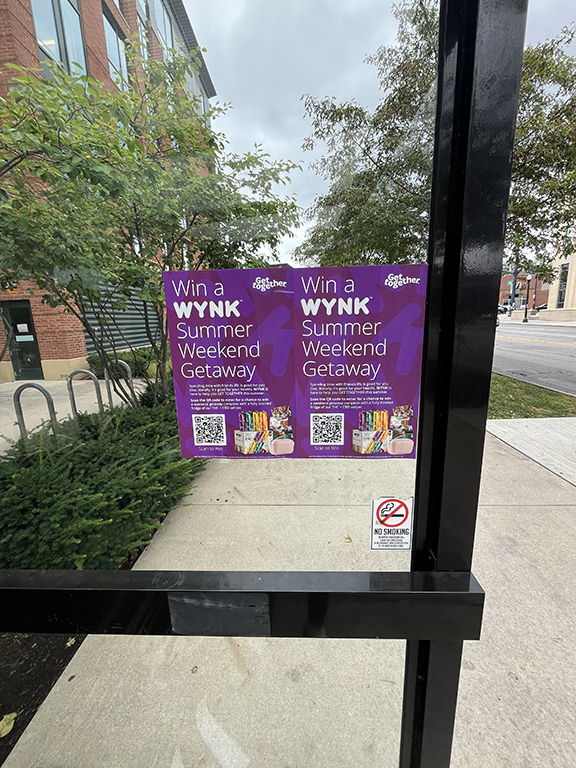
Sun Tran’s shelter network is concentrated along the highest-ridership corridors: Speedway Boulevard through the UA campus approach, South 6th Avenue through South Tucson, and at the Ronstadt Transit Center. Like Phoenix, Tucson’s extreme summer heat gives shelter advertising a specific attentiveness advantage: riders wait in shelters because the alternative is standing in direct sun at temperatures that regularly exceed 100 degrees from June through September. That enforced shelter use extends dwell time and advertising engagement beyond what temperate markets deliver.
The shelter stops at the major Speedway Boulevard intersections near the University of Arizona campus, including the stops at Park Avenue, University Boulevard, and Campbell Avenue, are the highest-ridership boarding points in the Sun Tran academic-year network. Students gather at these shelters every weekday morning during the school year, creating a concentrated daily impression environment with consistent audience demographics: 18 to 24, enrolled at UA, transit-using, phone-active, and in a discovery consumer mode that is specifically receptive to brands that speak to the student experience directly. Shelter advertising at these UA-adjacent stops builds frequency with this demographic across the full academic year, and the UA academic calendar creates two distinct high-frequency campaign windows: the fall semester starting in late August and the spring semester starting in January.
The shelter stops along South 6th Avenue through the South Tucson incorporated area serve a predominantly Latino transit-dependent community. The extreme heat of Tucson’s summer months makes these shelters essential waiting environments for South Tucson residents who have no air-conditioned space available during the transit wait. Spanish-language shelter advertising in this corridor reaches the community with extended dwell time, in a context where the physical advertising environment is the primary media exposure during the wait, and in a language that connects directly to the community’s daily communication environment.
The Ronstadt Transit Center shelter positions at Congress Street and 6th Avenue serve the maximum daily ridership concentration of any single Sun Tran location. Transfer riders from all routes pass through this hub, the Sun Link streetcar boards from adjacent stops, and the downtown pedestrian traffic of Congress Street and 4th Avenue is in immediate proximity. Advertising at the Ronstadt shelter positions reaches the full cross-section of Tucson’s transit ridership plus the downtown arts district pedestrian audience in a single placement location that delivers the highest total daily impression count in the Sun Tran advertising network.
What it is: A full backlit panel in a covered Sun Tran shelter at a primary Tucson ridership location.
Best for: Brand campaigns requiring sustained Tucson presence at a specific high-traffic Sun Tran corridor position for a four-week posting period.
Why buy it: At $3,850 for a four-week cycle, a premium Sun Tran shelter display at a UA campus approach stop or the Ronstadt hub delivers day-and-night illuminated presence to the highest-ridership Sun Tran audience positions. Tucson’s heat mandates shelter use in summer, and the backlit panel visible in the evening adds to the daytime impressions accumulated from the morning and afternoon academic and commuter peaks.
What it is: A mid-size shelter panel at a Sun Tran stop in Tucson.
Best for: Local Tucson businesses, South Tucson community organizations, UA campus-adjacent services, and Spanish-language campaign placements at South 6th Avenue stops.
Why buy it: At $850 for a four-week cycle, the Sun Tran junior poster is accessible to local Tucson businesses and community organizations. A South Tucson health clinic, a 4th Avenue restaurant, a UA campus tutoring service, or a Tucson community bank can place a junior poster at the nearest high-traffic Sun Tran stop and achieve four weeks of consistent daily impressions with the Tucson transit community.
What it is: A bench advertisement at a Sun Tran stop location.
Best for: Neighborhood-level Tucson presence at specific stop locations, particularly at high-dwell South Tucson stops and at the University Boulevard campus stops where students gather daily.
Why buy it: At $700 for a four-week cycle, the transit bench at a Sun Tran stop is the most accessible entry point to Tucson transit advertising. For a neighborhood community organization, a local Tucson business, or a UA campus service, a bench at the right Sun Tran stop provides four weeks of continuous exposure to the transit community at that location.
Tucson’s street culture, particularly in the 4th Avenue, Congress Street, and University of Arizona campus environments, is among the most receptive to guerrilla marketing in Arizona. The city’s arts community, its commitment to independent and locally owned businesses, and the visual culture of the UA campus create an environment where street-level advertising is engaged with rather than ignored.
Snipe advertising along Speedway Boulevard near the UA campus, at the 4th Avenue commercial corridor, and at the South 6th Avenue community intersections where Sun Tran routes run creates street-level touchpoints that reinforce the bus interior campaign across the same geographic corridors. In Tucson’s arts and campus environment, snipes at the right intersections are photographed and shared by the visually attentive community that defines these neighborhoods.
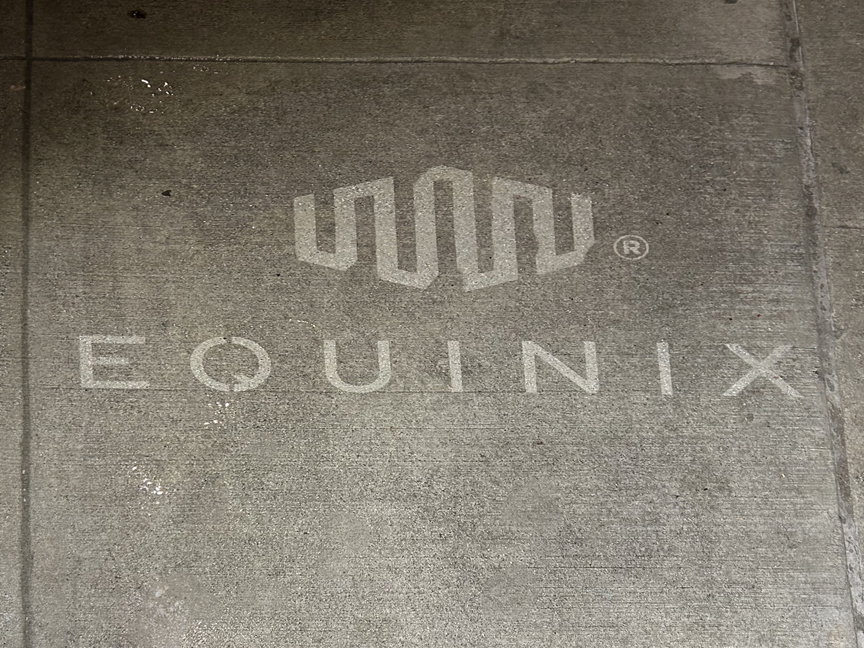
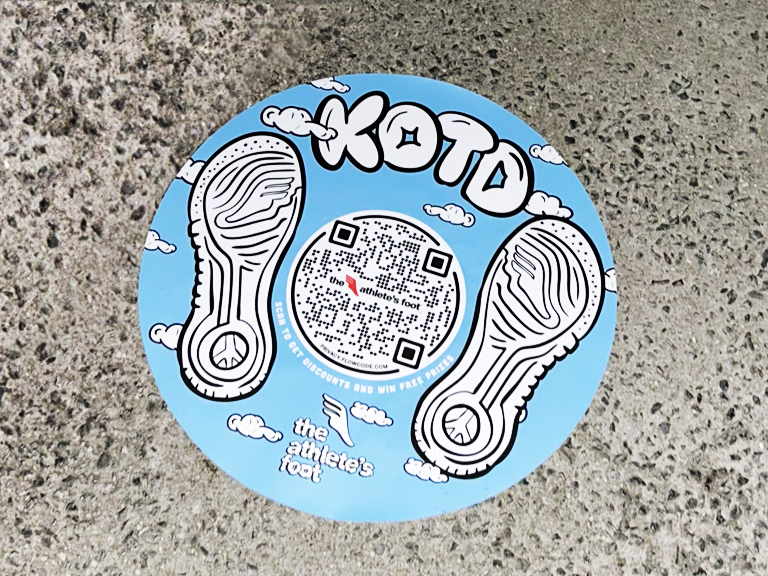
Sidewalk stencils at the UA main gate on Park Avenue, at the 4th Avenue and University intersection near the Rialto, and at the Ronstadt Transit Center hub create ground-level brand presence at the highest foot-traffic points in the Sun Tran network. For product launches and campus activations, stencils at the Ronstadt hub are visible to the full downtown Tucson transit foot traffic stream.
Take-one flyers at the coffee shops, independent bookstores, and community gathering spaces along 4th Avenue and the UA campus area extend the transit campaign message into the spaces where the Tucson arts and student community spends time off the bus. Epic Café on Grant Road, Cartel Coffee near 4th Avenue, and the spaces inside the UA Student Union are high-placement-value take-one locations for campaigns targeting the Tucson creative and student demographic.
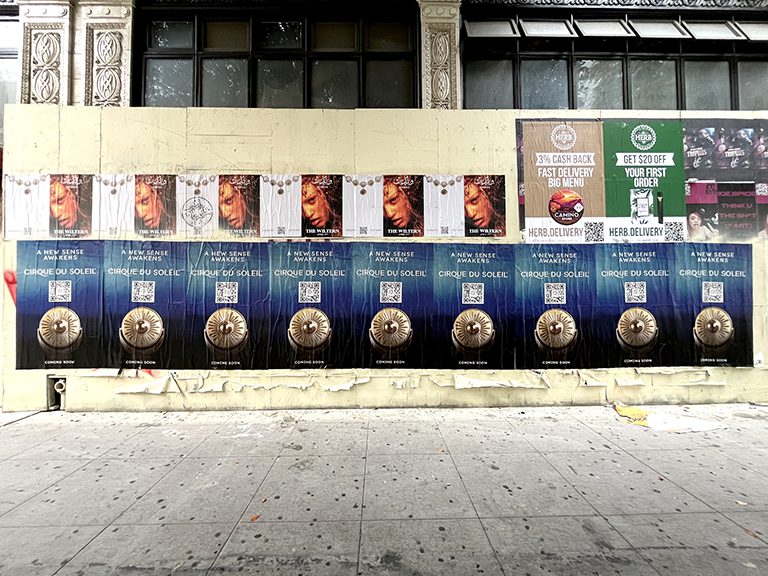
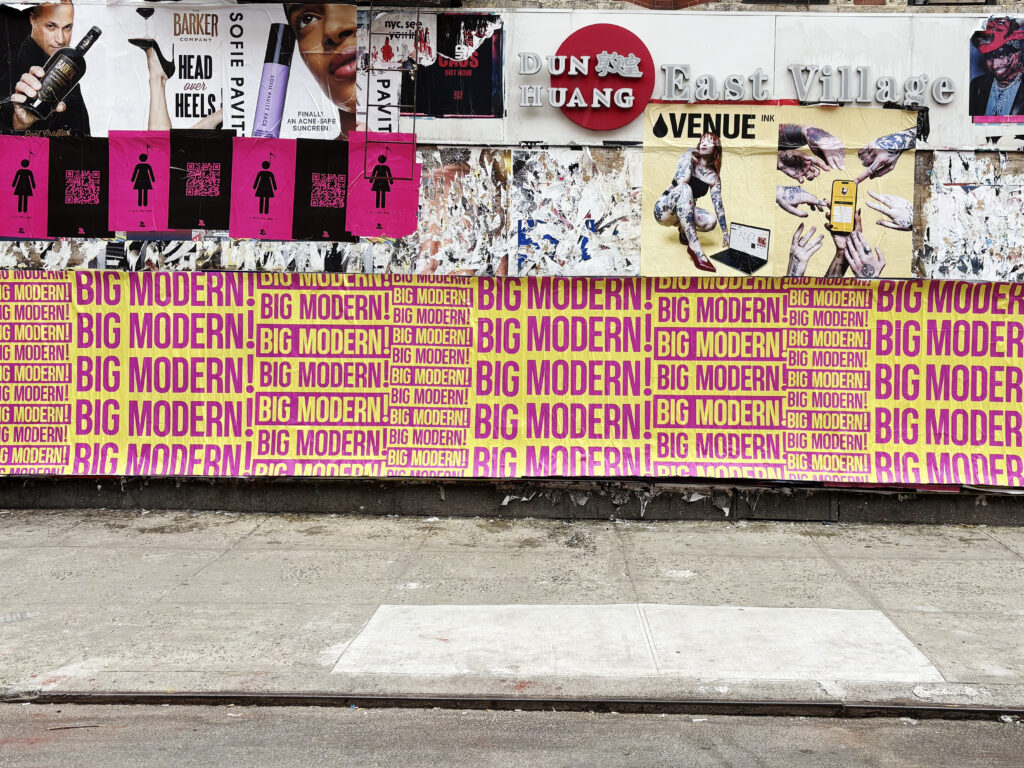
Wheatpasted poster campaigns on legal surfaces in the warehouse and arts districts around Congress Street, along the 4th Avenue corridor, and in the Barrio Viejo neighborhood south of Congress create large-format impressions for the pedestrian community of Tucson’s most walkable cultural districts.
The University of Arizona uses Sun Tran for enrollment, health services, and campus event advertising targeting the student and employee ridership on Speedway and campus-adjacent routes. Banner University Medical Center (UA Health) uses bus interior and shelter advertising to reach patients and recruit clinical staff from across the Tucson Sun Tran catchment area. The City of Tucson uses the system for public information campaigns, healthcare enrollment, utility assistance, and community services targeting the transit-dependent communities in South Tucson and west-central Tucson. Local restaurants and entertainment venues on 4th Avenue and Congress Street use interior cards for event promotion targeting the arts and student demographic on the routes serving those corridors. Tucson Electric Power and other utilities use shelter advertising for energy assistance program information targeting low-income communities on the South 6th Avenue and Benson Highway routes. Insurance companies, financial services brands targeting the working-class South Tucson demographic, and Spanish-language consumer brands are consistent interior card advertisers on the South Tucson routes.
The Sun Link streetcar operates from the University of Arizona campus area on Helen Street west through 4th Avenue to the downtown convention center and Mercado District, connecting at the Ronstadt Transit Center to the Sun Tran bus network. Advertising on Sun Link streetcar vehicles and at Sun Link stations is a complementary buy to Sun Tran bus advertising, reaching the same 4th Avenue and UA campus demographic in the streetcar environment alongside the bus placements. AGM can coordinate a combined Sun Tran and Sun Link advertising campaign for advertisers who want coverage across both Tucson transit modes through a single engagement.
Yes. Spanish-language creative is accepted across the Sun Tran system, and AGM recommends Spanish-language creative specifically for the South 6th Avenue, Benson Highway, and South Tucson routes where Spanish is the primary household language for the majority of the ridership. Dual-language Spanish and English creative is appropriate for the Speedway and Oracle Road routes where the ridership demographic is more linguistically mixed.
The Speedway Boulevard route (Route 4) is the primary Sun Tran line serving the University of Arizona campus and the off-campus student housing corridor along Speedway. Additional UA campus routes including the Campbell Avenue service (Route 10) and the Park Avenue-adjacent stops serve the full campus perimeter. AGM recommends a campaign combining the Speedway route with the Campbell and Park Avenue routes for complete UA campus approach coverage targeting the full Sun Tran student audience during the academic year.
Valley Metro Phoenix serves a larger metro area and has higher absolute ridership than Sun Tran, reflecting Phoenix’s greater population. Sun Tran’s advertising market is smaller but offers specific demographic precision advantages, particularly for campaigns targeting the UA student community, the South Tucson Latino community, and the 4th Avenue arts and culture demographic. For advertisers targeting Tucson-specific audiences, Sun Tran delivers more precise geographic targeting than a Phoenix-area buy without requiring the budget scale that a Phoenix system-wide campaign demands.
Sun Tran’s fixed-route service covers Tucson city proper and some adjacent unincorporated areas in Pima County. The Marana, Sahuarita, and Oro Valley suburban communities at the edges of the Tucson metro are served by limited routes or fall outside the Sun Tran core service area. For campaigns targeting the broader Tucson metro area beyond Sun Tran’s urban core coverage, AGM can advise on complementary transit and outdoor advertising options that extend reach into the suburban Pima County communities.
Similar to Phoenix, Tucson’s summer heat from June through September creates above-average shelter dwell times that increase advertising attentiveness at shelter positions. Interior bus advertising is not affected since vehicles are air-conditioned, but the boarding and alighting moments are prolonged as riders seek the shelter of the air-conditioned bus during the summer, creating slightly longer boarding impression windows than in cooler months. For shelter advertising specifically, Tucson summer campaigns benefit from the enforced shelter use that Tucson’s heat creates, generating dwell times that exceed what temperate climate markets experience year-round.
Yes. Sun Tran operates route service connecting to the Tucson International Airport on Valencia Road and to the industrial and commercial employment areas around the airport on the south side of Tucson. These routes carry airport workers, hospitality employees, and transit-dependent commuters from the south Tucson residential communities to airport and industrial employment. Interior advertising on airport corridor Sun Tran routes reaches a workforce demographic similar to the South Tucson routes: working adult, transit-dependent, with strong everyday consumer spending patterns.
For fall semester campaigns that launch during the first weeks of UA classes in late August, AGM recommends beginning the planning process in June or July. Premium shelter positions at UA campus approach stops and the Ronstadt Transit Center may book out by August for the fall semester launch window. Interior card and poster campaigns on Speedway and campus-adjacent routes have shorter lead times of two to four weeks, but the most strategic positions on the highest-ridership routes benefit from advance booking. Start the Sun Tran fall semester campaign conversation no later than early August for a clean late-August launch.
Yes. AGM manages multi-market Arizona transit campaigns combining Sun Tran in Tucson, Valley Metro City of Phoenix routes, Valley Metro RPTA regional service, Mountain Line in Flagstaff, and other Arizona systems through a single client engagement. An Arizona statewide transit campaign through AGM provides coordinated creative management, unified production, and consolidated post-campaign reporting across all Arizona markets. Contact AGM for multi-market Arizona transit campaign pricing and package structure options.
The Ronstadt Transit Center at Congress and 6th Avenue is the highest-concentration single advertising location in the Sun Tran network. A Ronstadt hub domination package combining multiple shelter positions, bus stop signage, and bench advertising at the transfer center creates a total saturation of the downtown Tucson transit environment that individual format buys cannot replicate. AGM can structure a $10,000 Transit Station Surround Package at Ronstadt for advertisers who want maximum downtown Tucson transit presence from a single campaign anchor. Contact AGM for Ronstadt domination package availability and pricing.