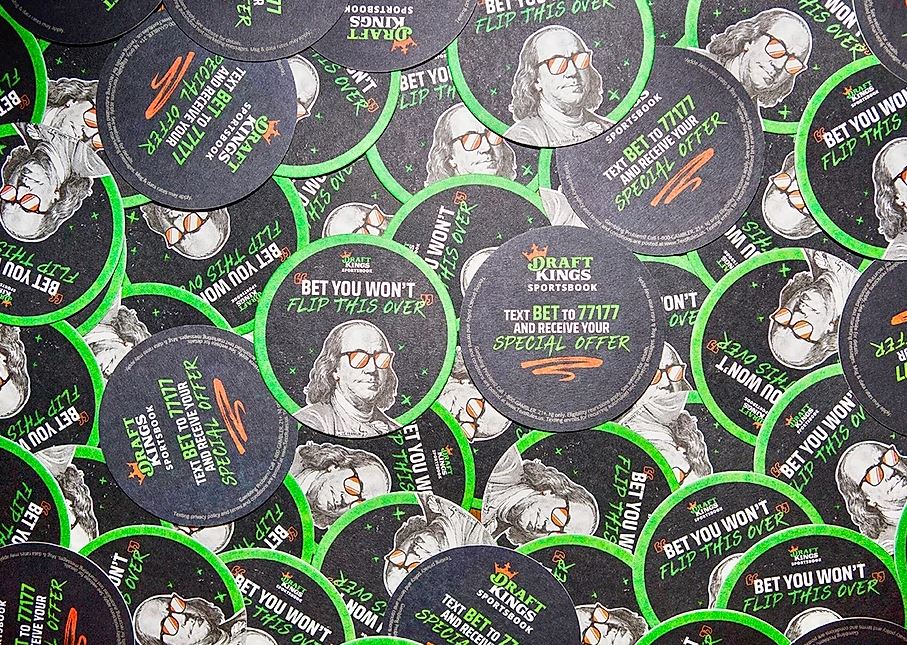
Guerrilla marketing gets misused more than almost any other term in advertising. It gets applied to digital stunts that have nothing to do with real-world activation, to any campaign with a surprising creative, and to tactics that are more remarkable for breaking the law than for building a brand. That conflation serves no one — least of all brands trying to figure out whether a street-level physical campaign belongs in their plan.
This guide defines guerrilla marketing from the operating perspective of a field agency that runs these campaigns for a living. What it is, what it is not, how to evaluate whether it’s right for your situation, what formats actually perform, and what distinguishes a well-executed program from one that wastes budget and creates liability.
American Guerrilla Marketing operates across 50+ U.S. markets running street team activations, poster campaigns, sidewalk programs, LED truck deployments, and brand activations. Our view of guerrilla marketing is practical — not ideological. A format earns its place only if it matches the audience, the geography, the timeline, and the operational realities on the ground.
The Real Definition: Unconventional Physical Presence
Guerrilla marketing, accurately defined, is the use of unconventional, real-world tactics to create high-impact brand impressions in environments where audiences actually move, wait, congregate, and make decisions. The word “guerrilla” is a military analogy: unconventional forces achieving outsized impact through surprise, speed, and terrain advantage rather than conventional mass deployment.
In marketing terms, that means:
- Meeting audiences in physical environments rather than paid media channels
- Using location, timing, and context as amplifiers rather than relying on reach alone
- Creating impressions that earn attention because they’re unexpected, well-placed, or visually compelling rather than simply purchased
- Executing with precision in specific geographies rather than broadcasting broadly
What guerrilla marketing is not: a social media campaign, a viral video, a digital stunt, a flash sale, or any other execution that lives primarily on screens. These can be creative and effective, but they are not guerrilla marketing as the term is correctly used in field advertising.
Why Guerrilla Marketing Still Works in 2026
Digital advertising has never been more prevalent or more easily ignored. Scroll behavior, ad blockers, algorithmic fragmentation, and the sheer volume of digital content competing for attention have collectively reduced the per-impression impact of most digital channels. Physical presence — a poster on a wall, a crew member handing something directly to a person, a sidewalk stencil that stops someone mid-step — operates in a fundamentally different attention environment.
Physical impressions are harder to ignore. They exist in three dimensions, in the context of real life rather than a content feed. When a brand places itself in the exact physical corridor where its target audience moves every morning, it achieves a specificity of presence that no algorithm can replicate. That specificity is what makes well-planned guerrilla marketing durable even as digital channels become more saturated.
The other reason guerrilla marketing remains effective is the social sharing amplifier. Well-executed street work — unusual, visually interesting, placed in high-visibility locations — gets photographed and shared. The physical campaign creates digital impressions without paying for them. When the creative is strong enough and the placement is smart enough, earned media extends the reach of the physical program by an order of magnitude.
Core Guerrilla Marketing Formats
Street Posters and Wheatpasting
Wheatpasted poster campaigns are the most enduring guerrilla marketing format. Posters placed in high-foot-traffic corridors generate thousands of impressions over their lifespan with no ongoing cost. Saturation programs — multiple placements per block across a target geography — create the visual presence of a much larger advertising budget. Strong poster work requires location intelligence, production quality, and documentation discipline.
Street Teams
Street teams are the human element of guerrilla marketing. Trained crews operating in target neighborhoods, transit nodes, event approaches, and retail corridors create direct contact with the audience — distributing materials, engaging in conversations, and generating energy that passive formats cannot replicate. Street teams work best when they’re integrated with other visibility elements rather than operating as standalone programs.
Sidewalk Stencils
Sidewalk stencils use the ground itself as brand real estate. Applied in high-pedestrian-traffic areas, they create unexpected, low-level impressions that differ from vertical-format advertising and photograph well for social sharing. Chalk and water-soluble formats allow compliant use in most markets.
LED Billboard Trucks
LED billboard trucks are mobile guerrilla formats that bring the message to the audience rather than waiting for the audience to come to the message. They’re most effective when routed through specific high-concentration corridors — event approaches, nightlife districts, retail zones — at times of peak audience density.
Brand Activations
Brand activations combine physical presence with interactive engagement — pop-up experiences, live demonstrations, product sampling, and other formats that create moments rather than just impressions. Activations are more resource-intensive than passive formats but generate higher engagement and social sharing when executed well.
How to Evaluate Whether Guerrilla Marketing Belongs in Your Plan
Guerrilla marketing earns its place when the following conditions are true:
Your Audience Concentrates Geographically
Guerrilla marketing’s power comes from reaching a specific audience in a specific place. If your audience is broadly dispersed with no meaningful geographic concentration, digital channels will generally outperform physical ones. If your audience concentrates — on campuses, at events, in specific neighborhoods, along specific transit corridors — guerrilla marketing can generate superior impact.
Physical Context Matters for Your Message
Some messages land better in physical environments. Brand legitimacy, local relevance, community presence, market entry — these are objectives that physical marketing serves in ways digital cannot. If your goal is to make a brand feel real and present in a specific market, street-level work contributes something that ads on screens do not.
You Can Execute at Sufficient Quality and Density
Guerrilla marketing at low density and low quality does not work. A handful of posters in the wrong locations, a small crew without proper training, or a stencil program with inconsistent application produces negligible impact and can actively harm brand perception. The format requires execution at sufficient quality and density to create the intended impression. Budgets that cannot support that threshold should be redirected to channels that can achieve their objectives at smaller scale.
The Timeline Allows for Proper Planning
Good guerrilla marketing requires planning time: location scouting, permitting, production, crew recruitment and briefing, logistics. Last-minute campaigns produce compromised results. If your timeline doesn’t allow for proper planning, either extend the lead time or select formats that can be executed at quality within the available window.
Compliance and Brand Risk: What Separates Professional Execution from Amateur Stunts
The biggest operational risk in guerrilla marketing is compliance failure. Unpermitted posting on private property, canvassing in restricted areas, activations that violate event perimeter rules, or stencil applications that damage surfaces create legal liability, media risk, and brand damage that undermine whatever impressions the campaign generates. The guerrilla label does not confer permission to ignore the law.
Professional guerrilla marketing operates within the law — using permitted posting zones, compliant materials, authorized locations, and crews that understand local ordinances and operate accordingly. The unconventional element is the creative approach and the environment, not the legal status of the work.
AGM builds compliance into every campaign plan. We identify permitted posting locations before production, brief crews on local ordinances, and document all placements to create a clear record of compliant execution. This discipline protects both the client and the field program.
Planning Framework: How AGM Approaches a New Guerrilla Marketing Campaign
When a new campaign brief arrives, we evaluate it against a consistent planning framework before recommending formats or budgets:
- Audience location: Where does the target audience physically concentrate?
- Timing: When is the audience in the target location? What are the peak windows?
- Format match: Which physical formats are compliant, available, and legible in these locations?
- Density requirement: What coverage level is needed to create the intended impression?
- Production timeline: What does the format require, and can it be executed at quality within the available time?
- Documentation: How will we prove the work was done at the planned locations and quality?
Campaigns that clear this framework get specific format recommendations and budget ranges. Campaigns that don’t fit get honest guidance about whether the format is right for the objective.
Measuring Guerrilla Marketing Performance
Guerrilla marketing performance is measurable — not as precisely as digital attribution, but with documentation that tells you what was done, where, and when. AGM’s standard documentation package includes GPS-tracked crew movements, time-stamped photo records of placements, materials distribution counts, placement persistence tracking, and written field observations.
Beyond documentation, performance indicators include social sharing volume (photo posts from the campaign location), qualitative field observations about audience receptivity, and downstream tracking of any direct response elements (QR codes, vanity URLs, promo codes) included in the physical materials.
FAQ
What is guerrilla marketing in simple terms?
Guerrilla marketing is physical, unconventional advertising that creates high-impact brand impressions in real-world environments — streets, transit systems, campuses, event corridors — using formats that earn attention rather than buying it through traditional media placements. It includes street team activations, wheatpasted poster campaigns, sidewalk stencils, LED billboard trucks, and other non-standard tactics deployed where audiences actually move and congregate.
Does guerrilla marketing always mean low budget?
No. Guerrilla marketing is defined by its unconventional approach, not its budget. Some campaigns run on minimal spend. Others involve significant production, multi-market logistics, and professional field crews at meaningful cost. The defining characteristic is creative use of real-world environments, not frugality.
Is guerrilla marketing only for edgy or disruptive brands?
No. Guerrilla marketing works for brands across categories — consumer products, entertainment, technology, financial services, political campaigns, nonprofit advocacy. The brand identity shapes the creative; the format works regardless of how conventional or unconventional the brand is.
How is guerrilla marketing different from experiential marketing?
Experiential marketing focuses on creating an immersive brand experience for participants. Guerrilla marketing can include experiential elements but also encompasses passive formats (posters, stencils, projections) where the audience encounters the brand without actively participating. The two often overlap in practice.
What makes a guerrilla marketing campaign effective?
Audience concentration, geographic precision, creative legibility, format quality, and documentation. A campaign that places the right message in front of the right people in the right context — with enough density to create repetition — consistently outperforms one that is merely creative.
Is guerrilla marketing legal?
Yes, when planned correctly. Compliant guerrilla marketing uses permitted formats in permitted locations, respects property rights, and operates within local ordinances. AGM builds compliance into every campaign plan. Unpermitted or illegal tactics create liability and media risk that undermine the campaign.
How does AGM approach guerrilla marketing differently from other agencies?
We approach guerrilla marketing as an operational discipline. The idea has to work in the field under real conditions — weather, foot traffic, permitting, crew logistics, and documentation requirements. We plan campaigns backward from those operational realities rather than forward from an idealized concept.
Frequently Asked Questions
What is what is guerrilla marketing 2?
American Guerrilla Marketing provides what is guerrilla marketing 2 services across 50+ U.S. markets. Every campaign is planned, scouted, executed, and GPS-documented by our field teams. We work with regional brands and Fortune 500 companies on campaigns that require real street-level execution and documented proof of performance.
How does AGM approach marketing 2?
Our process starts with a market consultation to understand your goals, target audience, and budget. We then scout locations, handle any required permissions or permits, coordinate production and installation with our local crews, and provide a full GPS-tagged photo report after the campaign runs.
What markets does American Guerrilla Marketing cover for marketing 2?
We operate in 50+ U.S. markets including New York, Los Angeles, Chicago, Miami, Houston, Atlanta, Seattle, Denver, Boston, and dozens of secondary markets. Contact us to confirm availability and pricing for your specific market.
How much does a marketing 2 campaign cost?
Campaign pricing depends on market, format, quantity, and duration. We work with budgets ranging from targeted single-market runs to national rollouts across multiple cities. Use our RFP Builder or contact us directly for a custom quote based on your specific campaign requirements.
How do I get started with marketing 2 through AGM?
The fastest way to get started is to submit your campaign details through our RFP Builder at americanguerrillamarketing.com, or contact us directly at [email protected] or (646) 776-2770. Our team typically responds within one business day with availability and initial pricing.