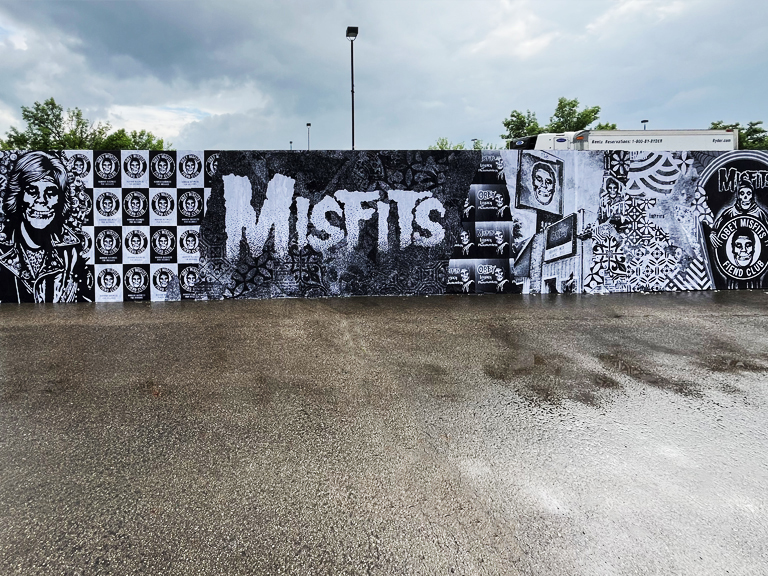
Mural advertising is one of the few formats that earns attention rather than demanding it. A well-executed brand mural stops foot traffic, invites photography, and gives a campaign a physical presence that no digital ad can replicate. When a 20-foot wall becomes your brand’s canvas in a neighborhood that matters to your audience, the impression count goes far beyond the people who walk by.
Over the past decade, mural advertising has shifted from a niche guerrilla tactic to a standard line item in the marketing budgets of consumer brands, streaming platforms, fashion labels, and tech companies. The format scales. A single mural in the right neighborhood can drive press coverage, social sharing, and foot traffic data — all from one production event.
This guide covers everything brand marketers need to understand about commissioning, planning, and measuring street mural campaigns: site selection, artist relationships, permitting, pricing, and how to build murals that generate earned media beyond the wall itself.
What Mural Advertising Actually Is
Mural advertising — sometimes called painted wall advertising or brand mural campaigns — involves a brand commissioning a large-format painted image on an exterior wall, typically in a high-foot-traffic urban neighborhood. Unlike billboards, murals are not rented on a standardized rate card. Each one is a negotiated, site-specific production that involves the wall owner, a commissioned artist, and often a local government permitting office.
How It Differs from Poster campaigns and Traditional OOH
Traditional out-of-home advertising (billboards, transit posters) is purchased through media companies that own standardized inventory. Murals operate differently. You’re not buying a unit — you’re creating a bespoke installation on a specific wall at a negotiated rate. Our guerrilla marketing services include both formats, but murals occupy a different strategic lane. They’re longer-lived, higher-impact, and generate cultural conversation that a printed poster typically can’t.
Painted Murals vs. Vinyl Wraps
Brands sometimes choose large-format vinyl wraps over painted murals for speed and cost predictability. Vinyl installs in hours rather than days and can be removed cleanly. Painted murals, however, read as more authentic, integrate better with neighborhood aesthetics, and photograph more compellingly. For social virality and press pickup, painted wins nearly every time.
Brand Murals vs. Artist-Led Murals
Some murals are brand-first — the mural exists primarily to communicate a campaign message. Others are artist-first — the brand sponsors a muralist known for their own work, and the brand’s involvement is subtle. Both approaches work, but the right choice depends on your audience, neighborhood, and campaign objectives. In cultural hubs like Brooklyn or Wynwood, artist-led murals tend to receive warmer reception and stronger social amplification.
Where to Put Your Mural: Site Selection Strategy
The wall is the media buy. Site selection is the most consequential decision in a mural campaign, and it requires on-the-ground knowledge that maps and satellite imagery can’t fully replace.
Foot Traffic and Dwell Time
A mural on a wall that pedestrians pass at speed is less valuable than one in a location where people slow down, congregate, or wait. Corners, café patrons zones, transit stops, and park adjacencies all create natural dwell. Our team scouts every potential location with foot traffic data and direct observation before recommending a wall.
Photography Angle and Sightlines
Murals live on social media as much as they live on walls. The best sites have a clear line-of-sight photography angle — room to step back, good natural light, and a background that doesn’t compete visually with the mural. Alleys, walls facing parks, and buildings set back from the sidewalk all create better photography conditions than tight urban canyons where you can only see the mural from directly below.
Neighborhood Relevance
Putting a mural in a neighborhood where it doesn’t resonate with residents creates friction, not conversation. The most effective brand murals are placed in areas where the target audience already lives, works, or spends leisure time. A fashion brand belongs in SoHo or Silver Lake. A tech startup might choose SOMA in San Francisco or the Gulch in Nashville. Context matters.
Wall Owner Relationships
Most high-value mural walls are controlled by property owners who lease them on a negotiated basis. Some markets have established mural programs — Wynwood in Miami, Bushwick in Brooklyn — where wall owners have experience licensing walls to brands. Others require cold outreach, negotiation, and relationship building. We manage landlord relationships in 50+ markets so our clients don’t have to.
The Art of Commissioning: Working with Muralists
A brand mural is only as good as the artist who executes it. Choosing the right muralist is not just a creative decision — it’s a strategic one that affects how the neighborhood receives the work, how it photographs, and whether it earns organic press.
Local Artists vs. National Names
Commissioning a local artist signals investment in the community and often generates goodwill press from neighborhood media. Commissioning a nationally recognized muralist brings built-in audience and social following. For most brand campaigns, a strong local artist with a distinctive style outperforms a generic illustrator, regardless of credential. For major product launches targeting cultural relevance, a recognizable name amplifies the story.
Creative Brief Development
Muralists work from a creative brief just like any creative vendor. The brief should define campaign objectives, required brand elements (logo, product, color palette), the degree of artistic freedom granted to the artist, and the approval process. Over-constraining muralists produces flat, corporate-looking work. Under-briefing produces beautiful art that doesn’t serve the campaign. The sweet spot is a clear brand framework with meaningful creative latitude.
Production Timeline
Small murals (under 500 square feet) typically take 2–5 days to complete. Large-format murals (1,000+ square feet) can run 1–3 weeks depending on wall prep, weather, and design complexity. Planning timelines should include: site negotiation (1–4 weeks), permitting (1–6 weeks depending on city), design approval (1–2 weeks), and production (1–3 weeks). Rushing any phase tends to compromise either quality or compliance.
Permitting and Legal Requirements for Brand Murals
Murals exist at the intersection of art, advertising, and property rights — which means the regulatory environment varies significantly by market. Getting this wrong can result in forced removal, fines, or reputational damage that undercuts the campaign entirely.
Signage vs. Art: The Key Distinction
Many cities distinguish between murals that are “art” (depicting no commercial message) and murals that are “signage” (including logos, product references, or brand copy). Art murals often receive faster, cheaper permits. Signage murals may require commercial advertising permits with associated fees and zoning compliance. Our team navigates this distinction in every market we work in.
Historical Districts and Neighborhood Review Boards
In historic districts, landmark zones, and certain community board areas, mural proposals may require neighborhood review before permitting proceeds. This process can add 4–8 weeks to a timeline. We identify these constraints during site selection so clients aren’t surprised mid-campaign.
Landlord Agreements
Separate from government permits, wall owners typically require a licensing agreement covering the term of the mural, maintenance responsibilities, the brand’s right to reproduce the mural in media, and removal obligations at end of term. These agreements should be reviewed by legal counsel before signing.
Mural Advertising Pricing: What You Should Expect to Pay
Mural advertising pricing is not standardized, but there are reliable ranges based on market, wall size, and production scope. Understanding these ranges helps brands budget accurately and evaluate proposals from vendors.
Typical Cost Ranges by Market Tier
Tier 1 markets (NYC, LA, Miami, Chicago) carry higher wall licensing fees, higher artist rates, and more complex permitting. Expect $25,000–$75,000+ for a flagship brand mural in a premium location. Tier 2 markets (Austin, Nashville, Atlanta, Denver, Portland) range from $15,000–$40,000. Smaller regional markets can deliver effective murals for $8,000–$15,000. Pricing includes wall licensing, artist commission, surface preparation, paint materials, and sealing.
Cost Components
Full-service mural production typically includes: site scouting and landlord negotiation, permitting fees, wall surface preparation (patching, priming), artist fee, materials, production documentation (photography and video), and a GPS-verified impression report. Some agencies bundle these; others line-item each component. Always confirm what’s included before signing a production agreement.
Comparing Mural ROI to Other OOH Formats
A well-placed mural generates impressions, organic social content, and press pickup in a way that no standard billboard can. The CPM on a mural that generates 500 user-created social posts is dramatically lower than it appears on paper. For brands building cultural credibility, the mural’s earned media value often exceeds its production cost. Our LED billboard trucks offer mobility across markets; murals offer permanence in a single high-value location. Both have a role in a complete street marketing strategy.
Measuring the Impact of a Brand Mural
Mural advertising is often dismissed as unmeasurable, but that’s a failure of methodology, not a feature of the format. With the right documentation and tracking approach, murals can produce concrete data on reach, engagement, and attribution.
Impression Counting and Foot Traffic Data
Foot traffic data from mobile device panels can estimate daily impressions for any wall location. Third-party providers like Placer.ai and similar tools measure pedestrian and vehicle traffic counts that can be tied to a specific address. For high-traffic locations, daily impression counts of 10,000–50,000 are common in major markets.
Social Monitoring and UGC Tracking
User-generated content from a mural wall is trackable via social listening tools. Brands should set up monitoring for location tags, hashtags, and visual search (Google Lens, Pinterest Lens) before the mural launches. A strong mural can generate hundreds to thousands of organic posts, each of which carries the brand message to the poster’s audience at zero additional cost.
QR Codes and Digital Integration
Murals can incorporate QR codes, short URLs, or AR triggers to bridge offline and online engagement. A QR code embedded in the mural’s design connects foot traffic to conversion tracking, lead capture, or campaign landing pages. This is one of the most direct ways to attribute downstream action to a street-level installation.
Press and Media Coverage Tracking
Newsworthy murals routinely earn coverage from local blogs, neighborhood media, and national marketing trades. Set up Google Alerts and media monitoring before launch. Coverage of a mural campaign often reaches audiences far beyond the wall’s immediate neighborhood, extending the brand’s reach without additional spend.
Mural Advertising in Practice: Campaign Types That Work
Not every mural campaign serves the same objective. Understanding which campaign types map to which outcomes helps brands choose the right format and set appropriate success metrics.
Product Launch Murals
Entertainment studios, CPG brands, and fashion companies frequently commission murals timed to product launches. A movie mural in the right Los Angeles neighborhood can generate entertainment press, social sharing from the film’s audience, and foot traffic photo documentation — all from a single production event. Combined with wheatpasting and poster campaigns in the same market, launch murals create layered visual saturation that’s difficult to ignore.
Brand Awareness Murals
For brands building awareness in a new market, a mural establishes physical presence in a way that digital ads can’t. A DTC brand entering a new city can signal local commitment through a mural that says “we’re here” in the language of the neighborhood. This approach works particularly well in markets where cultural credibility is a prerequisite for consumer adoption.
Event and Festival Activations
Murals timed to major events — music festivals, fashion weeks, sports championships — capitalize on concentrated foot traffic and press attention. A mural installed before SXSW in Austin, Art Basel in Miami, or NBA All-Star Weekend in whatever host city benefits from event-driven media coverage that wouldn’t otherwise touch a static wall installation.
Multi-City Mural Tours
Brands with national ambitions often commission mural tours — the same visual concept executed by local artists in 5–10 markets simultaneously or sequentially. This approach generates multi-market press, demonstrates national scale, and builds a content library of city-specific creative. Our team coordinates multi-city executions with local artists in each market, ensuring consistent quality across geographies.
Integrating Murals Into a Full Street Marketing Strategy
Murals perform best as part of a layered street marketing strategy rather than as standalone activations. The surrounding tactical environment amplifies a mural’s impact and extends campaign reach beyond a single wall.
Mural + Street Team Activation
Pairing a mural launch with a street team deployment at the wall creates a moment worth photographing and sharing. Street team members can distribute samples, engage passersby, direct people to the mural for photos, and create content that documents the activation in real time. The mural provides the backdrop; the team provides the human energy.
Mural + Sidewalk Stencils
Directing foot traffic toward a mural location using sidewalk stencils in the surrounding blocks creates a discovery experience that rewards curious pedestrians. This is particularly effective in neighborhoods where the mural is not immediately visible from major thoroughfares.
Mural + Experiential Event
A mural serves as permanent infrastructure for a one-day experiential marketing event at the wall. Launch events at the mural with brand activations, live music, or artist meet-and-greets drive concentrated earned media and social content. The mural continues working long after the event concludes.
Mural + Mobile Billboard Extension
For markets where a static wall isn’t available or practical, mobile billboards carrying the same mural creative extend the campaign’s visual language across the city. The mural anchors the concept; the mobile unit distributes it.
Frequently Asked Questions About Mural Advertising
How much does mural advertising cost?
Brand-commissioned murals typically run $8,000 to $75,000+ depending on wall size, market, artist tier, and permitting complexity. Small accent murals in secondary markets start around $8,000–$15,000. Large-format flagship murals in NYC, LA, or Miami range from $40,000 to $80,000 or more. Pricing includes artist commission, surface preparation, paint materials, and wall access coordination.
Do brands need a permit for a mural?
Yes, in most major U.S. cities. Permit requirements vary by municipality — some require a signage permit, others a mural permit from the public arts office. Permitting timelines range from 1 to 6 weeks depending on the city, zoning classification, and whether the mural includes commercial messaging. Our team handles permitting in all 50+ markets we activate.
How long does a brand mural last?
A properly sealed exterior mural lasts 2–5 years under normal weather conditions. UV-resistant clear coat extends life significantly. Most brands treat murals as 6–24 month activations tied to a campaign cycle, with removal or overpainting at end of term as specified in the landlord agreement.
What are the best cities for mural advertising?
New York City, Los Angeles, Miami (Wynwood), Chicago, Austin, Nashville, and Atlanta consistently deliver high foot traffic and strong social amplification for brand murals. Secondary markets like Denver, Portland, and Philadelphia offer strong value with lower costs and often more available wall inventory than saturated primary markets.
Can a mural go viral on social media?
Yes — and that’s a core part of the strategy. Murals designed with strong visual hooks, scale, and cultural relevance consistently generate organic photo and video content from passersby. Brands like Netflix, Nike, and Spotify have turned individual murals into national press moments. Design for the Instagram frame and the 10-second TikTok walkthrough, not just the passing pedestrian.
How does American Guerrilla Marketing handle mural campaigns?
Our team manages the full scope: site scouting, landlord negotiation, permitting, artist sourcing, production management, and GPS-documented photo and video delivery. We operate in 50+ U.S. markets from our base in Industry City, Brooklyn. Call us at (646) 776-2770 to discuss your campaign.
Frequently Asked Questions
What is mural advertising brand guide?
American Guerrilla Marketing provides mural advertising brand guide services across 50+ U.S. markets. Every campaign is planned, scouted, executed, and GPS-documented by our field teams. We work with regional brands and Fortune 500 companies on campaigns that require real street-level execution and documented proof of performance.
How does AGM approach brand guide?
Our process starts with a market consultation to understand your goals, target audience, and budget. We then scout locations, handle any required permissions or permits, coordinate production and installation with our local crews, and provide a full GPS-tagged photo report after the campaign runs.
What markets does American Guerrilla Marketing cover for brand guide?
We operate in 50+ U.S. markets including New York, Los Angeles, Chicago, Miami, Houston, Atlanta, Seattle, Denver, Boston, and dozens of secondary markets. Contact us to confirm availability and pricing for your specific market.
How much does a brand guide campaign cost?
Campaign pricing depends on market, format, quantity, and duration. We work with budgets ranging from targeted single-market runs to national rollouts across multiple cities. Use our RFP Builder or contact us directly for a custom quote based on your specific campaign requirements.
How do I get started with brand guide through AGM?
The fastest way to get started is to submit your campaign details through our RFP Builder at americanguerrillamarketing.com, or contact us directly at [email protected] or (646) 776-2770. Our team typically responds within one business day with availability and initial pricing.