The University of Michigan is one of the largest and most influential research universities in the United States. With over 47,000 students enrolled on its Ann Arbor campus and a national reputation that draws highly engaged, high-achieving students from across the country and internationally, U of M represents a concentrated, demographically valuable 18-24 audience for brands that need to reach college students at scale.
Ann Arbor’s relationship with its flagship university is deep — the city’s commercial, entertainment, and residential infrastructure is organized around the student population, creating a campus environment where off-campus student life is concentrated in identifiable, accessible corridors. For guerrilla marketing programs targeting the college student demographic, this concentration makes University of Michigan and Ann Arbor a high-efficiency market: you know where the students are, and the physical environment makes reaching them straightforward if you know the right tactics and locations.
American Guerrilla Marketing runs college marketing programs at universities across the country, including at University of Michigan. This guide covers the tactics that work in the U of M market, the locations that deliver the highest student reach, the timing windows that maximize campaign impact, and how to structure a program that actually moves the needle with this audience.
Understanding the University of Michigan Student Market
Before designing a U of M guerrilla marketing campaign, it helps to understand what makes this student population distinct. University of Michigan students are academically competitive, socially engaged, and embedded in a campus culture that values school identity, athletics, and community in ways that shape their consumer behavior.
Demographics and Consumer Profile
U of M attracts students from across the income spectrum, with a strong representation of upper-middle-class students who have significant discretionary spending power. The student population has strong concentrations in technology, business, engineering, and pre-professional programs — audiences that brands in tech, finance, consulting, consumer goods, and apparel actively target. The university’s strong international student enrollment also creates a multilingual, globally aware audience segment that is relevant for brands with international or multicultural positioning.
Athletics Culture and Community Identity
Michigan football is the single most powerful community identity driver at U of M. Michigan Stadium, with a capacity exceeding 107,000, hosts the largest regular-season attendance of any college football stadium in the world. The football season creates the highest-concentration audience windows in Ann Arbor, with tailgating, Main Street activity, and post-game entertainment district traffic creating massive pedestrian volumes in a compact area. Any campus guerrilla marketing program should account for the football calendar as a primary campaign timing driver.
Where to Reach U of M Students: Key Corridors and Locations
Effective guerrilla marketing at University of Michigan starts with location selection. Here are the corridors and locations where student traffic is highest and where campaign placements deliver the strongest reach.
South University Corridor
South University Avenue is the primary commercial and social corridor for U of M undergraduates. The strip between East University and Washtenaw concentrates bars, restaurants, retail, and the social activity that defines undergraduate daily life. This corridor is the highest-priority target for any campaign focused on the core undergraduate 18-22 demographic. Poster placements on licensed surfaces in this corridor, street team deployment during peak evening hours, and sampling programs in the retail stretch all deliver concentrated undergraduate reach.
State Street and Central Campus
State Street is the main pedestrian artery connecting central campus to downtown Ann Arbor. The street sees extremely high foot traffic during class hours and between class and residential destinations. State Street is the right location for campaigns that need daytime weekday reach against the full student body rather than the narrower late-night social audience of South University.
Downtown Ann Arbor: Main Street and Liberty
Downtown Ann Arbor, centered on Main Street and Liberty Street, serves both the student population and Ann Arbor’s permanent resident community. For campaigns that need to reach students with more disposable income and a wider age range, including graduate students and upperclassmen, downtown Ann Arbor provides the right mix. The Kerrytown district adds a more residential, community-oriented student audience to the campaign footprint. Wheatpaste poster campaigns in the downtown corridor consistently deliver strong student reach alongside local resident impressions.
Campus-Adjacent Housing Corridors
The residential streets surrounding central campus — Hill, Packard, Church, and the neighborhoods north of campus along Oxford and Geddes — are where undergraduates walk to and from campus daily. Poster placements in these corridors reach students in a lower-distraction context than the busier commercial streets, with high daily frequency as the same population passes the same surfaces repeatedly throughout the week. This frequency effect is particularly valuable for campaigns building sustained brand awareness over a multi-week period.
Tactics That Work at University of Michigan
The guerrilla marketing tactics that perform best at U of M combine the concentration advantages of the campus environment with the specific interests and behaviors of the Michigan student population.
Poster Campaigns on Licensed Surfaces
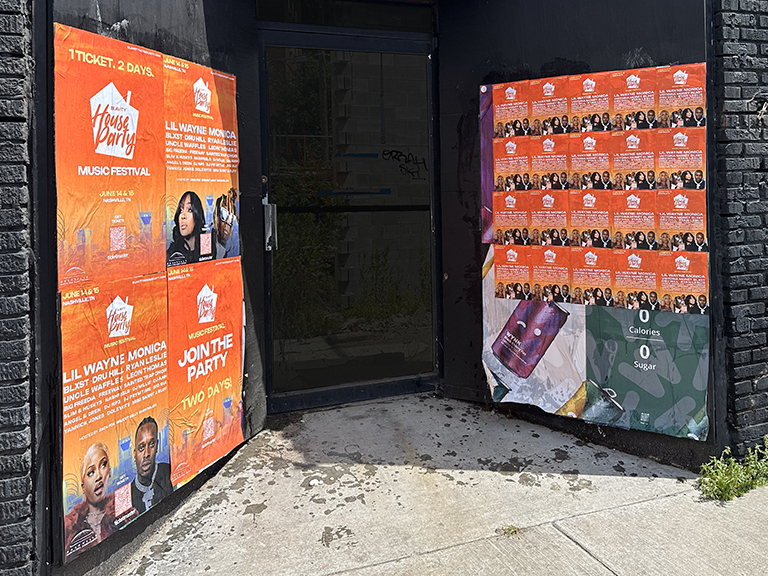
Poster campaigns on licensed off-campus surfaces in Ann Arbor’s student corridors are the highest-reach fixed format available for U of M marketing. Posters in South University, downtown Ann Arbor, and campus-adjacent housing corridors reach students at multiple touchpoints throughout their daily routines. Our guerrilla marketing services at college markets include poster placement on licensed surfaces that comply with city of Ann Arbor and University of Michigan posting policies.
Street Team Distribution
Street teams deployed in South University and on State Street during peak class-change and lunch hours reach large volumes of students with direct engagement. Street team programs at U of M are most effective when they offer something of genuine value — product samples, discount codes, branded items — rather than generic flyers that students have no motivation to accept. Our teams are briefed to engage naturally and offer genuine value, not to push materials on disinterested passersby.
Football Game Day Activations
Michigan home football game days are the highest-concentration audience events in Ann Arbor’s calendar. Tailgating areas, the Main Street entertainment strip, and the State Street corridor fill with students, alumni, and visitors in the hours before and after each home game. Experiential marketing activations positioned near tailgating zones or on the pedestrian approach to the Big House reach an audience that is in an unusually positive, social, and brand-receptive state. LED truck routing through the game day corridors also delivers high impressions per hour during these windows.
Sampling Programs
Product sampling at U of M is most effective when it is timed and located correctly. High-traffic outdoor locations on State Street or South University during midday hours, or near the Diag — the central campus open space — during warm weather, reach the broadest cross-section of the student population in a single deployment. Our product demonstrations at college markets include branded packaging, compliance review for any consumable products, and trained staff who can deliver the brand message alongside the sample.
Campaign Timing: Matching the U of M Academic Calendar
Academic calendar timing is a fundamental campaign planning input for any U of M guerrilla marketing program. The student population is concentrated in Ann Arbor for most of the fall and winter semesters, with predictable gaps during breaks and exam periods when off-campus activity drops significantly.
Fall Semester: The Highest-Value Window
Fall semester at U of M is the highest-value campaign period. Move-in weekend in late August brings thousands of new and returning students to Ann Arbor simultaneously, creating a specific high-attention moment for campaigns targeting incoming students in particular. The football season runs through November, delivering game-day audience spikes every other weekend. The overall fall semester period from September through mid-December represents the longest sustained window of high student population density in Ann Arbor.
Winter Semester Opportunities
Winter semester runs from January through April. Campaign execution during winter months requires contingency planning for Michigan’s cold weather, which affects street team efficiency and outdoor installation durability. January and February tend to have lower foot traffic in outdoor corridors; March and April recover as weather improves. The end of the academic year in April — with graduation events and end-of-year campus activities — creates a specific campaign timing opportunity for brands targeting students transitioning to post-graduation life.
Graduate and Professional School Marketing at U of M
University of Michigan’s graduate and professional programs attract a distinct audience segment from the undergraduate population — older students with professional experience, more specific career objectives, and significantly higher purchasing power. Graduate students at U of M’s Ross School of Business, Law School, Medical School, and School of Engineering represent target audiences for professional service firms, financial institutions, career development platforms, and premium consumer brands that the traditional 18-22 undergraduate market does not deliver.
Where Graduate Students Congregate
Graduate students at U of M concentrate in different Ann Arbor geographies than undergraduates. Downtown Ann Arbor, particularly Main Street and Kerrytown, attracts graduate students who live in the neighborhoods south and west of central campus. The Law Quad area and North Campus (home to the engineering and technical schools) serve concentrated graduate school communities. Street team programs, poster campaigns in downtown Ann Arbor, and sampling at the coffee shops and restaurants frequented by graduate students reach this audience segment efficiently without the undergraduate market noise of the South University corridor.
Professional Network Marketing
For brands targeting MBA students and business school audiences at Ross, campus-adjacent marketing that positions the brand in the professional identity context — near the business school buildings, at the MBA career fair, at business school networking events — creates the right association. Our brand ambassador programs can be tailored specifically for business school environments with brand messaging that speaks to the professional identity of the audience rather than the broader undergraduate consumer positioning.
Off-Season and Alumni Marketing at U of M
University of Michigan’s brand identity extends far beyond the student population to one of the country’s largest and most engaged alumni networks. Michigan alumni are concentrated not just in the Midwest but nationally and internationally, and the alumni audience continues to engage actively with Michigan athletic events, alumni chapter gatherings, and the university’s public profile long after graduation.
Alumni Events and Reunion Marketing
Michigan’s annual homecoming weekend and major reunion events bring large alumni populations back to Ann Arbor, creating campaign opportunities to reach the alumni audience alongside the current student population. For brands targeting the 30-50 professional and affluent consumer segment that Michigan’s alumni base heavily represents, homecoming weekend in Ann Arbor delivers a concentrated version of that audience in a geographic footprint that is much more accessible and cost-efficient than reaching the same audience through national digital advertising.
Alumni Markets: Reaching Michigan in Their Home Cities
Michigan alumni chapters in Detroit, Chicago, New York, Los Angeles, San Francisco, and dozens of other major markets represent organized, self-identifying audience communities that can be reached through local guerrilla marketing campaigns timed to chapter events, Michigan watch parties during football and basketball season, and other moments of alumni community activation. Brands that want to reach the Michigan alumni audience in non-Ann Arbor markets can use our guerrilla marketing services in those cities to activate around alumni community moments.
Integrating Digital and Physical at U of M
College guerrilla marketing campaigns at U of M work best when physical street-level tactics are connected to digital actions. QR codes on poster materials that link to app downloads, promotional pages, or content experiences convert physical impressions to measurable digital engagement. Street team interactions that include a digital component — a follow-us call to action, a UGC prompt, or a social share incentive — extend the physical campaign’s reach through the student social graph.
Student-Generated Content
University of Michigan students are active social media users who share campus experiences regularly. Campaigns that create share-worthy moments — a striking visual installation, a branded game or competition, an unusual or funny street element — generate organic student content that reaches far beyond the direct audience of the physical campaign. Our team designs campus activations with social content potential in mind, building in visual elements and interaction hooks that encourage photography and sharing.
Ann Arbor Local Market Integration
University of Michigan’s presence transforms Ann Arbor from a small Michigan city into one of the most educated, affluent, and culturally active smaller markets in the Midwest. This transformation creates opportunities for campus-focused guerrilla marketing programs that reach not just students but the broader Ann Arbor community that has grown around the university.
The Ann Arbor permanent resident market — faculty, medical professionals, university staff, and the professional community that has grown up around the university over decades — is a highly educated, high-income consumer segment that co-inhabits the same commercial corridors as the student population. Downtown Ann Arbor, Kerrytown, and the neighborhoods west and south of campus serve this combined student-and-resident audience. Brands that want to reach both segments efficiently can structure campaigns in these shared corridors rather than splitting between student-specific and resident-specific geographies.
The University Musical Society, the Michigan Theater, the Ann Arbor Film Festival, and the Ann Arbor Summer Festival are among the cultural programs that draw both the university community and broader Ann Arbor cultural audiences to specific locations on specific dates. These events create campaign timing windows similar to university athletic events — predictable audience concentration moments that guerrilla marketing programs can be structured around for maximum reach efficiency. Our team tracks the Ann Arbor cultural calendar alongside the academic calendar when building campaign timing recommendations for U of M market programs.
Brand Categories With Specific U of M Audience Alignment
Not all brands are equally relevant to the University of Michigan student population. Here is how specific brand categories align with the U of M audience and what each should prioritize in their campus marketing approach.
Technology and software brands have a natural home at U of M. The computer science and engineering programs graduate thousands of students annually into technical careers, and the broader student population at a research university is technologically sophisticated and early-adopting. App launches, software products, and consumer technology brands find a highly aligned audience at U of M. Campus marketing in the tech context should emphasize capability and genuine utility rather than lifestyle-only positioning — this audience wants to know what the product does and whether it is well-built.
Financial services brands — banking, investing, budgeting, student loan management — have a clear need-based audience at any university, and U of M’s large enrollment with a high proportion of students from upper-middle-class families creates a specific opportunity for investment products, premium banking services, and early career financial planning tools. This audience is making financial decisions for the first time in many cases, and brands that position as genuinely helpful resources rather than simple service sellers create stronger long-term relationships.
Athletic and outdoor brands have a built-in entry point through U of M’s sports culture. The Wolverines’ athletic identity creates natural affinity for athletic brands that sponsor or associate with the team, but the broader U of M student population also has high outdoor recreation participation given the Ann Arbor area’s access to Michigan’s lakes and natural areas. Experiential activations around outdoor themes — hiking, kayaking, cycling — connect with both the athletic identity and the recreational outdoor interest of the broader U of M student community.
Frequently Asked Questions
What guerrilla marketing tactics work at University of Michigan?
Effective tactics at U of M include poster campaigns on licensed campus-adjacent surfaces and off-campus housing corridors, street team distribution in the South University, State Street, and Liberty Street corridors, sampling programs at high-traffic campus locations, and event marketing around Michigan home football games and major campus events.
Where do UMich students spend time off campus?
The South University corridor, State Street, Main Street in downtown Ann Arbor, Liberty Street, and the Kerrytown district are the primary off-campus pedestrian areas where University of Michigan students concentrate. These corridors are the highest-value targets for off-campus guerrilla marketing.
When is the best time to run guerrilla marketing at University of Michigan?
Move-in weekend in late August and early September is the highest-value window for reaching incoming students. Home football game weekends at Michigan Stadium draw 100,000+ attendees and create massive pedestrian concentration in the surrounding Ann Arbor corridors. Fall semester in general is the highest-traffic period.
Can brands advertise on the University of Michigan campus?
University-managed surfaces on campus require approval from university facilities and may require partnership agreements. Off-campus surfaces in adjacent neighborhoods and the surrounding Ann Arbor commercial districts are available through standard licensing and property owner agreements.
How does American Guerrilla Marketing reach students at U of M?
Our college marketing programs at University of Michigan deploy street teams, poster campaigns on licensed off-campus surfaces, and sampling programs in the highest-traffic student corridors. Contact us at (646) 776-2770 to plan a U of M campaign.