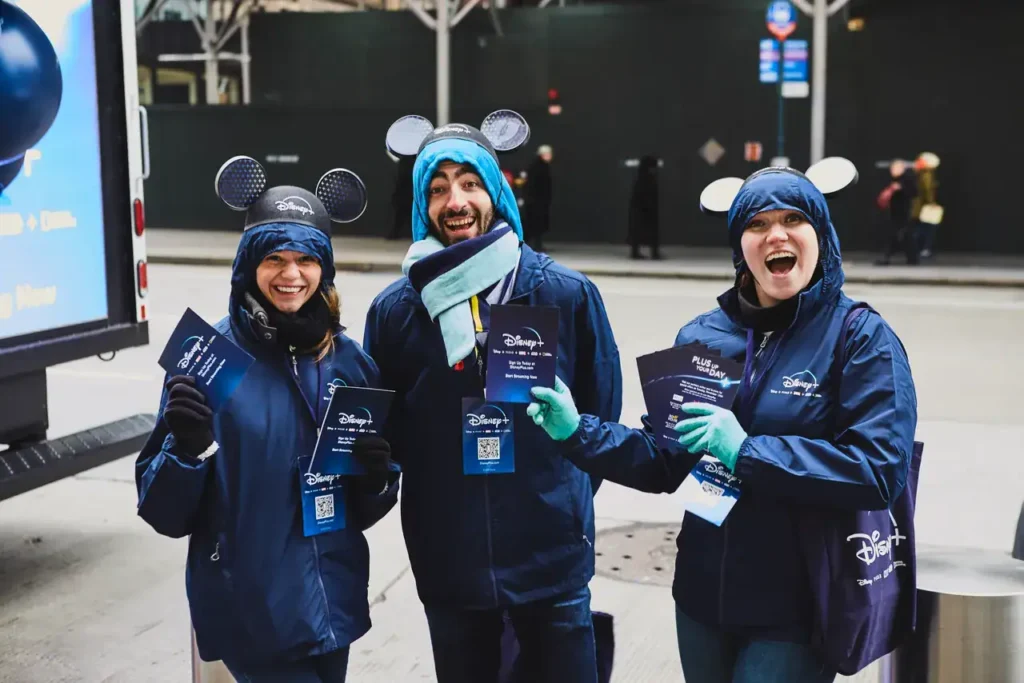
Market share is won in the moments that happen between a consumer and a brand, and most of those moments happen at street level: at a sampling table outside a grocery store, at a festival booth, at a trade show, or in front of a pop-up activation. Digital advertising can build awareness. A promotional staffing agency deploys the human infrastructure that converts that awareness into preference, trial, and purchase.
The right promotional staffing partner doesn’t just fill slots on a schedule. They match brand DNA with individual talent, train that talent on specific product knowledge and engagement techniques, and deploy them with the accountability structures that ensure the campaign executes as designed. That combination is what separates a promotional program that moves product from one that just keeps staff occupied.
This guide covers what a promotional staffing agency actually provides, how to evaluate partners, and how to structure campaigns that use promotional staff as a genuine competitive weapon.
The Real Value of a Promotional Staffing Agency
Most marketing channels target audiences. Promotional staffing engages individuals. The difference is not semantic; it’s the fundamental distinction between broadcast communication and personal interaction, and personal interaction converts at rates that broadcast cannot match.
Direct Consumer Influence
A brand ambassador standing in front of a consumer with a product sample, a clear message, and genuine product enthusiasm creates a persuasion moment that a 30-second ad slot can’t replicate. The direct, human, sensory experience of a product trial combined with a knowledgeable recommendation drives trial conversion at rates that performance digital campaigns rarely approach in high-consideration categories.
Market Intelligence Generation
Promotional staff in the field are a real-time market intelligence channel. They hear consumer objections, common questions, competitive comparisons, and spontaneous feedback that no survey or focus group captures as authentically. Brands that build feedback loops from their field teams into their product and marketing decisions gain a market intelligence advantage that competitors who only analyze digital data don’t have.
Brand Building at the Human Scale
Brand love is built through positive experiences, and experiences require interaction. The brands that consumers feel genuine affinity for are often those with strong experiential marketing programs that created personal moments. Promotional staffing is the mechanism that delivers those moments at scale.
What a Top-Tier Promotional Staffing Agency Provides
The gap between promotional staffing agencies is wide. Understanding what a top-tier partner provides helps you identify gaps in your current relationships and set expectations for new ones.
Curated Talent Rosters
Leading promotional staffing agencies maintain pre-vetted rosters organized by skill set, market, experience level, and aesthetic profile. When a campaign brief comes in, they match from an existing roster rather than cold recruiting, which compresses lead time and improves talent quality. Rosters are maintained through ongoing relationship management and performance tracking, not just job board postings.
Category-Specific Training
The training requirements for a spirits sampling program are different from those for a pharmaceutical trade show, which are different from those for a fitness brand activation. Top agencies develop category-specific training modules alongside brand-specific briefings, so staff arrive at every engagement with both general category fluency and specific brand preparation.
Campaign Integration
Promotional staffing doesn’t exist in isolation. It works best when integrated with the broader campaign architecture: the OOH media, the social media strategy, the retail promotion, the PR push. Agencies that understand campaign integration can brief staff on their role within the larger context, which improves their ability to direct consumers to other brand touchpoints and maximizes the overall campaign return.
Real-Time Operations Management
The best promotional staffing agencies don’t just place talent and hope for the best. They manage operations in real time: monitoring GPS locations, receiving field reports, responding to issues, and managing the logistics of multi-location deployments from a centralized operations function. This operational capability is what allows brands to confidently run complex, multi-city activations without on-site management at every location.
Promotional Staffing for Different Campaign Types
Promotional staffing serves a range of campaign functions, each with distinct requirements for talent profile, training, and performance measurement.
Product Sampling Programs
Sampling programs require staff with strong product knowledge, efficient sampling logistics skills, and the ability to convert a brief product interaction into a trial motivation. The KPI is usually samples distributed per hour combined with opt-ins or follow-through conversion data. Sampling staff need stamina for full-day activations and the ability to maintain energy and engagement quality across a high volume of interactions.
Street Team Activations
Street teams executing guerrilla marketing campaigns need a different profile: comfort with public environments, confidence with cold approaches, and adaptability to changing field conditions. They may be distributing materials, creating brand presence at high-traffic locations, directing foot traffic to nearby activations, or executing creative tactics that require improvisation within brand guidelines.
Trade Show Staffing
Trade show promotional staff operate in a business-to-business context with a sophisticated audience. They need to qualify leads quickly, hold technical product conversations, manage booth traffic, and represent the brand at a level that matches the professional context. This requires a higher baseline of professional polish and category knowledge than consumer-facing programs.
Sports and Entertainment Sponsorship Activations
At sporting events, concerts, and festivals, promotional staff work within high-energy, often loud, logistically complex environments. They need to create brand moments that cut through a competitive attention environment, manage equipment and materials in dynamic conditions, and engage audiences who are primarily focused on the event rather than the brand activation. High energy, physical stamina, and adaptability are critical profile requirements.
Selecting and Briefing a Promotional Staffing Agency
The selection process for a promotional staffing agency should be as deliberate as the selection process for any strategic marketing partner. The quality of this relationship directly affects campaign performance.
Evaluating Agency Track Record
Ask for case studies from campaigns similar to yours in scale, category, and geography. Agency portfolios often feature their best work rather than their typical work; asking for examples of campaigns that faced challenges and how those challenges were resolved is more revealing than reviewing highlights reels.
Understanding the Talent Selection Process
Ask specifically how the agency selects talent for a campaign. What criteria do they use? How do they evaluate fitness for your specific brand? Do they allow client involvement in the selection process? Agencies with rigorous, documented selection processes deliver more consistent talent quality than those who rely on relationships and gut feel.
Aligning on Accountability and Reporting
Establish reporting expectations before the campaign begins. What data will the agency provide and at what frequency? What does the daily or shift-end report include? How are issues escalated and documented? Clear reporting agreements prevent the ambiguity that leads to post-campaign disputes about whether the campaign was executed as planned.
Building a Long-Term Promotional Staffing Relationship
Promotional staffing relationships improve over time. Agencies that develop familiarity with a brand’s standards, culture, and campaign preferences deliver better talent matches, more efficient briefings, and fewer surprises than new relationships that start from scratch with every engagement.
Preferred Talent Roster Development
Over multiple campaigns, high-performing staff become identified as preferred talent for the brand. Building a dedicated roster through the agency partner creates a team that gets more effective with each deployment because they’re increasingly familiar with the brand. This compounding institutional knowledge is a significant operational advantage over starting fresh at every activation.
Continuous Performance Improvement
Post-campaign reviews that feed specific performance data back to the agency create a continuous improvement loop. Agencies that take feedback seriously and act on it between campaigns deliver measurably better performance over time. Those that treat feedback as a formality don’t.
Promotional Staffing ROI: Making the Business Case
Marketing budgets are competitive environments. Making the business case for promotional staffing investment requires connecting staff activity to measurable business outcomes that leadership recognizes.
Cost Per Engagement vs. Cost Per Click
The cost per direct consumer engagement in a well-executed field marketing program compares favorably to digital cost per click when you account for engagement depth. A 60-second brand conversation with a product sample creates a brand impression that no digital ad impression matches. The quality difference justifies a higher nominal cost per contact in most category analyses.
Trial Conversion to Purchase
In categories where trial drives purchase, measuring the conversion rate from field trial to subsequent purchase is the clearest ROI signal available. Brands with strong trial conversion data have the strongest business cases for promotional staffing investment. Establishing the measurement methodology before the campaign runs creates the data integrity needed to make this case convincingly.
Brand Recall Lift
Pre- and post-campaign brand recall surveys in markets where field programs ran versus control markets where they didn’t create a clean comparison that isolates the incremental brand awareness impact of promotional staff deployments. This methodology requires planning, but the resulting data is compelling evidence for continued investment.
Frequently Asked Questions
What does a promotional staffing agency do?
A promotional staffing agency sources, trains, and deploys brand representatives for marketing campaigns, events, and in-store promotions. They provide the human infrastructure for sampling programs, street team activations, trade show staffing, product launches, and experiential brand events.
How is a promotional staffing agency different from a general temp agency?
Promotional staffing agencies specialize in marketing and brand contexts. Their talent rosters are built around consumer-facing skills: engagement, persuasion, product knowledge, and brand representation. General temp agencies fill operational roles. Promotional specialists fill brand roles.
What types of campaigns use promotional staffing?
Product launches, sampling programs, trade show activations, street team campaigns, guerrilla marketing events, pop-up retail, sports sponsorship activations, music festival marketing, and retail floor promotions all rely on promotional staffing.
How do I brief a promotional staffing agency effectively?
Provide brand background, target consumer profile, campaign objectives, activation locations and schedule, specific staff requirements including appearance standards, and measurable goals. The more precise the brief, the better the agency can match talent and prepare them for your campaign.
What KPIs should I use to measure promotional staff performance?
Engagements per hour, samples distributed, leads or opt-ins collected, conversion rates, social content generated, brand recall lift, and return on investment per activation are all standard KPIs for promotional staffing programs.
Does American Guerrilla Marketing operate as a promotional staffing agency?
Yes. We deploy trained brand ambassadors, street teams, and promotional staff across 50+ U.S. markets. Every deployment is GPS-tracked, documented, and reported. We integrate promotional staffing into full guerrilla marketing campaigns for maximum impact.