American Guerrilla Marketing
Nationwide serivce
Media planning, media buying, billboard advertising, & guerrilla marketing
Case Study:

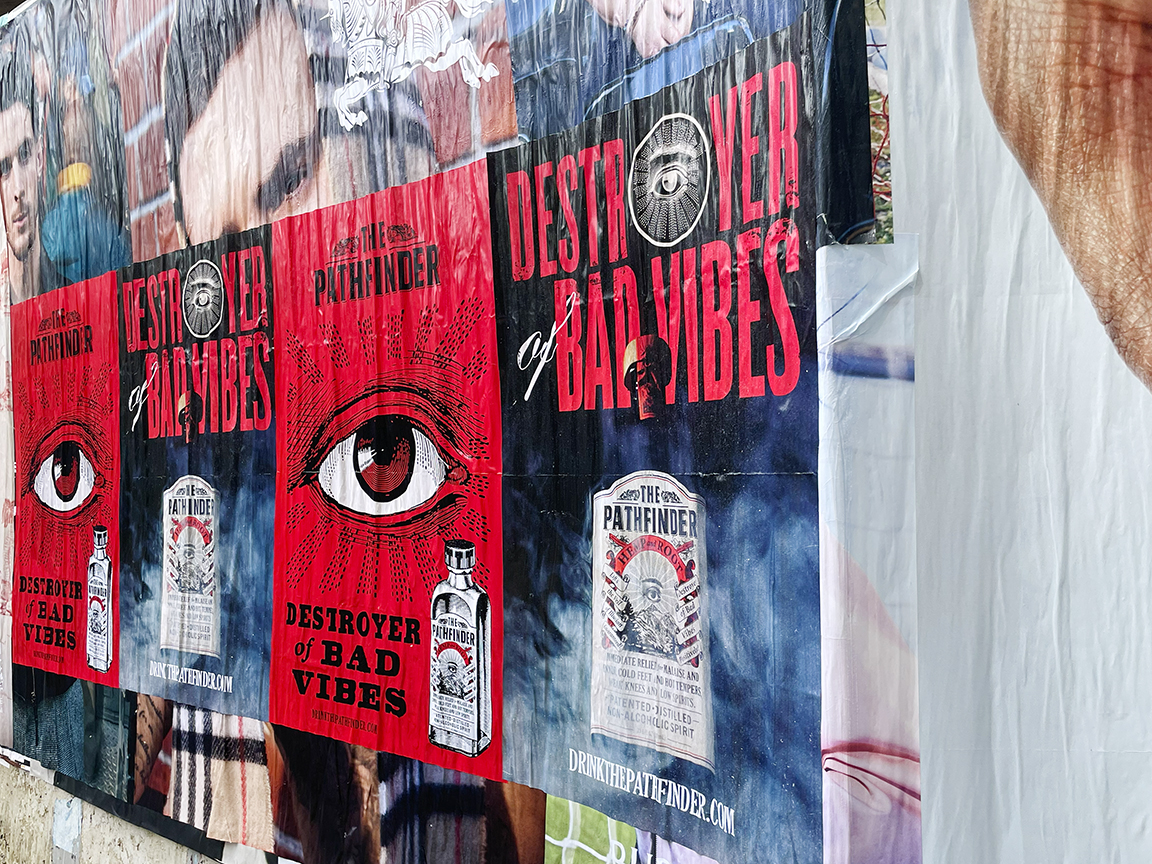
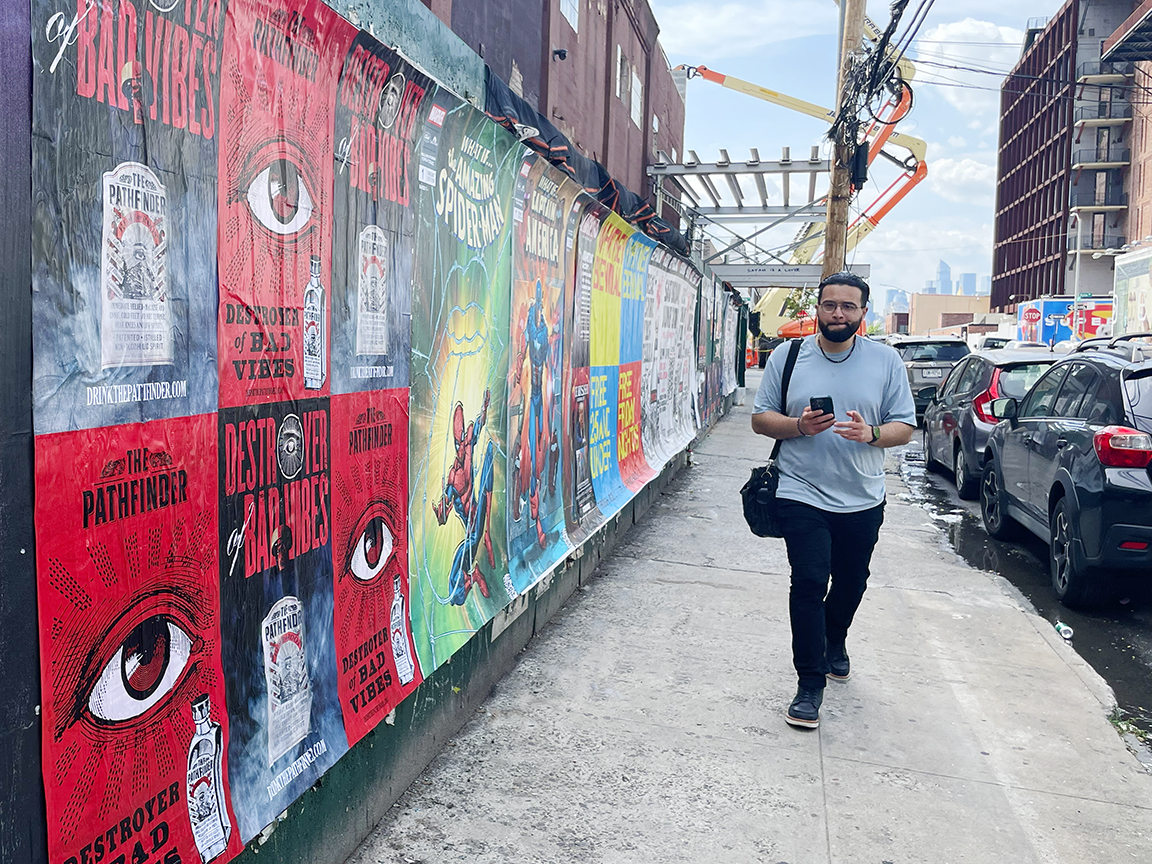
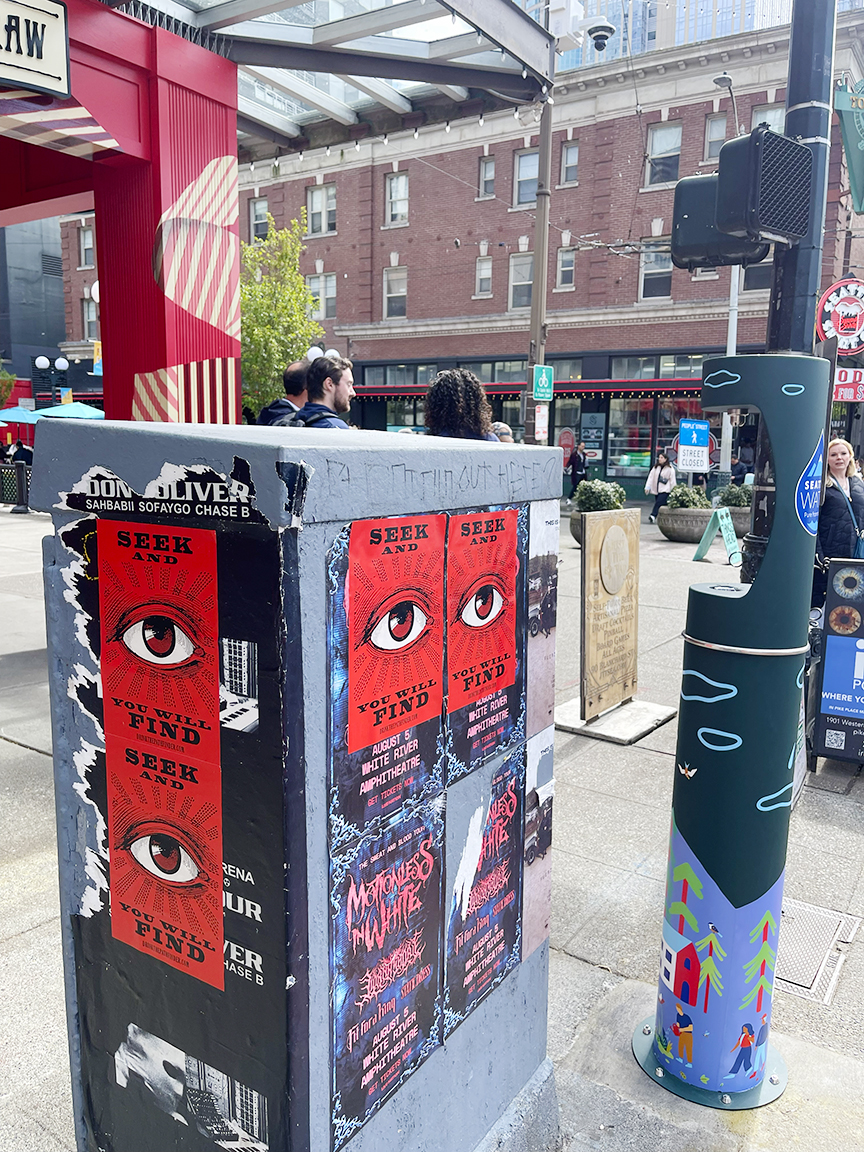
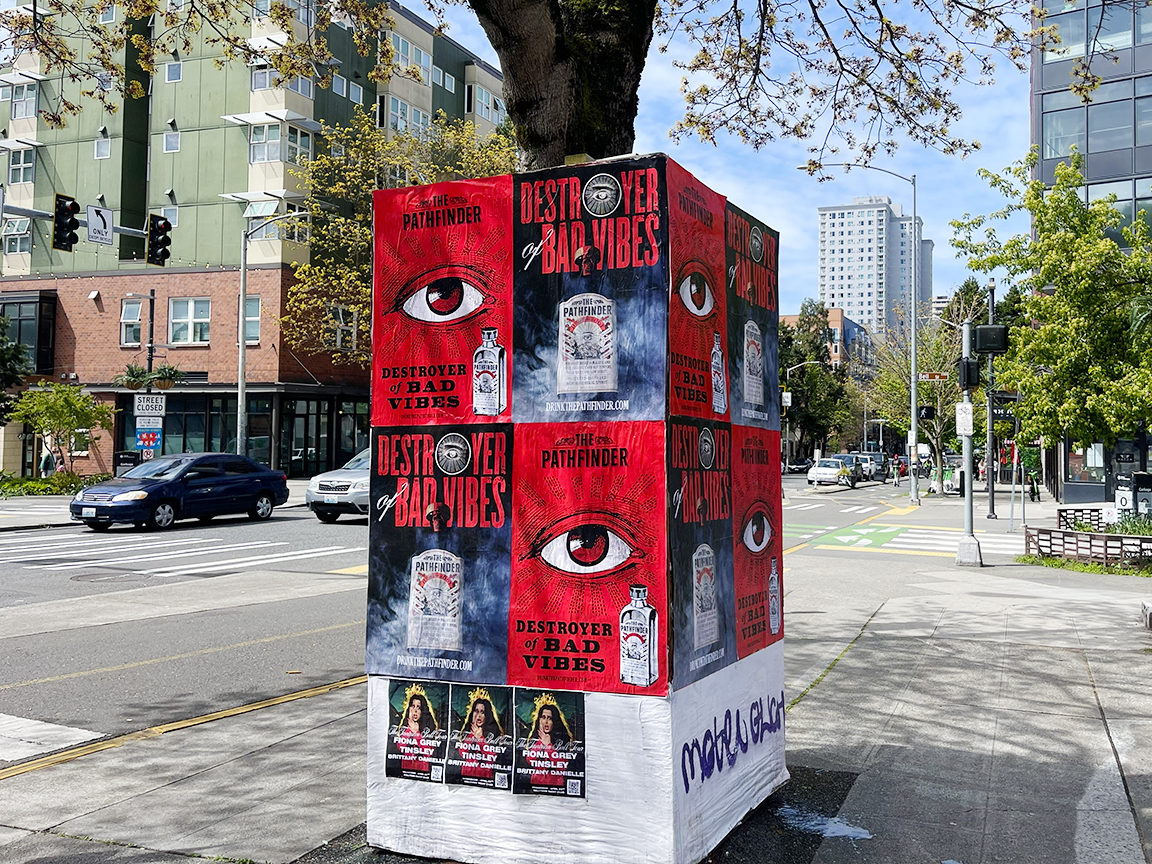
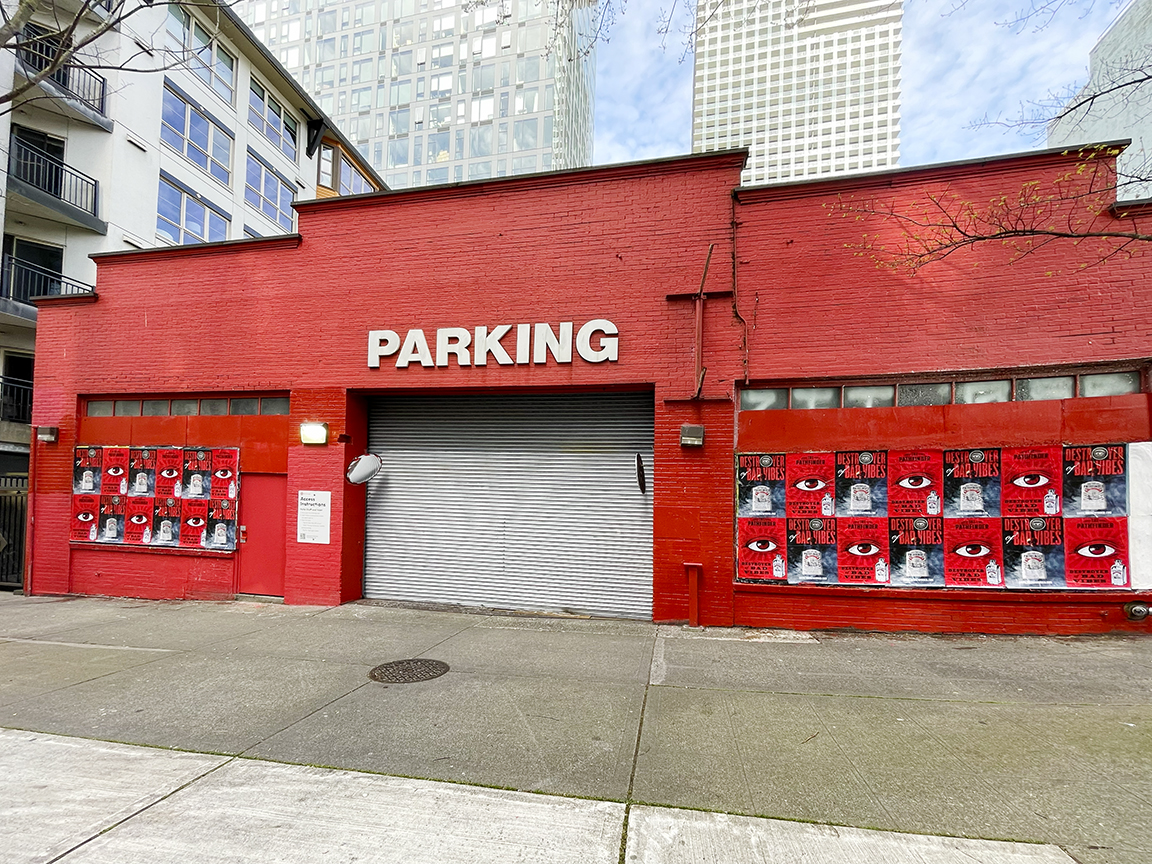
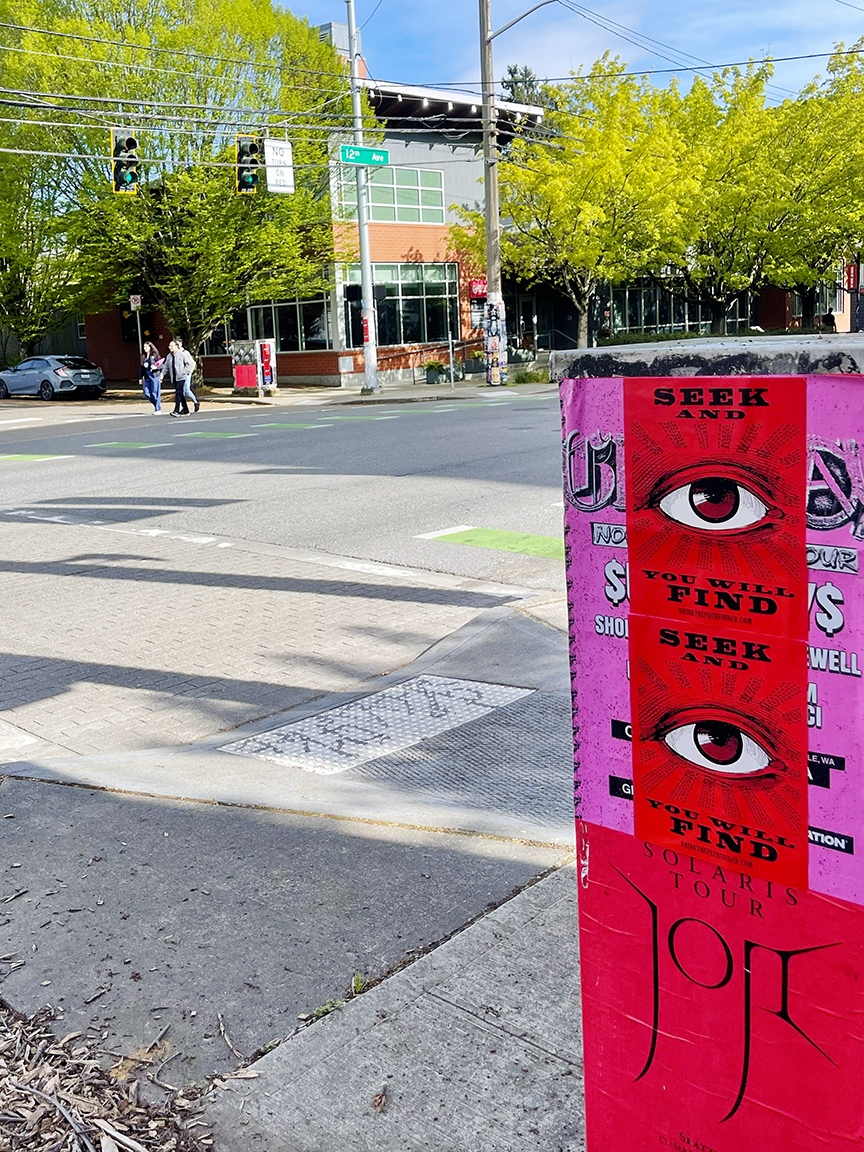
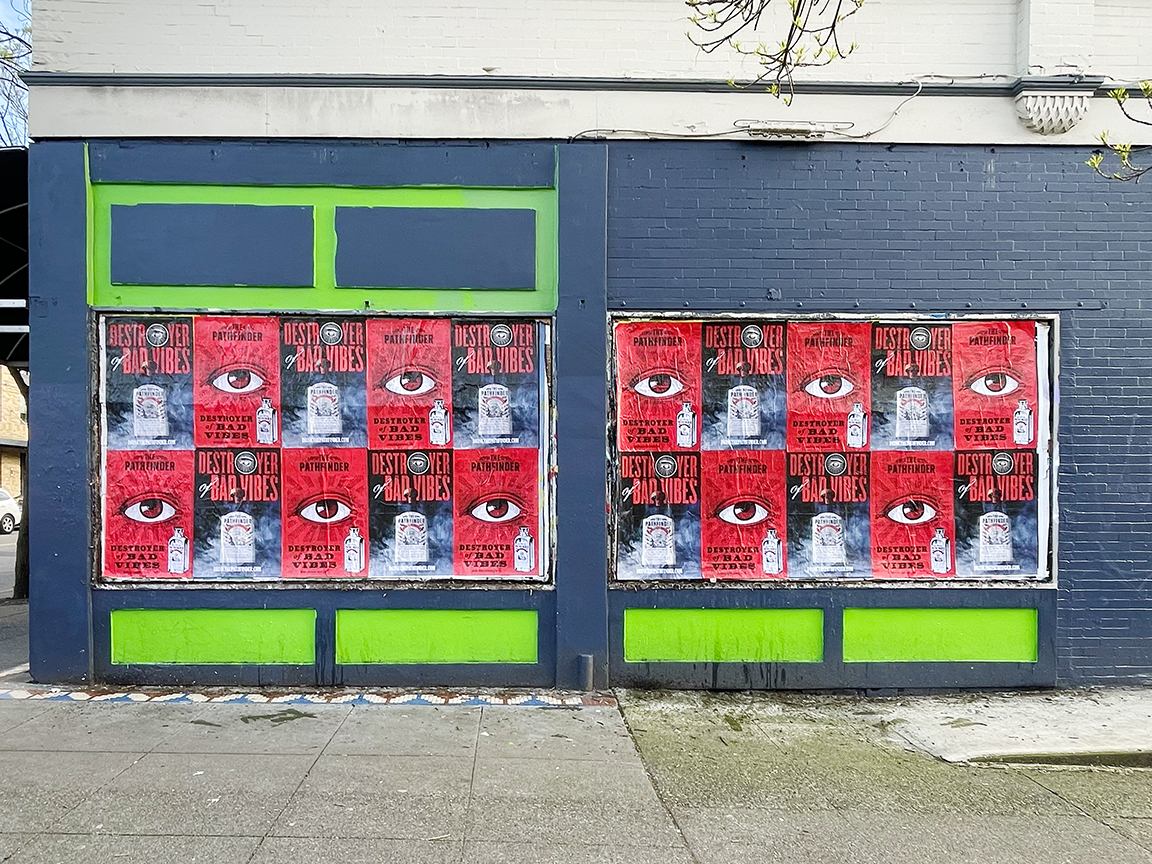
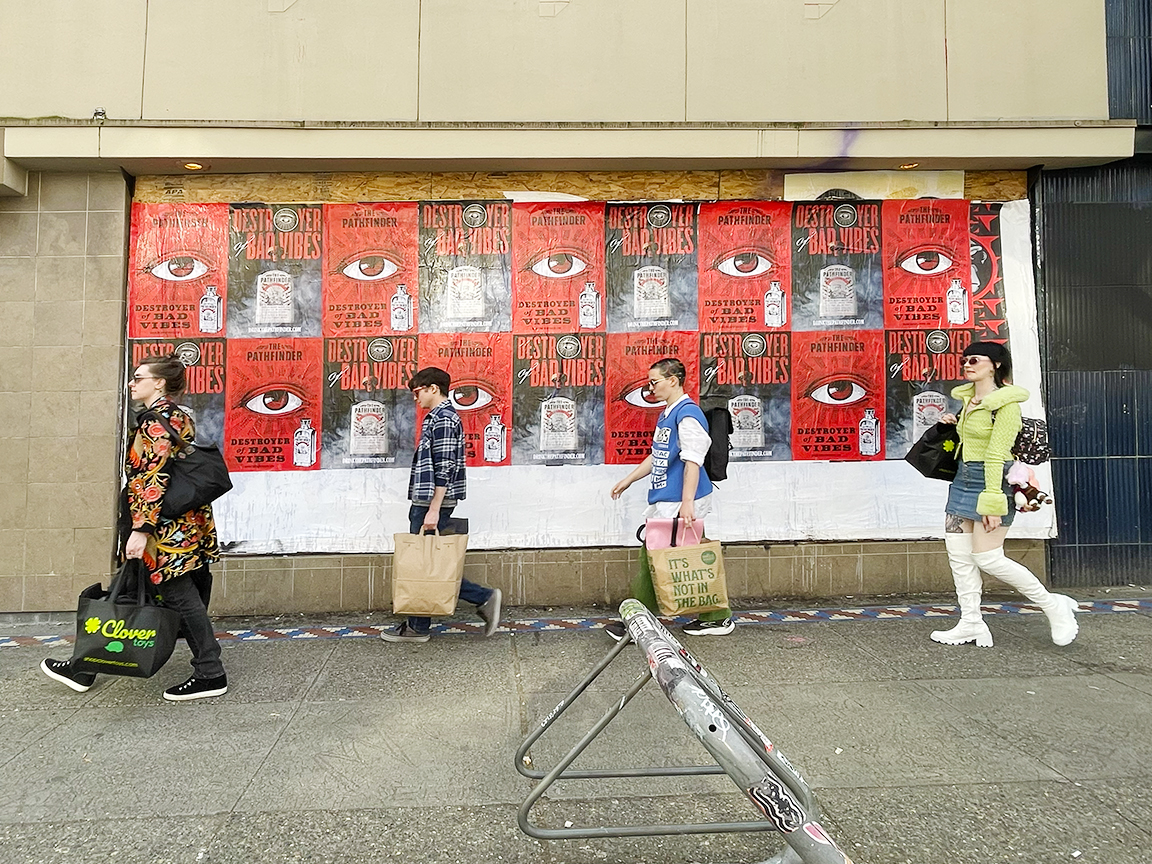
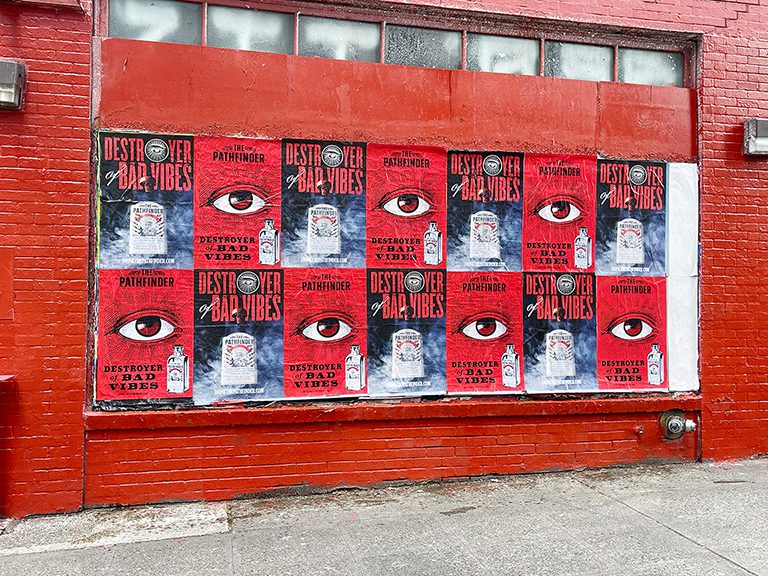
Restaurant Week draws diners out of their routines and into the streets. For several days, the neighborhoods with the highest concentration of participating restaurants become the most active pedestrian zones in their respective cities. Pathfinder launched a dual-market street campaign timed precisely to that window, deploying 400 large-format posters and 400 street snipes across Capitol Hill in Seattle and Industry City and the East Village in New York City simultaneously. The creative made the campaign unforgettable. Illustrated eyes covered every surface in the target neighborhoods, and those eyes followed pedestrians as they moved. People noticed. People stopped. People remembered.
The Pathfinder campaign ran across two markets in two separate installation windows, both timed to Restaurant Week activity in each city. Seattle installations ran April 18 through April 21, 2026, concentrating on Capitol Hill, the neighborhood with the highest density of independent restaurants, bars, and dining destinations in the city. New York City installations ran June 8 through June 12, 2026, targeting Industry City in Brooklyn and the East Village in Manhattan, two neighborhoods where restaurant foot traffic during dining-focused events is among the highest in the city.
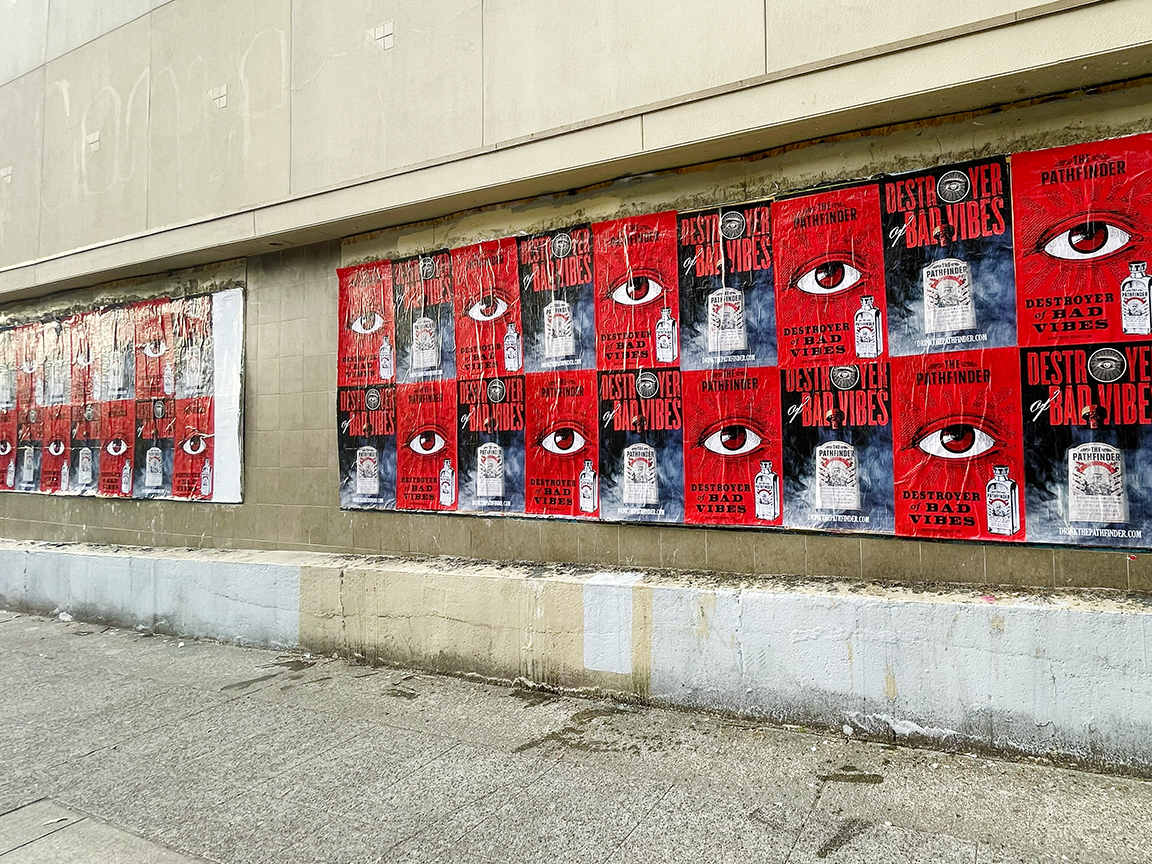
The two-format approach combined 400 24×36 large-format wheatpaste posters at ten or more locations per market with 400 9×12 snipe posters across the same footprint. Six creative designs ran across the poster format. One consistent design ran across the snipes, creating a unified base layer of repetition while the poster creative added visual variety at the larger scale.
By the end of both installation windows, Pathfinder had covered the walls, posts, and surfaces of the most active restaurant neighborhoods in two cities with creative that people kept looking at long after they had passed it.
Restaurant Week concentrates a valuable consumer audience into a specific geography over a specific time window. Diners who participate in Restaurant Week are already making active decisions about where to eat, already moving through restaurant districts on foot, and already in a discovery mindset. That combination of geographic concentration, timed consumer behavior, and dining intent makes Restaurant Week one of the highest-quality targeting windows for any brand relevant to the food, dining, or nightlife ecosystem.
The Pathfinder campaign was designed to reach that audience at the exact moment they were moving through the neighborhoods where the campaign was installed. Rather than simply placing posters in high-foot-traffic areas of each city, every placement was positioned within the restaurant district geography where Restaurant Week activity concentrated in each market. Not nearby. Not adjacent. Inside the exact zone where diners were already walking, waiting in line, and looking for what to do next.
The dual-market approach amplified the campaign’s overall impact. By launching Seattle and New York City in sequence rather than choosing a single market, Pathfinder built a presence in two of the country’s most prominent dining cultures during their respective Restaurant Week windows. The two markets did not compete for resources. They reinforced each other, demonstrating a brand with genuine national street presence built around the dining context rather than a single-city activation.
Award Winning Personalized Service
You will get thoughtful, devoted, and individualized attention from our experienced, qualified, and professional personnel. Being one of the most illustrious agencies in Brooklyn, New York, American Guerrilla Marketing has been awarded the Best of Brooklyn title.
Nationwide
Industry City, Brooklyn, New York 11232
American Guerrilla Marketing
Hours
Mon - Fri: 9 AM - 5 PM

Sat & Sun:Â Closed
Automate your campaign with AGM’s Request for Proposal Builder. Simply answer a few quick questions about your campaign goals, markets, and timeline, and the system will generate a tailored presentation with recommended strategies, quantities, and pricing. Click the RFP Builder to instantly receive your customized proposal.
The creative drove this campaign as much as the placement strategy did. The Pathfinder installations used illustrated eyes as the primary visual element. Large, detailed, expressive eyes covering the walls of Capitol Hill and the East Village, rendered in a style that made them feel like they were watching whoever walked past.
This is not a passive aesthetic choice. The illustrated eyes created an active consumer experience on the street. Pedestrians walking past a standard poster rarely stop walking. Pedestrians who feel that a poster is looking at them do. The eyes created a psychological engagement that most street advertising does not achieve because most street advertising is content to be seen rather than to create a moment.
The effect was particularly strong on the 24×36 posters, where the illustration scale allowed the eyes to read clearly at a distance and then become more detailed and expressive as the viewer moved closer. That dual scale performance, readable from a distance and engaging up close, is what good street creative looks like in a real neighborhood environment. The snipes reinforced the same visual motif at eye level throughout every block in the target zones, creating continuity between the larger poster presence and the ground-level saturation layer.
Four hundred 24×36 wheatpaste posters were deployed across both markets at ten or more locations per city, with six creative designs rotating throughout the campaign footprint. At 24 inches wide and 36 inches tall, these posters hit the right scale for restaurant district walls, where surfaces tend to be varied in size and a consistently readable format across different surface types is more valuable than a hero size that only works on certain walls.
Six creative designs across 400 placements means the campaign stayed visually active throughout each neighborhood. A diner walking from one end of Capitol Hill to the other, passing multiple installations along the way, encountered different iterations of the Pathfinder illustrated eye at each stop. The visual language remained consistent. The specific execution varied enough to reward attention rather than train the eye to stop registering it after the first few exposures.
In Seattle, placements concentrated on the core dining corridors and nightlife streets of Capitol Hill where Restaurant Week foot traffic is highest. In New York, the campaign split between Industry City, which draws a food-forward Brooklyn audience to its restaurant and market vendors, and the East Village, one of Manhattan’s most dense restaurant neighborhoods with strong independent dining culture and high pedestrian foot traffic throughout dining hours.
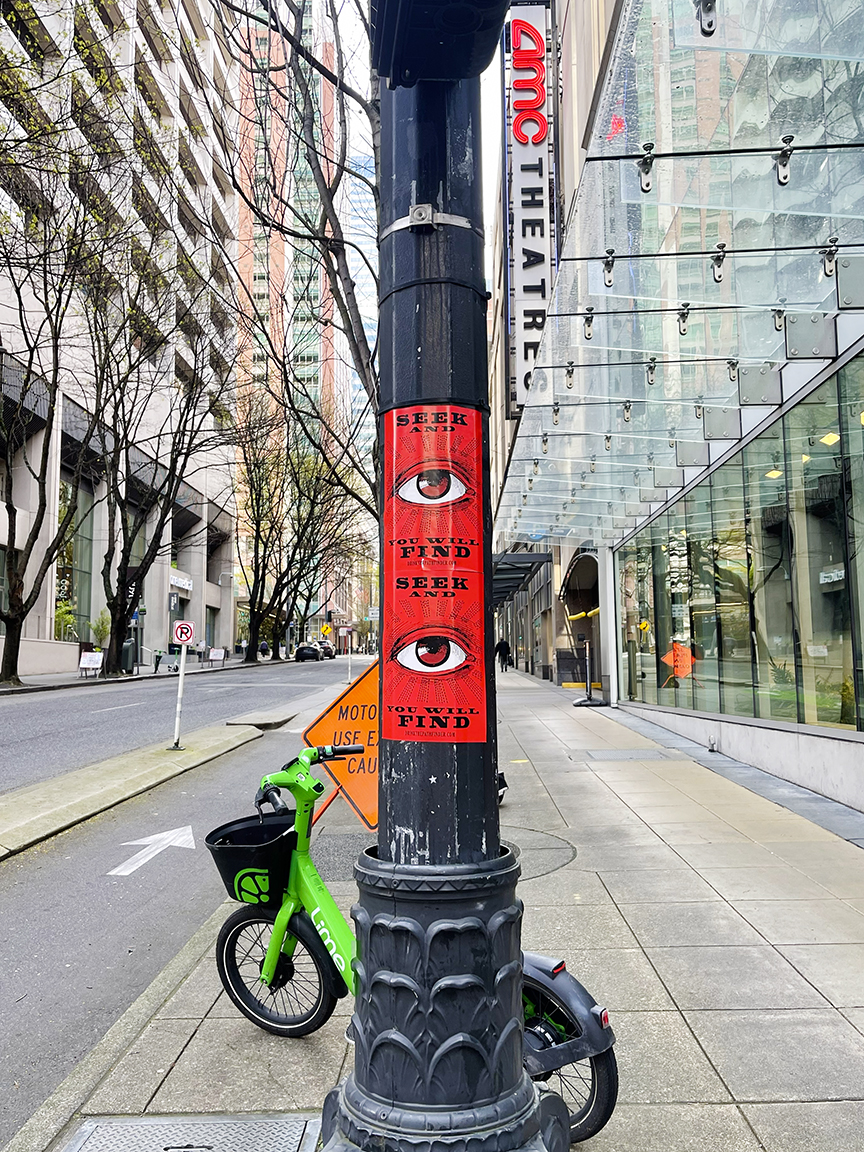
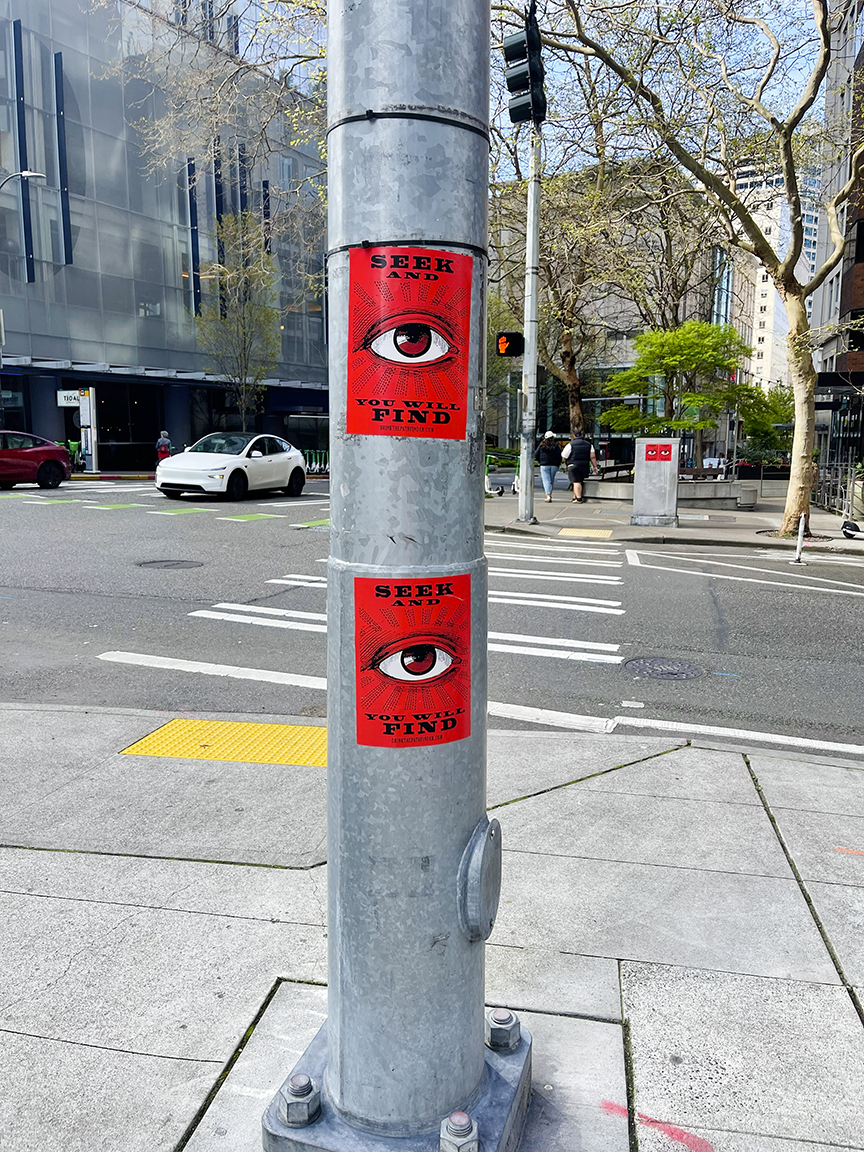
Four hundred 9×12 snipe posters were deployed across both markets at ten or more locations per city, running one consistent creative design throughout the entire campaign footprint. The snipes served as the frequency layer of the campaign, blanketing lamp posts, utility poles, scaffolding, and street-level surfaces throughout every block in the target zones with a consistent Pathfinder visual presence that reinforced the larger poster placements.
In a restaurant district context, the snipe placement strategy focused on surfaces immediately adjacent to restaurant entrances, bar doorways, sidewalk café perimeters, and the walking routes between dining destinations. A consumer deciding where to eat next, standing outside one restaurant while looking toward another, walking down a block of options, and waiting for a table to open up has extended dwell time in these exact locations. Snipes placed at those specific surface types capture attention during the decision moments that matter most for a dining-context campaign.
Four hundred snipes across two markets built genuine density in both cities. Capitol Hill and the East Village and Industry City are geographically compact enough that 200 snipes per market created strong neighborhood saturation without dispersing coverage across an area too large to feel concentrated.
The three neighborhoods selected for this campaign share a specific consumer profile: pedestrian-heavy, dining-oriented, creatively engaged, and concentrated enough to saturate effectively at moderate placement volumes.
Capitol Hill in Seattle is the neighborhood where independent restaurants, bars, coffee shops, and nightlife destinations concentrate most densely. During Restaurant Week, the foot traffic throughout Capitol Hill’s main corridors reaches some of the highest concentrations in the city. Installation teams focused on the main pedestrian streets, side streets with high restaurant density, and the approaches to the most prominent participating venues.
Industry City in Brooklyn is a food and creative market destination that draws a consistent audience of food-forward consumers from throughout the borough and beyond. Its layout, with pedestrian pathways running between market vendors, restaurants, and retail destinations, creates extended dwell time and natural foot traffic patterns that produce high placement visibility throughout the venue campus and surrounding streets.
The East Village in Manhattan is one of the city’s most restaurant-dense neighborhoods, with a strong independent dining culture, active nightlife, and consistent high foot traffic throughout dining hours. The neighborhood’s grid of pedestrian-scale streets and abundance of wall surfaces made it an ideal environment for both poster and snipe installations.
The Pathfinder campaign produced the kind of results that happen when creative and placement strategy work together at the same level of quality. The illustrated eye creative was not just visually distinctive. It was designed to create an active psychological engagement with the pedestrian walking past, making every installation feel personal rather than broadcast. In both Seattle and New York, that engagement translated into a campaign that people talked about, pointed out to each other, and remembered well after the installations had run their course.
The Restaurant Week timing concentrated the campaign’s impressions among the most valuable possible audience for Pathfinder’s messaging. Diners active during Restaurant Week are exactly the consumer profile the brand needed to reach, and those diners were moving through the exact neighborhoods where the installations were concentrated. The geographic and temporal targeting alignment produced campaign contact that was both high-frequency and high-relevance throughout both installation windows.
Pathfinder’s experience with this campaign reflected the results on the street. The client returned to American Guerrilla Marketing for a subsequent campaign, and Pathfinder’s feedback and review appear on AGM’s New York Google Business Profile as one of the agency’s most cited client testimonials. That kind of outcome does not come from placing media and hoping for the best. It comes from creative that creates genuine engagement and placement strategy that puts that creative in front of the right audience at the right moment
Restaurant Week concentrates a high-value, dining-oriented consumer audience into specific geographic areas over a defined time window. Diners who actively participate in Restaurant Week are already in a discovery mindset, already moving through restaurant districts on foot, and already making active decisions about where to eat. That combination of behavioral intent, geographic concentration, and timed consumer activity makes the Restaurant Week window significantly more targetable than general consumer reach efforts. A street campaign installed in the right neighborhoods during Restaurant Week reaches an audience that is already primed for the dining context rather than interrupting unrelated activity.
A dual-market campaign uses separate installation windows in each city timed to relevant local events, while maintaining a consistent creative identity and brand presence across both markets. For Pathfinder, the Seattle installation ran during Capitol Hill’s Restaurant Week window in April, and the New York City installation ran during the corresponding dining event in June. Each market received its own local targeting and installation logistics managed by AGM’s local crews, while the shared creative maintained a unified campaign identity across both cities. The result is a brand with demonstrated national street presence built around a specific consumer context rather than a single-city activation.
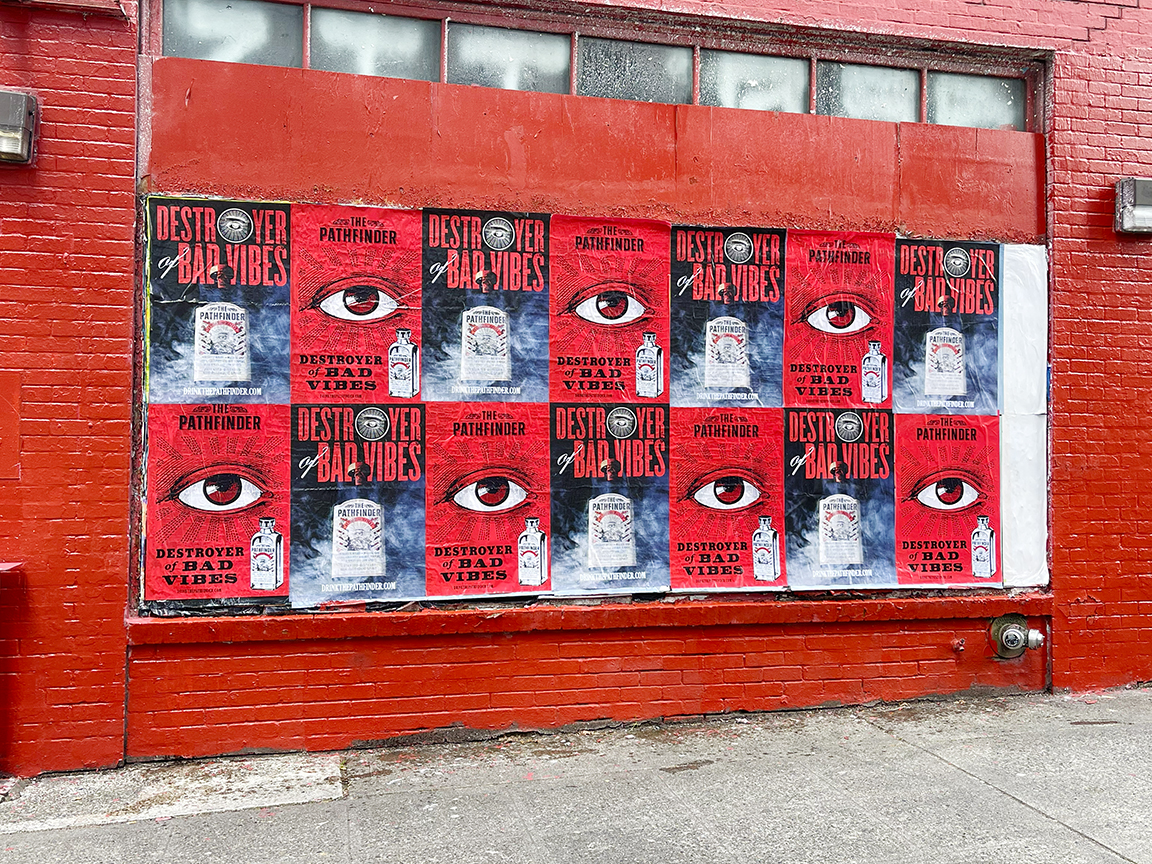
The illustrated eyes created active psychological engagement rather than passive visual presence. Most street advertising is content to be seen as a consumer passes by. The Pathfinder eyes were designed to make consumers feel seen by the installation, which triggers a brief but genuine moment of engagement that differs from the standard glance-and-move-on behavior most posters receive. At the 24×36 poster scale, the eyes were large enough to read clearly from across the street and detailed enough to reward a closer look. At the 9×12 snipe scale, the same visual motif created a consistent presence at eye level throughout every block in the target zone, reinforcing the larger poster presence with a frequency layer built around the same distinctive creative element.
Both neighborhoods were selected for their specific concentration of the dining-oriented consumer audience that Pathfinder needed to reach during Restaurant Week. Industry City draws a food-forward Brooklyn audience to a market-style destination with multiple restaurants, vendors, and retail options in a pedestrian-friendly campus layout that produces extended dwell time and high placement visibility. The East Village is one of Manhattan’s most restaurant-dense neighborhoods, with strong independent dining culture, active nightlife, and consistent high foot traffic throughout dining hours and into the evening. Together they covered the Brooklyn and Manhattan dining audiences that mattered most for the campaign’s objectives.
Neighborhood saturation depends on the geographic size of the target area, the density of available placement surfaces, and the format sizes being deployed. For compact, pedestrian-scale neighborhoods like Capitol Hill in Seattle or the East Village in Manhattan, 200 placements split across two formats, large-format posters at major wall surfaces and snipes at lamp posts and utility infrastructure, creates strong saturation within the core dining and nightlife corridors. The key is concentration rather than volume. Two hundred well-placed pieces in a targeted neighborhood footprint produces higher frequency and stronger consumer recall than the same volume spread across a much larger area.