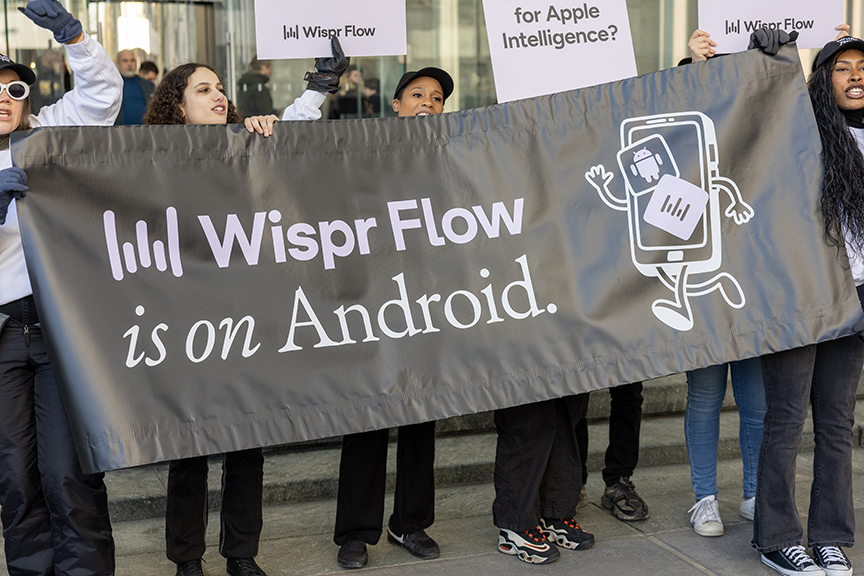
Tech startups don’t lose to larger competitors on product — they lose on visibility. A better product sitting in a market where nobody has heard of you is still a failing business. The companies that survive early-stage competition are the ones that build awareness faster than their runway runs out, and they do it with tactics that multiply impact relative to spend rather than matching incumbent brands dollar for dollar in paid channels where they can’t win.
Guerrilla marketing has always been the format of choice for resource-constrained brands that need to punch above their weight. Uber pasted stickers on cars in San Francisco. Airbnb wheat-pasted posters around hotel conference centers during major events. Early Spotify activations used street teams to drive app downloads in target markets before the platform hit critical mass. None of these were expensive compared to the TV and digital campaigns their eventual competitors would run — and all of them created outsized awareness for the investment made.
This guide covers how tech startups can apply guerrilla marketing to build real market visibility — which tactics work best, how to sequence them, what to spend, and how to measure results that matter to both marketing teams and investors watching early traction signals.
Why Guerrilla Marketing Is Built for Startups
Traditional advertising channels are structured to favor incumbents. The brands that dominate paid search have years of quality score history. The brands that dominate display have massive creative libraries and programmatic budgets. TV and radio are priced for scale. In these channels, a startup is always at a structural disadvantage: less history, less budget, less data, and less leverage with media vendors.
The Structural Advantage of Street-Level Tactics
Guerrilla marketing doesn’t have incumbents in the same way. A wheatpaste campaign in SoHo doesn’t care how long you’ve been in business — it either works in that neighborhood or it doesn’t. A street team activation at SXSW gives you the same physical access to the same audience as a brand with a hundred times your budget. The format rewards creativity, execution quality, and strategic placement over raw spend. That’s the startup’s natural domain.
Creating the Impression of Scale
One of guerrilla marketing’s most valuable properties for early-stage companies is its ability to create the impression of market presence before it fully exists. A focused wheatpaste campaign across three key neighborhoods in NYC makes it look like your brand is everywhere to the residents of those neighborhoods, even if the total campaign footprint is smaller than a single billboard on one highway. For a startup trying to establish credibility with early adopters and press, that perception of ubiquity is worth far more than its actual cost.
Generating Earned Media at Low Cost
Tech press and startup media are actively looking for companies doing interesting things. A clever guerrilla marketing campaign — one with a creative concept worth writing about — can generate press coverage from TechCrunch, Fast Company, and local tech media without a PR agency relationship or a press release. The campaign itself is the story. Our guerrilla marketing services are designed with this earned media dimension in mind, helping startups create activations that are worth covering, not just worth photographing.
The Most Effective Guerrilla Tactics for Tech Startups
Not all guerrilla marketing tactics are equally useful for tech startups. The format choices that work for a consumer packaged goods brand don’t automatically translate to a SaaS platform or a consumer app. Here’s how the most common street-level tactics map to tech startup objectives.
Wheatpasting Around Tech Hubs and Campuses
Wheat-pasted poster campaigns in neighborhoods with high concentrations of your target users are among the highest-efficiency awareness tactics available to early-stage startups. For B2C apps, this means the neighborhoods where young professionals live and commute. For developer tools or B2B platforms, this means the areas around major tech campuses, co-working clusters, and startup incubator buildings. Our wheatpasting campaigns in markets like San Francisco’s SOMA district, NYC’s Flatiron neighborhood, and Austin’s Second Street district consistently reach tech-adjacent demographics at competitive CPM.
Street Teams at Tech Conferences and Events
Tech conferences create concentrated audiences of exactly the users, press contacts, and investors a startup needs to reach. Deploying street teams in the blocks surrounding SXSW, CES, TechCrunch Disrupt, Web Summit, or any relevant vertical conference places your brand in the peripheral vision of everyone who matters to your market. The teams don’t need to be inside the conference — the streets, hotels, and restaurants surrounding the venue carry the audience before and after sessions. A strong street presence around a major conference can generate the impression of official involvement at a fraction of official sponsorship costs.
Sidewalk Stencils Outside Competitor HQs
One of the most discussed guerrilla tactics in tech startup lore is the competitor adjacency play: deploying sidewalk stencils or street team activations in the vicinity of a direct competitor’s office or flagship location. The tactic is provocative, generates press, and reaches exactly the audience that is already thinking about your product category. It requires careful execution to stay within legal bounds and to frame the message compellingly rather than defensively.
LED Truck Deployments on Launch Day
For product launches and funding announcements, an LED billboard truck deployed in the startup’s target market on the day of a major announcement creates a physical announcement moment that press covers. The visual of an LED truck with your launch campaign in the relevant tech neighborhood is photogenic, shareable, and signals the kind of bold marketing execution that startup press finds interesting. The format is particularly effective in San Francisco, NYC, and Austin where tech press has a physical presence and reporters walk the streets rather than working entirely remotely.
Sticker Campaigns for Developer and Creative Communities
For tech startups targeting developer, designer, or creator communities, sticker campaigns have a long, successful history. Developers stick stickers on laptops — it’s a cultural norm that predates most brand marketing practice. A well-designed sticker that a developer actually wants to put on their laptop gets seen by every other developer in their coworking space, conference, and meetup. The peer-to-peer display network generated by effective sticker campaigns in developer communities is exceptionally efficient for reaching tech-adjacent audiences.
Market Selection: Where Tech Startups Should Activate
Geographic focus is critical for early-stage startups with limited budgets. The instinct to go broad — to activate everywhere at once — consistently produces lower results per dollar than concentrated activation in the markets where success will be most visible and most impactful.
Primary Tech Markets
San Francisco and the Bay Area remain the primary tech startup guerrilla marketing market in the U.S. The concentration of tech media, investors, and early adopters makes it the highest-leverage market for tech-specific campaigns. NYC is the second primary market, particularly for fintech, media tech, adtech, and consumer apps targeting urban professionals. Austin is the third, driven by SXSW and a growing tech ecosystem that’s more accessible and less expensive than SF and NYC.
Secondary Markets with Strong Startup Ecosystems
Boston (biotech, edtech, fintech), Seattle (enterprise software, gaming), Denver (outdoor/active consumer apps), Miami (crypto, fintech, consumer), and Chicago (B2B SaaS, supply chain tech) all offer meaningful tech startup audiences at lower activation costs than primary markets. For startups targeting specific verticals with strong regional presence — healthcare in Boston, logistics in Chicago — secondary markets often outperform primary markets on cost-adjusted audience quality.
Conference-Driven Market Strategy
For startups without geographic commitment to a specific market, conference-driven activation is the most budget-efficient approach to guerrilla marketing. CES in Las Vegas, SXSW in Austin, Google I/O adjacent activations in San Jose, and vertical conference clusters in NYC (fintech) and Boston (healthtech) create temporary concentrations of exactly the right audiences in predictable geographic zones. Timing guerrilla activations to these conferences extracts maximum audience value from focused geographic investment.
Timing and Sequencing Your Guerrilla Marketing Campaign
Campaign timing matters more for tech startups than for established consumer brands, because startup visibility is tied to specific milestone moments — launches, funding rounds, major product updates — that create natural news hooks. A guerrilla marketing campaign that coincides with a major announcement reaches the tech press at a moment of peak interest and gives them physical evidence of market activity to cover.
Pre-Launch: Building Anticipation
Guerrilla campaigns deployed 2–4 weeks before a product launch create mystery and anticipation in the markets where you’re about to announce. A cryptic wheatpaste campaign with a URL or date — no explicit brand name yet — generates curiosity in tech neighborhoods and primes target consumers to pay attention when the launch moment arrives. This approach requires careful coordination between the street campaign timeline and the PR plan to ensure the announcement lands while the street campaign is still visible.
Launch Day: Creating a Moment
Launch day guerrilla activations — street teams, LED trucks, stencils, or all three simultaneously — create the visual evidence that your launch is a real market event rather than a blog post and a tweet. Press photographers in tech markets are always looking for something physical to shoot. A street-level activation on launch day gives them what they need and anchors the product announcement in a physical, shareable context that purely digital launches can’t produce.
Post-Launch: Sustaining Visibility
Post-launch wheatpaste campaigns and ongoing street team activations sustain brand presence in target neighborhoods between announcement cycles. For early-stage startups that need to keep tech press and early adopters aware of their presence between major announcements, a modest ongoing street-level program in key neighborhoods maintains the impression of active market participation without requiring major campaign investments on a continuous basis.
Measuring Guerrilla Marketing ROI for Startups
Investors and boards that are skeptical of guerrilla marketing often become believers when they see the measurement framework. Modern street marketing measurement produces concrete data that links campaign activity to business outcomes.
App Downloads and Sign-Up Attribution
QR codes integrated into street marketing materials — posters, stencils, stickers, LED truck content — tie physical campaign activity to digital conversion events. A tracked URL or QR code that’s unique to the street campaign allows marketing teams to attribute app downloads, sign-ups, and trials directly to the street-level activation. This is the most direct measurement link between guerrilla marketing spend and business outcome.
Social Media Reach and UGC Volume
User-generated content from guerrilla marketing activations represents earned media that has measurable audience reach. Track posts, stories, and videos featuring campaign elements using social listening tools. The combined follower counts of consumers who created and shared UGC represent the campaign’s organic amplification reach — a metric that supplements GPS impression data with social distribution data.
Press Coverage and Domain Authority Impact
Tech press coverage generated by a guerrilla marketing activation carries both immediate awareness value (readers of the coverage) and long-term SEO value (the domain authority and backlinks associated with press mentions). For startups investing in organic search as a growth channel, press coverage driven by guerrilla marketing activations contributes to SEO as well as brand awareness — a dual return that pure advertising buys can’t deliver.
Investor Storytelling and Pitch Deck Evidence
Post-campaign photo and video documentation from our GPS-verified reporting packages give startup founders concrete visual evidence of market activity for investor presentations. A slide in a Series A pitch deck showing your campaign in three markets with documented deployment photos and impression estimates demonstrates both marketing sophistication and market traction in a format that financial metrics alone can’t convey.
Integrating Guerrilla Marketing with Digital Campaigns
The most effective tech startup marketing programs use guerrilla marketing as a physical amplifier for digital campaigns rather than as a standalone channel. The physical and digital reinforce each other when coordinated properly.
Physical + Paid Social Integration
Running paid social campaigns geofenced to the neighborhoods where your street campaign is active creates dual-channel reinforcement — the consumer sees the physical campaign walking to work and the digital campaign on their phone during the commute. The multi-touchpoint effect increases message retention and conversion probability relative to either channel in isolation.
Street Campaign + PR Timing
Coordinating the street campaign launch with a press outreach moment — a product launch, funding announcement, or major partnership — gives tech journalists something physical to photograph and cover alongside the business news. The visual evidence of market activity from street teams, murals, or poster campaigns makes the business news story more compelling and provides editors with publication-ready visuals.
Physical Activation + Content Marketing
Campaign activation photography and video from street deployments generates social content, blog content, and press-ready visuals that have marketing value beyond the campaign period. A well-documented guerrilla campaign produces a content library that the startup can use across digital channels for weeks after the physical activation concludes. Our mobile billboard and experiential marketing activations are designed with content capture built into the deployment plan, ensuring every campaign generates maximum visual documentation for downstream use.
Frequently Asked Questions About Tech Startup Guerrilla Marketing
Why should tech startups use guerrilla marketing?
Tech startups typically can’t compete with established brands in traditional advertising channels on budget alone. Guerrilla marketing gives startups outsized visibility through creativity and street-level execution — creating the impression of market presence that a larger brand would spend ten times more to achieve through conventional media. The format rewards strategy and execution over raw spend, which is the startup’s natural domain.
What are the best guerrilla marketing tactics for tech startups?
The most effective guerrilla marketing tactics for tech startups include wheatpasting in tech-industry neighborhoods, street team activations near conferences and tech campuses, sticker campaigns targeting developer and creative communities, sidewalk stencils around competitor locations, and LED truck deployments timed to major tech events like CES, SXSW, or local Demo Days.
How much should a tech startup budget for guerrilla marketing?
Meaningful tech startup guerrilla campaigns can start at $10,000–$20,000 for a single-market activation. Multi-market campaigns timed to major tech events run $25,000–$75,000+. The key is concentration: one well-executed campaign in a specific neighborhood or around a specific event consistently outperforms three unfocused activations at the same total budget.
Can guerrilla marketing help a tech startup attract investors?
Yes. A well-executed guerrilla marketing campaign demonstrates marketing sophistication, creates organic press opportunities, and generates social proof that resonates with investors evaluating team capability and market traction. Post-campaign documentation packages provide visual evidence of market activity that translates directly into compelling pitch deck materials.
What markets work best for tech startup guerrilla marketing?
San Francisco/Silicon Valley, New York City, Austin, Seattle, Boston, and Los Angeles are the primary tech startup guerrilla marketing markets in the U.S. Secondary markets with growing tech scenes — Denver, Nashville, Miami, Chicago — offer strong cost efficiency with less competitive noise. Conference-driven market selection (SXSW, CES adjacents) is particularly efficient for startups without fixed market commitments.
Does American Guerrilla Marketing work with early-stage startups?
Yes. We work with startups at all stages, from pre-launch through Series B and beyond. We’ve helped funded startups make major market entry statements and early-stage companies create the impression of scale before they have the budget to back it up conventionally. Call us at (646) 776-2770 or reach us at our Industry City, Brooklyn base to discuss your stage and objectives.
Frequently Asked Questions
What is tech startup guerrilla marketing?
American Guerrilla Marketing provides tech startup guerrilla marketing services across 50+ U.S. markets. Every campaign is planned, scouted, executed, and GPS-documented by our field teams. We work with regional brands and Fortune 500 companies on campaigns that require real street-level execution and documented proof of performance.
How does AGM approach guerrilla marketing?
Our process starts with a market consultation to understand your goals, target audience, and budget. We then scout locations, handle any required permissions or permits, coordinate production and installation with our local crews, and provide a full GPS-tagged photo report after the campaign runs.
What markets does American Guerrilla Marketing cover for guerrilla marketing?
We operate in 50+ U.S. markets including New York, Los Angeles, Chicago, Miami, Houston, Atlanta, Seattle, Denver, Boston, and dozens of secondary markets. Contact us to confirm availability and pricing for your specific market.
How much does a guerrilla marketing campaign cost?
Campaign pricing depends on market, format, quantity, and duration. We work with budgets ranging from targeted single-market runs to national rollouts across multiple cities. Use our RFP Builder or contact us directly for a custom quote based on your specific campaign requirements.
How do I get started with guerrilla marketing through AGM?
The fastest way to get started is to submit your campaign details through our RFP Builder at americanguerrillamarketing.com, or contact us directly at [email protected] or (646) 776-2770. Our team typically responds within one business day with availability and initial pricing.