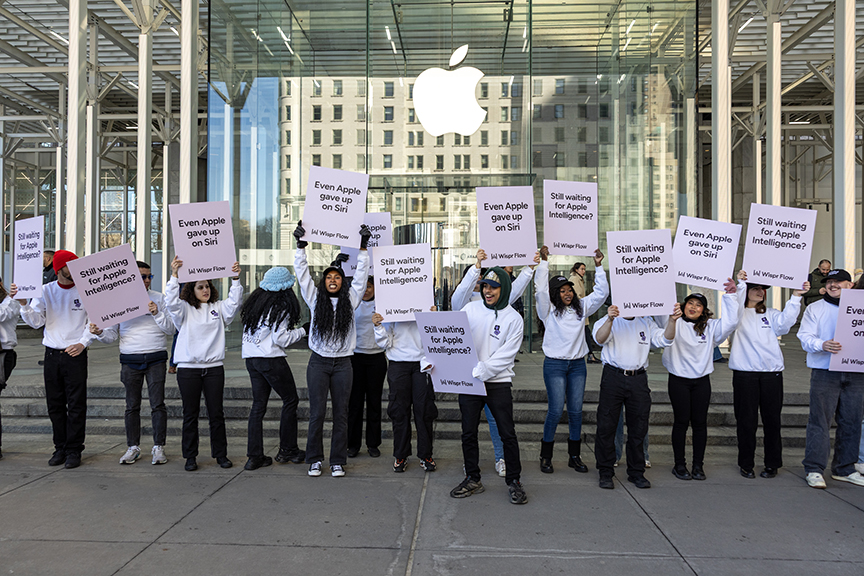
Convention booth space is expensive. A 10×10 booth at a major industry trade show can cost $5,000–$30,000 before you factor in the display, the furniture, the staffing, the shipping, and the travel. Premium placement — corner booths, island exhibits, sponsorship categories — multiplies that number quickly. For the brands that can afford it, the official presence has real value. For everyone else, there’s guerrilla marketing.
The insight that drives convention guerrilla marketing is straightforward: the most valuable part of any trade show or convention is the concentrated audience — thousands of relevant buyers, press contacts, decision-makers, and consumers gathered in a single geographic zone for 3–5 days. That audience doesn’t live inside the convention center. It eats at the surrounding restaurants, stays at the nearby hotels, walks to and from the venue on public streets, and fills the bars at night. Every one of those moments is a guerrilla marketing opportunity that doesn’t require an official exhibitor badge.
This guide covers how to build a guerrilla marketing campaign around a convention or trade show — which tactics deliver the best results, how to stay on the right side of venue restrictions and local ordinances, and how to structure a campaign that reaches the same concentrated audience as official sponsors without paying convention-center rates.
Why Convention Guerrilla Marketing Works
Trade shows create artificial scarcity for marketers: a concentrated, high-value audience available in one geographic zone for a limited time. Official sponsors pay for the privilege of accessing that audience inside the venue. Guerrilla marketers access the same audience in the public spaces surrounding the venue, at a fraction of the cost.
The Outside-the-Venue Advantage
Inside a convention hall, attendees are in “show mode” — evaluating vendors, collecting materials, attending sessions, and managing a packed schedule. They’re processing a high volume of commercial messaging and often struggle to differentiate between the 200+ exhibitors competing for their attention. Outside the venue — on the walk from the hotel, at the coffee shop before doors open, at the restaurant during networking dinners — attendees are in a more receptive, less saturated state. Brand interactions in these contexts often leave stronger impressions than booth encounters because they’re unexpected and contextually distinct from the trade show noise.
Audience Concentration Without Venue Fees
A convention in a midsize city temporarily concentrates 10,000–100,000 relevant people in a walkable geographic zone. This concentration is geographically exploitable by any marketer who deploys resources in the surrounding streets, hotels, and restaurants. You don’t need access to the venue floor to benefit from the audience concentration — you need street-level presence in the blocks where attendees live for the duration of the event.
Challenger Brand Opportunity
For challenger brands competing against category leaders with dominant convention presences, guerrilla marketing levels the playing field. If the incumbent owns the convention floor, own the streets outside. If they have the prime sponsorship placement inside, make sure your brand is the one every attendee sees on the way in and the way out. This positioning actually works to your advantage — the unexpected appearance of a challenger brand’s creative in a context where attendees expected only official sponsors creates distinctiveness and memorability that the expected sponsors don’t achieve.
Key Tactics for Convention and Trade Show Guerrilla Marketing
The specific tactics that work best around conventions depend on the event type, venue location, market city, and campaign objectives. Here’s how each core format maps to the convention marketing context.
Street Teams at Venue Entrances and Hotel Corridors
Deploying street teams at the public entrances to convention venues is the most direct convention guerrilla tactic available. A team of trained brand ambassadors stationed on the public sidewalk outside a main entrance has access to every attendee entering or leaving the venue — a captured, concentrated audience passing through a predictable chokepoint at predictable times. Teams can distribute materials, engage in conversations, offer samples, and create photo opportunities without entering venue property.
LED Billboard Trucks on Convention Corridors
An LED billboard truck driving slow loops through the streets immediately surrounding a convention venue creates high-visibility brand presence in the exact zone where attendees are concentrated. The format is particularly effective during move-in and move-out days when exhibitors are present, during lunch breaks when attendees emerge from the venue, and during morning arrival windows. A truck with compelling creative driving a convention corridor is often photographed and shared by attendees, generating organic social content that extends reach beyond the immediate zone.
Wheatpaste Campaigns in the Convention Neighborhood
A wheatpaste campaign deployed in the neighborhoods surrounding a convention venue creates ambient visual presence that attendees encounter throughout their stay — not just at the venue entrance, but on every walk between hotel, restaurant, and convention center. The campaign can be deployed a few days before the event begins to ensure coverage is fully up when attendees arrive, maximizing the number of impressions per person over the convention duration.
Sidewalk Stencils and Directional Messaging
Convention guerrilla marketing can include directional sidewalk stencil campaigns that guide attendees toward brand touchpoints — an offsite event, a nearby pop-up, a hotel hospitality suite. Stencils placed on the walking routes between convention hotels and the venue entrance appear to hundreds of thousands of individual pedestrian traffic moments over a multi-day event. They’re temporary, attention-catching, and work as passive signage without requiring staffing.
Branded Hospitality Events and Offsite Activations
Many of the most memorable convention marketing moments happen at offsite hospitality events — cocktail parties, dinners, presentations, and experiences hosted by brands in nearby venues. These events don’t require convention sponsorship and can be positioned as invitation-only premium experiences that the brand controls entirely. An offsite hospitality event is not strictly guerrilla marketing, but it operates in the same strategic space: reaching the convention audience in contexts outside official channels at costs that often undercut official sponsorship tiers.
Mobile Billboards Along Hotel Shuttle Routes
Many major conventions run shuttle bus services between official hotels and the venue. Mobile billboard trucks running parallel to shuttle routes capture attendees in the shuttle wait zones and visible corridors, reaching a captive audience at predictable locations and times. This is particularly effective at large conventions where hotel-to-venue distance creates extended pedestrian and shuttle wait dwell time.
Projection Advertising on Convention-Adjacent Buildings
For conventions held in urban environments with appropriate building geometry, projection advertising on buildings visible from the convention entrance or main pedestrian routes creates dramatic brand statements that no booth display can match. A nighttime projection covering a full building facade visible to every convention attendee walking between the venue and nearby hotels generates social content and press pickup that extends far beyond the immediate audience.
Planning Your Convention Guerrilla Campaign
Effective convention guerrilla marketing requires more advance planning than standard campaign activations because you’re working against a fixed event timeline with concentrated audience windows that can’t be replicated after the event ends.
Timeline and Pre-Event Preparation
Begin planning 6–8 weeks before the convention date. Wheatpaste campaigns should be fully deployed 24–48 hours before event start. Street team staffing, briefing, and positioning should be confirmed at least 2 weeks in advance. LED truck and mobile billboard routing should be filed with local transportation authorities if required in the specific market. Permitting for any fixed installations near the venue should be in hand before activation begins.
Venue Boundary Mapping
Understanding exactly where the convention venue’s private property boundary ends and the public sidewalk begins is critical for legal compliance. Convention organizers sometimes attempt to enforce de facto exclusion zones beyond their actual property line; knowing your legal rights in public spaces prevents needless confrontation with venue staff and security. Our team maps the operational zone for every convention campaign we execute before deployment begins.
Audience Flow and Timing Analysis
Convention audiences move in predictable patterns determined by the event schedule. Morning arrival windows (7–9am), lunch breaks (12–2pm), and end-of-day departure windows (5–7pm) create concentrated pedestrian traffic at venue entrances. Evening networking hours concentrate audiences in surrounding restaurants and bars. Plan your street team and mobile asset deployment around these flow patterns rather than maintaining uniform presence throughout the day.
Market-Specific Considerations
Convention guerrilla marketing plays out differently in different cities. Las Vegas — home to CES, NAB, and dozens of major conventions — has specific regulations around marketing activities on the Strip and in the Convention Center district. San Diego’s Comic-Con zone has established precedent for guerrilla marketing in the surrounding Gaslamp Quarter. New York’s Javits Center conventions activate in a neighborhood with different pedestrian patterns than Austin’s convention center zone. Market-specific operational knowledge is essential for campaigns that need to activate quickly and precisely around event timelines.
Legal Framework and Risk Management
Convention guerrilla marketing operates in public spaces that are definitively outside convention organizers’ jurisdiction — but there are real legal considerations to manage correctly.
Venue Property vs. Public Sidewalk
Convention centers and their surrounding plazas are frequently on private or quasi-public property where the venue operator has real authority to restrict commercial activity. The sidewalk adjacent to the venue is public right-of-way where standard city ordinances apply. Understanding this boundary prevents activations that the venue can legally shut down from activations that they cannot.
Event Official Sponsor Restrictions
Many major conventions include sponsor protection provisions that restrict official sponsors from competing with guerrilla activities near the venue. These provisions apply to other official sponsors, not to non-sponsoring brands operating legally in public spaces. A brand that has not purchased official sponsorship is not bound by sponsor protection clauses — only by applicable city and state law.
Coordinating with Local Law
Convention host cities are usually experienced with convention marketing activity and have clear policies about street team positioning, mobile vehicle routes, and poster installation. We coordinate with local permit offices and law enforcement liaisons in every market we activate, ensuring our campaigns operate with full legal clarity and no risk of mid-campaign shutdown.
Measuring Convention Guerrilla Marketing Results
Convention campaigns operate on a compressed timeline — often 3–5 days of active audience availability — which means measurement needs to be real-time and multi-dimensional to capture the full campaign impact.
Real-Time Distribution Tracking
Street team distribution counts (materials handed out, engagements logged) and GPS deployment documentation provide same-day performance data that allows campaign optimization within the event window. If one entrance is outperforming another, teams can be redeployed in real time rather than waiting for post-campaign analysis.
QR Code and URL Attribution
Convention campaign materials with unique QR codes and tracking URLs attribute digital actions — app downloads, demo requests, website visits — directly to the convention guerrilla campaign. This data connects physical distribution activity to digital business outcomes and provides the clearest possible ROI calculation for the campaign investment.
Social Monitoring During the Event
Social listening during the convention period captures organic content generated by attendees who encountered the campaign. Convention hashtags make this monitoring straightforward — searches within the event hashtag surface posts that mention or photograph your campaign elements. This real-time data informs both the current campaign’s performance and planning for future convention activations.
Post-Event Coverage and Press Impact
Industry press covering a convention will occasionally feature notable brand activations in their coverage — both official and guerrilla. Our documentation packages give brands the visual assets needed to pitch their convention guerrilla campaign as a story to trade press, extending the event’s awareness value into coverage that reaches the broader industry beyond the attendees who were present at the venue.
Frequently Asked Questions About Convention and Trade Show Guerrilla Marketing
What is convention guerrilla marketing?
Convention guerrilla marketing involves deploying street-level marketing tactics in and around a convention or trade show to reach attendees without purchasing official sponsorship or booth space. Tactics include street teams outside venue entrances, LED billboard trucks on adjacent streets, wheatpaste campaigns in surrounding neighborhoods, and branded ambassador programs at nearby hotels and restaurants.
Is guerrilla marketing at trade shows legal?
Guerrilla marketing in the public spaces surrounding a convention or trade show is generally legal. Activations on public sidewalks, nearby streets, and public spaces adjacent to the venue are typically permitted with standard city licensing. What’s not permitted is activating inside the venue or on private venue property without official authorization. We handle legal compliance for all convention campaigns we execute.
How much does guerrilla marketing around a convention cost?
A focused guerrilla marketing campaign around a trade show typically runs $10,000–$40,000 depending on tactics, duration, and market. This is often significantly less than comparable convention booth space while reaching the same concentrated audience in the same geographic zone. Multi-tactic campaigns with street teams, LED trucks, and wheatpasting run toward the higher end of that range.
What guerrilla tactics work best at conventions?
The most effective convention guerrilla marketing tactics include street teams stationed at venue entrances and nearby hotels, LED billboard trucks driving convention corridors, branded hospitality events at nearby bars and restaurants, wheatpaste campaigns in the surrounding neighborhood, and sidewalk stencils directing attendees toward brand touchpoints.
Can a brand compete with official sponsors through guerrilla marketing?
Yes — and many brands do exactly this. Official sponsorship buys inside access; guerrilla marketing buys outside presence. Attendees who spend 10 hours on the convention floor often have more meaningful interactions with brands they encounter at nearby restaurants, on the street outside the venue, or at dedicated offsite events than with any booth they visited inside.
Does American Guerrilla Marketing execute trade show guerrilla campaigns?
Yes. We execute guerrilla marketing campaigns around major conventions and trade shows in markets across the country — CES in Las Vegas, SXSW in Austin, NYCC in New York, Comic-Con in San Diego, and vertical industry shows in all major markets. We operate in 50+ cities and can mobilize teams around virtually any major event. Call (646) 776-2770 to discuss your convention timeline.
Frequently Asked Questions
What is convention trade show guerrilla marketing?
American Guerrilla Marketing provides convention trade show guerrilla marketing services across 50+ U.S. markets. Every campaign is planned, scouted, executed, and GPS-documented by our field teams. We work with regional brands and Fortune 500 companies on campaigns that require real street-level execution and documented proof of performance.
How does AGM approach guerrilla marketing?
Our process starts with a market consultation to understand your goals, target audience, and budget. We then scout locations, handle any required permissions or permits, coordinate production and installation with our local crews, and provide a full GPS-tagged photo report after the campaign runs.
What markets does American Guerrilla Marketing cover for guerrilla marketing?
We operate in 50+ U.S. markets including New York, Los Angeles, Chicago, Miami, Houston, Atlanta, Seattle, Denver, Boston, and dozens of secondary markets. Contact us to confirm availability and pricing for your specific market.
How much does a guerrilla marketing campaign cost?
Campaign pricing depends on market, format, quantity, and duration. We work with budgets ranging from targeted single-market runs to national rollouts across multiple cities. Use our RFP Builder or contact us directly for a custom quote based on your specific campaign requirements.
How do I get started with guerrilla marketing through AGM?
The fastest way to get started is to submit your campaign details through our RFP Builder at americanguerrillamarketing.com, or contact us directly at [email protected] or (646) 776-2770. Our team typically responds within one business day with availability and initial pricing.